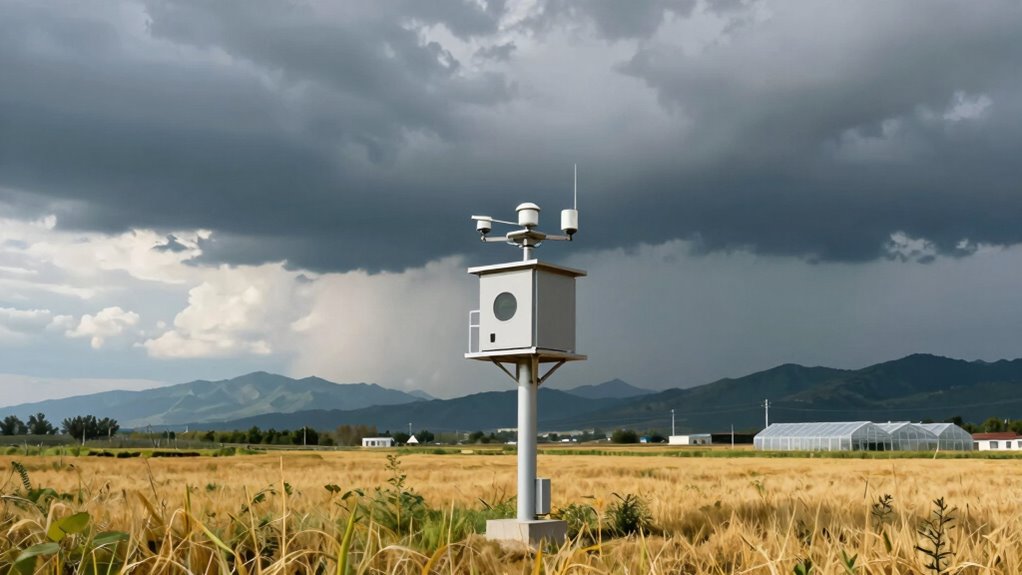
Monitoring weather beyond your greenhouse helps you protect crops and make smarter resource decisions. It allows you to anticipate sudden frosts, heatwaves, or storms, so you can act early and prevent damage. Tracking conditions also guides when to water, fertilize, or deploy pest control, saving costs and supporting sustainability. Using advanced tools, you can respond quickly to changing weather, increasing resilience. If you want to know more about these strategies, keep exploring how weather data benefits your farm.
Key Takeaways
- It helps farmers anticipate and respond to extreme weather events that can affect outdoor crops and infrastructure.
- Weather data guides timely pest control measures, reducing crop damage from weather-sensitive pests.
- Monitoring conditions supports efficient resource use, such as irrigation and fertilization, during droughts or heavy rains.
- Real-time alerts enable swift actions to protect both crops and farm infrastructure from sudden weather changes.
- Overall, it promotes sustainable farming by enhancing resilience and optimizing practices beyond greenhouse operations.
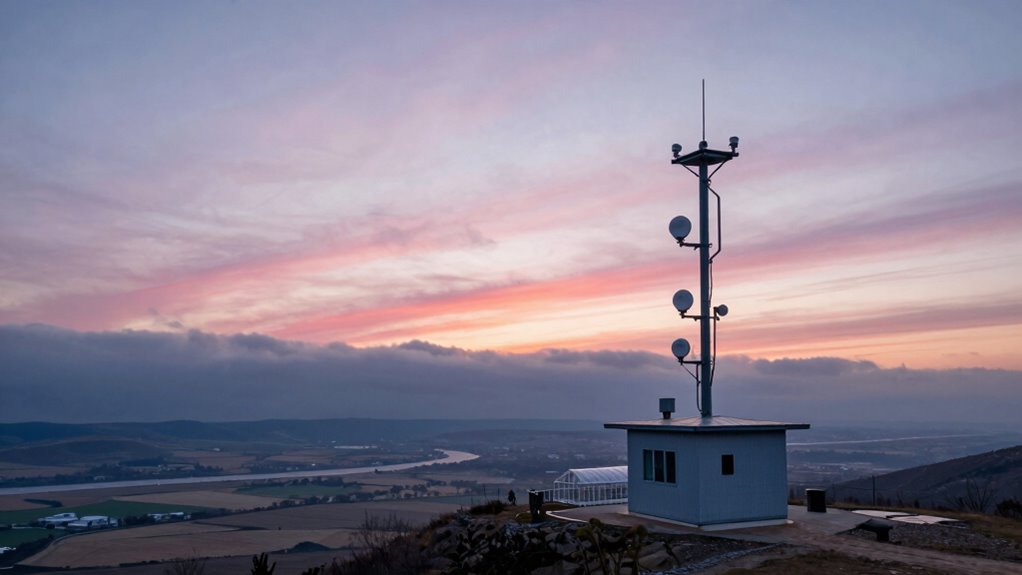
Weather monitoring is essential because it helps us stay prepared for changing conditions and potential hazards. When you keep an eye on the weather, you gain critical insights that extend far beyond just knowing if it’s going to rain. For farmers and growers, understanding weather patterns is indispensable to maintaining crop resilience. Sudden frosts, heatwaves, or unexpected storms can severely impact your crops if you’re not ready. By monitoring weather forecasts closely, you can make informed decisions about when to plant, irrigate, or protect your fields. For example, if a cold snap is forecasted, you can take measures like covering vulnerable plants or adjusting your watering schedule to prevent stress or damage. This proactive approach helps guarantee your crops stay healthy and productive, even in unpredictable conditions.
Beyond safeguarding crops, weather monitoring plays a pivotal role in pest control. Many pests are highly sensitive to weather changes; temperature, humidity, and wind influence their activity and spread. When you track weather patterns, you can anticipate pest outbreaks before they happen. If a warm spell is predicted during a typically cooler season, it might trigger an increase in pest activity, giving you the opportunity to implement control measures early. This not only minimizes crop damage but also reduces your reliance on chemical interventions, making pest control more sustainable. Recognizing these weather-driven pest patterns allows you to time interventions more effectively, targeting pests when they’re most vulnerable and preventing them from establishing large populations.
Furthermore, weather monitoring helps you optimize resource use. Knowing when to irrigate or apply fertilizers depends heavily on weather conditions. For instance, applying fertilizers before heavy rain can cause runoff, wasting resources and polluting nearby waterways. Conversely, during drought conditions, you can prioritize water conservation efforts. This precise management helps improve your crop resilience by reducing stress and ensuring plants receive exactly what they need, when they need it. Additionally, understanding climate data allows for better long-term planning to adapt to changing environmental conditions and promote sustainability. Incorporating weather data into your farm management practices can also lead to cost savings and increased efficiency over time. Being aware of climate variability can help you develop strategies to better cope with extreme weather events and adaptation strategies.
In addition, advanced weather monitoring tools can provide real-time alerts, allowing for swift responses to sudden weather changes that could threaten crops or farm infrastructure. In essence, weather monitoring isn’t just about reacting to weather events; it’s about integrating climate data into your overall farm management strategy. It empowers you to make smarter decisions that bolster your crop resilience and sharpen your pest control tactics. When you understand how weather influences your crops and pests, you’re better equipped to adapt and protect your yields. This proactive approach ultimately leads to healthier crops, higher productivity, and more sustainable farming practices. Staying vigilant with weather data is a fundamental part of modern agriculture—one that benefits your entire operation, well beyond the greenhouse.
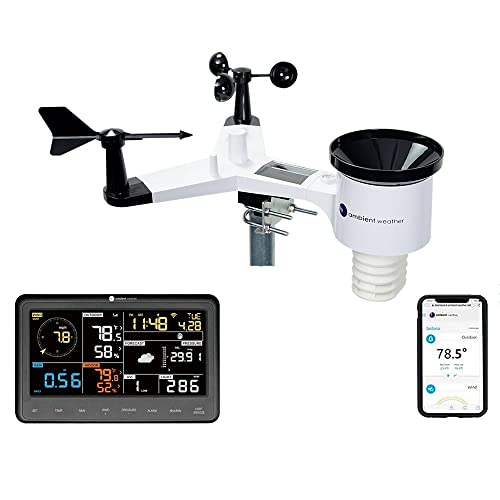
Ambient Weather WS-2902 Wi-Fi Smart Weather Station
- Complete Weather Station: Includes sensor array and LCD display
- Hyper-Local Weather Data: Wireless sensors measure wind, rain, UV, and more
- Smart Home Compatibility: Integrates with IFTTT, Google Home, Alexa
As an affiliate, we earn on qualifying purchases.
As an affiliate, we earn on qualifying purchases.
Frequently Asked Questions
How Does Weather Monitoring Affect Local Community Safety?
Weather monitoring helps you protect your community by providing early warnings of severe conditions, boosting community resilience. When you stay informed about storms, floods, or heatwaves, emergency response teams can act swiftly, reducing risks and saving lives. This proactive approach keeps everyone safer, minimizes damage, and strengthens your community’s ability to handle weather-related emergencies effectively. You’re better prepared and more resilient when weather data guides your actions.
Can Weather Data Predict Long-Term Climate Changes?
Absolutely, weather data can predict long-term climate changes through careful climate modeling and long-term forecasting. By analyzing patterns and trends over decades, you can identify shifts in temperature, precipitation, and atmospheric conditions. This predictive power helps you prepare for future climate challenges, adapt strategies, and make informed decisions. While not foolproof, consistent monitoring and advanced models markedly improve your ability to foresee and mitigate long-term climate impacts.
What Are Emerging Technologies in Weather Monitoring?
You should explore emerging weather monitoring technologies like advanced satellite sensors that provide high-resolution data and IoT networks that enable real-time, localized weather tracking. These innovations allow you to gather more precise information, improve forecasting accuracy, and respond swiftly to changing conditions. By integrating satellite sensors and IoT networks, you can enhance your understanding of weather patterns beyond traditional methods, leading to better decision-making and climate resilience.
How Do Weather Patterns Influence Agriculture Globally?
Did you know that unpredictable weather can reduce global crop yields by up to 20%? As you manage agriculture, you see how shifting weather patterns directly impact crop growth and pest outbreaks. When temperatures rise or rainfall varies, pests thrive or diminish, affecting your harvest. Monitoring weather helps you anticipate these changes, enabling better planning. It’s essential for maintaining healthy crops and ensuring food security worldwide.
What Role Does Weather Data Play in Disaster Preparedness?
Weather data helps you prepare for disasters by enabling better urban planning and the deployment of renewable energy. You can predict extreme weather events, such as storms or floods, and implement safety measures accordingly. This data also guides the placement of renewable energy sources like wind turbines and solar panels, ensuring they operate efficiently during adverse conditions. Ultimately, accurate weather information empowers you to minimize risks and protect communities effectively.
Conclusion
So, next time you check the weather, remember it’s not just about your garden or crops. While you might think a quick forecast is enough, real weather insights protect your entire community and economy. Ironically, the more we rely on tech to predict storms, the more we realize how little control we truly have. Staying aware and prepared isn’t just smart — it’s essential, because weather’s unpredictable power affects us all, far beyond the greenhouse walls.