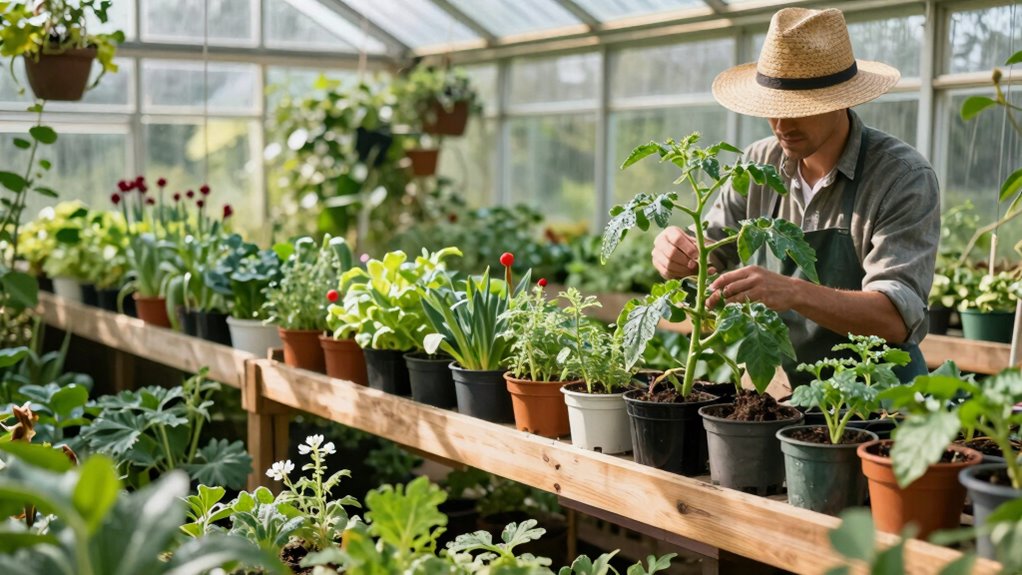

To make your greenhouse gardening more rewarding, develop habits like regularly monitoring temperature, humidity, and ventilation to keep conditions ideal. Keep your tools clean and organize your records of plant health, pests, and environmental changes. Establish routines for watering, fertilizing, and pruning, and practice early pest detection. Staying consistent with these habits reduces stress on your plants and boosts growth. If you stick to these routines, you’ll discover more ways to optimize your greenhouse success.
Listen free for 30 days with Audible
Thousands of audiobooks and originals — cancel anytime.
As an affiliate, we earn on qualifying purchases.
Key Takeaways
- Regularly monitor and adjust temperature and humidity to maintain optimal plant-growing conditions.
- Ensure proper airflow and ventilation to prevent diseases and promote healthy growth.
- Keep detailed records of environmental conditions, pest control, and plant care routines for effective management.
- Practice consistent sanitation and tool maintenance to prevent disease spread and improve efficiency.
- Educate yourself on specific plant needs and develop tailored routines for watering, fertilizing, and pruning.
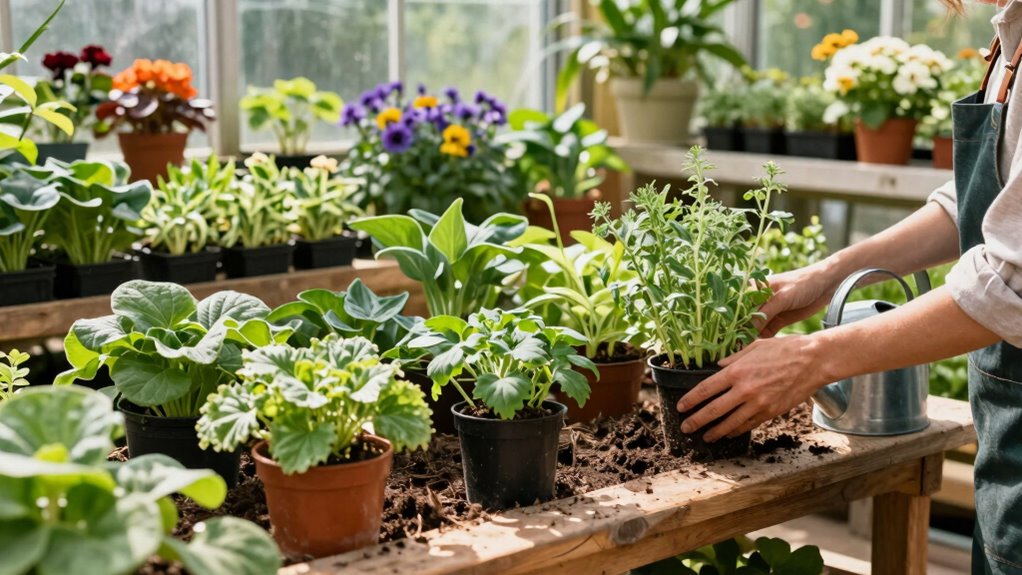
Greenhouse gardening requires consistent habits to guarantee healthy plants and productive growth. One of the most essential routines involves maintaining a stable indoor climate. You need to monitor temperature and humidity levels regularly, adjusting vents, fans, or heaters as needed. A steady indoor climate prevents stress on your plants, reduces the risk of diseases, and encourages vigorous growth. Investing in a good thermometer and hygrometer helps you keep an eye on these conditions, making it easier to respond swiftly to any fluctuations. Proper ventilation is equally critical, as it ensures fresh air circulation, prevents mold buildup, and keeps pest populations in check. Establishing a daily or weekly schedule for climate checks keeps your greenhouse environment ideal. Incorporating climate control systems can further automate and optimize this process, ensuring consistent conditions with minimal effort. Consistently educating yourself about plant-specific needs can also enhance your ability to maintain optimal conditions tailored to your plants. Developing a plant care routine that covers watering, fertilizing, and pruning ensures your plants stay healthy and productive, fostering a thriving greenhouse.
Pest management is another key habit that directly impacts your greenhouse’s success. You should conduct routine inspections to spot early signs of pests like aphids, whiteflies, or spider mites. Catching infestations early allows for less aggressive, more natural control methods, such as introducing beneficial insects or applying organic sprays. Avoid the temptation to ignore small pest issues, as they can quickly escalate and cause significant damage. Maintaining cleanliness inside the greenhouse is also necessary. Remove dead leaves, fallen debris, and any plant material that might harbor pests or diseases. Keeping the space tidy reduces hiding spots and makes it easier to identify problems before they spread. You should also set up quarantine zones for new plants to prevent introducing pests or diseases into your established greenhouse environment. Regularly rotating crops and practicing integrated pest management**** can help you keep pest populations under control more sustainably.
Building these habits isn’t just about reacting to problems; it’s about creating a proactive approach that supports plant health. Regularly cleaning and sterilizing tools minimizes the transfer of pests and pathogens, while consistent watering and fertilizing routines promote strong, resilient plants. When you keep a detailed log of your climate conditions, pest sightings, and plant health, you gain valuable insights that help you tweak your methods over time. These records can also help you identify patterns or recurring issues, enabling you to make more informed decisions. Over time, these habits become second nature, leading to fewer disruptions and more impressive yields. By prioritizing a stable indoor climate and diligent pest management, you’re setting your greenhouse up for long-term success. These routines not only protect your plants but also make gardening more enjoyable and less stressful, transforming your greenhouse into a thriving, healthy space.

Serundo Auto Digital Hygrometer Thermometer Indoor/Outdoor Hygrometer 2PC
- Portable Digital Hygrometer: Quickly measures temperature and humidity
- Unit Conversion: Switches between Fahrenheit and Celsius
- Accurate Readings: Temperature ±1°F, Humidity ±3%RH
As an affiliate, we earn on qualifying purchases.
As an affiliate, we earn on qualifying purchases.
Frequently Asked Questions
How Often Should I Water Greenhouse Plants During Winter?
You should water your greenhouse plants about once a week during winter, but it depends on your watering schedule and winter moisture levels. Check the soil regularly—if it feels dry an inch below the surface, it’s time to water. Avoid overwatering, as winter moisture tends to linger longer in cooler temperatures. Adjust your routine based on plant needs and indoor humidity, ensuring your plants stay healthy.
What Are the Best Ventilation Practices for Small Greenhouses?
Don’t let poor air circulation ruin your greenhouse efforts—proper ventilation is crucial. You should use ventilation systems such as exhaust fans, vents, or adjustable louvers to promote fresh air flow. Keep vents open during the day to prevent overheating and close them at night to retain warmth. Regularly check and maintain your ventilation setup to guarantee consistent air circulation, creating a healthy environment for your plants to thrive.
How Can I Prevent Pests Without Harming My Plants?
You can prevent pests by using companion planting, which naturally repels unwanted bugs, and applying natural repellents like neem oil or garlic spray. Regularly inspect your plants for early signs of pests, removing any affected leaves promptly. Encourage beneficial insects, such as ladybugs, to keep pest populations down. Combining these methods creates an eco-friendly, effective pest control system that protects your plants without causing harm.
What Are the Ideal Humidity Levels for Greenhouse Crops?
You should aim for humidity levels between 60-70% for most greenhouse crops. Effective humidity control helps maintain ideal crop hydration and reduces stress on your plants. Keep an eye on the moisture levels using a hygrometer, and adjust with misting or dehumidifiers as needed. Proper humidity promotes healthy growth, minimizes disease risk, and guarantees your plants thrive in a controlled environment.
How Do I Extend My Growing Season Effectively?
Did you know that proper season extension can increase your harvests by up to 50%? To do this effectively, invest in heating systems, shade cloths, and insulation to maintain ideal conditions year-round. Practice crop rotation to improve soil health and reduce pests. These habits help you extend your growing season, allowing you to enjoy fresh produce longer and maximize your greenhouse’s productivity.
Conclusion
By embracing these home habits, you gently nurture your greenhouse sanctuary, turning routine moments into meaningful gains. Small, thoughtful actions weave a quiet magic that enhances your gardening journey, making each harvest feel like a well-kept secret. Remember, patience and care are the silent partners in your success. As you tend to your plants with consistent love, you’ll find that your greenhouse becomes a treasured retreat—where growth and reward flourish just beneath the surface.
Flea & tick season Picks
flea and tick prevention
As an affiliate, we earn on qualifying purchases.