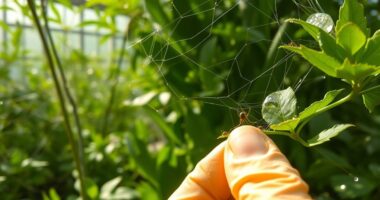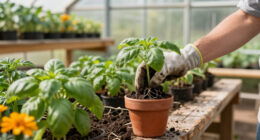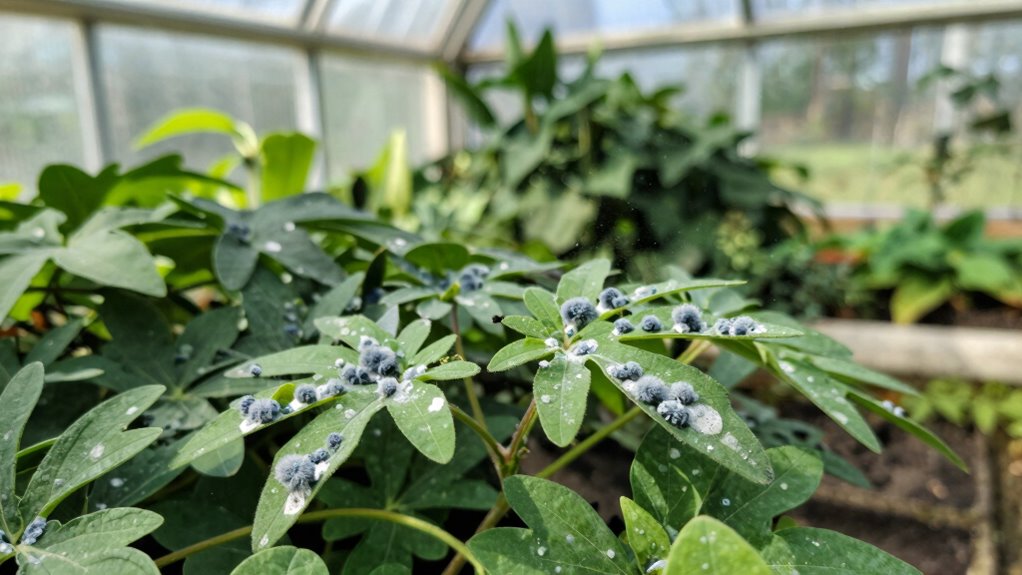

Even a small amount of mold in your greenhouse shouldn’t be ignored because it can quickly spread, harming your plants and weakening their health. Mold releases spores that settle on leaves, stems, and soil, leading to slowed growth, discoloration, and increased vulnerability to pests and diseases. Poor airflow and high humidity create ideal conditions for mold to thrive. Addressing mold early is essential to prevent bigger problems—keep going to understand how to control and prevent it effectively.

Get garden gear delivered free — and shop member deals
- Fast, free delivery on millions of items
- Access to Prime Big Deal Days deals on October 6–7
- Prime Video, Amazon Music and more included
Key Takeaways
- Even small mold spots can spread rapidly, causing significant damage to plant health if not addressed early.
- Mold weakens plants and increases vulnerability to pests and diseases, risking long-term crop loss.
- Initial mold presence often indicates underlying ventilation or humidity issues that need correction.
- Ignoring minor mold can lead to larger infestations, making cleanup more difficult and costly.
- Early detection and removal prevent mold from compromising overall greenhouse environmental conditions.

Have you noticed fuzzy spots or a musty smell in your greenhouse? If so, it’s a sign that mold might be taking hold. Even if the mold seems minor or harmless, ignoring it can lead to serious problems for your plants. Mold can quickly spread, affecting plant health and reducing yields. It’s vital to address it early before it becomes a larger issue. Mold thrives in environments with high humidity and poor airflow, making ventilation issues a common culprit. When your greenhouse isn’t properly ventilated, moisture builds up, creating the perfect conditions for mold growth. This can be especially problematic during colder months when the temperature fluctuations trap humidity inside.
Plant health depends heavily on a stable environment, and mold can disrupt that stability. Mold spores settle on leaves, stems, and soil, weakening plants and making them more vulnerable to diseases and pests. You might notice slowed growth, leaf discoloration, or even plant death if mold is left unchecked. The presence of mold often indicates underlying ventilation issues that need immediate attention. Proper airflow not only helps control humidity but also reduces stagnant air, which fosters mold development. Improving ventilation could mean installing exhaust fans, opening vents more frequently, or rearranging equipment to promote better circulation. Additionally, understanding mold growth conditions can help you prevent future issues more effectively. Recognizing ventilation problems early can significantly reduce the risk of mold spreading and improve overall plant health. Regular monitoring and maintenance of ventilation systems can also play a crucial role in preventing mold. Paying attention to signs of air circulation issues can help you catch problems before they escalate.
As an affiliate, we earn on qualifying purchases.
Frequently Asked Questions
Can Mold Exposure Harm Greenhouse Plants or Humans?
Yes, mold exposure can harm both greenhouse plants and humans. Mold spores thrive in high indoor humidity, which can spread quickly and lead to mold growth. For plants, mold can cause diseases and weaken their health. For humans, inhaling mold spores may trigger allergies or respiratory issues. Managing indoor humidity levels and removing mold promptly help protect your plants and your health, preventing potential problems from escalating.
What Are Common Signs of Mold Presence in a Greenhouse?
You’ll notice mold presence in your greenhouse through surface discoloration on plants, soil, or structures. Mold spores often appear as fuzzy, gray, green, or black patches. Look for white, powdery growth on leaves or surfaces, and watch for warped or damaged plant tissues. These signs indicate mold growth, which can spread quickly if ignored, impacting plant health and potentially causing broader contamination. Regular inspections help catch mold early.
How Can I Prevent Mold Growth in My Greenhouse?
To prevent mold growth in your greenhouse, guarantee good air circulation by regularly opening vents and spacing plants properly. Keep humidity levels low and avoid overwatering, as excess moisture encourages mold. Use fans to promote airflow and remove stagnant air. Regularly inspect your plants for early signs of mold, and clean your greenhouse surfaces to reduce spores. These steps are essential for effective mold prevention and maintaining a healthy environment.
Are There Natural Remedies to Eliminate Mold Effectively?
Yes, you can use natural remedies for mold elimination in your greenhouse. A mixture of white vinegar and water works effectively; spray it on affected areas and let it sit. Tea tree oil diluted in water is also a powerful antifungal. Baking soda solutions help prevent mold buildup. Regularly ventilate your greenhouse and keep humidity low to support these natural remedies and prevent future mold growth.
When Should I Seek Professional Help for Mold Issues?
You should seek professional help when environmental monitoring shows persistent mold growth despite using mold-resistant materials or natural remedies. If mold continues to spread, causes respiratory issues, or you notice structural damage, it’s time to call experts. Professionals can assess hidden mold, recommend advanced treatments, and guarantee proper ventilation. Don’t delay addressing these issues, as unresolved mold can worsen and threaten plant health and your safety.
Conclusion
Remember, a little mold today can turn into a big problem tomorrow. Don’t ignore those tiny spots or signs of mold in your greenhouse; addressing them early keeps your plants healthy and your space safe. As the saying goes, “A stitch in time saves nine.” Stay vigilant, clean regularly, and act quickly. By doing so, you’ll maintain a thriving greenhouse environment and avoid costly damage down the line.
Fall yard work Picks
leaf blowers
As an affiliate, we earn on qualifying purchases.