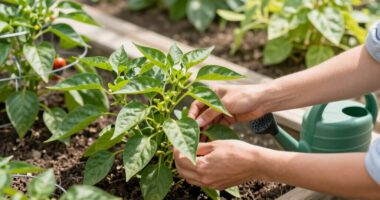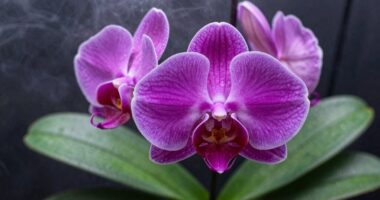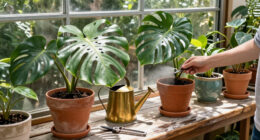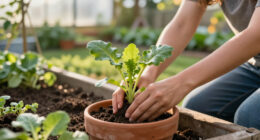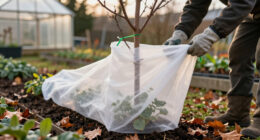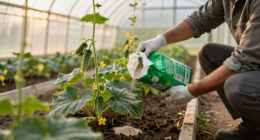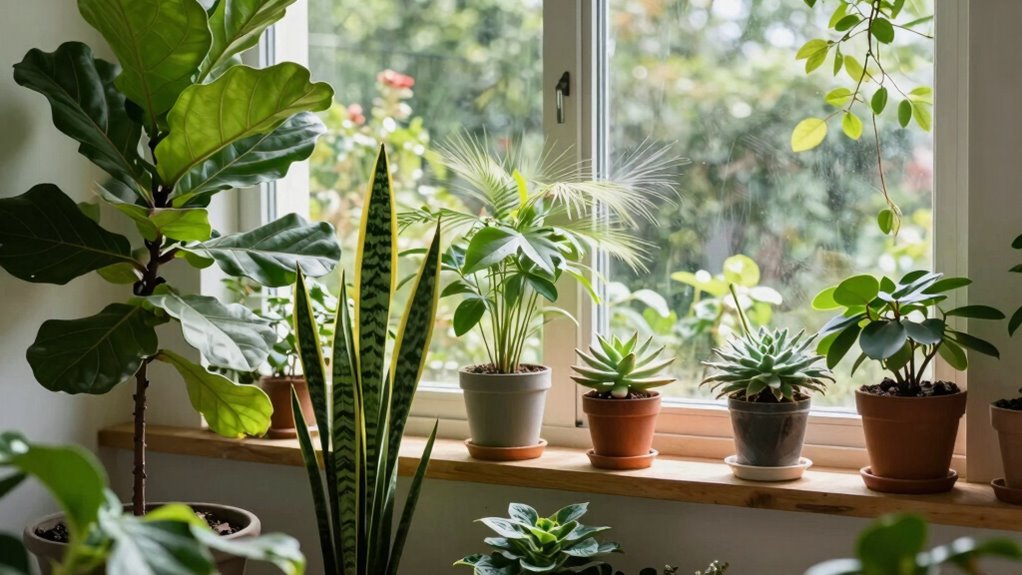
When light conditions shift, you should adjust your plants’ placement based on their specific needs, keeping an eye on their responses. Increase or decrease watering and humidity to match the new light levels, and watch for signs of stress like brown edges or stretching. Regularly inspect for pests, wiping leaves and using organic treatments if needed. Maintaining proper care routines helps your plants thrive despite changing light, and you’ll find more tips to keep them healthy as you go.

Get garden gear delivered free with Prime
- Fast, free delivery on millions of items
- Prime Video, Amazon Music and more included
- Member-only deals all year
Key Takeaways
- Assess and adjust plant placement based on their specific light requirements to prevent stress or damage.
- Modify watering and humidity levels to accommodate changes in evaporation and moisture needs.
- Monitor plants regularly for signs of light stress or pest infestations and address issues promptly.
- Use supplemental lighting or shading to maintain consistent light conditions for sensitive plants.
- Maintain overall health through proper care routines to strengthen plants against environmental fluctuations.
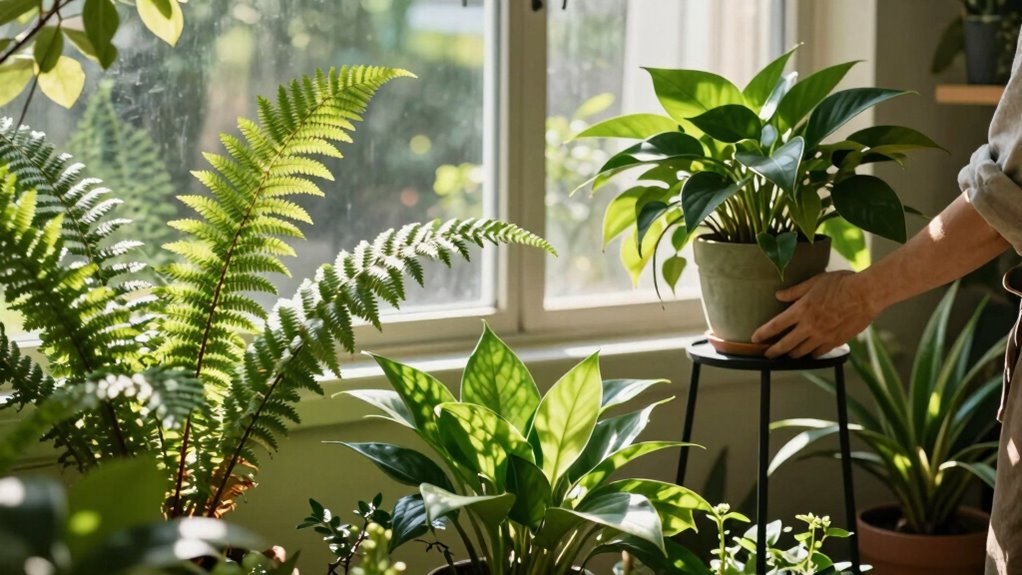
When light conditions change, it’s essential to adjust your plant care routine to keep them healthy and thriving. Shifts in sunlight—whether they’re more or less—can significantly impact your plants’ growth and well-being. As the light dims, you might notice your plants stretching toward the window or losing some of their vibrant color. Conversely, if they’re suddenly exposed to more direct sunlight, their leaves can scorch or fade. To navigate these changes, you need to modify watering habits, monitor indoor humidity, and implement pest prevention strategies.
Indoor humidity plays a crucial role in maintaining plant health, especially when light conditions shift. Reduced sunlight often means lower evaporation rates, which can cause humidity levels to fluctuate. If your indoor environment becomes drier, your plants might suffer from dehydration or develop leaf edges that turn brown. To counteract this, consider increasing humidity around your plants by grouping them together, placing a humidifier nearby, or setting trays filled with water and pebbles beneath your pots. These methods create a microenvironment that supports your plants’ moisture needs, helping them adapt to changing light and temperature conditions. Additionally, understanding your plants’ specific light requirements can guide you in making more precise adjustments to their placement and care routines. Being mindful of plant adaptations can further assist in developing a tailored approach to care during such periods.
Increase indoor humidity with grouping, humidifiers, or water trays to help plants adapt to changing light and temperature conditions.
Pest prevention becomes even more vital during periods of light fluctuation. Changes in sunlight can stress your plants, making them more vulnerable to pests like spider mites, aphids, or scale insects. These pests thrive on weakened plants that are struggling to adjust to new light patterns. Regularly inspecting your plants ensures you catch any infestations early. Wipe leaves with a damp cloth, and if pests are present, treat the affected areas with appropriate organic solutions or insecticidal soap. Keeping your plants healthy by adjusting watering schedules and maintaining proper indoor humidity also helps bolster their defenses against pests.
As an affiliate, we earn on qualifying purchases.
Frequently Asked Questions
How Can I Tell if My Plant Is Getting Too Much or Too Little Light?
You can tell if your plant gets too much light if its leaves turn scorched or pale, and soil moisture drops quickly. Too little light causes leggy growth and dull leaves. Check soil moisture regularly to avoid overwatering or underwatering. Also, monitor for pests, as stressed plants are more vulnerable. Adjust light exposure gradually, ensuring your plant’s environment supports healthy growth and pest management.
Are There Specific Plants That Tolerate Fluctuating Light Better?
Yes, some plants tolerate fluctuating light better. Look for shade-tolerant species like pothos, snake plants, or philodendrons, which adapt well to varying light conditions. These plants have versatile light preferences and can thrive in low to bright indirect light. By choosing these, you reduce stress on your plants when light conditions change, making plant care easier and more forgiving amid shifting light environments.
Should I Rotate My Plants During Changing Light Conditions?
In the land of the digital age, you should rotate your plants during changing light conditions. This helps guarantee even light exposure and prevents leaning toward the light source. Regularly shifting plant positioning allows you to maintain healthy growth, especially when natural light varies throughout the day. By rotating your plants, you give each side equal access to light, promoting balanced growth and vibrant foliage.
How Often Should I Adjust Watering When Light Conditions Change?
You should check your soil moisture more frequently when light conditions change, as plants may need different watering levels. Adjust your watering schedule based on soil moisture rather than sticking to a fixed routine. Also, consider modifying your fertilization schedule if the plant’s growth slows or speeds up, ensuring it gets the right nutrients. Regular observation helps you respond promptly to your plant’s evolving needs, keeping it healthy.
Can Artificial Light Fully Replace Natural Sunlight for Plants?
Artificial lighting can replace natural sunlight to some extent, but it often isn’t a perfect substitute. You need to select artificial lighting with a full light spectrum to mimic daylight effectively. This guarantees your plants get the necessary wavelengths for photosynthesis. While artificial lights support growth indoors or during low-light periods, providing natural sunlight remains ideal, especially for plants that thrive on direct or bright indirect light.
Conclusion
As light conditions shift, adjusting your plant care guarantees they stay healthy and vibrant. Remember, a sudden change in light can stress plants—did you know that 60% of indoor plant failures are due to improper light management? By monitoring their response and tweaking watering or positioning as needed, you can keep your plants thriving regardless of seasonal or environmental changes. Stay attentive, and you’ll enjoy lush, happy greenery year-round.
Halloween Picks
halloween
As an affiliate, we earn on qualifying purchases.