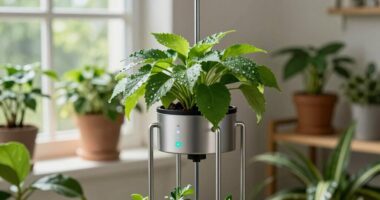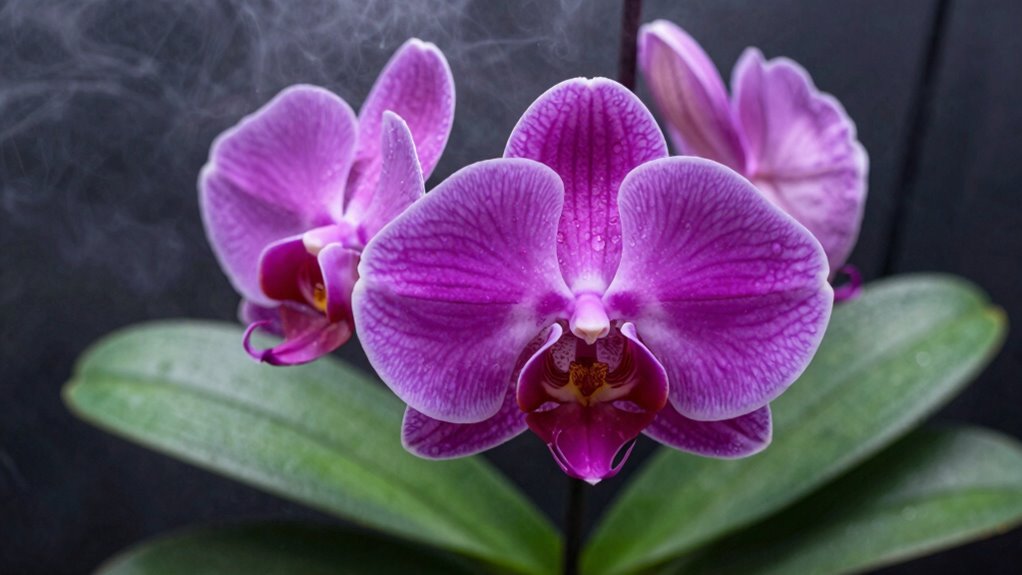

To keep orchid roots healthy without rot, you need to balance humidity carefully. Maintain a level of 50% to 70%, adjusting for the type of orchid and season. Use tools like hygrometers to monitor moisture, and increase humidity with pebble trays, misting, or humidifiers—but avoid overdoing it to prevent soggy roots. Proper airflow and well-draining media also help. If you want to master these tips, you’ll find solutions to keep your orchids thriving.

Get garden gear delivered free — and shop member deals
- Fast, free delivery on millions of items
- Access to Prime Big Deal Days deals on October 6–7
- Prime Video, Amazon Music and more included
Key Takeaways
- Maintain humidity levels between 50-70% to prevent dehydration and rot, adjusting seasonally as needed.
- Use hygrometers to monitor humidity accurately and avoid over-humidifying or drying out roots.
- Ensure proper pot drainage and well-draining media to prevent waterlogging and root decay.
- Increase humidity with misting or pebble trays in dry conditions, but ensure good airflow to avoid excess moisture.
- Regularly inspect roots for signs of rot, and adjust humidity and watering practices promptly to keep roots healthy.
As an affiliate, we earn on qualifying purchases.
Why Orchid Humidity Matters for Healthy Growth
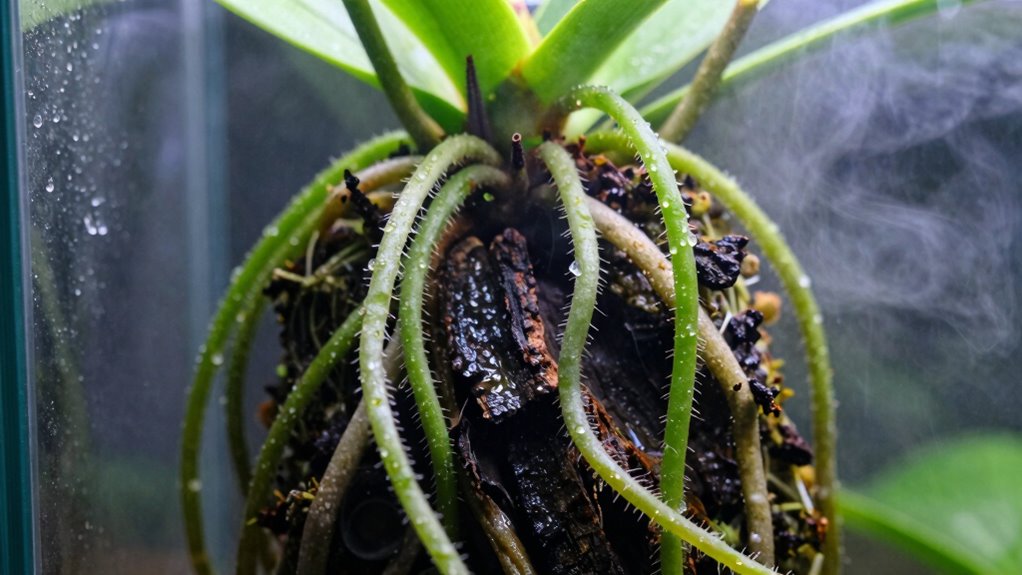
Orchids thrive when the humidity levels around them are just right because it directly impacts their ability to absorb moisture and nutrients. Proper humidity supports orchid transpiration, the process where moisture moves from roots to leaves and eventually evaporates. When humidity is too low, transpiration speeds up, causing humidity stress that can lead to dehydration and weakened roots. Conversely, excessive humidity hampers airflow, increasing the risk of rot and fungal issues. Maintaining balanced humidity ensures your orchid’s roots stay healthy, absorbing nutrients efficiently without risking excess moisture buildup. Recognizing the ideal humidity levels helps prevent humidity stress that can hinder growth or damage your plant. By understanding this delicate balance, you prevent humidity stress that can hinder growth or damage your plant. The right humidity level keeps your orchid thriving, promoting strong roots and vibrant blooms.
What’s the Ideal Humidity Range for Different Orchids?
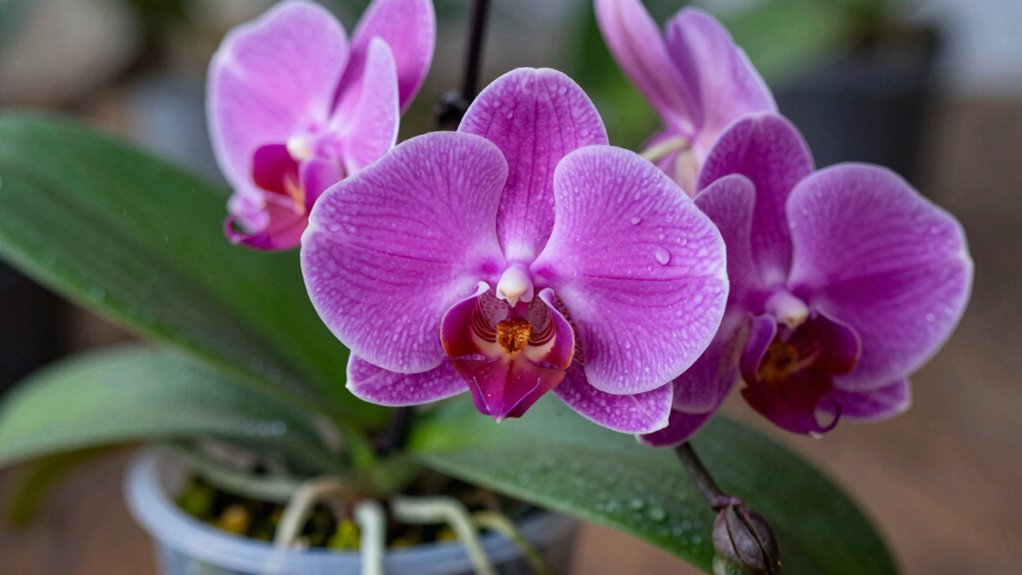
Understanding the ideal humidity range for your orchids depends on their specific type, as different species thrive in varying conditions. For proper orchid hydration, maintaining the right humidity control is essential. Most orchids prefer a humidity level between 50% and 70%, but some, like Phalaenopsis, do well at around 50%, while others, like Cattleyas, enjoy higher levels closer to 70%. Consistently monitoring humidity ensures your orchids stay healthy without risking rot or dehydration. Adjust your environment with humidifiers, trays, or misting as needed to reach these ranges. Remember, too much humidity can lead to root rot, so balance is key. Knowing your orchid’s specific needs helps you create the perfect conditions for vibrant, healthy growth. Additionally, contrast ratio in your growing environment can influence how well your orchids adapt to different lighting conditions, impacting overall health.
How Do Humidity Levels Impact Orchid Roots?
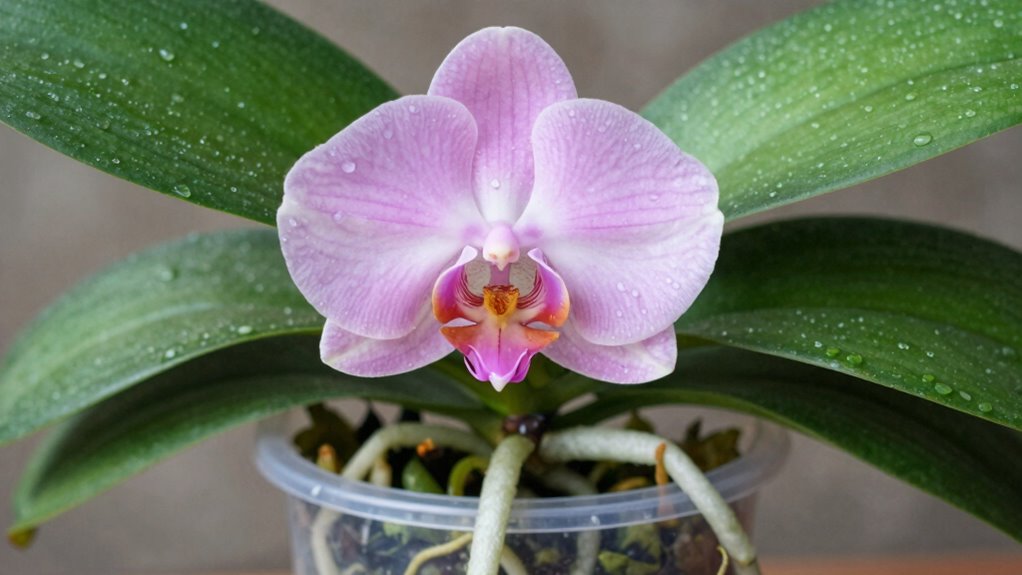
Humidity levels directly influence the health of your orchid roots, as they determine how well the roots can absorb moisture from their environment. Proper humidity control guarantees your roots maintain ideal root moisture, preventing them from drying out or staying overly wet. When humidity is too low, roots struggle to absorb enough moisture, leading to dehydration and weakened plants. Conversely, excessive humidity can cause roots to stay waterlogged, increasing the risk of rot and fungal issues. Maintaining balanced humidity helps roots stay healthy, supporting nutrient uptake and overall growth. You’ll want to monitor and adjust humidity levels carefully, ensuring your orchid roots remain moist but not soggy. Achieving the right humidity balance is essential for preventing rot and fungal problems, promoting strong, vibrant roots, and a thriving orchid.
How to Measure and Monitor Humidity at Home
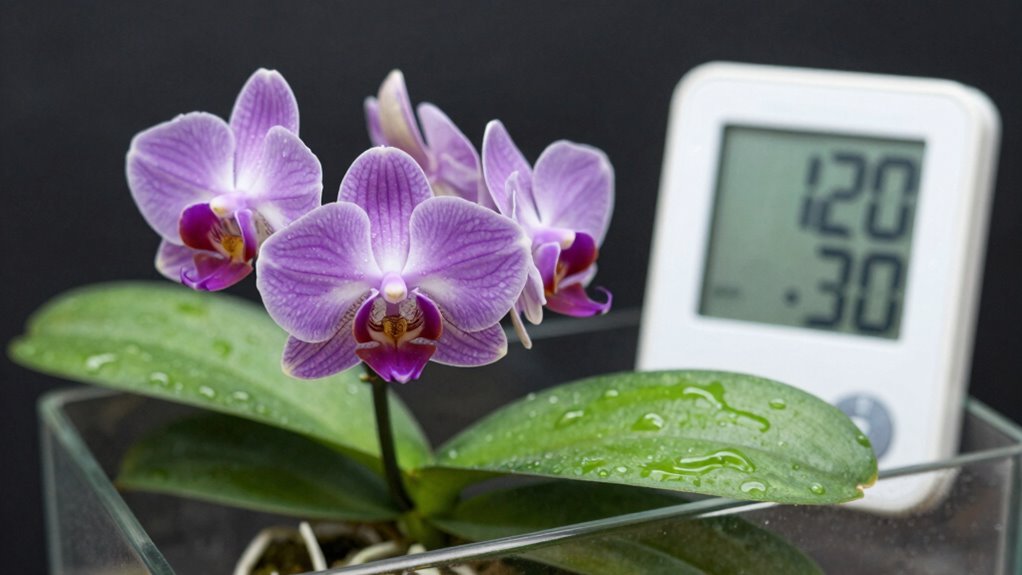
To keep your orchid healthy, you need to accurately measure and monitor the humidity levels in your home. Using humidity sensors or a hygrometer allows you to get precise readings of the moisture in the air. Place your hygrometer in the same area where your orchid is located, ideally at plant level, to guarantee accurate monitoring. Avoid placing it near windows, vents, or direct sunlight, as these can skew the readings. Check the hygrometer regularly to track humidity fluctuations throughout the day. If you notice consistent low or high readings, you can take steps to adjust the environment accordingly. Proper placement and regular monitoring help you maintain the ideal humidity range, supporting your orchid’s roots and overall health. Incorporating innovative materials used in sneaker technology can also inspire creative ways to control humidity levels indoors.
Tips to Increase Orchid Humidity Safely

Once you’ve learned how to measure and monitor your orchid’s environment, the next step is adjusting the humidity to keep it thriving. To do this safely, consider these tips:
- Use humidity traps, like shallow trays filled with pebbles and water, to increase moisture without overwatering roots.
- Misting myths abound—avoid excessive misting, which can promote rot; instead, mist lightly only when humidity drops markedly.
- Keep air circulation steady to prevent stagnant moisture and fungal issues.
- Be aware that maintaining the right humidity level is crucial for preventing orchid root rot and ensuring healthy growth.
How to Prevent Excess Humidity and Root Rot
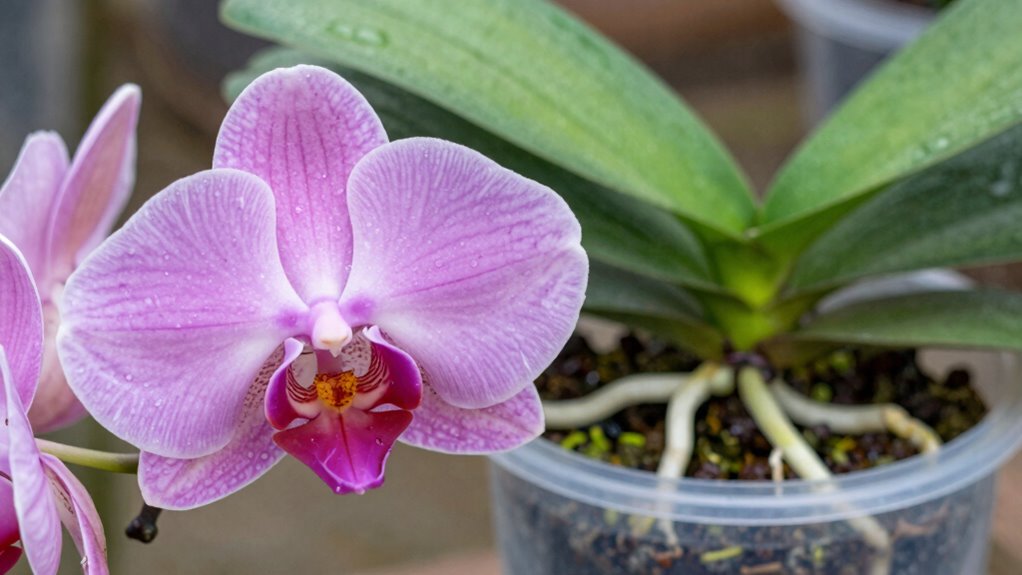
To prevent excess humidity and root rot, you need to focus on proper pot drainage and make certain water doesn’t sit around the roots. Good airflow helps keep the environment balanced and reduces moisture buildup. Using humidity monitoring tools lets you keep track and adjust conditions before problems develop. Regularly checking and maintaining optimal humidity levels can further protect your orchid’s roots from damage.
Proper Pot Drainage
Proper pot drainage is essential for preventing excess humidity and root rot in your orchids. To guarantee healthy roots, focus on these three key steps:
- Use pots with drainage holes to allow excess water to escape, reducing sogginess.
- Incorporate well-draining media like bark or charcoal to facilitate airflow and moisture control.
- After orchid fertilization or pruning, check that water drains completely and avoid overwatering, which can lead to standing water and rot.
- Selecting energy-efficient containers can also contribute to sustainable orchid care by reducing excess water retention and promoting healthier root environments.
Adequate Airflow Circulation
Ensuring good airflow around your orchid is essential for preventing excess humidity and root rot. Proper airflow patterns help regulate humidity zones, reducing stagnant air that encourages fungal growth. You should position your orchid where gentle air circulation occurs, like near a fan or open window, but avoid direct drafts. Use the table below to understand airflow options:
| Airflow Method | Effect on Humidity Zones |
|---|---|
| Fan circulation | Promotes even air movement, preventing pockets of high humidity |
| Natural breeze | Keeps air fresh and reduces stagnant zones |
| Ventilation gaps | Ensures consistent airflow, avoiding excess humidity buildup |
Maintaining these airflow patterns keeps humidity levels balanced, supporting healthy roots. Proper airflow is also vital for air circulation, which helps prevent fungal issues and promotes healthy plant growth.
Humidity Monitoring Techniques
Monitoring humidity levels is essential for preventing excess moisture that can lead to root rot in your orchid. To do this effectively, consider these techniques:
- Use humidity sensors to get real-time readings of your orchid’s environment, ensuring you catch any spikes in moisture early.
- Regularly calibrate your hygrometer, following the manufacturer’s instructions, to maintain accurate measurements.
- Keep a close eye on your readings, aiming for the *ideal* humidity range, and adjust your setup—like increasing airflow or using a dehumidifier—if levels are too high.
- Understanding humidity management can help you create a stable environment that promotes healthy root growth and prevents rot.
Using Humidifiers, Pebble Trays, and Misting Effectively

To maintain the right humidity levels for your orchids, you can use a combination of humidifiers, pebble trays, and misting techniques effectively. Start with humidifier maintenance by regularly cleaning your device to prevent mold and mineral buildup, ensuring it functions properly. For pebble tray placement, position the tray beneath your orchid pot without letting the water touch the roots, creating a humid microenvironment without overwatering. Misting can supplement humidity but should be done carefully—mist in the morning to allow leaves and roots to dry by evening, reducing rot risk. Use misting sparingly and avoid excessive moisture. Additionally, monitoring humidity levels with a hygrometer can help you keep conditions stable. Combining these methods helps maintain stable humidity levels, supporting healthy roots while preventing excess moisture that can lead to rot.
Common Mistakes That Hurt Your Orchids’ Roots
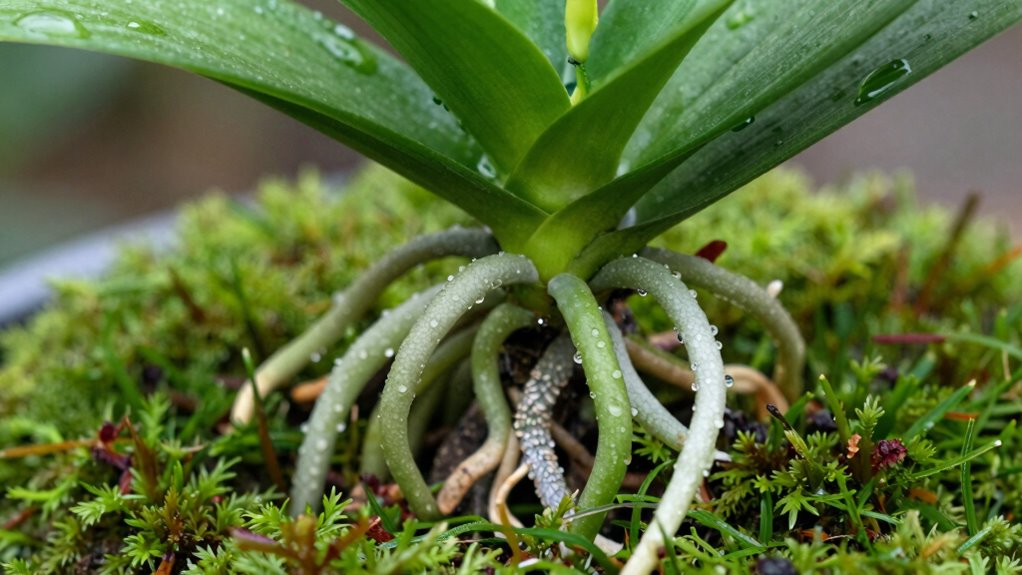
One common mistake is overwatering, which can drown your orchid’s roots and cause rot. Poor drainage in your potting medium only makes this worse, leading to root health problems. Additionally, ignoring the right humidity levels can stress your plant and make it more vulnerable to damage.
Overwatering Risks Increase
Overwatering is a common mistake that can seriously damage your orchids’ roots. When you water too frequently, you risk overwatering consequences that threaten root health. Excess moisture creates an environment where roots can suffocate and rot, which weakens the plant overall. To avoid this, keep in mind:
- Water only when the top inch of the medium feels dry.
- Ensure your pot has proper drainage to prevent standing water.
- Monitor humidity levels to avoid excess moisture around the roots.
Poor Drainage Issues
Poor drainage can be just as damaging as overwatering, leading to waterlogged roots that struggle to breathe and absorb nutrients. When your orchid’s soil composition isn’t well-draining, excess water pools around the roots, increasing the risk of rot. Using heavy, dense soil or overpacking the pot reduces airflow and drainage, which compromises root health. Additionally, improper fertilizer application can exacerbate drainage issues; applying too much fertilizer or using a formulation that retains moisture can worsen soggy conditions. To prevent these problems, guarantee your orchid is in a light, airy mix designed for orchids, like bark-based media. Also, follow recommended fertilizer guidelines to avoid excess salts that can hinder water movement and root function. Proper soil and fertilizer management are key to healthy, well-drained roots.
Ignoring Humidity Levels
Ignoring humidity levels can silently damage your orchid’s roots, especially if the air is too dry. Humidity neglect leads to moisture oversight, causing roots to dry out and weaken. Without proper humidity control, your orchid struggles to absorb enough moisture, risking dehydration. To avoid this, remember:
- Regularly monitor humidity levels to prevent dryness.
- Use a humidity tray or mist your plant if the air feels arid.
- Adjust your environment or add moisture sources when needed.
Failing to address humidity needs can cause stress, root browning, and poor growth. Keep a close eye on the air’s moisture content to ensure your orchid’s roots stay healthy and hydrated. Proper humidity management is essential for thriving orchids, preventing unseen damage from moisture oversight.
Adjusting Humidity for Seasons and Climate Changes

As the seasons change and climate conditions fluctuate, it becomes essential to adjust the humidity levels in your orchid’s environment to keep it healthy. Seasonal humidity adjustments help your orchid adapt to varying temperatures and moisture levels, preventing stress and dehydration during dry winter months or excessive moisture in humid summers. Climate change impacts, such as unexpected temperature swings or increased humidity, further require you to monitor and modify your orchid’s surroundings regularly. Using a hygrometer can guide you in maintaining ideal humidity levels year-round. During colder months, increase humidity with humidifiers or pebble trays, but avoid overwatering. In warmer, more humid seasons, ensure good air circulation to prevent rot. Adapting to these changes helps your orchid thrive no matter the season.
Troubleshooting Orchid Humidity Problems and When to Seek Help
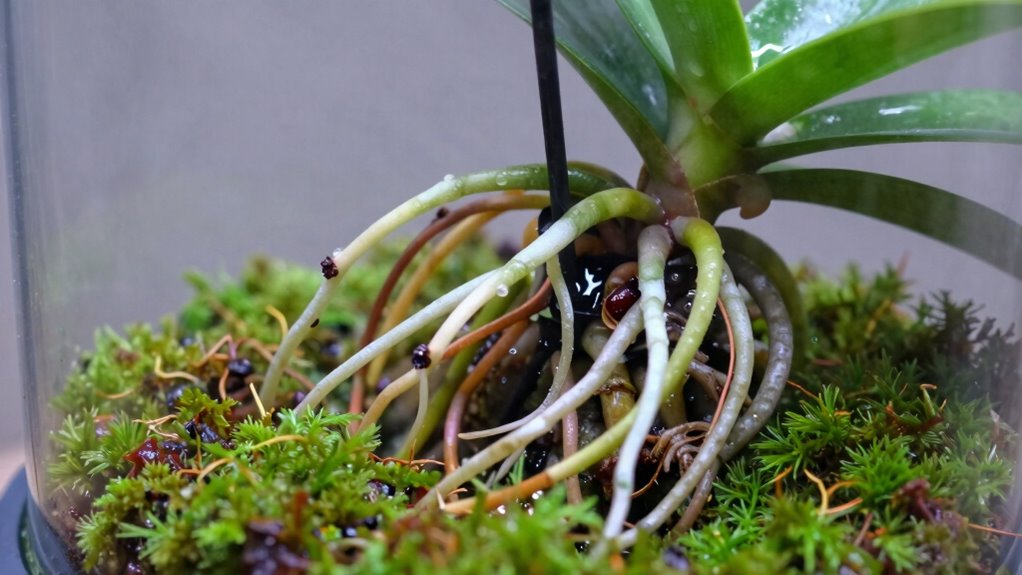
If you notice your orchid stays soggy or develop persistent moisture, it could signal a humidity issue. Watch for signs of root decay, like blackened or mushy roots, which indicate a problem. When these symptoms appear, it’s best to consult an expert to prevent further damage.
Recognizing Persistent Moisture
Persistent moisture around your orchids can signal an ongoing humidity problem that needs immediate attention. If the roots stay soggy or the soil feels consistently wet, it’s a sign you’re overdoing it. To recognize persistent moisture, check for these clues:
- Poor root aeration, which traps moisture and hampers oxygen flow.
- Soil composition that retains water too long, like heavy clay or overly dense mixes.
- Visible water pooling or a consistently damp surface around the pot.
Addressing these issues involves improving root aeration and choosing a well-draining soil mix. If moisture persists despite adjustments, it’s best to consult an expert to prevent root rot and maintain healthy growth.
Signs of Root Decay
Root decay is a clear warning sign that your orchid’s humidity levels may be too high or that overwatering has compromised the plant’s health. When roots turn dark, mushy, or emit a foul smell, it indicates root decay. Fungal infection often accompanies this decay, spreading quickly if not addressed. You might notice roots losing their firm, white appearance and becoming soft or blackened. Healthy roots are firm and light-colored, so any deviation signals trouble. If you see these signs, it’s essential to act promptly to prevent further damage. Overly humid conditions combined with excess moisture create an ideal environment for fungal infections, accelerating root decay. Regularly check your orchid’s roots and adjust humidity and watering practices to maintain healthy, decay-free roots.
When to Consult Experts
When you notice signs of root decay or other issues with your orchid, it’s a good idea to contemplate consulting an expert. They can help diagnose problems that may not be obvious, like improper humidity levels or nutrient deficiencies. Consider seeking help if:
- Your orchid shows persistent yellowing leaves despite correct watering and humidity adjustments.
- You’ve tried adjusting your orchid fertilizer and pruning methods but see no improvement.
- The roots appear mushy or black despite maintaining proper humidity and drainage.
An expert can guide you on proper orchid pruning to remove damaged roots and recommend the right orchid fertilizer to promote healthy growth. Don’t hesitate to get professional advice if your efforts aren’t yielding results—early intervention can save your plant.
Frequently Asked Questions
Can High Humidity Promote Fungal Diseases in Orchids?
Yes, high humidity can promote fungal diseases in orchids. To prevent this, you should use proper misting techniques and avoid over-misting, which can create excess moisture. Using humidity sensors helps you monitor the environment accurately, ensuring humidity levels stay ideal without becoming too damp. Good airflow and proper watering routines also reduce the risk of fungal issues, keeping your orchid roots healthy and thriving.
How Do I Balance Humidity Without Increasing Pests?
To balance humidity without attracting pests, you should focus on humidity control by maintaining levels around 50-60%. Use a humidity tray with pebbles and water for gradual increases, ensuring good air circulation to prevent excess moisture buildup. Regularly inspect your orchids for pests and keep the environment clean. Proper humidity management and pest prevention work together to keep your orchids healthy and thriving without risking rot or infestations.
Are There Natural Ways to Maintain Humidity Indoors?
Did you know that natural humidity sources can boost indoor moisture by up to 50%? You can easily maintain humidity with indoor misting, which adds moisture without introducing pests. Placing water bowls near plants or using humidifiers also helps. These methods keep your orchids happy, healthy, and well-hydrated, all while avoiding the risk of rot. Just remember to mist in moderation to prevent excess dampness.
What Signs Indicate My Orchid Is Suffering From Improper Humidity?
If your orchid shows wilted or yellowing leaves, it likely suffers from improper humidity. Use humidity sensors to monitor levels and adjust misting frequency accordingly; too much misting can cause rot, while too little dries out the roots. You might also notice poor flower development or root discoloration. Keep a close eye on these signs, and balance your humidity to make certain your orchid stays healthy and vibrant.
How Does Airflow Affect Humidity and Root Health?
Airflow regulation plays a key role in humidity control and root health. When you guarantee good airflow around your orchid, it helps prevent excess moisture buildup, reducing the risk of rot. Proper airflow maintains a balanced humidity level, preventing overly damp conditions that can harm roots. By adjusting vents or using gentle fans, you create an environment where humidity stays ideal, supporting healthy root growth and overall plant vigor.
Conclusion
Maintaining the right humidity is key to keeping your orchids healthy and thriving without risking rot. By paying attention to their needs and adjusting as seasons change, you can create a cozy environment that encourages lush growth. Remember, don’t throw the baby out with the bathwater—balance is everything. Stay vigilant, monitor regularly, and you’ll be able to nurture beautiful orchids that flourish and bring joy to your space.
Fall yard work Picks
leaf blowers
As an affiliate, we earn on qualifying purchases.