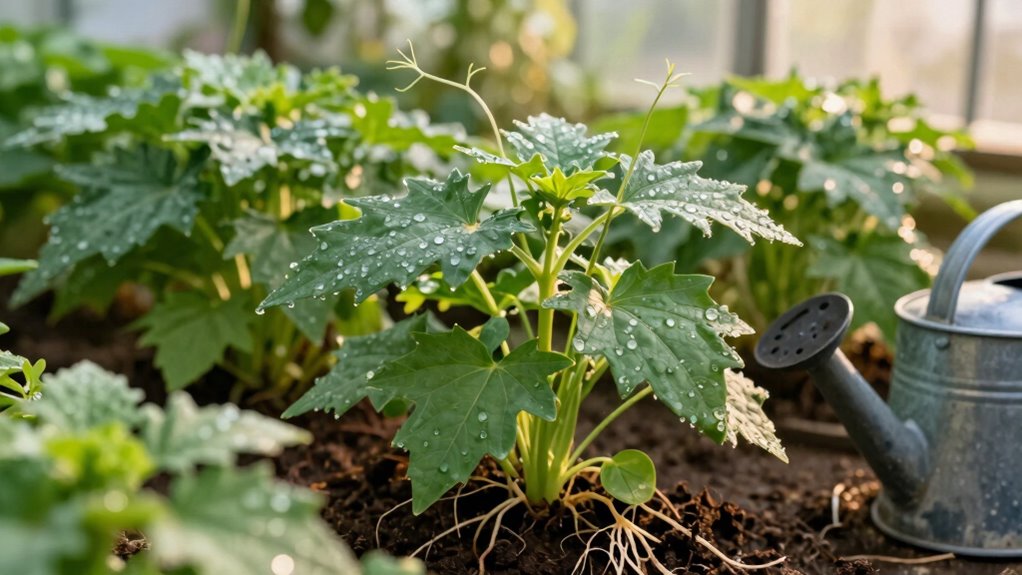

To make greenhouse growing feel natural, establish a consistent care rhythm by aligning your watering, feeding, and monitoring with your plants’ needs and environmental cues. Develop a routine that matches their growth cycle, checking soil health regularly and adjusting watering based on the climate. Pay attention to signs like wilting or yellowing to fine-tune your approach. Staying flexible and observant helps you create a balanced, intuitive process. Keep exploring to discover even more ways to nurture your plants effectively.
Listen free for 30 days with Audible
Thousands of audiobooks and originals — cancel anytime.
As an affiliate, we earn on qualifying purchases.
Key Takeaways
- Establish a consistent care routine aligned with plants’ natural growth cycles.
- Regularly monitor and maintain soil health with organic nutrients.
- Adjust watering schedules based on plant needs and environmental conditions.
- Observe environmental cues like light, humidity, and temperature for responsive care.
- Continuously fine-tune watering, feeding, and environment adjustments through regular observation.
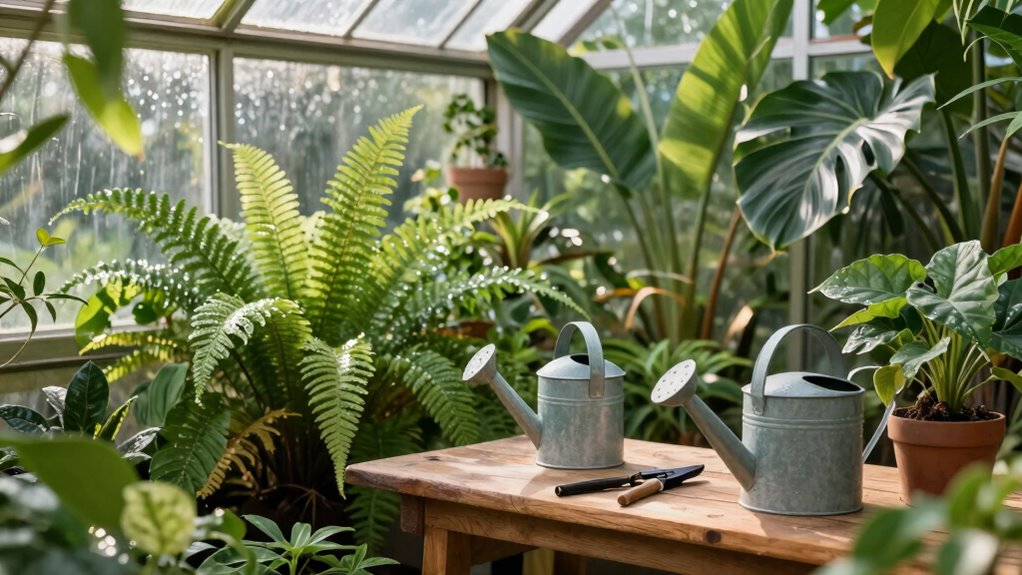
Caring for plants is most effective when you develop a consistent rhythm that matches their natural needs. When you establish a steady routine, your plants begin to thrive, and the process of greenhouse growing feels more instinctive rather than forced. One of the key aspects of this rhythm is understanding soil nutrition. Healthy soil provides the foundation for strong, vibrant plants. You want to guarantee your soil remains rich in essential nutrients, which means regularly checking its condition and supplementing it with compost or organic fertilizers when necessary. This way, you’re not just watering your plants; you’re actively nourishing them at a deeper level. Balancing soil nutrition prevents deficiencies that can stunt growth or cause disease, making your care more predictable and effective.
Alongside maintaining soil health, managing watering frequency is pivotal. Plants need water, but too much or too little can upset their balance. Developing a consistent watering schedule helps your plants adapt and grow steadily. For many greenhouse plants, watering once every few days works well, but this depends on factors like the plant species, pot size, and environmental conditions. You’ll want to observe your plants carefully—wilting, yellowing leaves, or overly moist soil are signs you need to adjust your watering. By sticking to a regular pattern, you reduce guesswork and prevent overwatering, which can drown roots and cause rot. Equally, consistent watering encourages roots to grow deeper and stronger, reinforcing the plant’s resilience.
Creating this rhythm also involves paying attention to environmental cues such as humidity, temperature, and light, which influence how often you water and how often you need to refresh soil nutrients. When these conditions fluctuate, your routine may need slight adjustments. The key is to stay attentive and adapt your schedule accordingly, rather than sticking rigidly to a fixed timetable. This adaptability ensures your plants receive what they need when they need it, fostering a natural growth cycle. Recognizing the importance of soil health and its impact on plant vitality helps you develop a more holistic approach to care. Additionally, understanding the natural growth cycle of your plants can guide you in timing your care routines more effectively. Developing an awareness of environmental factors enables you to fine-tune your routine and maintain optimal growth conditions. Incorporating regular observation into your routine allows you to respond promptly to your plants’ needs, rather than relying solely on set schedules.
Over time, as you develop this care rhythm, you’ll notice your plants becoming more robust and self-sufficient. Their responses to your routine will become more predictable, allowing you to fine-tune your approach effortlessly. Your gardening efforts transform from a series of chores into a harmonious process aligned with nature’s flow. By prioritizing consistent soil nutrition and watering frequency, you create a nurturing environment that feels intuitive, making greenhouse growing a more natural, rewarding experience. Additionally, fostering a mindful gardening approach can help you better connect with your plants’ specific needs and environmental cues.
organic soil nutrients for greenhouse plants
As an affiliate, we earn on qualifying purchases.
As an affiliate, we earn on qualifying purchases.
Frequently Asked Questions
How Can I Adapt Plant Care to Seasonal Changes?
To adapt plant care to seasonal changes, start with seasonal light adjustments by shifting your plants’ positions or using grow lights to guarantee they get the right amount of light. Implement temperature regulation strategies like ventilating during warmer months and insulating during colder ones. Keep a close eye on your plants for signs of stress, adjusting watering and humidity as needed. These steps help maintain a natural, healthy growth rhythm year-round.
What Are Common Signs of Overwatering or Underwatering?
If your plant shows wilting, yellowing leaves, or soggy soil, you’re likely facing watering issues like overwatering. Conversely, dry, brittle leaves and a dry soil surface indicate underwatering. Keep an eye out for drought stress signs, such as leaf curl or stunted growth. Adjust your watering schedule accordingly, ensuring consistent moisture without waterlogging, to prevent damage and promote healthy growth.
How Do I Prevent Pests in a Greenhouse Environment?
Think of your greenhouse as a fortress, and pests as unwelcome invaders. To keep them at bay, practice companion planting—pairing plants that naturally repel pests. Incorporate biological controls like beneficial insects that prey on pests, creating a balanced ecosystem. Regularly inspect plants, maintain cleanliness, and avoid overwatering, which attracts pests. These proactive steps help you maintain a healthy, pest-free environment, making your greenhouse a thriving sanctuary for your plants.
What Tools Are Essential for Maintaining Plant Health?
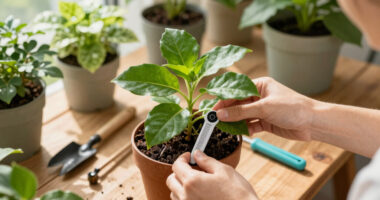
You need essential tools like a soil testing kit to monitor nutrient levels accurately and guarantee proper nutrient balancing. A pH meter helps you maintain ideal soil acidity, while watering cans and spray bottles keep your plants hydrated without overwatering. Pruning shears and magnifying glasses assist with pest detection and plant health checks. Using these tools regularly helps you catch issues early and keeps your greenhouse plants thriving and healthy.
How Can I Encourage Natural Pollination Inside My Greenhouse?
Imagine this: you’re channeling your inner Leonardo da Vinci, orchestrating a symphony of life. To encourage natural pollination, you should focus on pollinator integration by inviting bees and butterflies into your greenhouse. Habitat diversification is key—add native plants, flowers, and nesting sites to attract and sustain these pollinators. This creates a thriving ecosystem, boosting plant health naturally and reducing your need for manual pollination efforts.
Conclusion
By embracing the plant care rhythm, you create a natural flow that makes greenhouse growing feel as seamless as breathing. When you tune into your plants’ needs and follow a consistent, intuitive routine, caring for them becomes second nature—like a gentle dance. Remember, just as a heartbeat keeps you alive, your rhythm keeps your greenhouse thriving. Stay in sync, and watch your plants flourish effortlessly, turning your greenhouse into a lush, vibrant sanctuary.
Baby shower & registry season Picks
baby registry must-haves
As an affiliate, we earn on qualifying purchases.