Choose shade-tolerant spinach varieties like ‘Baby’s Leaf’ or ‘Space’ that thrive in low light. Position them near windows or use reflective surfaces to boost natural light, and consider supplemental LED grow lights if needed. Optimize soil with organic compost, improve airflow, and keep moisture steady. Regular pruning and pest control will keep plants healthy. For more tips on growing vibrant spinach in low-light conditions, keep exploring ways to adapt your garden environment.
Listen free for 30 days with Audible
Thousands of audiobooks and originals — cancel anytime.
As an affiliate, we earn on qualifying purchases.
Key Takeaways
- Select shade-tolerant spinach varieties with dark green, thick leaves designed for low-light conditions.
- Maximize natural light by placing plants near windows and using reflective surfaces to enhance brightness.
- Supplement with full-spectrum LED grow lights to ensure sufficient photosynthesis and vibrant growth.
- Enrich soil with organic compost, maintain proper pH, and improve aeration with soil conditioners to boost plant health.
- Practice regular pest prevention, prune for airflow, and avoid overwatering to prevent weakness and disease.

Perpetual Spinach Seeds for Planting – Survival Garden Seeds (1 Pack)
- Long Season Harvest: Harvest from spring to winter in mild zones
- Easy to Grow: Germinates in 7-14 days, reaches 24 inches tall
- Continuous Greens Supply: Harvest outer leaves for ongoing fresh greens
As an affiliate, we earn on qualifying purchases.
As an affiliate, we earn on qualifying purchases.
What Are the Best Spinach Varieties for Growing in Shade or Low Light?
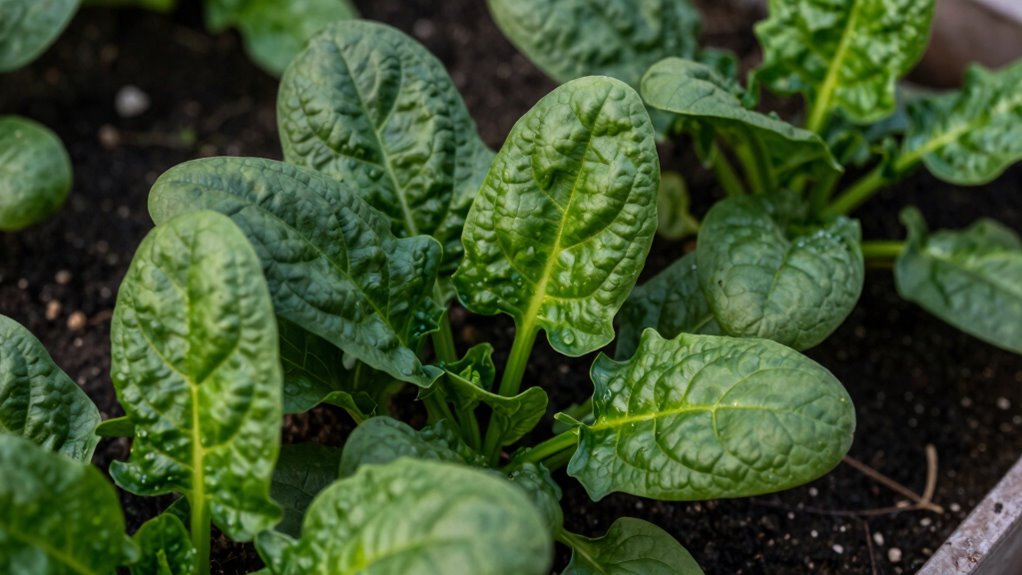
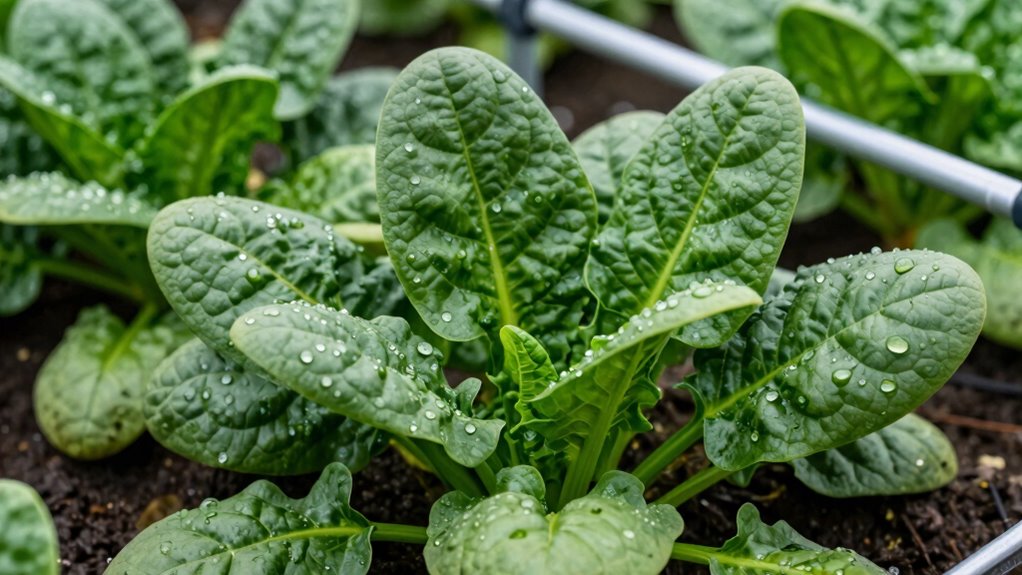
If you have limited sunlight in your garden, choosing the right spinach varieties can make all the difference. Look for shade tolerant varieties or low light cultivars that thrive in less sun. These types typically have darker green, thicker leaves, which help them absorb more available light efficiently. Some popular options include ‘Baby’s Leaf,’ known for its quick growth in shaded areas, and ‘Space,’ which performs well in low-light conditions. These cultivars are bred to handle reduced sunlight without becoming weak or leggy. By selecting these specific varieties, you give your spinach the best chance to grow healthy and robust, even in shady spots. Additionally, selecting cultivars designed for energy efficiency can further improve growth in low-light environments. Keep in mind, these low light cultivars are a smart choice for maximizing yields in limited sunlight.
How Can I Optimize My Space for Growing Spinach Indoors or in Shady Gardens?

To get the most out of your shady space, focus on maximizing natural light sources by placing your plants near windows or open areas. You can also use reflective surfaces like mirrors or white walls to bounce light and brighten the environment. These strategies help guarantee your spinach gets enough light to thrive indoors or in low-light gardens. Additionally, choosing low-light tolerant spinach varieties can improve your chances of success in less sunny conditions.
Maximize Natural Light Sources
Maximizing natural light is essential when growing spinach in shady gardens or indoors, as it helps the plants thrive despite limited sunlight. Position your spinach where it can receive the most indirect light, such as near south-facing windows or open spots in your garden. Use companion planting to attract beneficial insects that help control pests, reducing the need for chemical interventions that could harm your plants. Avoid overcrowding, which can block sunlight and create shaded areas. Keep leaves clean and free of debris to optimize light absorption. Pruning any lower or older leaves also improves airflow and light penetration. By strategically arranging your space and encouraging natural pest control through companion planting, you enhance spinach growth even in low-light conditions. Additionally, understanding vulnerabilities in devices can help you secure your equipment and prevent disruptions that might impact your gardening setup.
Use Reflective Surfaces Effectively
Using reflective surfaces is an effective way to boost natural light for your spinach, especially in shaded gardens or indoor setups. Reflective surfaces, like white walls, aluminum foil, or reflective panels, help maximize light diffusion across your space. By bouncing light around, they reduce shadows and ensure more even illumination, which benefits your plants’ growth. Position these surfaces strategically near your spinach beds or containers to capture and redirect available light. This technique makes the most of limited sunlight, promoting healthier, faster-growing plants without the need for additional artificial lighting. Remember, the goal is to enhance light diffusion without creating hot spots or glare. Proper use of reflective surfaces can considerably improve your spinach’s growth environment, even in low-light conditions. Employing color temperature adjustments can further optimize the light spectrum for plant growth and development.
How Does Low Light Affect Spinach, and What Can I Do to Compensate?

Low light conditions can considerably hinder spinach’s growth by reducing its ability to produce energy through photosynthesis. To compensate, you need to understand its shade tolerance and how it affects leaf development. Spinach adapts poorly to deep shade but can handle partial shade with proper care. When light is limited, expect smaller, weaker leaves, and slower growth. To improve your crop, consider increasing light exposure or choosing more shade-tolerant varieties. Here’s a quick comparison:
| Aspect | Full Sun | Partial Shade | Deep Shade |
|---|---|---|---|
| Leaf Size | Large, robust | Moderate | Small, weak |
| Growth Rate | Fast | Moderate | Slow |
| Shade Tolerance | Low | Moderate | High |
| Leaf Development | Healthy, full | Slightly stunted | Poor |
| Recommended Actions | Maximize sunlight | Use reflective surfaces | Supplement with artificial light |
Additionally, understanding shade tolerance can help you select the best planting strategies for low-light environments.
What Are the Best Lighting Options to Grow Spinach Indoors in Low Light?
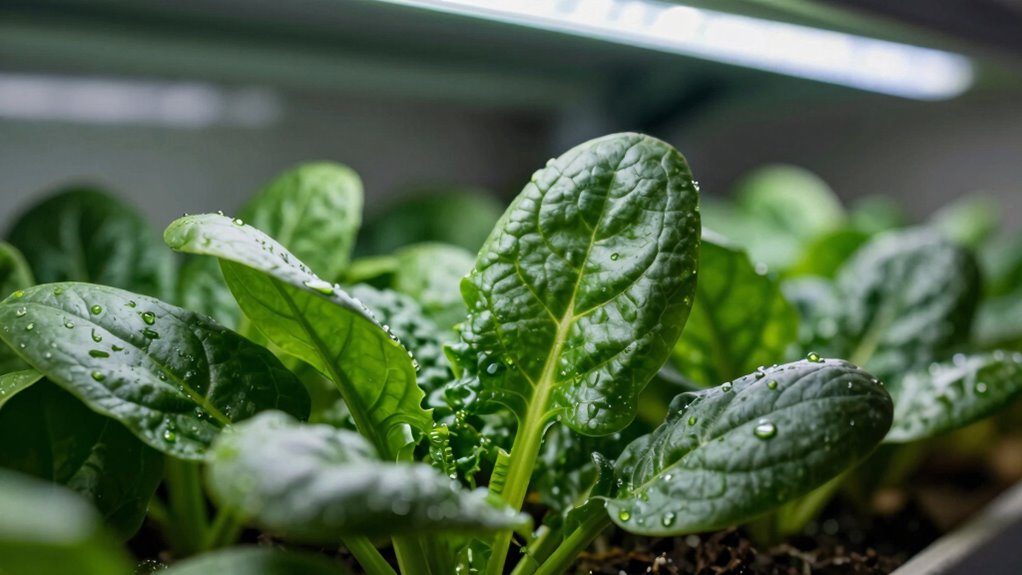
Growing spinach indoors in low light can be challenging, but choosing the right artificial lighting options makes a significant difference. LED grow lights are your best choice because they provide targeted, energy-efficient light tailored for leafy greens. Look for full-spectrum LED lights that mimic natural sunlight, promoting healthy growth and vibrant leaves. If possible, supplement with natural sunlight by placing your spinach near windows or using reflective surfaces to maximize light exposure. Combining LED grow lights with natural sunlight supplementation ensures your plants receive consistent, adequate light. Keep lights on for about 12-16 hours daily, adjusting as needed based on plant response. This setup helps prevent legginess and weak growth, ensuring your spinach stays healthy and productive even in low-light indoor conditions. Additionally, understanding the different light spectrums can help you optimize growth and maximize your indoor gardening success.
How Do I Manage Soil, Water, and Nutrients for Spinach in Low-Light Conditions?
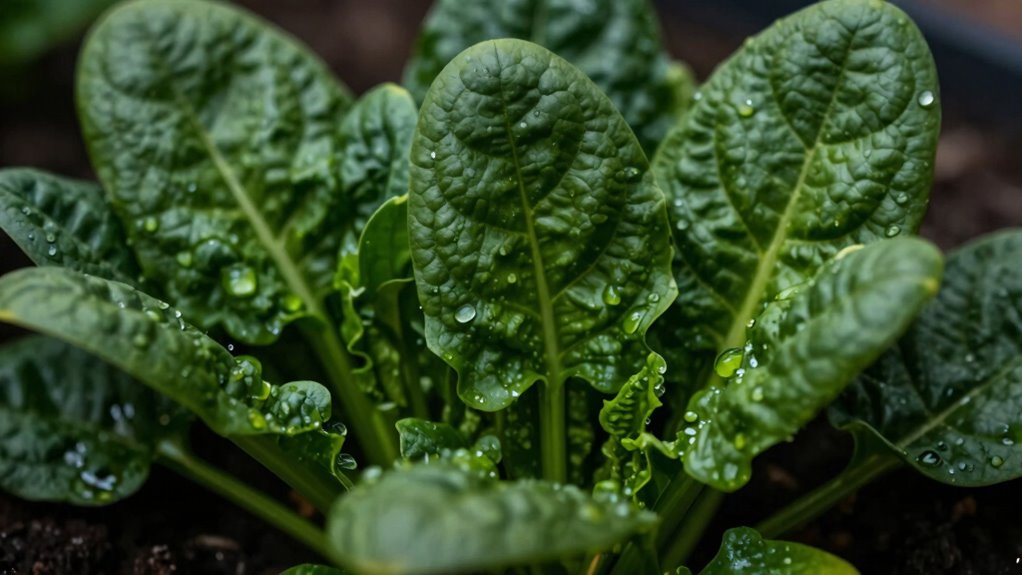
To keep your spinach healthy in low-light conditions, you need to pay close attention to soil, water, and nutrients. Enrich your soil with organic matter to improve drainage and nutrient availability, and water it consistently without overdoing it. Make sure you’re balancing nutrients properly to support steady growth despite limited light. Incorporating at-home gardening tools can also help monitor and optimize these conditions effectively.
Soil Enrichment Strategies
When managing soil, water, and nutrients for spinach in low-light conditions, focusing on soil enrichment is essential for maximizing growth. Proper soil amendment boosts microbial activity, which helps break down organic matter and release nutrients. To improve your soil:
- Incorporate compost or well-rotted organic matter to enhance nutrient content and microbial diversity.
- Use aged manure or organic fertilizers to provide steady nutrient release.
- Adjust soil pH if necessary, aiming for slightly acidic to neutral levels (6.0–7.0).
- Incorporate biochar or other soil conditioners to improve aeration and moisture retention.
These strategies foster a healthy microbial environment, ensuring your spinach receives essential nutrients even in low-light conditions. Proper soil enrichment creates a robust foundation for steady growth and vibrant, healthy leaves.
Optimal Watering Techniques
Since low-light conditions can reduce a plant’s ability to photosynthesize efficiently, careful watering is essential for maintaining healthy spinach growth. Establish a consistent watering schedule to prevent stress from over- or under-watering. Spinach prefers moist soil, but too much water can lead to root rot, so monitor moisture levels regularly. Use well-draining soil to improve moisture retention without waterlogging the roots. Water deeply when the top inch of soil feels dry, ensuring even moisture distribution. Mulching can help retain soil moisture and keep roots cool. Avoid frequent shallow watering, which encourages weak root systems. Adjust your watering based on weather and soil conditions, always aiming for consistent soil moisture to promote strong, healthy spinach plants even in low-light environments. Incorporating supportive gardening practices can further enhance plant resilience under challenging conditions.
Nutrient Balance Tips
Managing soil, water, and nutrients effectively is essential for healthy spinach growth in low-light conditions. To maximize your crop, focus on balancing nutrients and supporting pest management. Use organic compost to improve soil fertility without overwhelming the plants with excess nutrients. Incorporate companion planting, like radishes or nasturtiums, to naturally deter pests and improve soil health. Water consistently but avoid overwatering, which can lead to root rot and nutrient leaching. Regularly test soil pH to ensure nutrient availability and adjust accordingly for prime spinach growth. Additionally, considering Free Floating techniques can help optimize water use and nutrient distribution in your garden. Proper nutrient management encourages stronger plants and reduces pest problems. Maintaining this balance ensures your spinach thrives even with limited sunlight, resulting in healthier, more robust leaves.
Troubleshooting Spinach Growth Problems in Low Light: Common Issues and Fixes
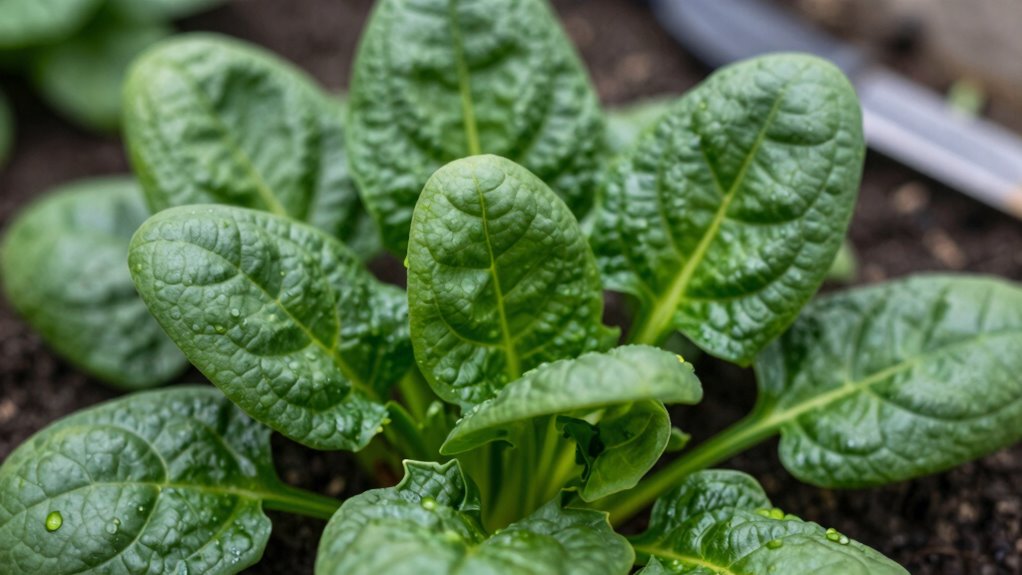
Low-light conditions can pose significant challenges to growing healthy spinach, often leading to issues like leggy stems, pale leaves, and poor overall growth. To troubleshoot, start by ensuring proper pest prevention, as pests can weaken plants further in low light. Regularly inspect leaves for signs of pests and remove affected plants promptly. Additionally, practicing crop rotation helps prevent soil-borne diseases that thrive in crowded or exhausted soil, which can stunt growth. If spinach appears pale or weak, consider supplementing with a balanced, low-light-friendly fertilizer. Adjust your watering schedule to avoid overwatering, which can exacerbate problems. Improving air circulation and trimming excess foliage also helps reduce disease risk, keeping your spinach healthier and more resilient despite limited sunlight. Incorporating sound therapy techniques can also support overall plant vitality by promoting stress resilience and healthy growth processes.
Frequently Asked Questions
Can Low-Light Spinach Be Harvested More Frequently Than Sun-Grown Varieties?
Yes, low-light spinach can be harvested more frequently than sun-grown varieties. By managing growth cycles carefully, you can optimize harvest frequency, allowing you to pick leaves more often. Keep in mind that the slower growth in low-light conditions may slightly reduce the number of harvests, but with proper care, you’ll enjoy fresh spinach more frequently. Adjust your watering and nutrient schedule to support quicker regrowth and maximize your yields.
What Are the Signs of Nutrient Deficiency in Low-Light Spinach Plants?
You’ll notice nutrient deficiencies in your low-light spinach through chlorosis symptoms, where leaves turn yellow due to lack of iron or nitrogen. Stunted growth is another sign, indicating insufficient nutrients for healthy development. Keep an eye on leaf color and size; pale, small leaves suggest deficiencies. Address these issues promptly by adjusting fertilization, ensuring your spinach gets the nutrients it needs to thrive even in low-light conditions.
How Does Temperature Interact With Low-Light Growing Conditions?
As you tend your low-light spinach, you’ll notice that soil temperature and ambient warmth naturally coincide, affecting plant metabolism. Cooler temperatures slow growth, making it harder for plants to thrive in limited light, while warmer soil encourages faster photosynthesis. By maintaining consistent, moderate temperatures, you support healthy metabolism and prevent stress. So, keep your spinach in a cozy environment, and it’ll grow stronger, even in low light conditions.
Are There Specific Pests That Target Low-Light Spinach Plants More Often?
You should watch out for pests like aphids, flea beetles, and leaf miners that target low-light spinach plants more often. To manage these pests, practice integrated pest management strategies, including regular inspection and natural controls. Keep in mind that some pests can develop insect resistance, so rotate methods and use resistant plant varieties when possible. This approach helps protect your spinach without over-reliance on chemical treatments.
What Companion Plants Can Improve Spinach Growth in Shaded Areas?
You can improve your shaded spinach by practicing companion planting with plants like lettuce, radishes, or chives, which enhance shade tolerance. These companions help improve soil health, deter pests, and maximize space, creating a more favorable environment for spinach. Incorporate these plants around your spinach to boost growth and ensure a healthier, more productive crop in low-light conditions. This strategy makes your garden more resilient and efficient.
Conclusion
With the right choices and a little extra care, you can turn even the dimmest corners into a lush spinach oasis. Think of your garden as a canvas, where thoughtful lighting, soil, and patience paint a vibrant, thriving patch of greenery. Don’t let low light dim your gardening spirit—nurture your plants, and watch them flourish like stars shining brightly against the night sky. Your shaded sanctuary can become a verdant masterpiece.
Grilling season Picks
grills
As an affiliate, we earn on qualifying purchases.