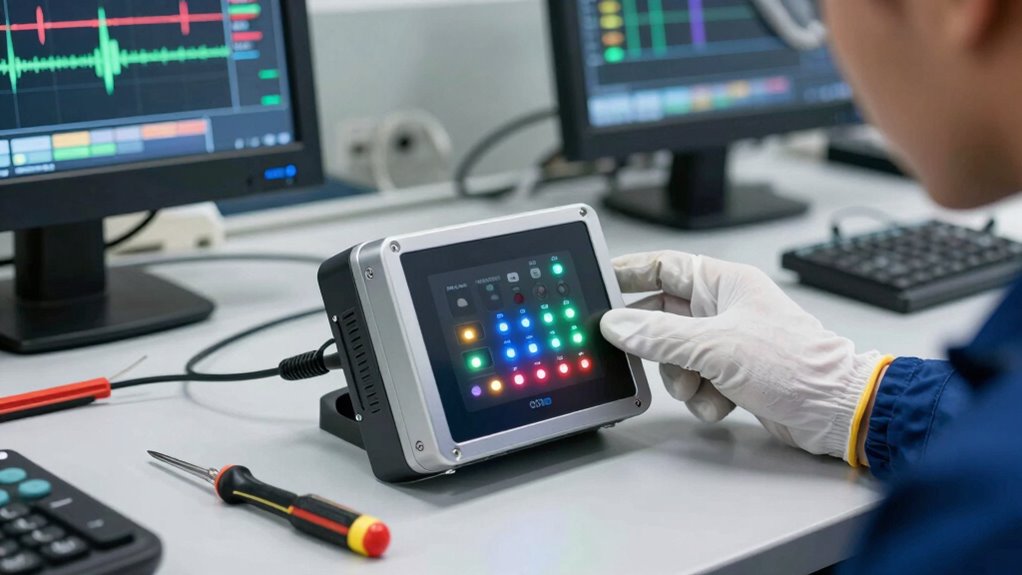

To keep your monitoring equipment reliable, perform routine inspections, check connections, and replace worn parts proactively. Use predictive analytics to spot issues early and schedule repairs before problems escalate. Maintain accurate records of maintenance and calibration to guarantee data integrity. Keep essential spare parts on hand for quick replacements and monitor equipment regularly for signs of wear or corrosion. Continuously applying these habits will boost reliability—keep going to learn more about optimizing your maintenance routines.
Key Takeaways
- Conduct routine inspections to identify early signs of wear, corrosion, or loose connections.
- Follow a strict calibration schedule to ensure measurement accuracy and data integrity.
- Utilize predictive analytics to forecast potential failures and schedule proactive maintenance.
- Maintain detailed documentation of maintenance activities, calibrations, and spare part usage for informed planning.
- Keep essential spare parts stocked and review inventory regularly to minimize downtime and repair delays.
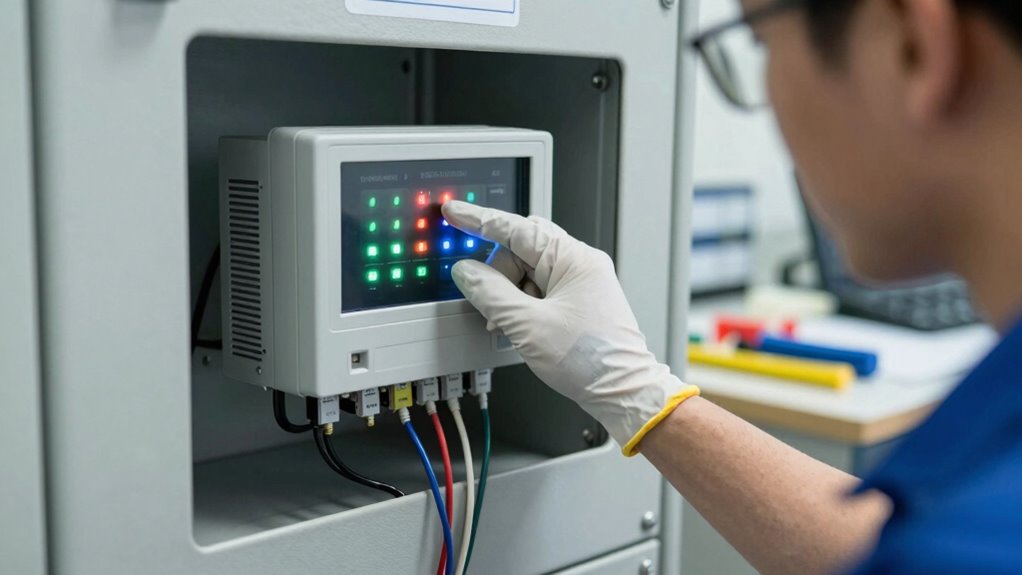
Regular maintenance is indispensable to guarantee your monitoring equipment remains reliable and accurate. When you stay proactive about upkeep, you prevent unexpected failures and extend the lifespan of your devices. One of the most effective ways to achieve this is by leveraging predictive analytics. This technology helps you identify potential issues before they escalate, allowing you to schedule repairs or replacements at ideal times. By analyzing data trends, predictive analytics can forecast when specific components might fail, giving you the chance to act preemptively. This not only minimizes downtime but also reduces costs associated with emergency repairs. Incorporating biodiversity considerations into your maintenance routines can also promote more eco-friendly practices, aligning operational efficiency with sustainability goals.
Having a well-organized inventory of spare parts is equally critical. When maintenance needs arise, waiting for parts can lead to unnecessary delays, affecting your operations. Keeping essential spare parts on hand ensures you can perform quick replacements and maintain continuous monitoring. It’s important to regularly review your inventory and update it based on your equipment’s usage patterns and historical failure data. This way, you’re always prepared for routine repairs or urgent fixes, avoiding prolonged downtime that can compromise your data accuracy. Additionally, understanding equipment lifespan can help you plan replacements more effectively and avoid sudden failures. Implementing a preventive maintenance schedule also contributes significantly to reducing unexpected breakdowns and extending device longevity.
Routine inspections are another foundation of dependable maintenance habits. You should schedule regular checks to verify that sensors, connections, and power supplies are functioning correctly. During these inspections, look out for signs of wear, corrosion, or loose connections that might cause inaccuracies in your readings. Addressing small issues early prevents them from developing into bigger problems that could jeopardize your monitoring precision. Incorporating predictive analytics into these inspections can further streamline the process, highlighting areas that require closer attention based on data insights. Additionally, performing these inspections with a systematic approach ensures consistency and helps identify patterns or recurring issues over time.
Proper calibration of your monitoring equipment is essential for ensuring data remains precise over time. Develop a calibration schedule aligned with manufacturer recommendations and your operational needs. Consistent calibration prevents drift in measurements, maintaining the integrity of your data collection. When calibration is performed correctly and regularly, it complements predictive analytics and spare parts management, creating a thorough maintenance approach. Furthermore, maintaining calibration records can support troubleshooting efforts and ensure compliance with industry standards. Regular calibration also plays a vital role in validating the accuracy of your equipment, especially when combined with other maintenance practices.
Finally, documentation and record-keeping are often overlooked but are critical for maintaining reliability. Keep detailed logs of maintenance activities, calibration dates, and spare parts used. This information helps you track patterns, predict future needs, and refine your maintenance schedules. By combining predictive analytics, well-stocked spare parts, regular inspections, calibration, and thorough documentation, you build a resilient maintenance routine that keeps your monitoring equipment reliable and precise. Staying disciplined with these habits ensures your data remains trustworthy, and your operations stay smooth.

Stethoscope Spare Parts Kit – Includes Eartips, Adult & Pediatric Diaphragms, Non-Chill Bell Sleeve, 4Pcs Super Soft Earbud Eartips Earpieces Replacement for Littmann Stethoscope Silicone Black.
- Compatibility: Fits Classic III, Cardiology III & IV
- Complete Spare Set: Includes 4 ear tips and diaphragms
- Comfortable Earbuds: Soft, universal 5mm and 6mm ear tips
As an affiliate, we earn on qualifying purchases.
As an affiliate, we earn on qualifying purchases.
Frequently Asked Questions
How Often Should Calibration Be Performed on Monitoring Equipment?
Calibration should be performed regularly, typically based on the manufacturer’s recommendations and your equipment’s usage, to maintain *ideal* calibration frequency. You should check equipment accuracy at least annually, but more frequent calibrations may be necessary if it’s used in critical or harsh environments. Consistent calibration ensures reliable measurements, reduces downtime, and extends your equipment’s lifespan, helping you catch issues early and maintain high-quality data for your monitoring processes.
What Are Common Signs of Equipment Malfunction?
Imagine your equipment whispering warnings through unusual vibrations. You notice irregular vibrations in vibration analysis, or a shift in wear pattern assessment, signaling potential issues. These signs indicate malfunction, like misaligned parts or bearing damage. Keep an eye on fluctuating readings, strange noises, or increased temperature. Catching these early helps prevent costly failures, ensuring your monitoring equipment stays reliable and performs effectively.
How Can Data Logs Improve Maintenance Routines?
Data logs enhance your maintenance routines by enabling predictive analytics, which helps you identify potential issues before failures occur. By analyzing historical data, you can forecast equipment needs and schedule timely interventions. Data visualization tools make it easier to interpret complex data, highlighting trends and anomalies. This proactive approach reduces downtime, extends equipment life, and optimizes maintenance efforts, ensuring your monitoring systems remain reliable and efficient.
What Training Is Recommended for Maintenance Personnel?
You should pursue relevant maintenance certifications to guarantee you have the necessary skills and knowledge. Additionally, training in safety protocols is essential to protect yourself and your team during maintenance tasks. Regularly updating your certifications and safety training keeps you current with industry standards, enhances your troubleshooting abilities, and promotes reliable equipment operation. Prioritizing these training areas helps maintain a safe, efficient, and well-informed maintenance routine.
Are There Specific Environmental Conditions That Affect Equipment Reliability?
You need to be aware that environmental factors like extreme temperatures, dust, and humidity control can *considerably* impact your equipment’s reliability. Picture moisture seeping into sensitive parts or dust clogging vents, causing malfunctions. To keep your equipment running smoothly, monitor these conditions closely, *guarantee* proper humidity control, and protect your gear from sudden temperature swings. Regularly inspecting the environment helps prevent issues before they lead to costly downtime.
Conclusion
So, next time you skip that routine check or ignore a small glitch, remember—you’re actually sabotaging your own reliability. Ironically, it’s those tiny, overlooked habits that turn monitoring equipment from dependable to disastrous. Don’t let complacency be the reason your system fails when it matters most. Stay vigilant, stay consistent, and keep your equipment in top shape—because neglecting maintenance is the one habit you definitely don’t want to get comfortable with.