
To keep algae from taking over your paths, start by regularly sweeping away leaves and debris to reduce moisture buildup. Assess your surface’s texture and repair any cracks first. Use a suitable algae remover or a vinegar solution, scrubbing with a stiff brush before rinsing thoroughly. Seal your surface afterward to create a barrier. Consistent maintenance, including trimming nearby vegetation and fixing drainage issues, will help keep algae at bay—learn how to master this routine today.
Key Takeaways
- Regularly sweep and remove debris to reduce nutrients and moisture for algae growth.
- Apply targeted algae cleaners or vinegar solutions, letting them sit before scrubbing and rinsing.
- Seal the surface after cleaning to create a protective barrier against future algae development.
- Improve drainage and fix uneven surfaces to prevent water retention and damp, shaded areas.
- Trim surrounding vegetation to reduce shade and promote sunlight, inhibiting algae growth.

Wet & Forget Outdoor Moss, Mold, Mildew, & Algae Stain Remover Multi-Surface Cleaner, Ready to Use, 64 Ounce
- High-capacity trigger sprayer: Quick application to small surfaces
- Removes moss, mold, mildew, algae: No scrubbing or rinsing needed
- Suitable for multiple surfaces: Porch steps, fountains, upholstery, and more
As an affiliate, we earn on qualifying purchases.
As an affiliate, we earn on qualifying purchases.
What Causes Algae Growth on Your Paths?
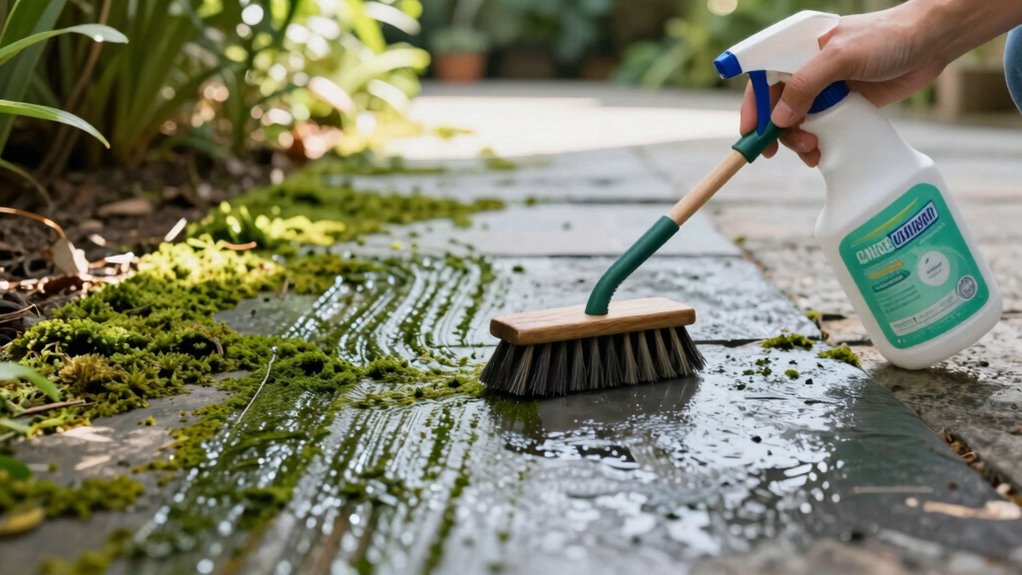
Algae tend to grow on your paths when conditions are just right, primarily in shaded, damp areas where sunlight is limited. These spots retain moisture longer, creating the perfect environment for algae to thrive. Organic debris such as leaves, twigs, and dirt also play a vital role, providing nutrients that encourage algae growth. When organic debris accumulates on your paths, it traps moisture and offers a food source for algae, speeding up their development. Additionally, poor drainage can increase moisture retention, further promoting algae growth. If you notice shaded areas with dampness and organic debris, you’re more likely to see algae forming. Regular cleaning to remove debris and improve drainage helps reduce moisture retention, making your paths less inviting for algae. Incorporating professional services for maintenance can also help ensure your pathways stay clear and algae-free. Furthermore, using preventive treatments can create a barrier that inhibits algae adherence and growth over time. Proper pathway design can also help minimize shaded, damp spots where algae are prone to develop, reducing the need for frequent maintenance. Understanding the environmental conditions that favor algae growth can help you target prevention efforts more effectively, especially by addressing moisture control techniques.
How to Assess and Prepare Your Surfaces for Cleaning
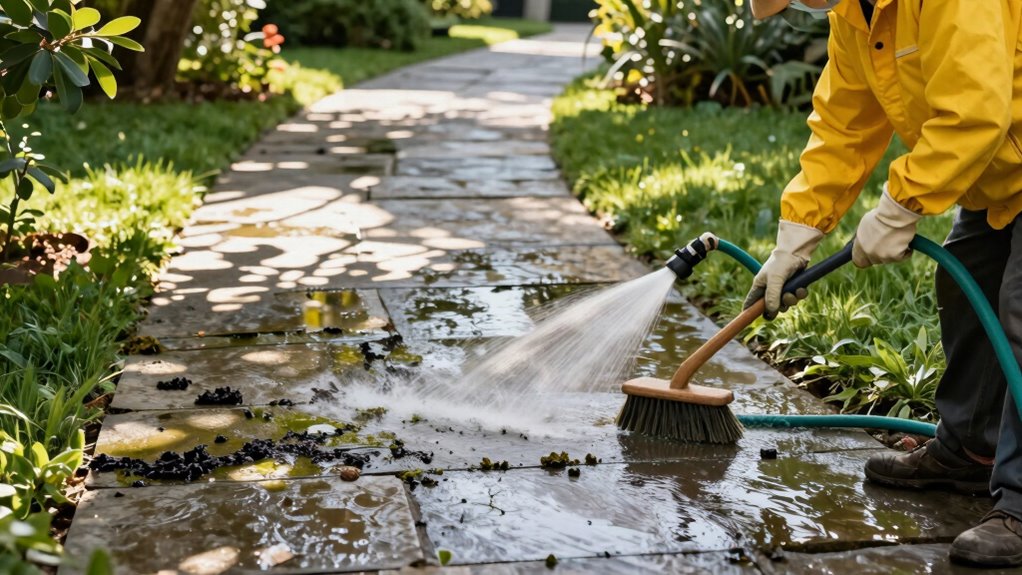
Before you start cleaning, it’s essential to assess the condition of your surfaces to guarantee effective results. Examine the surface texture—smooth, rough, or porous—as this impacts how algae adhere and how you’ll need to approach cleaning. Consider environmental factors like shade, moisture levels, and recent weather patterns, as these influence algae growth and cleaning priorities. Check for loose debris, moss, or dirt that could interfere with cleaning products or tools. Identify areas with visible algae buildup or staining to target your efforts effectively. Also, note any cracks or damage that may require repairs before cleaning. Proper assessment helps you choose the right cleaning method and prepares your surfaces for ideal algae removal, ensuring your paths stay clear and algae-free longer. Environmental conditions can significantly affect algae development and cleaning strategies. Additionally, understanding the surface material can guide you toward the most effective cleaning solutions and tools. Recognizing how glycolic acid benefits skin health emphasizes the importance of using appropriate cleaning agents that won’t harm delicate surfaces. Being aware of biofilm formation can also help you select cleaning techniques that prevent future algae buildup.
Choosing the Best Products and Tools for Algae Removal
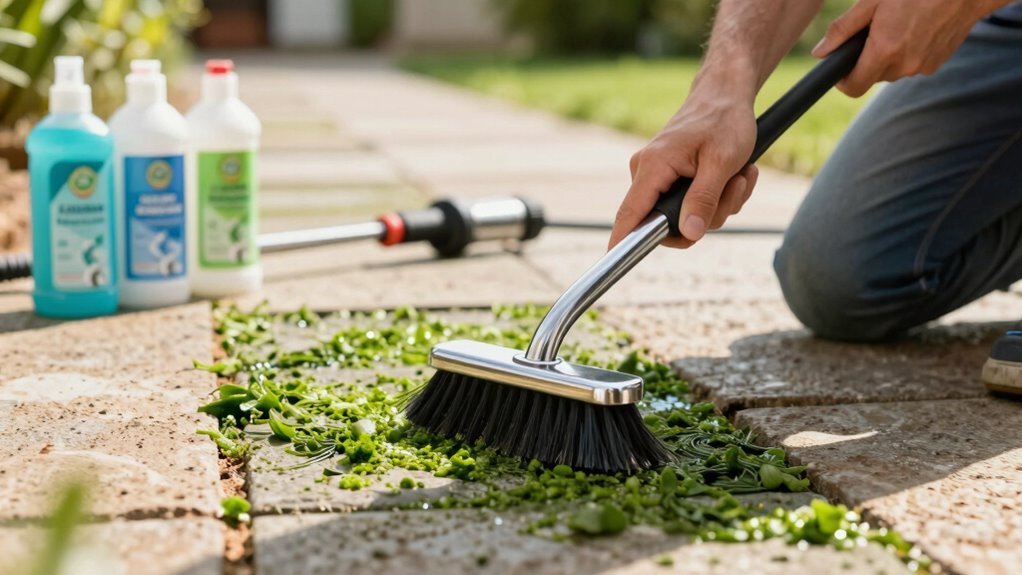
Selecting the right products and tools is essential for effectively removing algae from your paths. Biological factors, like the type of algae, influence the cleaning method you choose, so identify what’s growing there. Environmental conditions, such as moisture levels and sunlight exposure, also affect which products will work best. For stubborn algae, use a specialized algae remover or a diluted bleach solution, ensuring it’s suitable for your surface type. A stiff-bristled brush helps scrub away growth without damaging the surface. For lighter algae, eco-friendly cleansers or vinegar solutions may suffice. Always check product labels for safety and compatibility with your path material. Additionally, understanding the growth patterns of algae can help you develop a more targeted cleaning plan. Recognizing Biological factors and how they interact with environmental conditions allows for more effective and lasting results. Regular maintenance and proper surface preparation can further prevent algae from taking hold again, saving time and effort in the long run. By considering biological factors and environmental conditions, you’ll select tools and products that clean effectively and prevent rapid regrowth.
Step-by-Step Routine to Remove and Prevent Algae
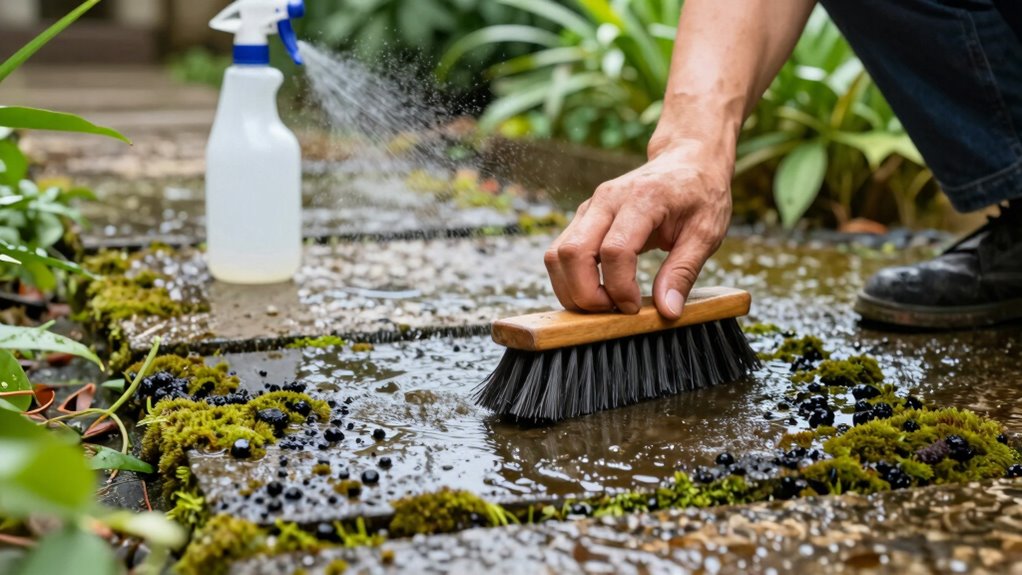
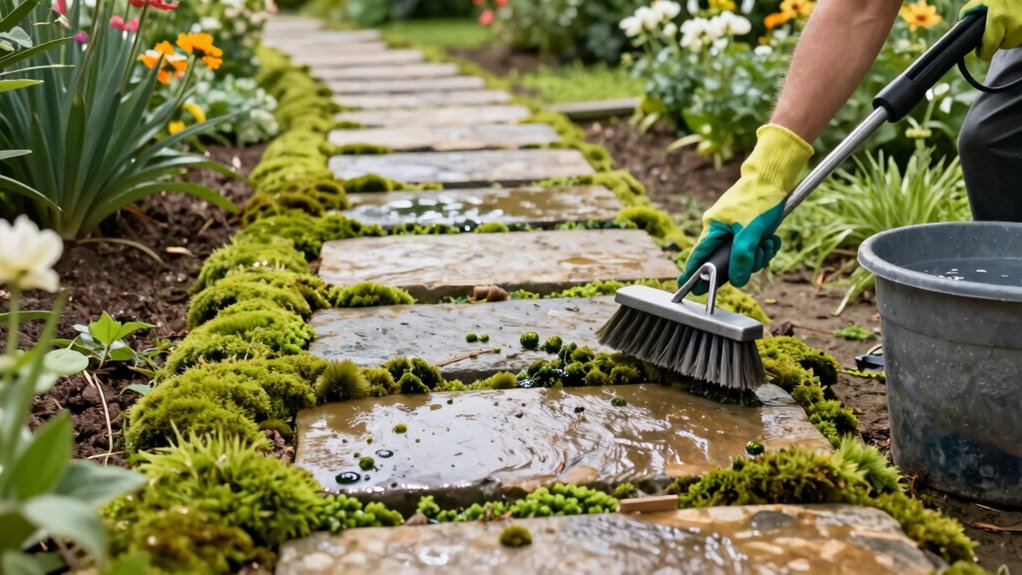
Start by gathering your chosen cleaning products and tools based on the algae type and surface material. Begin by sweeping away loose debris to expose affected areas. Apply a targeted algae remover or a mixture of water and vinegar directly onto the surface, letting it sit for 10-15 minutes. Scrub the area with a stiff brush to lift algae from the surface. Rinse thoroughly with water. To prevent future growth, consider surface sealing after cleaning, which creates a protective barrier against moisture and algae buildup. Regular cleaning combined with surface sealing is key to algae prevention. Incorporating proper cleaning techniques ensures more effective algae removal and long-lasting results. Maintaining surface integrity through periodic inspections and cleaning helps prevent algae from re-establishing. Maintain this routine periodically, especially in shaded or damp spots, to keep your paths clear and algae-free over time. Using preventative measures like surface sealing can significantly reduce the chances of algae returning quickly.
How to Maintain Your Paths and Keep Algae Away Year-Round
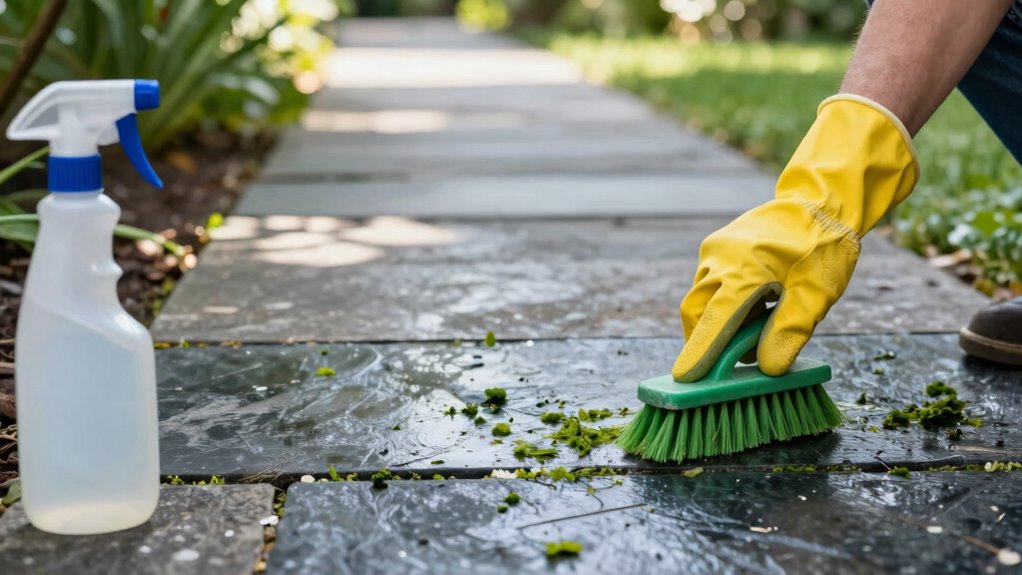
Maintaining your paths to stay algae-free year-round requires consistent efforts and proactive measures. Regular pathway maintenance is essential to prevent algae buildup and ensure safety. Keep your paths clear of debris, leaves, and dirt, which can retain moisture and promote algae growth. Improve drainage by fixing uneven surfaces and adding gravel or sand where needed, reducing standing water. Apply algae prevention treatments, like specialized sealers or natural solutions such as vinegar or baking soda, to inhibit growth. Trim nearby vegetation to reduce shade, as algae thrive in damp, shaded areas. Regular inspections allow you to catch early signs of algae before they spread. Additionally, understanding air-based cleaning techniques can help you effectively remove surface algae without damaging your pathways. Incorporating proper drainage methods is also crucial to prevent water accumulation that encourages algae development. Consistent maintenance and moisture control are key to keeping your paths clean, safe, and algae-free all year.
Frequently Asked Questions
How Often Should I Clean My Paths to Prevent Algae Growth?
You should clean your paths every 4 to 6 weeks to effectively prevent algae growth. Regular path maintenance is essential for algae prevention, especially in shaded or damp areas. Use a scrub brush and a mixture of water and mild detergent or a specialized algae cleaner. Consistent cleaning keeps algae at bay, preserves the appearance of your paths, and reduces the risk of slipping or damage caused by algae buildup.
Can Weather Changes Affect the Effectiveness of My Cleaning Routine?
Weather changes definitely impact your cleaning routine’s effectiveness. Seasonal moisture from rain and humidity can promote algae growth, making cleaning more frequent necessary. Sunlight exposure helps dry surfaces, reducing algae buildup, but cloudy or rainy periods can hinder this. To keep algae at bay, adjust your cleaning schedule seasonally, cleaning more often during damp, shady months, and verify your paths dry thoroughly after rain to prevent future growth.
Are Natural or Homemade Solutions Better Than Commercial Products?
Natural or homemade solutions are like a revitalizing breeze—they can be just as effective as commercial products. You’re often better off with eco-friendly options and DIY cleaning methods, which are gentle on the environment and your pathways. They usually contain simple ingredients like vinegar, baking soda, or lemon juice, making them safer and more sustainable choices for keeping algae at bay without harsh chemicals.
What Safety Precautions Should I Take During Cleaning?
You should wear protective gear like gloves, goggles, and a mask to prevent skin and eye irritation from cleaning chemicals. Make sure good ventilation by opening windows and doors to disperse fumes and avoid inhaling harmful vapors. Always read product labels for specific safety instructions, and consider using eco-friendly, non-toxic solutions when possible. Taking these precautions keeps you safe while effectively maintaining your paths and preventing algae buildup.
How Can I Restore My Paths if Algae Has Caused Permanent Damage?
Imagine a once vibrant path now marred by algae, its surface etched with damage. To restore it, you need effective path repair combined with thorough algae removal. Start by evaluating the damage, then remove algae using a stiff brush and eco-friendly cleaner. Fill cracks with suitable patching material, and seal the surface to prevent future growth. With patience, your path can regain its former beauty, inviting you to walk without worry.
Conclusion
By staying vigilant and following this routine, you’ll turn your paths into a fortress against algae invasion. Think of it as tending a garden—you’ll nurture a clean, vibrant walkway that gleams under the sun, free from stubborn green invaders. With consistent care, your outdoor paths will remain as inviting as a well-kept secret, welcoming you home with every step. Keep up the routine, and watch your paths stay clear, bright, and algae-free all year long.