To fix flower drop in your greenhouse peppers, ensure proper pollination by creating ideal conditions like managing temperature (70-85°F) and humidity (50-70%), and encouraging natural pollinators with flowering plants. You can also manually pollinate using a brush or cotton swab to transfer pollen. Maintaining good airflow and pest control helps flowers stay healthy. If issues persist, exploring additional tips and techniques can help you boost fruit set and improve yields.

Get garden gear delivered free — and shop member deals
- Fast, free delivery on millions of items
- Access to Prime Big Deal Days deals on October 6–7
- Prime Video, Amazon Music and more included
Key Takeaways
- Ensure optimal environmental conditions, such as temperature (70-85°F) and humidity (50-70%), to promote healthy pollination.
- Attract natural pollinators by planting flowering plants and creating a habitat within or near the greenhouse.
- Use manual pollination techniques like brushing or cotton swabs during peak flowering to supplement natural pollination.
- Maintain good airflow, pest control, and plant health to prevent flower drop caused by environmental stress or pests.
- Seek expert advice if flowers continue dropping despite optimal conditions or if pollination success remains low.
greenhouse pepper pollination tools
As an affiliate, we earn on qualifying purchases.
As an affiliate, we earn on qualifying purchases.
Why Do Greenhouse Pepper Flowers Drop and How Pollination Helps

Greenhouse pepper flowers often drop before they develop into fruit, and understanding why this happens is key to improving your harvest. One common reason for flower drop is inadequate pollination. Without proper pollination methods, like hand pollination or encouraging natural pollinators, flowers fail to produce fruit. Poor pollination can result from low humidity, temperature fluctuations, or lack of movement to transfer pollen. When flowers aren’t properly pollinated, the plant recognizes the lack of fertilization and sheds the flower to conserve energy. Pollination efficiency is crucial in ensuring that flowers stay on the plant longer and develop into healthy fruits. To prevent this, guarantee good airflow, ideal temperature, and consider manually transferring pollen using a small brush or vibrating tool. Effective pollination helps flowers stay on the plant longer and increases your chances of a healthy, fruitful harvest.
How to Recognize Signs of Poor Pollination in Your Peppers
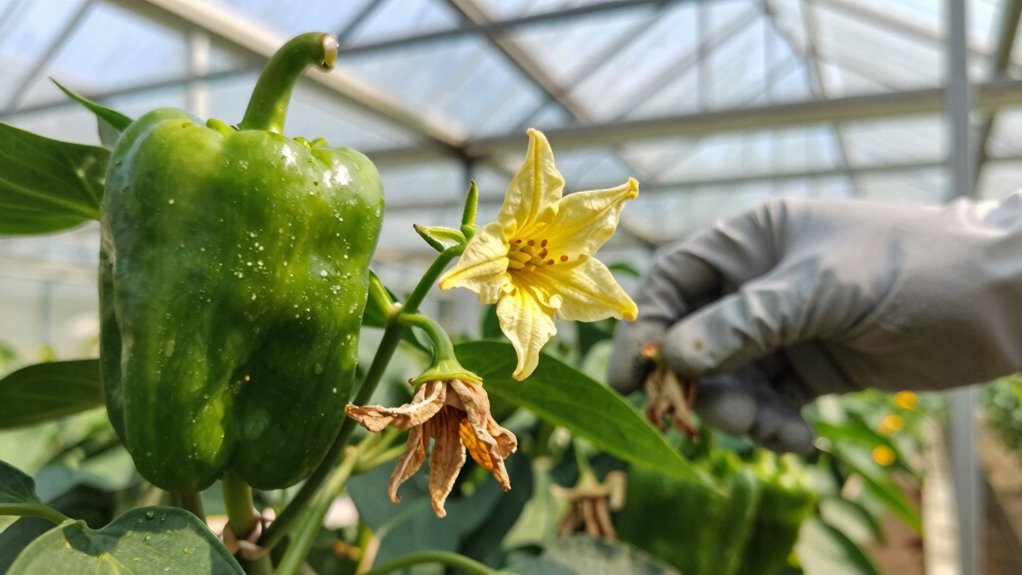
When flowers drop prematurely, it often signals issues with pollination. You might notice flower discoloration, such as dull or faded petals, indicating poor pollination. Additionally, fruit drop is a clear sign that pollination didn’t occur properly, leading to undeveloped or falling-off peppers. To better understand this, consider the following:
| Sign | What It Means |
|---|---|
| Flower discoloration | Poor pollination or environmental stress |
| Fruit drop | Insufficient pollination or nutrient issues |
| Small or misshapen peppers | Pollination failure or pest damage |
Furthermore, environmental factors like temperature fluctuations can also adversely affect pollination efficiency and contribute to flower drop.
Simple Techniques to Boost Pollination in Your Greenhouse
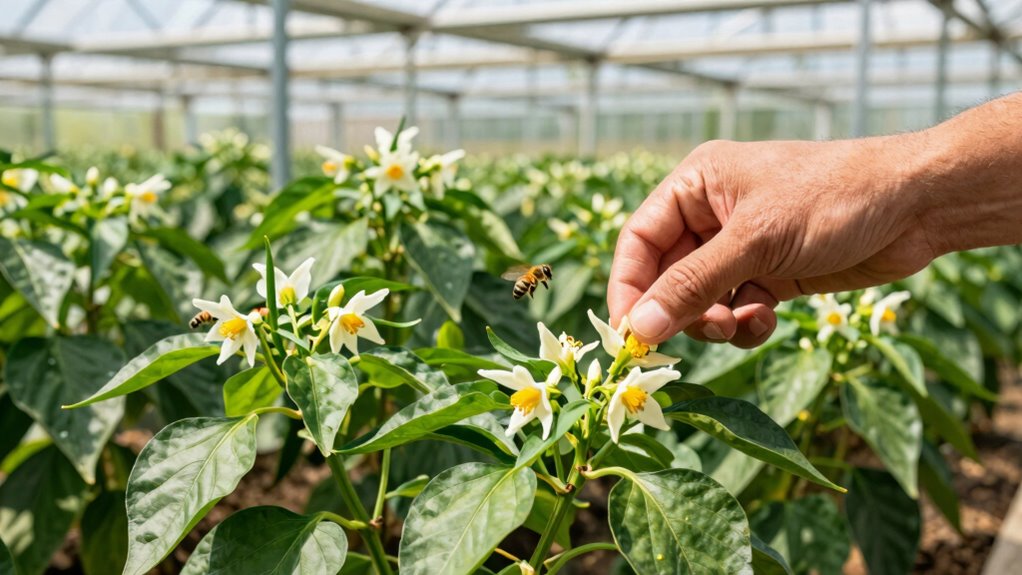
To improve pollination in your greenhouse, start by making flowers more visible to pollinators. You can also attract natural pollinators like bees or consider manually transferring pollen between flowers. These simple actions can notably increase your pepper yields. Additionally, implementing energy-efficient cloud servers can help monitor and optimize your greenhouse conditions effectively.
Enhance Flower Visibility
Boosting flower visibility is essential for increasing pollination rates in your greenhouse. You can do this by enhancing features that attract pollinators, such as flower color and blossom fragrance. Bright, contrasting colors like reds and yellows catch the eye quickly, encouraging pollinators to visit. Additionally, a strong blossom fragrance acts as an inviting signal, guiding pollinators directly to your flowers. Use the table below to plan your enhancements:
| Flower Characteristic | Action |
|---|---|
| Flower color | Brighten or contrast colors |
| Blossom fragrance | Increase scent intensity |
| Flower placement | Ensure flowers are easily visible from different angles |
Furthermore, understanding how to pollination strategies can help optimize your efforts and improve flower retention.
Use Natural Pollinators
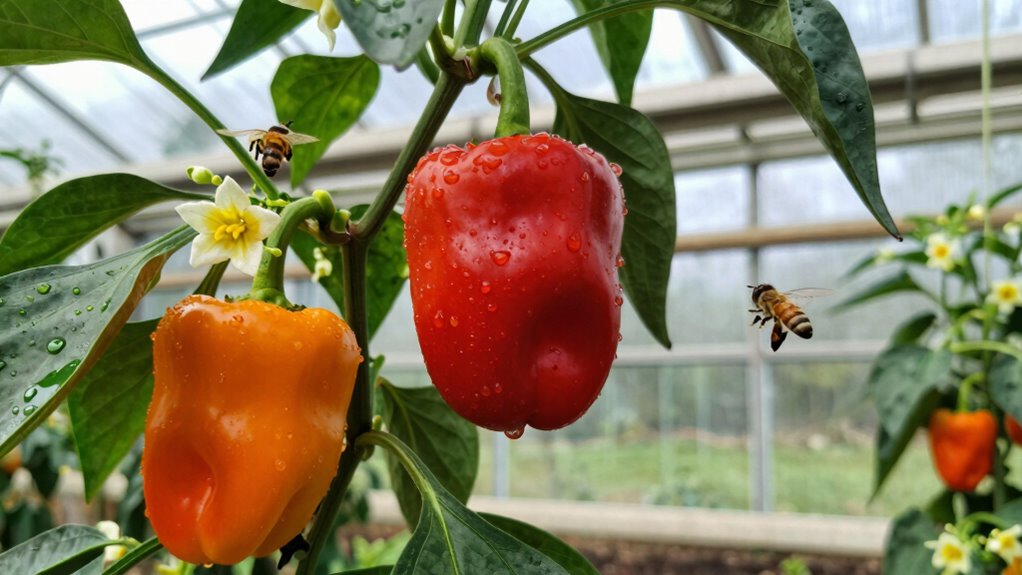
Using natural pollinators is one of the most effective ways to improve pollination in your greenhouse without relying on artificial methods. By understanding pollination ecology, you can attract beneficial insects like bees, butterflies, and other natural predators that facilitate pollination. These creatures naturally transfer pollen as they forage for nectar and pollen, increasing fruit set and yield. Creating a habitat that supports their presence—such as planting flowering plants nearby or providing shelter—encourages their activity. Enhancing biodiversity encourages natural predators and pollinators to thrive, which helps control pest populations and reduces the need for chemical interventions. This eco-friendly approach fosters a balanced environment where pollinators thrive, boosting pollination efficiency naturally. Embracing these methods aligns with sustainable practices and enhances your greenhouse’s productivity.
Manually Transfer Pollen
While attracting natural pollinators is highly effective, there are times when manual intervention can give your greenhouse a helpful boost. By manually transferring pollen, you can better control pollination timing, especially when natural insects are scarce. To do this, observe the flower anatomy—identify the stamen and pistil—and use a small brush or cotton swab to gently collect pollen from the stamen. Then, carefully brush it onto the pistil of the same or another flower. This process ensures pollination occurs at the ideal time, preventing flowers from dropping without producing fruit. Manual pollination is especially useful during early morning or late evening when natural pollinator activity is low. With patience and attention to flower structure, you can improve fruit set and overall yield in your greenhouse. Understanding flower anatomy helps ensure successful manual pollination and better crop results.
How to Manually Pollinate Greenhouse Peppers for Better Fruit Set
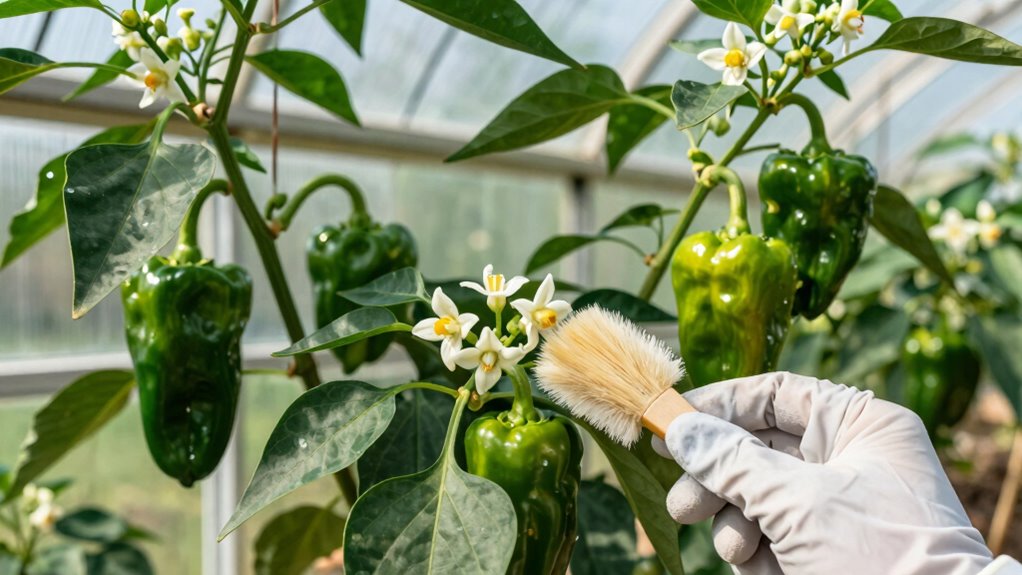
To improve fruit set, you’ll need the right tools like small paintbrushes or electric toothbrushes for manual pollination. Timing is essential, so aim to pollinate when flowers are fully open and receptive. Use gentle, consistent motions to transfer pollen effectively and boost your pepper yield. Incorporating smart home automation techniques can help remind you of the optimal pollination times to maximize success.
Tools for Manual Pollination
Manual pollination of greenhouse peppers requires the right tools to guarantee effective transfer of pollen and maximize fruit set. Using proper pollination tools makes manual techniques more efficient and consistent. A small, soft brush or paintbrush works well to collect pollen from the male parts of the flower and transfer it to the female stigma. Some growers prefer a clean, lightweight cotton swab for precise pollination. An electric toothbrush can also be effective, vibrating gently to release pollen. Handheld magnifying glasses help you see the flowers clearly. Always ensure your tools are clean to prevent disease transmission. Proper tool maintenance ensures your pollination efforts remain effective and reduces the risk of spreading pathogens. With these pollination tools, you can confidently perform manual techniques that improve fruit set and overall yield in your greenhouse peppers.
Timing and Technique Tips
Timing is crucial when manually pollinating greenhouse peppers to guarantee the best fruit set. You should target flowers when they’re fully open and oriented upward, ensuring pollen transfer is most effective. Morning is ideal, as flowers are usually at their peak and humidity levels are moderate, which helps pollen adhere. Maintain humidity control by keeping the environment slightly humid but not overly damp, since excessive moisture can hinder pollination. Use a gentle brush or your fingertip to transfer pollen from the anther to the stigma, paying attention to flower orientation to maximize contact. Avoid pollinating during extreme heat or low humidity, as these conditions reduce pollen viability. Consistent timing and proper technique increase your chances of successful fruit development. Additionally, ensuring the proper environment can significantly improve pollination success rates and fruit quality.
Creating the Perfect Conditions for Effective Pepper Pollination
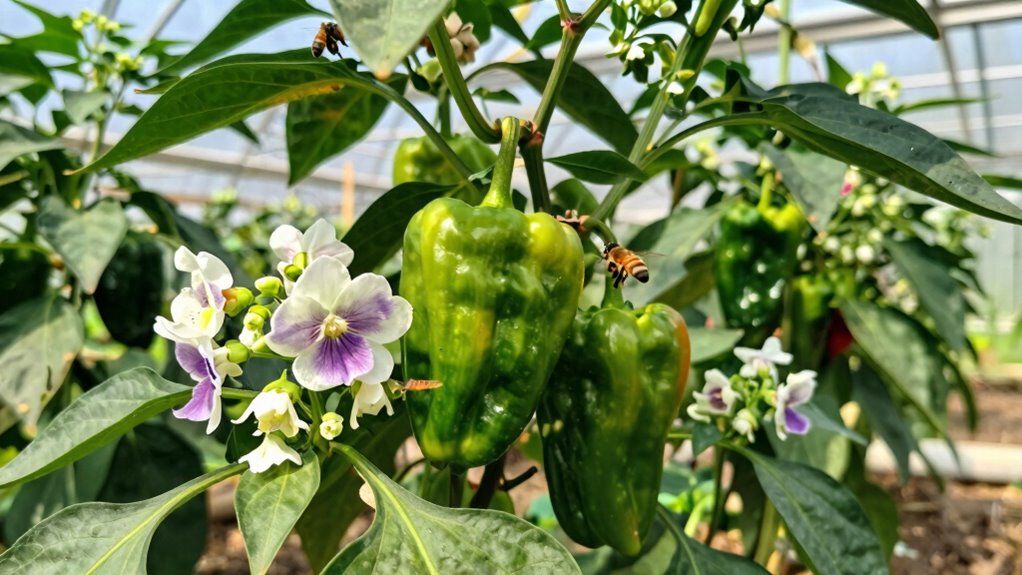
Creating the perfect conditions for effective pepper pollination involves carefully managing environmental factors to encourage natural pollination processes. Focus on maintaining high flower quality by ensuring flowers are healthy and open fully, which makes pollination easier. Proper temperature and humidity levels are essential; keep temperatures around 70-85°F and humidity between 50-70% to support pollen viability. Good airflow prevents stagnation and reduces disease risk. Pest control is critical—pests can damage flowers or spread pathogens, reducing pollination success. Regularly inspect plants and use integrated pest management strategies to keep pests under control. Additionally, avoid stressing plants, as healthy, stress-free peppers produce better flowers, leading to more successful pollination and higher yields. Ensuring optimal pollination conditions can significantly improve fruit set and overall plant productivity.
Troubleshooting Pollination Problems and When to Get Expert Help
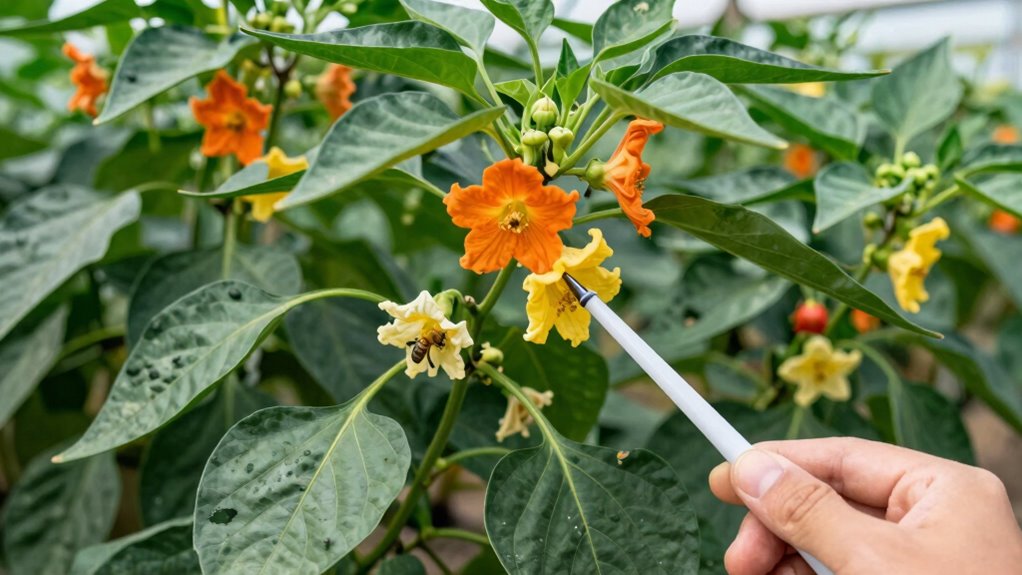
When you notice that your greenhouse peppers aren’t setting fruit despite ideal conditions, it’s time to troubleshoot the issue. Pollination challenges often cause flowers to drop or fail to develop into fruit. First, check if there’s enough airflow and proper temperature for pollination to occur naturally. If flowers continue to drop despite these factors, you might be facing a pollination problem beyond your control. In such cases, expert intervention can make a difference. An experienced grower or horticulturist can recommend manual pollination techniques or introduce beneficial insects to improve pollination rates. Don’t ignore persistent problems—addressing pollination challenges early ensures healthy fruit development and a successful harvest. When in doubt, consulting an expert can save you time and optimize your greenhouse’s pollination process.
Frequently Asked Questions
Can Outdoor Pollination Techniques Be Used in Greenhouses?
Yes, you can adapt outdoor pollination techniques for greenhouses. Focus on timing your pollination efforts to match flower blooming periods and use pest control strategies to protect pollinators like bees. Hand pollination can also supplement natural methods when needed. By carefully managing pollination timing and pest control, you’ll improve fruit set and overall yields in your greenhouse environment, ensuring healthy, productive plants.
What Are the Best Natural Pollinators for Greenhouse Peppers?
You should consider using natural pollinators like bumblebees or native bee species, as they promote insect diversity and improve pollination timing for your greenhouse peppers. These insects are highly effective at transferring pollen, ensuring better fruit set. Introducing them at the right time helps optimize pollination, reduces the need for manual intervention, and creates a healthier, more sustainable environment for your plants.
How Does Humidity Affect Pepper Pollination Success?
Humidities highs hinder humidity levels, harming pollination efficiency. When the air’s too moist, pollen clumps and struggles to transfer effectively, leading to poor fruit formation. Conversely, low humidity can dry out pollen, reducing its essentiality. To optimize pollination success, you should maintain balanced humidity levels—around 50-70%. This careful control creates a conducive climate, encouraging healthy pollination and promising pepper production.
Are There Eco-Friendly Methods to Improve Pollination?
Yes, you can improve pollination using eco-friendly solutions and sustainable practices. Try introducing native pollinators like bees or installing bee hotels to encourage natural pollination. You can also gently shake plants or use a soft brush to transfer pollen, reducing the need for chemical aids. These methods support eco-friendly practices, promote biodiversity, and boost your pepper yield without harming the environment.
How Long Does Manual Pollination Take per Plant?
Manual pollination typically takes about 1 to 3 minutes per plant, depending on the number of flowers and your experience. You should focus on efficient pollination timing, usually during the morning when flowers are most receptive. Use manual pollination tools like a small brush or cotton swab to transfer pollen gently. This method guarantees better fruit set, especially in greenhouse environments, and can be done quickly once you get the hang of it.
Conclusion
Remember, a little effort goes a long way in keeping your greenhouse peppers healthy and productive. By recognizing pollination issues early and taking simple steps to improve them, you’ll enjoy a bountiful harvest. Don’t forget the saying, “A stitch in time saves nine”—address problems now before they worsen. With patience and the right techniques, you’ll turn those dropping flowers into thriving peppers, ensuring a fruitful season ahead.
Fall Picks
fall essentials
As an affiliate, we earn on qualifying purchases.