To prevent bitter cucumbers in your greenhouse, use proper vine training techniques like supporting your plants on trellises and regularly pruning side shoots and dead leaves. This reduces stress, improves airflow, and promotes healthy fruit development. Avoid overtraining or stressing plants, and keep greenhouse conditions stable with proper humidity, temperature, and pest control. Maintaining an open, well-maintained vine promotes sweet cucumbers—discover more tips to perfect your training approach.

Get garden gear delivered free with Prime
- Fast, free delivery on millions of items
- Prime Video, Amazon Music and more included
- Member-only deals all year
Key Takeaways
- Use sturdy trellises and support systems to guide vines vertically, reducing stress and preventing bitterness.
- Regularly prune side shoots and dead leaves to improve airflow and minimize plant stress.
- Maintain consistent greenhouse temperature, humidity, and ventilation to promote healthy growth and flavor.
- Incorporate rest periods and avoid overtraining to help vines recover and prevent bitterness.
- Ensure balanced fertilization with proper nitrogen levels to support fruit development and prevent flavor issues.
greenhouse cucumber trellis support
As an affiliate, we earn on qualifying purchases.
As an affiliate, we earn on qualifying purchases.
Why Managing Vine Stress Prevents Bitter Cucumbers
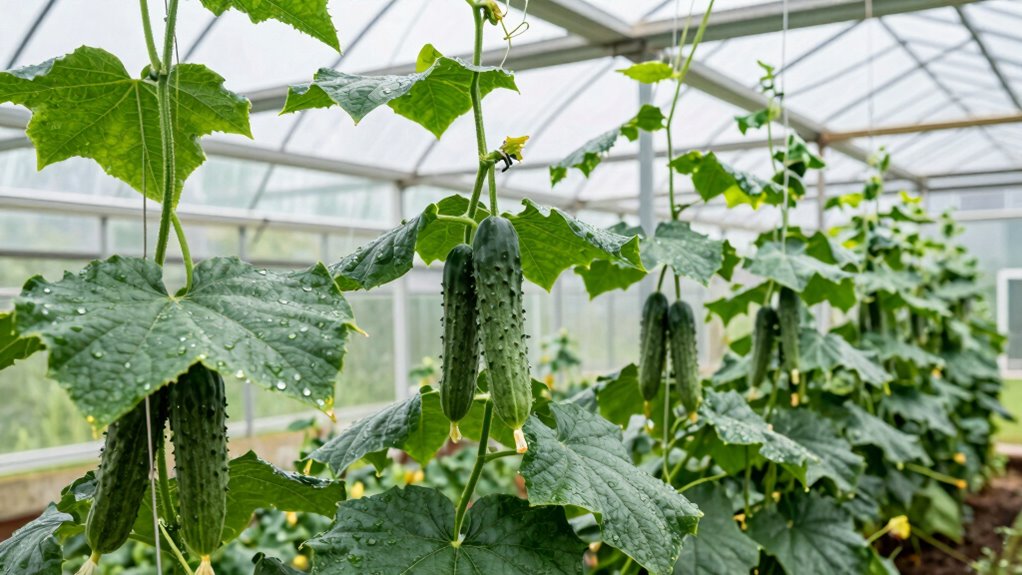
Vine stress is a primary factor that causes cucumbers to develop a bitter taste. When your vines experience stress, they produce more cucurbitacin, the compound responsible for bitterness. To prevent this, focus on proper vine pruning; removing excess growth reduces strain on the plant and encourages healthy development. Additionally, effective nutrient management is crucial—ensure your plants receive balanced fertilization to avoid deficiencies or excesses that can stress the vines. Overwatering or underwatering can also lead to stress, so monitor moisture levels carefully. Proper watering techniques are essential for maintaining vine health and preventing bitterness. By maintaining ideal vine health through strategic pruning and precise nutrient management, you help your cucumbers grow without bitterness. Keeping stress levels low supports better flavor development and overall plant vitality.
How Greenhouse Conditions Impact Cucumber Flavor
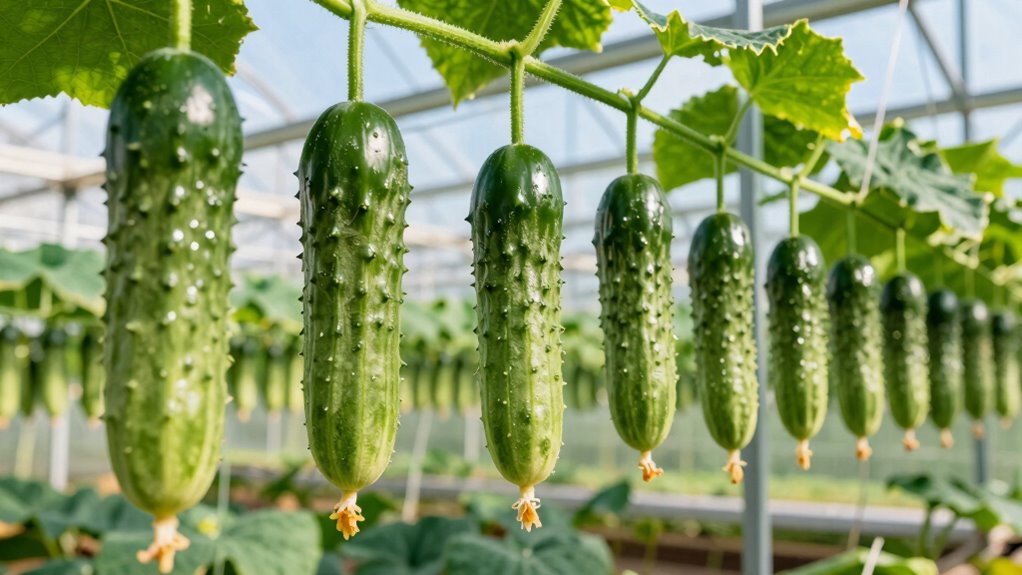
Greenhouse conditions play a essential role in shaping the flavor of your cucumbers. High-quality compost ensures your plants receive fundamental nutrients, promoting vibrant growth and a balanced taste. Poor compost quality can lead to nutrient imbalances, resulting in bitter or bland cucumbers. Additionally, pest control is imperative; unchecked pests can stress plants, causing flavor deterioration and deformities. Maintaining a clean greenhouse environment minimizes pest problems, allowing cucumbers to develop their natural sweetness. Temperature and humidity levels also influence flavor; stable, ideal conditions prevent stress that can lead to off-flavors. By focusing on compost quality and effective pest control, you create a stable environment that supports the development of flavorful, high-quality cucumbers. Proper management of these factors is key to achieving the best taste from your greenhouse-grown crop. Air quality management also plays a crucial role in maintaining healthy, flavorful plants.
Key Principles of Effective Vine Training
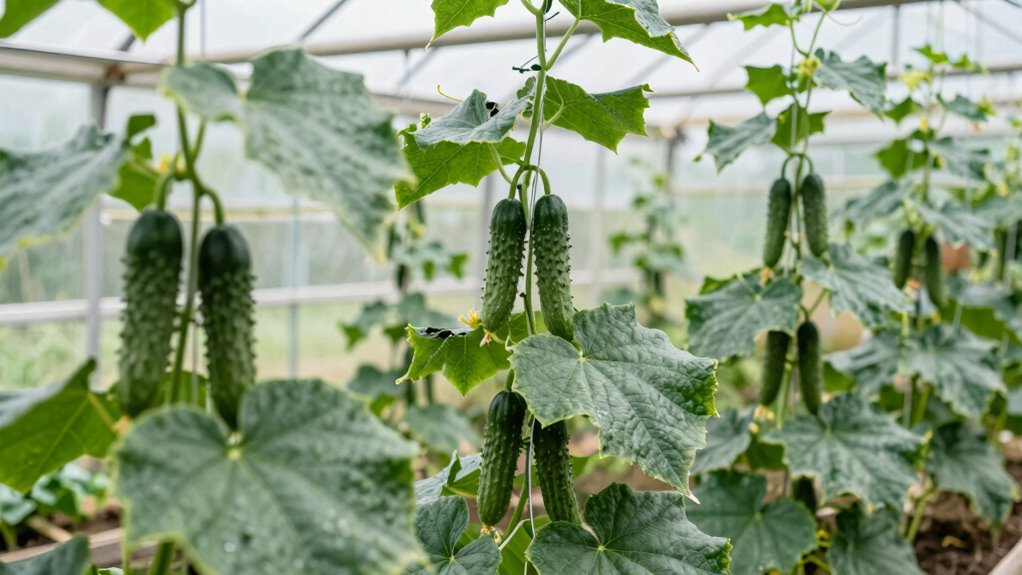
Effective vine training is essential for maximizing cucumber yield and quality. To achieve this, focus on consistent vine pruning to remove unnecessary growth and promote airflow. Proper vine pruning encourages the plant to direct energy toward fruit development rather than excessive foliage. Leaf trimming is equally important; carefully trim excess or shaded leaves to improve light penetration and reduce humidity around the fruit. Keep the vine structure manageable by guiding the main stem and lateral branches along trellises or support systems. This not only prevents overcrowding but also minimizes the risk of diseases. Remember, the key principles are maintaining an open, well-ventilated canopy and supporting healthy vine growth through timely pruning and leaf trimming, ensuring your cucumbers stay healthy and free from bitterness. Additionally, utilizing energy-efficient cloud solutions can help optimize greenhouse environmental controls and data management, promoting sustainable cultivation practices.
Step-by-Step Guide to Training Cucumber Vines
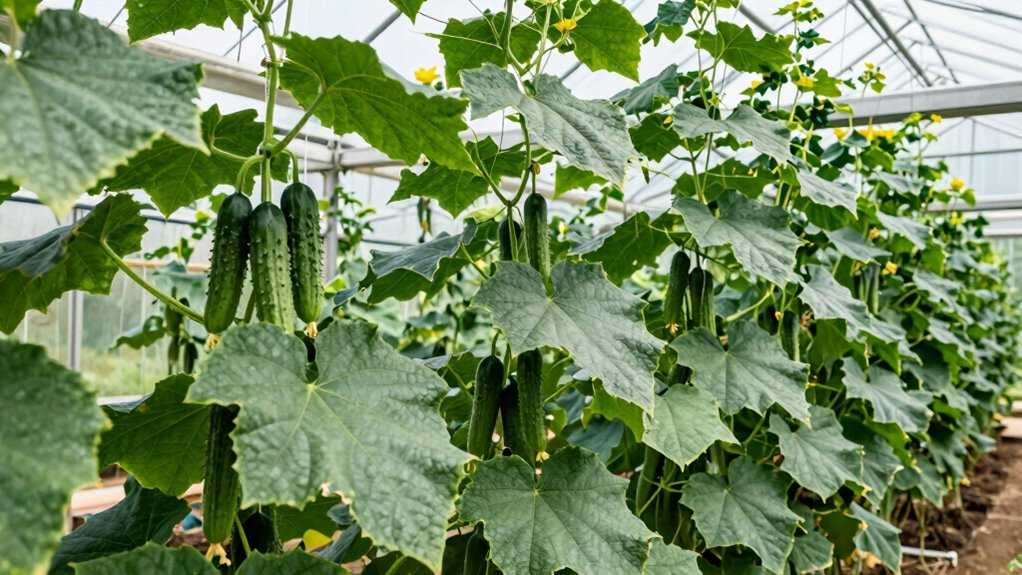
To successfully train your cucumber vines, start by selecting a sturdy support system like a trellis or stakes that can handle the plant’s growth. Begin by gently guiding the vine onto the support, pinching off any side shoots to promote vertical growth. Regularly perform plant pruning to remove dead or crowded leaves, ensuring good airflow and preventing disease. Check soil nutrition often; a balanced fertilizer supports healthy development. Additionally, monitoring the Gold IRA Markets can provide insights into alternative investment opportunities that can diversify your financial portfolio.
Supporting and Securing Your Cucumber Plants
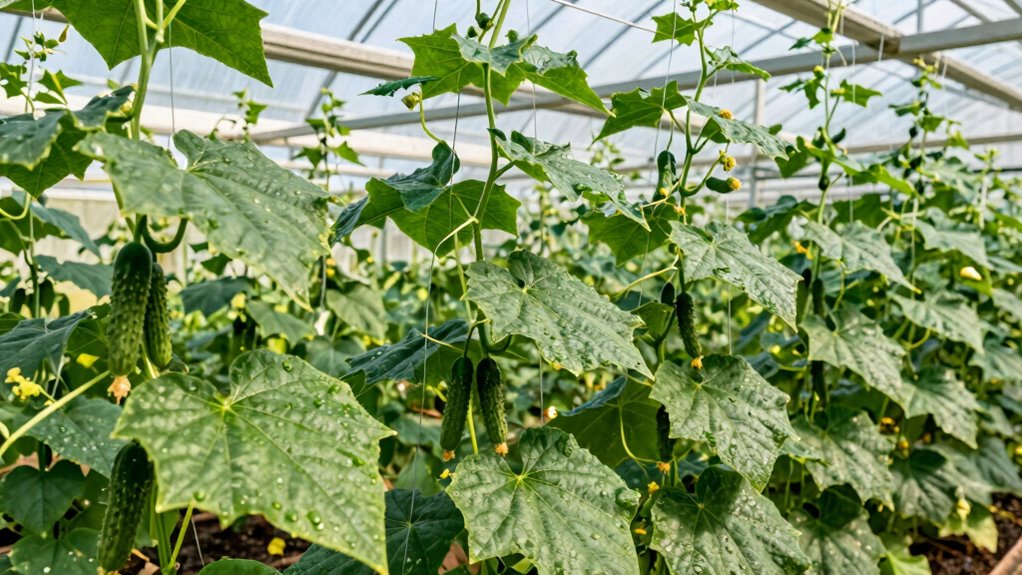
Supporting and securing your cucumber plants is essential for healthy growth and high yields. Use proper pruning techniques to remove excess foliage and improve airflow, which reduces disease risk. Tie the main vine gently to trellises or stakes to keep plants upright and prevent breakage. Secure the plants with soft ties to avoid damaging stems. Incorporate soil amendments like compost or organic matter to boost plant strength and root development, ensuring they can support their weight as they grow. Regularly check ties and supports, adjusting them as plants mature. Proper support minimizes fruit contact with soil, reducing rot and bitterness. Additionally, using support structures like trellises or stakes can help maximize space and improve light exposure for your cucumber plants. By combining effective pruning with sturdy support systems and enriching your soil, you create an ideal environment for vigorous, healthy cucumber plants.
Adjusting Training Techniques as Plants Grow
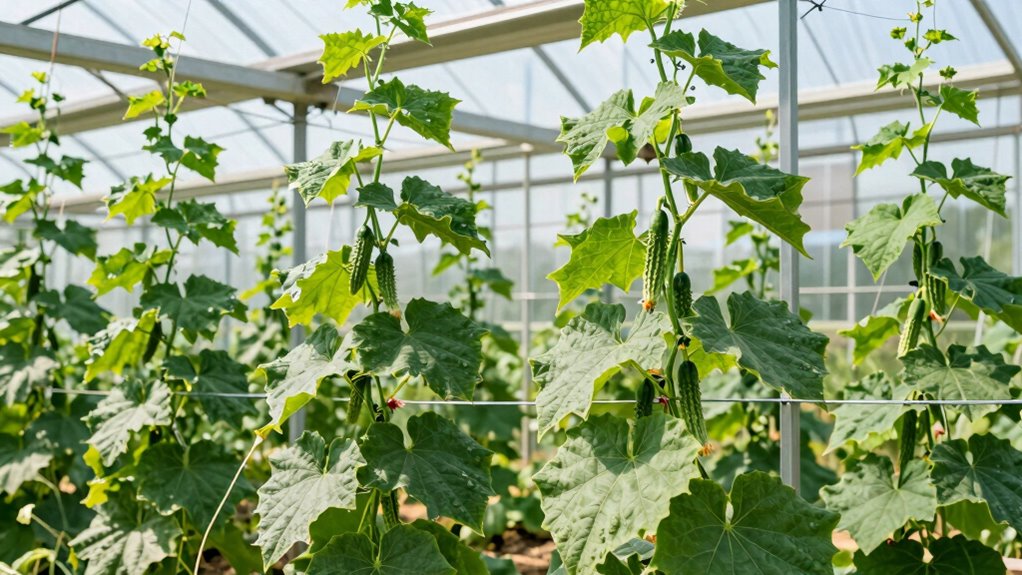
As cucumber plants grow taller and produce more fruit, their training needs evolve. You’ll need to adjust your pruning techniques to keep the vine manageable and encourage healthy growth. Remove any dead or crossing leaves to improve airflow and prevent disease. As the vine supports heavier fruit, reinforce your vine support system to prevent sagging or breakage. Tie new growth gently to your trellis or supports, guaranteeing the plant remains upright without constricting it. Regularly check and prune side shoots to focus energy on the main vine and fruit. This ongoing adjustment helps maintain ideal light exposure and airflow, which are vital for preventing bitterness. Additionally, understanding the horsepower of electric dirt bikes can be useful if you’re considering mechanized solutions for greenhouse tasks. Adapting your training method as plants grow ensures a healthy, productive cucumber crop.
Common Mistakes That Lead to Bitter Fruit
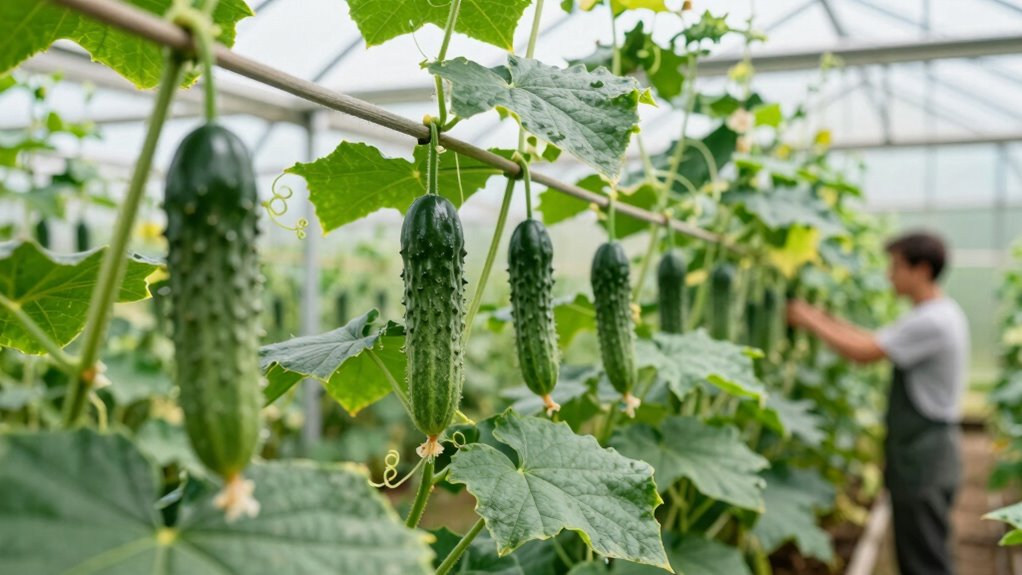
One common mistake is overwatering, which stresses the plants and can cause bitterness. Poor pollination also leads to uneven fruit quality and flavor issues. Additionally, using too much nitrogen encourages excessive growth, increasing the likelihood of bitter cucumbers. Using the correct training method can help prevent these issues and promote healthy, flavorful fruit.
Overwatering Causes Stress
Overwatering your cucumber plants can cause significant stress, leading to undesirable changes in fruit quality. Too much water can drown roots, reduce oxygen flow, and hinder nutrient absorption. This stress often results in bitter cucumbers. To avoid overwatering, consider these tips:
- Use well-draining soil or substrates, especially in hydroponic systems, to prevent waterlogging.
- Monitor soil moisture regularly; only water when the top inch feels dry.
- Maintain proper pest management, as overwatered plants are more vulnerable to pests that can compound stress.
- Stay aware of market trends that could influence your gardening decisions and resource availability.
Poor Pollination Results
Poor pollination is a common mistake that can lead to bitter cucumbers and uneven fruit development. When pollination barriers exist, such as low insect activity or unsuitable environmental conditions, pollen transfer becomes inefficient, resulting in poorly developed fruit. Additionally, limited genetic diversity among cucumber plants can hinder successful pollination, as plants may lack compatible pollen sources. To improve pollination results, make sure your greenhouse environment promotes pollinator activity or consider hand-pollination techniques. Selecting diverse cucumber varieties can also enhance genetic variability, increasing the chances of successful pollination. Addressing pollination barriers and maintaining genetic diversity are essential steps to prevent bitter fruit and achieve uniform, high-quality cucumbers. Proper pollination practices support healthy fruit development and a more productive harvest. Incorporating strategies to foster imagination within your gardening approach can lead to innovative solutions for common cultivation challenges.
Excessive Nitrogen Use
Excessive nitrogen fertilization can considerably contribute to bitter cucumbers, as too much nitrogen promotes lush foliage at the expense of fruit quality. This imbalance can cause nitrogen toxicity, weakening the plant and impairing fruit taste. To prevent this, focus on maintaining proper fertilizer balance. Here are key tips:
- Use balanced fertilizers with appropriate nitrogen levels to prevent overfeeding.
- Monitor plant growth and adjust feeding to avoid excessive foliage development.
- Incorporate organic matter or slow-release fertilizers to ensure steady nutrient supply.
How to Recognize and Reduce Training Stress

You need to watch for signs of overtraining, like wilting leaves or slowed growth, which indicate stress. Adjust your training intensity to avoid pushing your cucumbers too hard, and don’t forget to include rest periods to help them recover. Recognizing these signals early helps keep your plants healthy and productive. Additionally, understanding training stress can help you develop better cultivation strategies.
Identifying Overtraining Signs
Recognizing the signs of overtraining is essential to maintaining healthy cucumber plants and preventing setbacks in growth. When plants are overtrained, you might notice issues like pollination problems, which can lead to poor fruit development. Excessive training can also cause nitrogen toxicity, resulting in lush foliage but weak stems and delayed fruiting. To spot overtraining early, look for:
- Wilting or yellowing leaves despite proper watering
- Reduced flowering and poor pollination activity
- Excessive vegetative growth with sparse fruit production
If you observe these signs, reduce training intensity and avoid over-manipulating vines. Proper balance ensures your cucumbers stay healthy, avoid stress, and produce tasty, bitter-free fruit. Monitoring these signs helps you maintain ideal plant conditions.
Adjusting Training Intensity
Adjusting training intensity is essential when you notice signs of stress in your cucumber plants. If you see wilting, yellowing leaves, or slowed growth, it’s time to reduce strain. Start with gentle vine pruning to remove excess or damaged foliage, which eases the plant’s energy load. Also, evaluate your plant staking; if stakes are too tight or too rigid, they can cause unnecessary stress. Loosen or reposition stakes to support the plant without constriction. Avoid overtraining by not forcing vines into aggressive shapes or excessive bending. Instead, focus on subtle adjustments that promote healthy growth. By carefully managing vine pruning and staking, you help your cucumbers recover and prevent bitter fruit caused by excessive training stress.
Implementing Rest Periods
Implementing rest periods is a crucial step in reducing training stress on your cucumber plants. Rest allows vines to recover from pruning and training, preventing overexertion that leads to bitterness. To effectively manage this, focus on these key actions:
- Vine pruning: After pruning, give plants time to heal and avoid excessive manipulation.
- Nutrient balancing: Adjust fertilizer levels to support recovery without overwhelming plants.
- Monitoring growth: Watch for signs of stress, like wilting or slowed growth, and pause training to let plants stabilize.
Tips for Maintaining Optimal Greenhouse Conditions

Maintaining ideal greenhouse conditions is essential for healthy cucumber growth, and it requires careful attention to several key factors. Start by ensuring proper pest management; regularly inspect plants and implement integrated pest control methods to prevent infestations that can stress cucumbers. Good soil preparation is also vital—use well-draining soil enriched with organic matter, and test soil pH to keep it within the best range. Maintain consistent temperature and humidity levels to reduce stress and prevent diseases. Proper ventilation helps regulate airflow, reducing excess moisture that fosters mold or mildew. Keep the greenhouse clean and remove debris to minimize pest hiding spots. By balancing pest management with soil preparation and environmental controls, you create an ideal setting for vibrant, flavorful cucumbers.
Monitoring Your Training to Keep Cucumbers Sweet
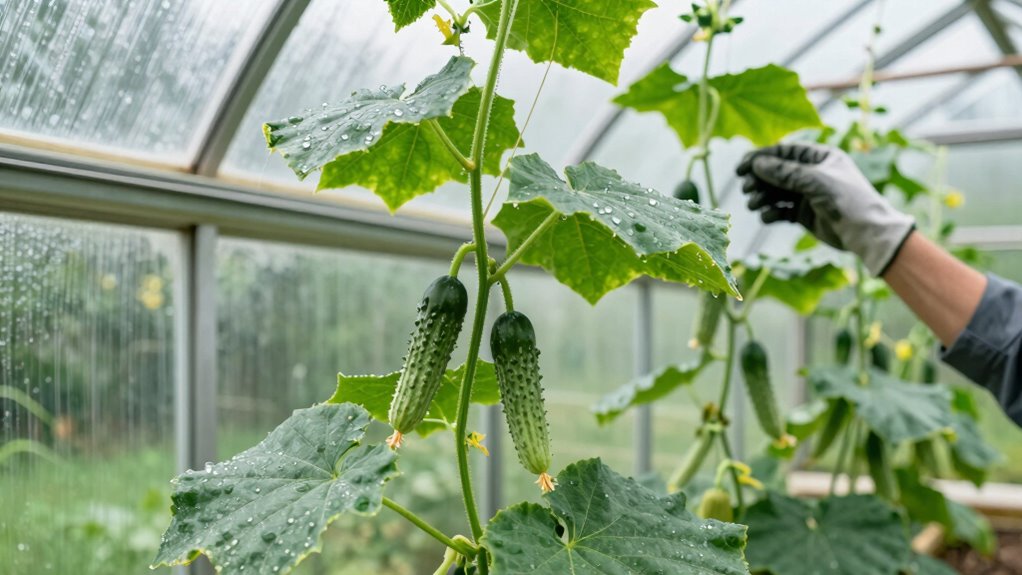
To keep your cucumbers sweet, you need to regularly check their growth and training progress. Watch for signs of overtraining, like wilting or stunted development, and adjust your methods accordingly. By staying attentive, you guarantee ideal conditions for healthy, flavorful cucumbers.
Regular Monitoring Techniques
Regular monitoring is essential to guarantee your cucumbers stay sweet and healthy throughout the growing season. By consistently checking your greenhouse, you can catch issues early and maintain ideal conditions. Focus on three key areas:
- Pest prevention: Inspect leaves and stems for pests like aphids or beetles, and remove any infestations promptly.
- Soil testing: Regularly test your soil to ensure the pH and nutrient levels support healthy growth and prevent bitter fruit.
- Training adjustments: Observe your cucumber vines’ growth and make necessary modifications to your training system to avoid stress and overtraining.
Keeping a close eye on these factors helps you prevent problems before they escalate, ensuring your cucumbers develop the desired sweetness and quality.
Recognizing Overtraining Signs
If you notice your cucumber vines suddenly slowing their growth or exhibiting drooping leaves, it could be a sign of overtraining. Overtraining stresses the plants, making them vulnerable to pests and diseases, so pest management becomes vital. Check your soil fertility; nutrient imbalances can cause symptoms similar to overtraining, like weak stems or leaf discoloration. Consistently monitoring plant responses helps you spot overtraining early, preventing bitter fruit. Be cautious not to overdo pruning or training techniques, as they can deplete plant energy reserves. Adjust your care accordingly, ensuring your plants receive balanced nutrition and appropriate support. Recognizing these signs allows you to fine-tune your training methods, promoting healthy growth and sweet, flavorful cucumbers.
Adjusting for Optimal Growth
Monitoring how your cucumber plants respond to training helps you maintain their health and sweetness. Pay close attention to their growth patterns and adjust accordingly. Use pruning techniques to remove excessive or unhealthy foliage, encouraging better airflow and fruit development. Regularly assess nutrient management by checking soil levels and supplementing with balanced fertilizers to support steady growth. To fine-tune your approach, consider these steps:
- Observe whether the plants are producing uniform, healthy vines without signs of stress.
- Adjust pruning techniques if you notice excessive foliage, ensuring light reaches all parts.
- Reevaluate nutrient management, adding nutrients as needed to prevent bitterness and promote sweetness.
Frequently Asked Questions
How Often Should I Inspect My Cucumber Vines for Stress Signs?
You should inspect your cucumber vines at least twice a week for stress signs. During these checks, look for pest management issues like aphids or spider mites, and watch for nutrient deficiencies such as yellowing leaves or poor growth. Regular inspections help catch problems early, preventing stress that can lead to bitterness. Staying vigilant guarantees healthy plants and a bountiful harvest, keeping your cucumbers flavorful and pest-free.
What Are the Best Tools for Training Cucumber Vines Effectively?
You should use sharp pruning shears to trim your cucumber vines and keep them healthy. A sturdy trellis system is essential for training your vines, providing support and guiding their growth. Regularly prune and secure the vines to the trellis, which helps prevent disease and bitter fruit. Invest in quality pruning shears and a reliable trellis system to make training effective and maintain ideal cucumber production.
Can Improper Watering Affect Cucumber Bitterness Despite Correct Training?
Improper watering can definitely cause cucumber bitterness, even if you’re training your vines correctly. Watering issues lead to inconsistent moisture levels, stressing the plant and triggering bitter compounds. Additionally, nutrient imbalance from irregular watering can worsen bitterness. To prevent this, maintain consistent watering schedules and ensure balanced fertilization. Proper hydration keeps cucumbers sweet and flavorful while minimizing stress that causes bitterness.
How Do Temperature Fluctuations Influence Cucumber Flavor in a Greenhouse?
Temperature fluctuations can markedly impact your cucumber flavor in a greenhouse. When temperatures vary, it stresses the plants, often leading to bitterness. To prevent this, you should focus on proper temperature regulation and humidity control, keeping conditions consistent. Maintaining stable temperatures and humidity levels helps preserve the natural sweetness and flavor of your cucumbers, ensuring they stay tender and delicious without developing bitterness.
Are There Specific Cucumber Varieties More Resistant to Bitterness?
You’ll find that certain cucumber varieties, thanks to their genetics, naturally resist bitterness better through careful varietal selection. These resilient options are bred to handle environmental stresses, making them less prone to traits like bitterness. Exploring specific cucumber genetics allows you to choose varieties more suited for your greenhouse. By selecting these varieties, you’re more likely to enjoy consistently crisp, sweet cucumbers, even when conditions fluctuate unexpectedly.
Conclusion
Think of your cucumber vines as delicate musicians; when they’re stressed, their tune turns bitter. By carefully training and supporting them, you’re conducting a harmonious environment where sweet, delicious cucumbers thrive. Just like tuning an instrument, managing greenhouse conditions and vine stress guarantees your plants perform their best. When you stay attentive and adjust as needed, you’ll harvest flavorful cucumbers every time—your greenhouse symphony in perfect harmony.
Fall Picks
fall essentials
As an affiliate, we earn on qualifying purchases.