
TL;DR

Get garden gear delivered free with Prime
- Fast, free delivery on millions of items
- Prime Video, Amazon Music and more included
- Member-only deals all year
OmVed Gardens has demonstrated how to turn garden cuttings into a compact winter shelter called a bug snug. The structure uses three poles and layered plant material; the garden organization says it can shelter insects and other wildlife, while birds may also use the material for nesting in spring.
OmVed Gardens, a North London community garden and learning hub, has shared instructions for building a bug snug—a simple frame filled with garden cuttings that can provide shelter for insects and other wildlife over winter. The approach gives gardeners a place to gather leaves and prunings rather than clearing every scrap from the garden or sending it to waste.
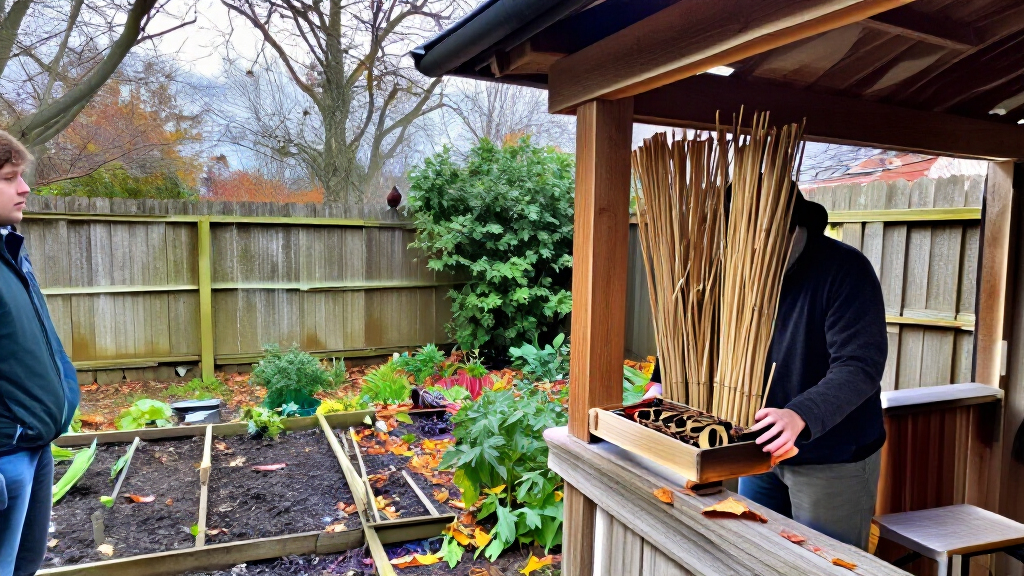
The method, shown in an Instagram reel, starts with three sturdy, straight poles arranged into a free-standing triangular or teepee-shaped frame. OmVed landscape gardener John Gaffney said hazel was used in the demonstration, but bamboo canes or other suitable poles can also work. The frame can be made at different sizes, and the poles can be pushed into the ground for added stability.
Once the frame is standing, gardeners can layer in cuttings, lawn clippings and leaves until the structure is filled. Gaffney singled out wildflowers as useful material because their hollow stems can offer places for insects to shelter. The source does not give a prescribed volume of material or a specific maintenance schedule.
OmVed says the name does not describe the only wildlife that may benefit: the shelter can also provide cover for frogs and birds. Birds may take some of the plant material for nesting in spring, Gaffney said. The advice is to keep the material together in a designated spot, balancing a tidier-looking garden with leaving habitat available.
Garden Cuttings Can Provide Shelter
The suggestion offers gardeners a practical alternative to removing or discarding all seasonal debris. Leaves and plant stems that might otherwise be treated as mess can be gathered into one feature, which, according to OmVed, may create shelter for wildlife through colder months. That can make the method useful for people who want to tidy paths and lawns without clearing every corner of the garden.
The potential benefit should be understood as habitat support, not a guarantee that wildlife will move in or survive winter because of one structure. OmVed’s guidance describes a low-material way to make a sheltered area; it does not report measured effects on insect or bird populations. For readers, the central point is straightforward: retaining some garden material in a contained spot may serve both a practical gardening purpose and local wildlife.
As an affiliate, we earn on qualifying purchases.
From Seasonal Cleanup to Habitat
The instructions respond to a familiar seasonal task: mowing, pruning and raking can leave gardens with piles of plant debris. The source report, published by Country Living, presents the bug snug as a way to manage those cuttings while retaining some of their possible value as habitat. It also notes that an untidy-looking pile can shelter insects and other small animals.
OmVed Gardens describes itself as a North London community “greenscape” and learning hub focused on reconnecting people with the land, community well-being and climate resilience. Its Instagram demonstration featured Gaffney explaining the construction and the reason for keeping some garden material rather than clearing it all away. The source provides no independent ecological assessment of the structure.
“What wildlife wants is a bit of mess.”
— John Gaffney, landscape gardener at OmVed Gardens
Wildlife Benefits Are Not Measured
The source explains the intended uses of a bug snug but does not provide research findings or population data showing how many animals use one, which species are most likely to benefit, or how much the shelter improves winter survival. Its wildlife benefits are presented as guidance from OmVed and Gaffney, not as results from a reported study.
It is also unclear how often a completed structure should be refreshed, whether particular cuttings should be avoided, or how its performance varies with site and weather. The report gives no fixed dimensions or detailed instructions for anchoring beyond the option of pushing the poles into the ground. Those choices are left to the gardener and available materials.
Build One With Garden Trimmings
Gardeners following the demonstration can choose three straight poles, form a stable triangular frame and fill it with available cuttings, leaves and hollow-stemmed plants. OmVed’s reel is the cited demonstration; the source gives no announced follow-up event, monitoring project or later update about wildlife use.
After building a snug, the next development to watch for would be whether its creator or OmVed shares observations about which materials attract wildlife and how the structure holds up through winter. No such results or further guidance are included in the report, so the extent of use at any individual garden remains to be seen.
Key Questions
What is a bug snug?
A bug snug is a frame filled with garden cuttings, leaves and other plant material. OmVed Gardens describes it as a place that can shelter insects and other wildlife over winter.
What materials do I need to make one?
The method uses three sturdy, straight poles and garden material such as cuttings, lawn clippings and leaves. Gaffney said OmVed used hazel poles, while bamboo canes or other straight poles can also be used.
Can the poles be secured in the ground?
Yes. The frame is described as able to stand by itself, but pushing the poles into the ground is an option for added stability.
Which wildlife might use a bug snug?
OmVed says the shelter may help insects, frogs and birds. Gaffney also said birds may use some of the material for nesting in spring. The source does not report measured wildlife use.
Do the instructions specify how often to maintain it?
No maintenance schedule is provided in the source. It explains how to assemble and fill the frame but does not say when or how often to add or replace material.
Source: rss
Fall yard work Picks
leaf blowers
As an affiliate, we earn on qualifying purchases.