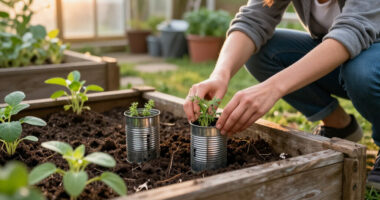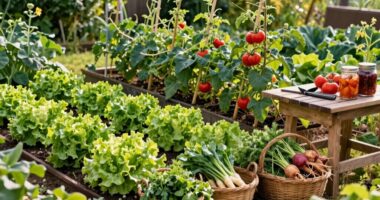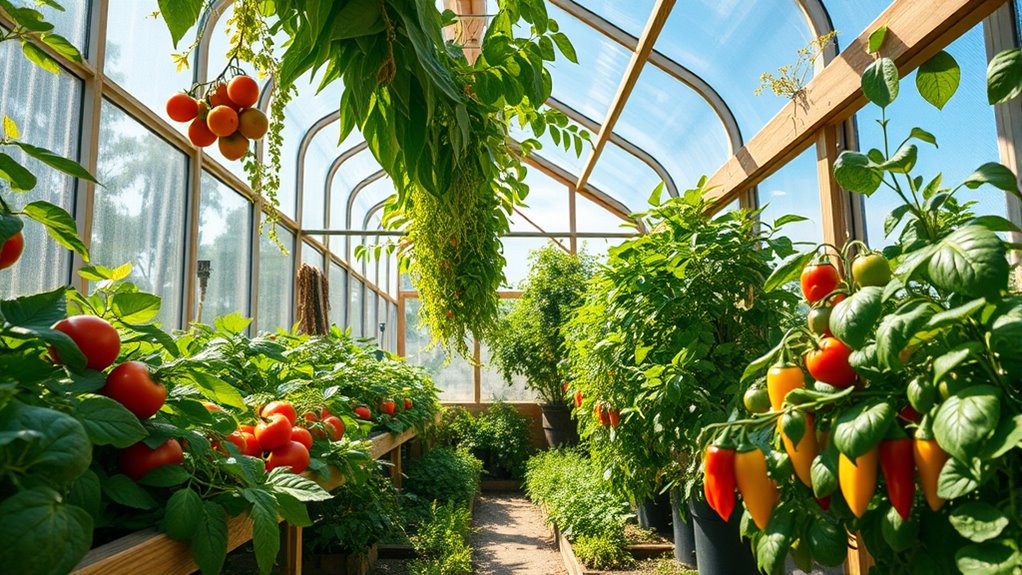

Growing your own food year-round is possible with a greenhouse that creates a controlled environment, allowing you to extend your growing season beyond outdoor limits. You can grow fresh vegetables, herbs, and small fruits consistently, reducing your reliance on store-bought produce. By managing temperature, humidity, and pests, you’ll keep your plants healthy and productive all year. If you stay proactive about environmental control and pest management, you can enjoy a steady supply of homegrown food—learn more tips to optimize your greenhouse setup.

Get garden gear delivered free with Prime
- Fast, free delivery on millions of items
- Prime Video, Amazon Music and more included
- Member-only deals all year
Key Takeaways
- Greenhouses enable year-round cultivation of vegetables, herbs, and small fruits, extending growing seasons beyond outdoor limitations.
- Controlled environment conditions optimize plant health, improve yields, and support diverse crop growth regardless of outdoor weather.
- Regular pest monitoring and integrated management keep plants healthy and prevent infestations within the greenhouse.
- Environmental controls like temperature and humidity regulation help deter pests and promote optimal plant development.
- Maintaining cleanliness and early detection of issues ensures sustainable, self-sufficient indoor gardening throughout the year.
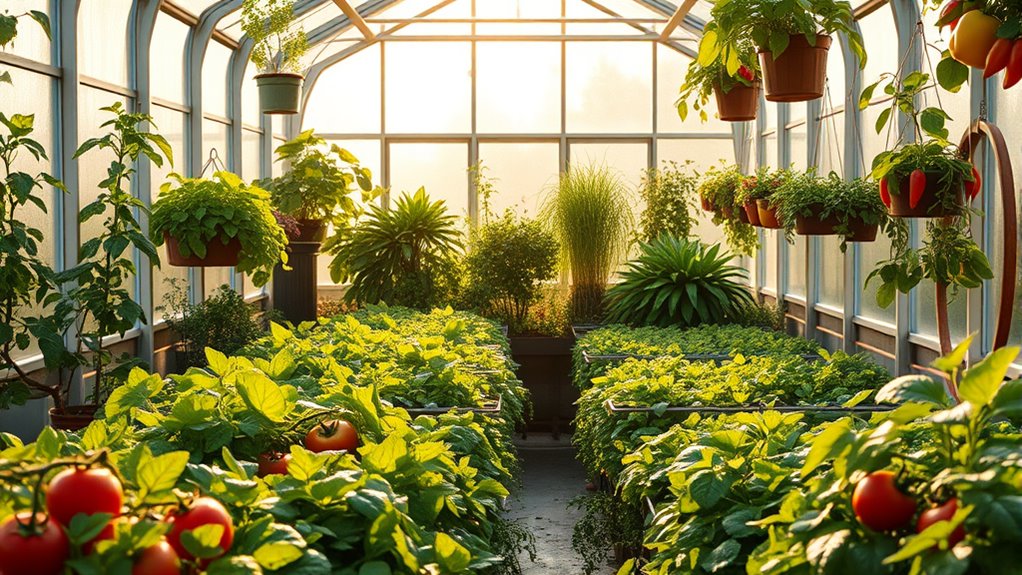
A greenhouse can be a game-changer for achieving self-sufficiency by allowing you to grow fresh vegetables, herbs, and even small fruits year-round. With a controlled environment, you gain the ability to extend your growing season and cultivate a variety of crops that wouldn’t survive outdoors in colder months. This means you can enjoy homegrown produce regardless of the weather outside, reducing your dependency on store-bought food and enhancing your self-sufficiency. Indoor gardening within your greenhouse becomes an efficient way to maximize space and optimize growth. You can set up vertical garden systems, hydroponics, or container gardening to make the most of limited space, all while maintaining ideal conditions for your plants.
When it comes to indoor gardening, the key is creating the right environment—controlling temperature, humidity, and light. This allows your plants to thrive and produce high yields. Consistent conditions also help you grow a wider variety of crops, including those that might not typically do well in your local climate. As your indoor garden expands, pest management becomes increasingly important. A greenhouse minimizes exposure to many outdoor pests, but it doesn’t eliminate the need for vigilance. You need to monitor your plants closely for signs of pests or diseases and employ integrated pest management techniques. This approach includes physical barriers, biological controls like beneficial insects, and organic treatments to keep pests at bay without harming your plants or the environment.
Because pests can quickly spread in a contained environment, maintaining cleanliness is essential. Regularly inspect your plants and remove any infected leaves or debris. Keep your greenhouse well-ventilated to prevent excess humidity, which can attract pests like aphids, spider mites, or fungus gnats. Introducing companion planting within your indoor garden can also help deter pests naturally. For example, planting marigolds near your vegetables may repel certain insects. Additionally, understanding the importance of environmental control in a greenhouse helps you create optimal conditions and prevent pest issues more effectively. The key is to stay proactive—consistent monitoring and early intervention prevent infestations from becoming severe, saving you time and effort in the long run.
greenhouse for year-round vegetable growing
As an affiliate, we earn on qualifying purchases.
As an affiliate, we earn on qualifying purchases.
Frequently Asked Questions
What Are the Initial Costs of Building a Greenhouse?
The initial cost of building a greenhouse varies based on your material options and size, typically ranging from $1,000 to $10,000. You should do a cost analysis by comparing materials like glass, polycarbonate, or plastic, which impact durability and price. Consider your budget and climate needs to choose the best options. Investing in quality materials now can save you money and effort in the long run, making your greenhouse more efficient.
How Much Maintenance Does a Greenhouse Require Annually?
You’ll find that maintaining your greenhouse takes about 5-10 hours annually, which might sound like a lot, but it’s manageable. Each year, you’ll do seasonal pruning to keep plants healthy and ensure your irrigation systems work efficiently. Regularly checking for pests, cleaning glass or plastic panels, and adjusting vents also help. This minimal effort keeps your greenhouse productive and your self-sufficiency goal on track.
Can a Greenhouse Be Used in Extremely Cold Climates?
Yes, you can use a greenhouse in extremely cold climates. To keep it functional, you’ll need winter insulation and reliable heating options like electric or gas heaters. Insulating your greenhouse helps retain heat, reducing energy costs, while heating ensures your plants stay warm even during harsh winters. Regular maintenance, such as checking seals and heating systems, keeps your greenhouse efficient and productive year-round, even in the coldest environments.
What Are the Best Plants for Year-Round Greenhouse Growth?
Think of your greenhouse as a cozy haven, where you can cultivate a diverse palette of plants year-round. For seasonal planting, choose hardy greens like kale, spinach, and lettuce that thrive in controlled environments. Consider tomatoes, peppers, and herbs for continuous harvests. Proper plant selection and consistent care transform your greenhouse into a self-sustaining oasis, ensuring fresh produce no matter the season.
How Do I Control Pests Without Chemicals in a Greenhouse?
You control pests naturally by encouraging natural pest control methods and practicing companion planting. Introduce beneficial insects like ladybugs and predatory mites to keep harmful pests in check. Use companion planting to repel pests and attract beneficial insects, planting marigolds or basil near your crops. Keep your greenhouse clean and healthy, removing affected plants promptly. These strategies help maintain a balanced ecosystem, reducing pests without chemicals.
Conclusion
With your greenhouse as a steady heartbeat, you turn seasons into an endless dance of growth. Each seed you plant is a promise, each harvest a symphony of self-sufficiency. As you nurture this green sanctuary, you’re weaving a tapestry of resilience that blooms year-round. Embrace this living mosaic, where your effort blossoms into abundance, and your home becomes a sanctuary of sustenance—ever-growing, ever-thriving, and forever yours.
Halloween Picks
halloween
As an affiliate, we earn on qualifying purchases.