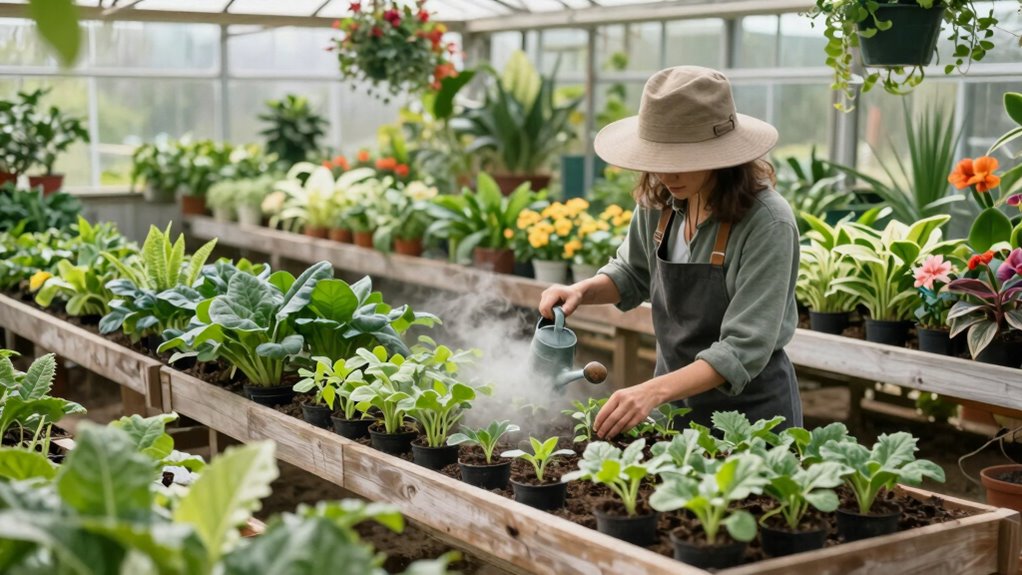

On your “Reset Day,” focus on soil health by testing nutrients and aerating. Check for pests, remove affected plants, and apply organic controls. Clean and sanitize tools, surfaces, and old debris to prevent issues. Rearrange pots for better space use, label new plants, and organize your workspace for efficiency. Make sure your greenhouse is clean and well-prepared for the next cycle. Want practical tips to keep your greenhouse thriving? Keep going to discover more.

Get garden gear delivered free with Prime
- Fast, free delivery on millions of items
- Prime Video, Amazon Music and more included
- Member-only deals all year
Key Takeaways
- Conduct a thorough soil assessment, add compost, and aerate to optimize plant health.
- Inspect plants for pests, remove affected parts, and apply organic pest controls proactively.
- Clean and sanitize tools, surfaces, and remove debris to prevent disease and pests.
- Reorganize workspace, label new plants, and prepare tools for efficient workflow.
- Ensure the greenhouse environment is clean, organized, and ready for the upcoming growth cycle.

Every greenhouse owner knows that a well-organized reset day can make all the difference in maintaining healthy plants and a smooth-running operation. It’s your chance to reset, refresh, and set the stage for the upcoming growth cycle. You start by taking a close look at the soil. Soil maintenance is critical, so you check for signs of nutrient depletion or compaction. If necessary, you add compost or organic fertilizers to replenish essential nutrients, ensuring your plants have a healthy foundation to thrive on. Aerating the soil helps improve drainage and oxygen flow, which promotes root health and prevents issues like root rot. This step isn’t just about fixing problems; it’s about proactively supporting your plants’ growth potential. Monitoring soil health regularly helps you catch issues early and maintain optimal conditions for your plants. Incorporating soil testing can provide more precise insights into your soil’s nutrient levels and pH balance. Understanding soil properties is essential for making informed amendments and supporting sustainable practices in your greenhouse. Regularly assessing soil conditions allows for more targeted and effective adjustments to your soil management strategies.
A thorough soil check and aeration set the foundation for healthy, thriving plants.
Next, you shift your focus to pest management. Even if your greenhouse is relatively pest-free, it’s vital to stay vigilant. You thoroughly inspect plants for any signs of pests or eggs—tiny insects hiding in leaves, webbing, or discoloration. Removing affected plants or parts prevents pests from spreading. You might also apply organic pest control measures, such as neem oil or insecticidal soap, to keep pests at bay without harming your plants or the environment. This routine reduces the risk of infestations that could jeopardize your entire crop. Prevention is always easier and more cost-effective than dealing with a full-blown infestation later.
After soil maintenance and pest management, you can move on to cleaning and sanitation. Removing dead leaves, debris, and old plant material reduces hiding spots for pests and fungi. Disinfecting tools and surfaces prevents cross-contamination and keeps your greenhouse environment healthy. It’s a good idea to review your watering and fertilization schedules, adjusting them based on recent plant performance and upcoming planting needs. Regular sanitation practices are essential for maintaining a disease-free environment, especially in enclosed spaces like greenhouses.
Lastly, you organize your workspace—rearranging pots, labeling new plants, and preparing your tools. This keeps your operation efficient and minimizes chaos during busy days. A reset day isn’t just about fixing problems; it’s about creating an environment where your plants can flourish and pests are kept in check. When you finish, you’ll feel confident that your greenhouse is primed for the next growth cycle. By dedicating time to soil maintenance, pest management, and sanitation, you’re investing in the health of your plants and the success of your operation. It’s a straightforward routine that pays off in healthier crops, fewer pest issues, and a more manageable greenhouse every day.
As an affiliate, we earn on qualifying purchases.
Frequently Asked Questions
How Often Should I Schedule a Reset Day?
You should schedule a reset day every 4 to 6 weeks to keep your greenhouse in top shape. During this time, focus on garden design adjustments, cleaning, and pest management. This routine helps prevent pest buildup and guarantees your plants thrive. Regular resets also give you time to evaluate your plant health and make necessary changes, keeping your greenhouse efficient and productive without becoming overwhelmed.
What Tools Are Essential for Reset Day?
On reset day, you’ll want essential tools like a watering can or hose to review and adjust your watering schedule, ensuring plants get the right amount of moisture. Keep pest management supplies like insecticidal soap or neem oil handy to inspect and treat any infestations. Additionally, have pruning shears, gloves, and cleaning brushes ready to tidy up, prune overgrown plants, and maintain a healthy, thriving greenhouse environment.
Can Reset Day Improve Plant Health?
Ever wonder if reset day can boost your plant health? It definitely can, by giving your plants a fresh start. You’ll improve soil aeration, which helps roots breathe and absorb nutrients better. Regular pest inspection during reset day prevents infestations before they spread. This routine keeps your greenhouse healthier, happier, and more productive. So, yes—dedicating time to reset day is a smart move for thriving plants.
How Do I Prioritize Tasks During Reset Day?
You should prioritize tasks during reset day by starting with soil maintenance to guarantee your plants have healthy, nutrient-rich roots. Next, focus on pest management to prevent infestations from spreading. Address any urgent plant issues first, then move on to routine tasks like pruning or cleaning. By organizing your tasks this way, you keep your greenhouse healthy and productive, saving time and reducing stress throughout your busy schedule.
Is Reset Day Necessary for Small Greenhouses?
Even small greenhouses benefit from a reset day, as studies show consistent plant maintenance boosts growth by up to 30%. By dedicating time to greenhouse scheduling and plant maintenance, you guarantee your space stays organized and plants thrive. Reset day helps you catch issues early, streamline tasks, and prevent larger problems. It’s a simple, effective way to keep your greenhouse healthy, no matter its size.
Conclusion
By implementing your reset day routine, you set yourself up for success and a thriving greenhouse. Taking time to refresh and plan keeps chaos at bay and guarantees everything runs smoothly. Think of it as hitting the reset button—clearing out the clutter and starting fresh. With each reset, you’re nurturing your space and your passion, turning chaos into calm. Remember, a well-maintained greenhouse is the foundation of a fruitful harvest—so keep your routine steady and your garden will flourish.
Halloween Picks
halloween
As an affiliate, we earn on qualifying purchases.