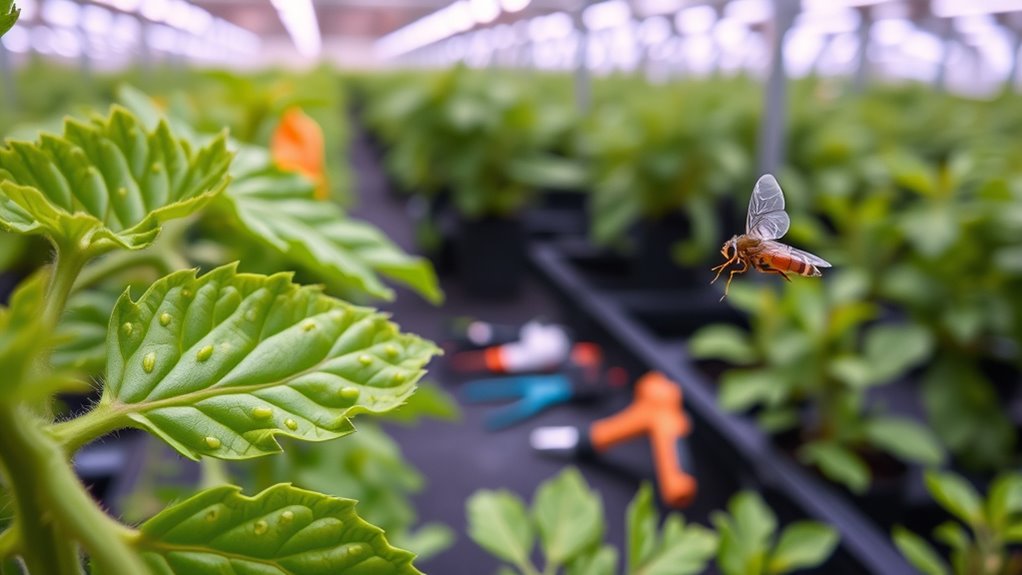

To identify common greenhouse pests, look for tiny insects like aphids, whiteflies, and thrips on your plants. Aphids are soft-bodied and cluster on new growth, while whiteflies fly around damaged leaves. Thrips are slender and cause silvery streaks. Control them by releasing beneficial insects, applying organic pesticides like neem oil or insecticidal soap, and maintaining good hygiene. Keep an eye out for signs of pests—more tips await if you continue exploring.
Key Takeaways
- Recognize pests like aphids, whiteflies, and thrips by their appearance and damage signs for early detection.
- Regularly inspect plant undersides and new growth to identify pests promptly.
- Promote beneficial insects such as ladybugs and predatory mites to naturally control common pests.
- Use organic pesticides like neem oil and insecticidal soaps at early infestation stages for effective control.
- Improve air circulation and maintain plant health to reduce pest attraction and prevent outbreaks.
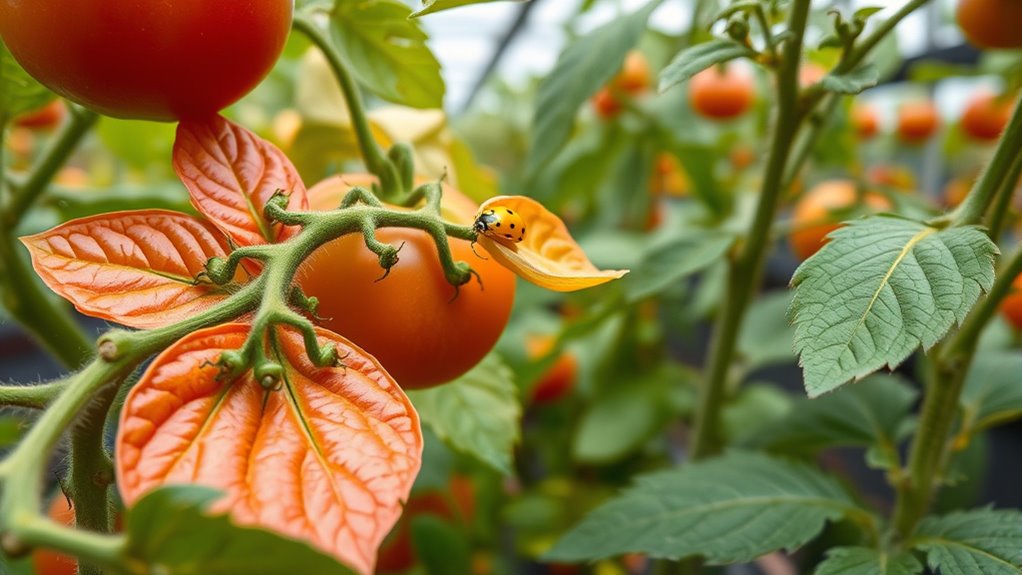
Greenhouses provide an ideal environment for many pests to thrive, making pest management essential for healthy plants. When pests invade, it’s crucial to identify them early to prevent serious damage. One effective strategy is encouraging beneficial insects, such as ladybugs, lacewings, and predatory mites, which naturally control pest populations. These beneficial insects prey on common greenhouse pests like aphids, whiteflies, and thrips, reducing the need for chemical interventions. Introducing or conserving these allies creates a balanced ecosystem, decreasing pest numbers sustainably.
In addition to biological controls, organic pesticides serve as a vital tool for managing pests without harming your plants or the environment. Organic options like neem oil, insecticidal soaps, and pyrethrin-based sprays are effective against a broad range of pests and are safe when used correctly. Applying organic pesticides at the first signs of infestation helps keep pest numbers in check before they become overwhelming. Always follow label instructions carefully to avoid damaging your plants or harming beneficial insects you’ve worked to attract. Combining organic pesticides with beneficial insects offers an integrated approach that minimizes chemical use while maximizing pest control efficiency.
Knowing how to identify common pests is key to managing them effectively. For instance, aphids are tiny, soft-bodied insects that cluster on new growth and excrete sticky honeydew, which can lead to mold problems. Whiteflies are small, white flying insects that hover around plants and cause yellowing leaves. Thrips are slender insects that puncture plant tissues, causing silvery streaks and deformities. Recognizing these pests early allows you to act swiftly. Regular inspection of your plants, especially undersides of leaves and new growth, is critical. Use a magnifying glass if needed to spot small pests or their eggs, which can be easily overlooked.
Once pests are identified, you can tailor your control methods accordingly. For minor infestations, increasing air circulation and removing affected leaves can help. For more persistent problems, releasing beneficial insects and applying organic pesticides can be combined for maximum effect. Remember that prevention is always better than cure. Maintaining healthy plants by providing proper watering, nutrition, and sanitation reduces stress and makes them less attractive to pests. A proactive approach, including regular monitoring and early intervention, keeps your greenhouse pest-free and ensures your plants thrive in a healthy, balanced environment. Additionally, understanding the importance of contrast ratio and color accuracy in your pest management tools can help you choose the most effective visual aids and monitors to detect early signs of infestation.

WZQH Leather Work Gloves for Men or Women.Gardening,Welding,Coffee-grey L
- Material: 100% split cowhide leather with soft lining
- Protection: High abrasion, puncture, cut, and heat resistance
- Design: Reinforced palm and adjustable wrist for fit
As an affiliate, we earn on qualifying purchases.
Frequently Asked Questions
How Can I Prevent Pests From Entering My Greenhouse?
To prevent pests from entering your greenhouse, guarantee proper greenhouse ventilation to reduce humidity and discourage pest buildup. Keep doors and vents sealed tightly, and use screens on all openings. Introduce beneficial insects, like ladybugs and parasitic wasps, to naturally control pests before they become a problem. Regularly inspect plants for early signs of pests, and maintain cleanliness to eliminate hiding spots, creating an environment less attractive to unwanted visitors.
Are Organic Pest Control Options Effective for Greenhouse Pests?
Yes, organic pest control options are effective for greenhouse pests. You can use organic pesticides that target specific pests without harming your plants or beneficial insects. Introducing natural predators, like ladybugs or predatory mites, helps keep pest populations in check naturally. These methods work well together, providing an eco-friendly approach to pest management. Regular monitoring and timely application of organic solutions guarantee your greenhouse remains healthy and pest-free.
What Are the Signs of Pest Infestation Early On?
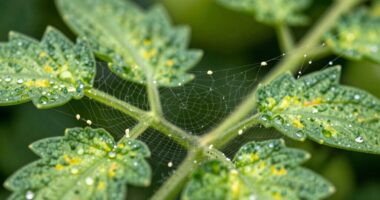
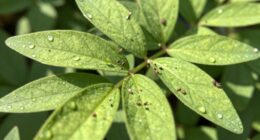
You can spot pest infestations early by observing pest identification signs like tiny holes in leaves, sticky residue, or discolored spots. Look closely for motionless insects, eggs, or webs on plants, as these are early warning signals. Regularly inspecting your greenhouse helps catch pests early, making control easier. Staying vigilant and familiar with common pests’ signs guarantees you act quickly before they cause significant damage.
How Often Should I Inspect My Greenhouse for Pests?
You should inspect your greenhouse at least once a week, as pest monitoring is vital for early detection. Studies show that pests can reproduce rapidly, sometimes doubling their population every few days. Keeping a consistent inspection schedule helps catch infestations early, preventing major damage. Make it a habit to check all plants, especially undersides of leaves and hidden spots, so you stay ahead of potential problems and maintain a healthy environment.
Can Pests Develop Resistance to Control Methods Over Time?
Yes, pests can develop resistance to control methods over time. When you repeatedly use the same pesticides or biological controls, pest resistance can occur, making these methods less effective. To prevent this, you should regularly adapt your control strategies, rotating different pesticides or integrating biological controls. This process of control method adaptation helps keep pest populations in check and reduces the risk of resistance development, ensuring your greenhouse stays healthy.
Conclusion
By recognizing these common greenhouse pests and applying targeted control methods, you can protect your plants and guarantee a healthy, thriving environment. Think of your greenhouse as a fortress—each pest a sneaky invader—you hold the power to keep it secure. Stay vigilant, act promptly, and you’ll turn the tide against these unwelcome guests. With knowledge and effort, your greenhouse becomes a sanctuary where plants flourish, untouched by pests’ shadow.