To prepare for emergencies, store at least one gallon of water per person per day for at least three days, more for hot climates or extended events. Use food-grade containers, keep water in cool, dark places, and sanitize regularly with proper cleaning or a small amount of bleach. Rotate your supply every 6 to 12 months to keep it fresh and safe. If you continue exploring, you’ll discover more tips on planning and maintaining your water reserve effectively.
Listen free for 30 days with Audible
Thousands of audiobooks and originals — cancel anytime.
As an affiliate, we earn on qualifying purchases.
Key Takeaways
- Store at least 1 gallon of safe drinking water per person daily, with more in hot or dry climates.
- Regularly rotate stored water every 6 to 12 months to prevent stagnation and spoilage.
- Use food-grade, airtight containers, labeling them with storage dates for proper tracking.
- Keep water in cool, dark environments to inhibit bacteria growth and extend shelf life.
- Inspect for signs of spoilage like cloudiness, bad smell, or discoloration, and replace water promptly.
food grade water storage containers
As an affiliate, we earn on qualifying purchases.
As an affiliate, we earn on qualifying purchases.
How Much Water Do You Need for Emergencies?
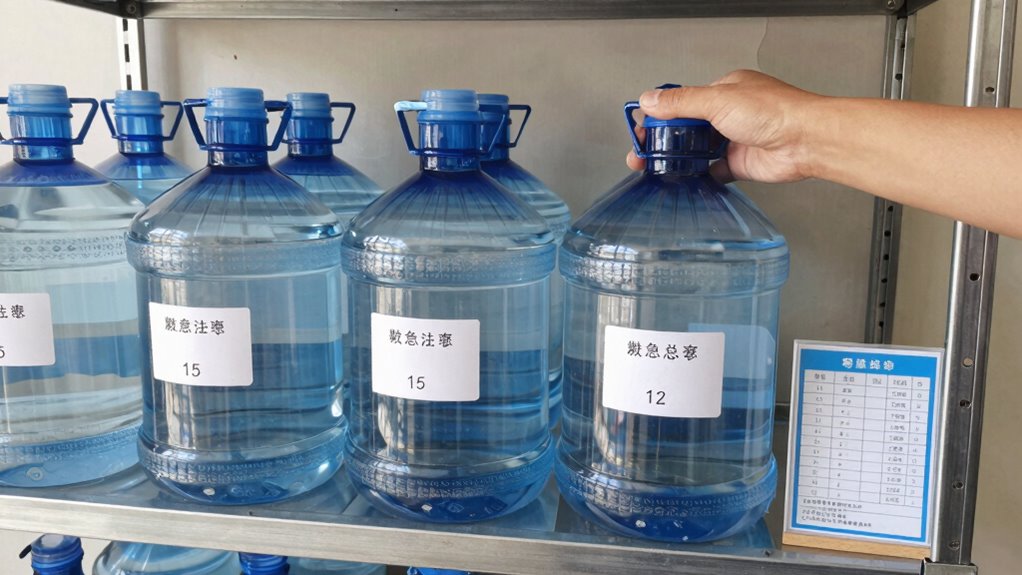
Understanding how much water you need for emergencies is essential to guarantee your safety and well-being. A good rule of thumb is to store at least one gallon of water per person per day, which covers drinking and basic hygiene. Consider your household size, climate, and activity level when planning your supply. When selecting containers, choose food-grade water storage containers that are durable and easy to clean. Proper container selection ensures your water stays safe and uncontaminated. Additionally, include water purification tools like filters or purification tablets in your kit, so you can treat additional water sources if needed. Remember, having the right amount of water and the proper containers is key for maintaining health and safety during emergencies. Incorporating Free Floating water storage strategies can help optimize space and accessibility during critical times.
What Factors Affect Your Emergency Water Needs?
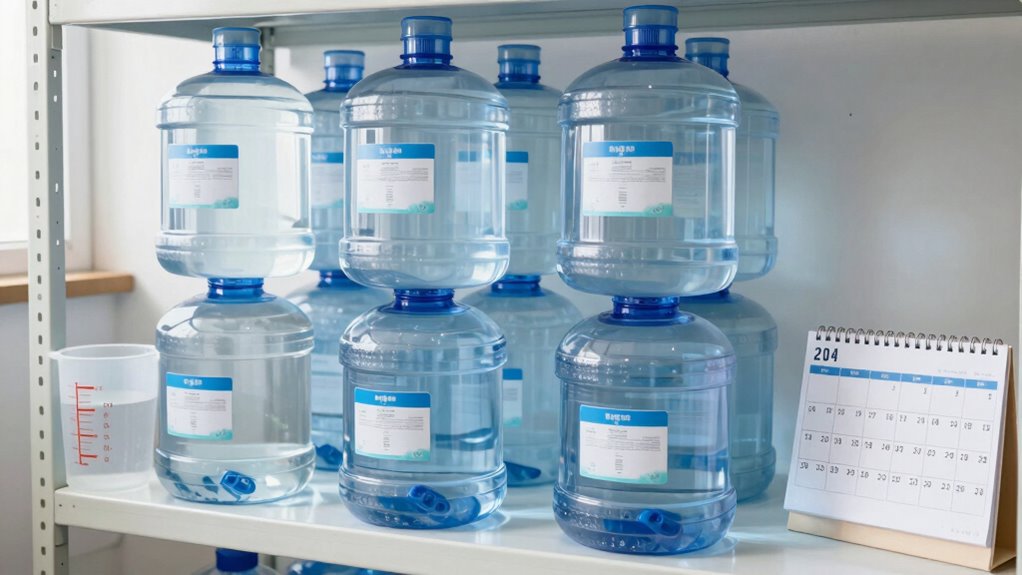
Several key factors influence how much water you’ll need during an emergency. First, your household size determines basic consumption needs. Second, the climate plays a role—hotter, dry conditions increase your water requirements. Third, your access to alternative sources like rainwater harvesting affects your supply options. If you plan to collect rainwater, consider local rainfall patterns and storage capacity. Additionally, the quality of your water source matters—using effective water purification methods guarantees safety. Remember, relying solely on stored water isn’t enough; understanding these factors helps you plan accurately. Adjust your storage based on household size, climate, and available collection methods. Knowing about trusted resources and how to access them can make a significant difference in your preparedness. Being aware of these factors ensures you’re prepared for various scenarios and can maintain a safe, reliable water supply during emergencies.
How to Properly Prepare and Sanitize Your Water Supply
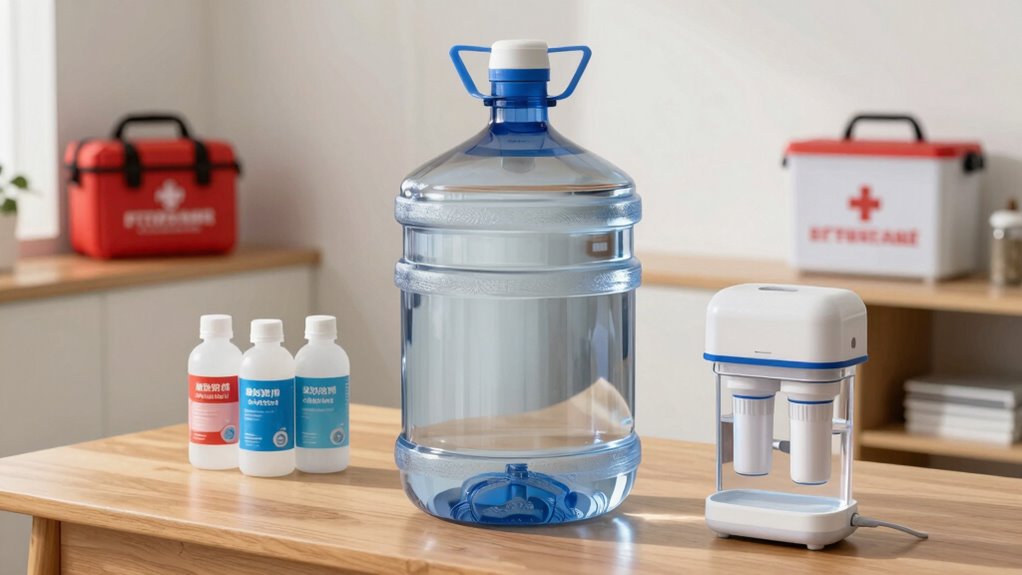
To guarantee your water is safe to use, you need to choose reliable sources and properly sanitize them. Using the right techniques, like boiling or chemical treatment, can eliminate harmful bacteria. Additionally, storing and rotating your water supplies correctly keeps them fresh and ready for use when needed. Incorporating proper sanitation techniques ensures consistent safety and quality of your stored water.
Selecting Safe Water Sources
How can you guarantee the water you collect is safe to drink during an emergency? Start with choosing reliable water sources like running tap water, untreated well water, or natural sources such as ponds or rivers. Next, focus on water purification methods to eliminate pathogens. Finally, pay attention to container selection—use food-grade, clean containers designed for water storage.
To assure safe water, consider these steps:
- Test natural sources for contamination before collecting.
- Use water purification techniques like boiling or chemical treatment.
- Store water in sanitized, food-grade containers to prevent recontamination.
Proper Sanitization Techniques
Once you’ve identified and collected a safe water source, properly sanitizing your water is the next vital step to guarantee it’s safe for use. Start by using effective cleaning methods to remove dirt and debris from containers and sanitization equipment. Wash bottles or storage tanks thoroughly with soap and water, then rinse well. For sanitization, use appropriate sanitization equipment such as household bleach or commercial water disinfectants. Add the correct amount of sanitizer—typically 8 drops of unscented bleach per gallon of water—and let it sit for at least 30 minutes. Make certain all containers are filled completely to prevent contamination. Proper sanitization eliminates harmful pathogens and guarantees your stored water remains safe for emergency use. Additionally, ensure proper water purifier maintenance to keep your sanitization process effective over time.
Storage and Rotation Tips
Are you ensuring your stored water remains safe and ready for use over time? Proper storage and rotation are key. First, choose your container carefully: select food-grade containers made of BPA-free plastic or glass, ensuring they’re thoroughly cleaned and sanitized before use. Second, label each container with the storage date to track freshness and plan rotation. Third, implement a regular schedule to replace stored water—ideally every 6 to 12 months—to prevent stagnation. When rotating, perform water purification techniques like boiling or using water purification tablets if needed. Proper container selection minimizes contamination, while consistent rotation keeps your water fresh and safe. Staying diligent with these tips guarantees your emergency water supply remains reliable when you need it most. Additionally, understanding your water quality helps ensure your stored water stays safe and free from contaminants over time.
Which Containers Are Best for Storing Water Safely?
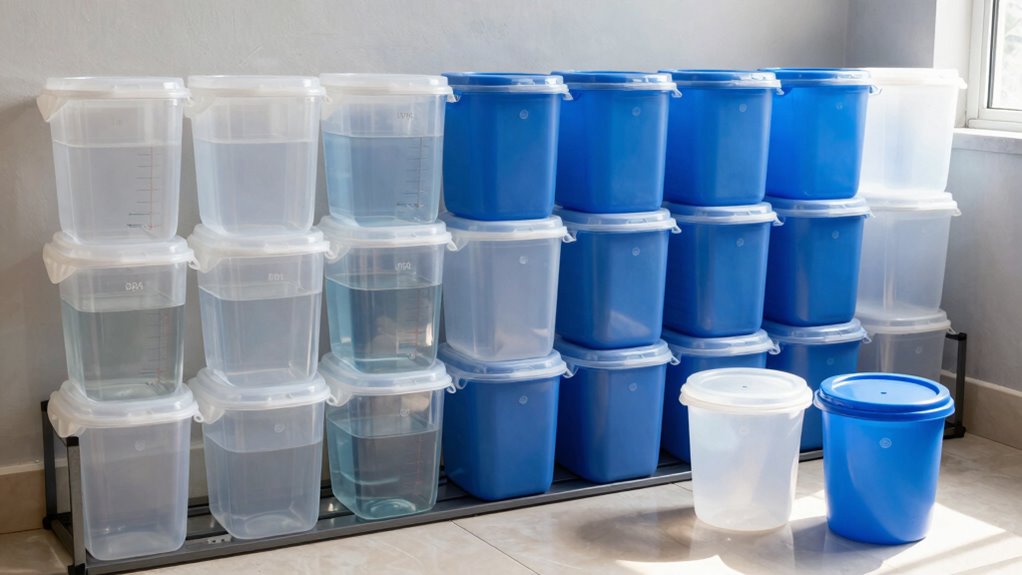
Choosing the right containers is vital for storing water safely and guaranteeing it remains clean and safe to drink. Look for containers made from food-grade, BPA-free plastics or stainless steel, as these materials prioritize container safety and won’t leach harmful chemicals into your water. Durable containers are essential because they withstand handling and environmental conditions without cracking or degrading, maintaining water quality over time. Avoid containers that are brittle, porous, or poorly sealed, as they increase the risk of contamination. Make certain the container has a tight-fitting lid to prevent debris and bacteria from entering. By selecting containers with high container durability and safety features, you can confidently store water for emergencies while preserving its freshness and safety. Eco-friendly travel options are increasingly popular, and choosing sustainable containers can further reduce your environmental impact while ensuring water safety.
How Long Is Stored Water Safe to Use?

Properly stored water can remain safe to drink for a significant period, but its safety depends on how well the container was prepared and sealed. Generally, water’s shelf life ranges from 6 months to 1 year when stored appropriately. To ensure water safety, consider these factors: 1. Use airtight, food-grade containers to prevent contamination. 2. Store in a cool, dark place to slow down algae and bacteria growth. 3. Regularly inspect your storage for signs of spoilage or leaks. 4. Maintaining proper indoor air quality can help prevent mold and bacteria growth that might compromise stored water. If stored properly, water can be safe beyond the 6-12 month mark, but it’s essential to rotate supplies periodically. Always check for cloudiness, odor, or particles before use, as these indicate compromised water safety.
Tips for Rotating and Replenishing Your Emergency Water
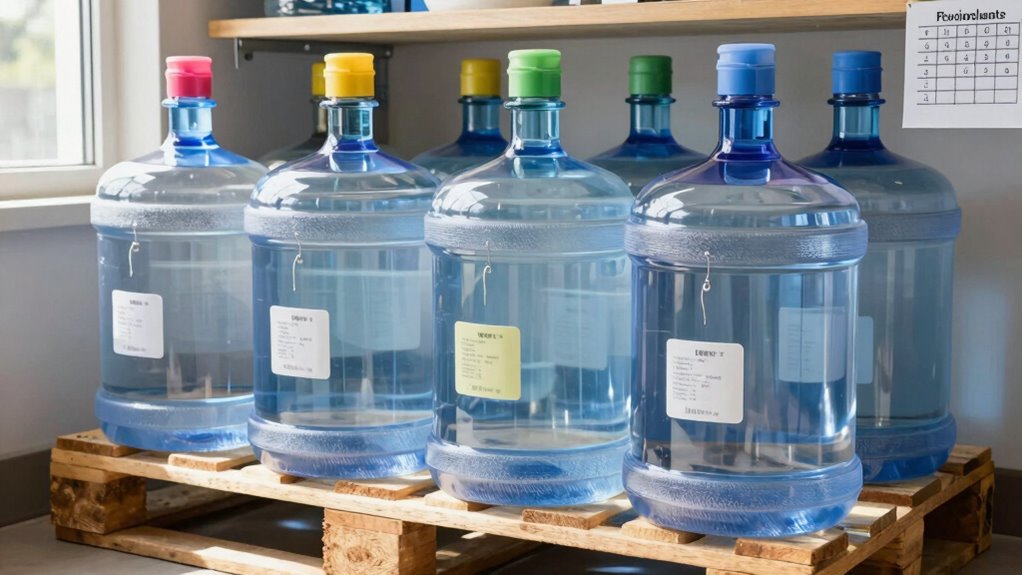
To keep your emergency water safe, you need to regularly check its quality for any changes. Always use proper storage containers designed for water to prevent contamination. Replenishing your supply on a schedule guarantees your water remains fresh and ready when you need it. Ensuring your storage area maintains a calm and organized environment can also help prevent accidental spills or contamination.
Regularly Check Water Quality
Regularly checking the quality of your stored water is essential to guarantee it remains safe for use. To do this effectively, consider these key steps:
- Perform water testing periodically to identify any bacterial growth or contaminants.
- Use clear, durable container labeling to track storage dates and ensure timely rotation.
- Visually inspect containers for leaks, discoloration, or cloudiness, which can indicate spoilage.
Use Proper Storage Containers
Choosing the right containers is essential for keeping your emergency water safe and fresh. Opt for containers made from food-grade materials like high-density polyethylene (HDPE) or BPA-free plastic, which won’t leach chemicals into your water. Avoid containers that previously held chemicals or non-food substances, as they can contaminate your supply. Be sure to label each container clearly with the storage date and refill schedule, using waterproof markers or labels. Proper labeling practices help you track when to rotate and replenish your water, ensuring freshness and safety. Additionally, tightly seal your containers to prevent contamination and evaporation. Regularly inspect your storage containers for cracks or leaks, replacing them as needed. Using the right container materials and proper labeling keeps your emergency water clean and ready when you need it most. Properly maintained containers also help prevent oxidation, which can compromise water quality over time.
Signs That Your Stored Water Has Gone Bad

If your stored water develops an off-putting smell, cloudy appearance, or strange taste, it’s a clear sign that it may have gone bad. Recognizing signs contamination and water spoilage indicators is vital for safety. Here are three key signs to watch for:
- Unusual Odor – A foul or chemical smell suggests bacterial growth or chemical contamination.
- Cloudiness or Sediment – Cloudy water or floating particles indicate microbial activity or debris.
- Changed Color or Taste – Discoloration or metallic, sour, or musty flavors point to chemical reactions or microbial proliferation.
Additionally, regularly inspecting your water purification systems ensures that your stored water remains safe and free from contamination. If you notice any of these signs, avoid drinking the water and replace it immediately to prevent health risks. Regularly inspecting your stored water helps guarantee it remains safe for emergency use.
DIY Techniques to Extend Your Water’s Shelf Life

To keep your stored water safe and drinkable over time, implementing DIY methods to extend its shelf life can make a significant difference. One effective approach is DIY filtration—using activated charcoal, sand, or cloth filters to remove impurities before storage. Regular container maintenance is also vital; clean your containers thoroughly with soap and water, then rinse well to prevent bacterial growth. Seal containers tightly to limit contamination and avoid direct sunlight, which accelerates deterioration. Consider adding a small amount of unscented household bleach (per guidelines) to sanitize water periodically. Here’s a simple overview:
| Technique | Purpose | Tips |
|---|---|---|
| DIY filtration | Remove impurities | Use layered materials |
| Container maintenance | Prevent bacterial growth | Clean regularly |
| Sealing containers | Limit contamination | Use airtight lids |
Common Mistakes to Avoid When Storing Emergency Water

One common mistake is using containers that aren’t food-grade, which can contaminate your water. Another is forgetting to rotate your supply regularly, risking outdated or unsafe water. Avoid these pitfalls to guarantee your emergency water remains safe and ready when you need it.
Using Incorrect Containers
Using the wrong type of container can compromise your emergency water supply. If your containers aren’t food-grade, they risk container contamination, which can make the water unsafe. Improper sealing also allows bacteria, mold, or debris to enter, reducing water quality and shelf life. To avoid these issues, ensure you:
- Use only food-grade, BPA-free containers designed for water storage.
- Check that lids or caps seal tightly to prevent leaks and contamination.
- Avoid containers previously used for chemicals or non-food liquids, as they can introduce harmful residues.
Choosing the right containers and sealing them properly helps maintain water purity and safety. Using incorrect containers not only risks contamination but also defeats the purpose of having a reliable emergency water supply.
Forgetting Regular Rotation
Have you ever overlooked the importance of rotating your emergency water supply? This common mistake stems from maintenance oversight or neglecting updates to your storage plan. Water can become stale, develop algae, or harbor bacteria if not refreshed regularly. Failing to schedule routine rotation can compromise the safety of your stored water, making it unusable in an emergency. To avoid this, set reminders to check and replace your supply every six to twelve months. Updating your plan as needed ensures you always have clean, safe water on hand. Regular rotation isn’t just about freshness; it’s about maintaining reliable preparedness. Don’t let neglecting updates jeopardize your emergency readiness—stay vigilant and keep your supply fresh.
Create a Water Storage Plan That Fits Your Family’s Needs

Creating a water storage plan tailored to your family’s needs is essential for ensuring you have a reliable supply during emergencies. To do this effectively, consider these steps:
- Determine your family’s daily water needs based on the number of members and activities.
- Select appropriate containers that are food-grade and easy to clean, ensuring safe water storage.
- Plan for water purification methods, like filtration or boiling, to keep stored water safe over time.
Frequently Asked Questions
Can I Store Tap Water Without Treatment?
You shouldn’t store tap water without treatment, as it may contain contaminants. To maintain it safe, use proper water purification methods like boiling, chemical treatment, or filtration. Also, choose the right container—food-grade, BPA-free, and airtight—to prevent contamination and algae growth. Always clean your storage containers thoroughly before use, and rotate the water regularly to ensure freshness and safety in emergencies.
How Do I Know if Stored Water Is Safe to Drink?
Like a vigilant guardian, you’ll notice changes in your stored water’s clarity, smell, or taste—signs it may no longer be safe. To guarantee safety, use water purification methods like boiling or chemical disinfectants before drinking. Proper storage longevity depends on keeping water in airtight containers, away from sunlight, and rotating it every 6-12 months. Regularly check for signs of contamination to keep your water safe and fresh.
What Are the Best Indicators Water Has Gone Bad?
You’ll notice water has gone bad if it develops a foul smell, strange taste, or cloudiness, which are signs of water contamination. Also, check if the storage container has deteriorated—cracks or leaks can lead to contamination. If your water looks, smells, or tastes off, or if the container’s durability is compromised, it’s safest to discard and replace it to make certain you’re drinking safe, clean water.
Should I Use Bottled or Homemade Containers for Storage?
You should use food-grade bottles over homemade containers because they’re more durable and safer for long-term storage. Choose a storage location that’s cool, dark, and dry to prevent contamination and degradation. Regularly inspect your containers for cracks or leaks, and rotate your water supply every six months. This approach guarantees your water stays safe, fresh, and ready when you need it most.
How Often Should I Check My Emergency Water Supply?
You should check your emergency water supply at least once every six months. This keeps your storage containers clean and guarantees water freshness. During inspections, perform water testing to detect any contaminants or changes in clarity. Regular checks prevent surprises during emergencies and help you spot leaks or contamination early. Make it a routine, and you’ll always have safe, reliable water when you need it most.
Conclusion
Storing enough emergency water is essential—you should aim for at least one gallon per person per day. Did you know that properly stored water can last up to six months? By following best practices and rotating your supply regularly, you guarantee safe, clean water during emergencies. Stay vigilant for signs of spoilage and avoid common mistakes. With a solid plan, you’ll be ready to tackle any situation confidently and stay healthy no matter what happens.
Flea & tick season Picks
flea and tick prevention
As an affiliate, we earn on qualifying purchases.