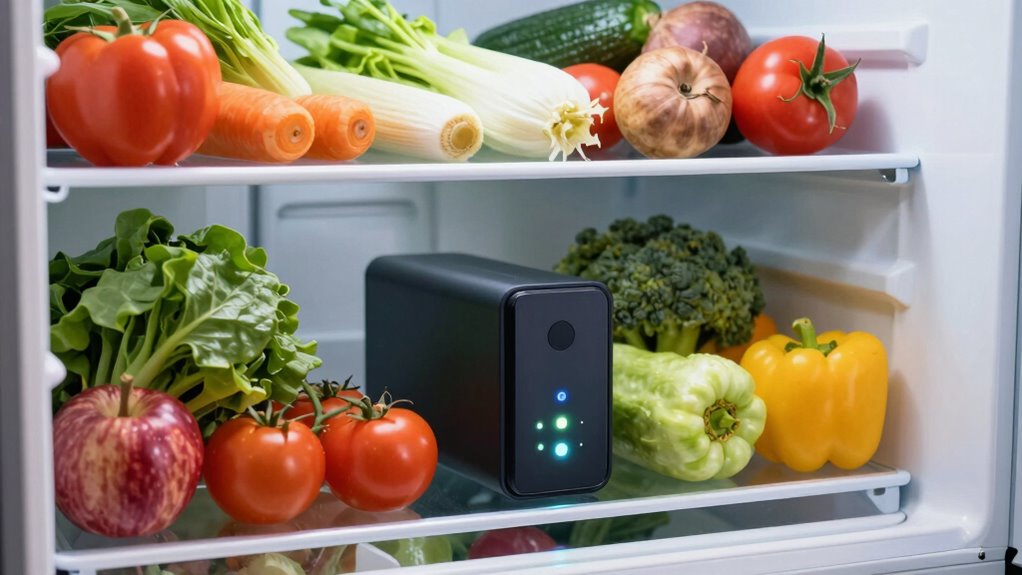

To protect your harvest during outages, you need to size your freezer’s backup batteries accurately. This involves calculating your freezer’s power needs, understanding battery capacity in amp-hours and voltage, and estimating how long the battery can run your freezer. Proper sizing prevents food spoilage and ensures system reliability. Keep in mind common mistakes like underestimating surge power or ignoring maintenance. If you continue exploring, you’ll find how to optimize your backup system for peace of mind.

Get garden gear delivered free with Prime
- Fast, free delivery on millions of items
- Prime Video, Amazon Music and more included
- Member-only deals all year
Key Takeaways
- Accurately calculate your freezer’s energy consumption and backup duration to ensure reliable cold storage during outages.
- Proper battery sizing considers capacity, voltage, startup surges, and safety margins for continuous operation.
- Match battery capacity with load needs to prevent premature failure and accommodate power spikes.
- Regularly monitor and maintain batteries to extend lifespan and ensure system readiness when needed.
- Proper system design and maintenance protect your harvest by keeping your freezer operational during power interruptions.
deep cycle backup batteries for freezer
As an affiliate, we earn on qualifying purchases.
As an affiliate, we earn on qualifying purchases.
Why Accurate Battery Sizing Matters for Freezer Backup Systems?
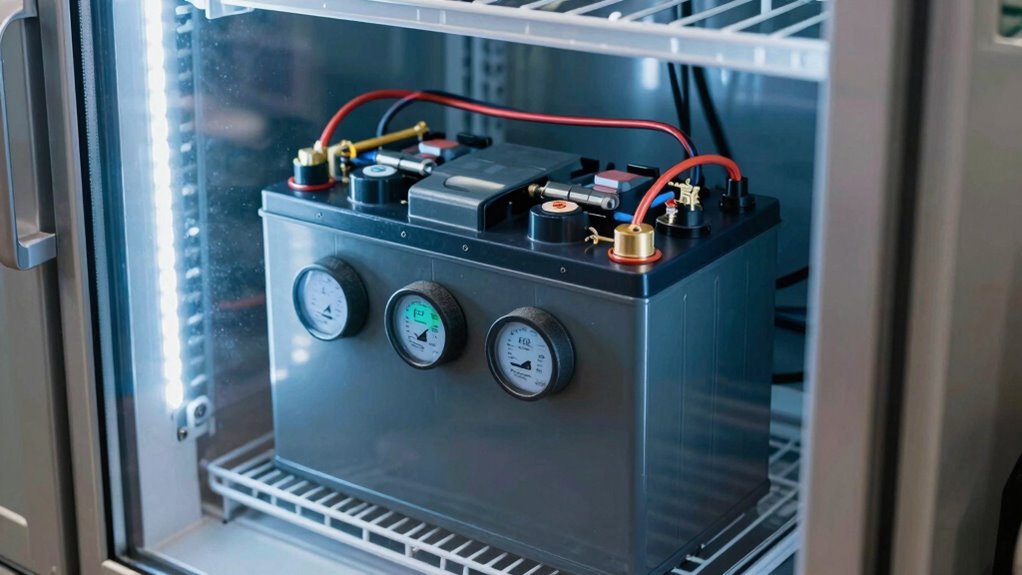
Accurately sizing batteries for your freezer backup system is vital because it directly impacts the reliability and efficiency of your cold storage. Proper sizing ensures your batteries can handle the required load without overworking, which can lead to premature failure. Understanding battery chemistry helps you choose the right type—such as lithium-ion or lead-acid—that matches your system’s demands. Additionally, thermal management plays a significant role; batteries generate heat during operation, and inadequate cooling can reduce their lifespan and performance. Color accuracy impacts how well your system can monitor and display battery status, enabling timely maintenance. By carefully considering both battery chemistry and thermal management, you guarantee your backup system remains dependable during power outages. Correct sizing not only protects your stored harvest but also optimizes your investment, preventing unnecessary replacements and maintenance costs.
How to Calculate Your Freezer’s Power Needs for Backup Batteries?
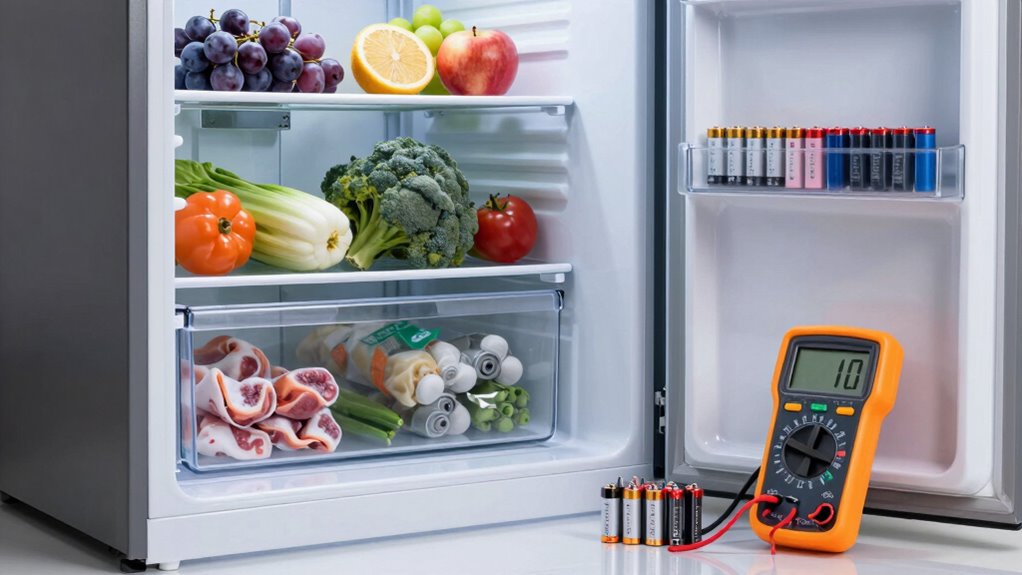
To figure out your freezer’s power needs, start by determining how much energy it consumes during normal operation. Then, decide how long you want your backup system to keep it running without power. Finally, select a battery capacity that can supply that energy for your desired backup duration. Incorporating energy-efficient appliances can help reduce your overall power requirements and extend backup times.
Determine Power Consumption
Before selecting backup batteries for your freezer, you need to determine its power consumption. Temperature fluctuations can cause the freezer to cycle more frequently, increasing energy use. To accurately assess your freezer’s power needs, check its energy label or manual for wattage or amperage ratings. Use a power meter if possible to measure real-time consumption, especially if your freezer’s load varies. Keep in mind that modern freezers are designed for high power efficiency, which reduces energy draw during normal operation. However, during startup or defrost cycles, power spikes occur. Understanding these variations helps you calculate the total energy your backup system must supply. Energy efficiency is a key factor in determining the appropriate backup capacity, ensuring your freezer remains protected without unnecessary overcapacity. Precise measurement of your freezer’s power consumption guarantees your backup batteries will provide reliable protection without overestimating capacity.
Calculate Backup Duration
Calculating your freezer’s backup duration involves understanding how much power it consumes and how long your backup batteries can supply that energy. To do this, review your freezer’s power consumption, which you determined earlier, and consider its energy efficiency—more efficient freezers use less power during outages. Next, factor in your temperature monitoring system, as maintaining proper temperature prolongs your harvest’s safety. Divide your backup battery’s capacity by the freezer’s wattage draw to estimate how many hours it can run on backup power. Keep in mind, real-world conditions may vary, so it’s wise to add a safety margin. Proper calculation guarantees your backup system can sustain your freezer long enough to protect your harvest during outages. Additionally, understanding your power needs helps you select the appropriate size of backup batteries for reliable operation.
Choose Battery Capacity
Knowing your freezer’s power needs is the foundation for choosing the right backup battery capacity. To determine this, consider your freezer’s wattage and how long you want it to run on backup power. Think about:
- The total energy your freezer consumes daily
- The battery chemistry that suits your climate and usage
- The installation location’s temperature and accessibility
- The startup surge your freezer requires
- The safety margin to ensure reliable operation
Understanding sleep comfort and how it relates to your environment can also help optimize your freezer’s performance and backup plan. Choosing the right capacity involves matching your freezer’s power draw with a battery that can deliver sufficient energy, considering factors like temperature and installation environment. Properly sizing your battery ensures your freezer stays cold during outages, protecting your harvest effectively.
What Does Battery Capacity Mean? Amp-Hours, Voltage, and Energy Explained

Understanding battery capacity is essential when selecting a backup power source because it directly impacts how long your freezer can stay cold during an outage. Battery capacity is measured in amp-hours (Ah), which indicates how much charge a battery can store. The voltage tells you the electrical potential, affecting how the battery connects with your system. Energy, measured in watt-hours (Wh), combines voltage and amp-hours to show total stored energy. Different battery chemistries, like lithium-ion or lead-acid, influence capacity and lifespan, as they have varying charge cycles—the number of times a battery can be charged and discharged before performance declines. Knowing these factors helps you choose a battery that provides reliable backup, ensuring your harvest stays protected when power fails. Additionally, understanding battery chemistries can help optimize performance and longevity for your specific needs.
How to Estimate How Long Your Backup Battery Will Keep Your Freezer Cold?
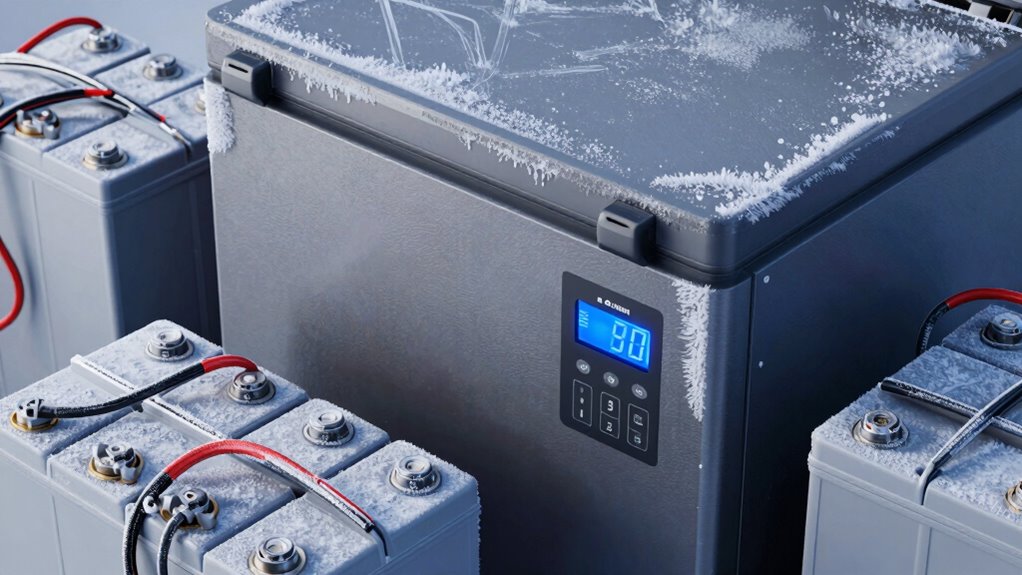
To estimate how long your backup battery will keep your freezer cold, start by determining the freezer’s power consumption. Knowing this helps you understand how much energy your battery needs to supply. Keep in mind that battery chemistry affects efficiency and discharge rates, influencing cold storage duration. Imagine your backup system powering:
- The icy hum of the compressor
- The glow of indicator lights
- The gentle hum of fans circulating cold air
- The pulse of energy flowing through cables
- The steady drain during prolonged outages
Understanding battery capacity is crucial for accurately predicting how long your backup will sustain cold temperatures.
Common Mistakes to Avoid When Choosing a Battery Backup System?
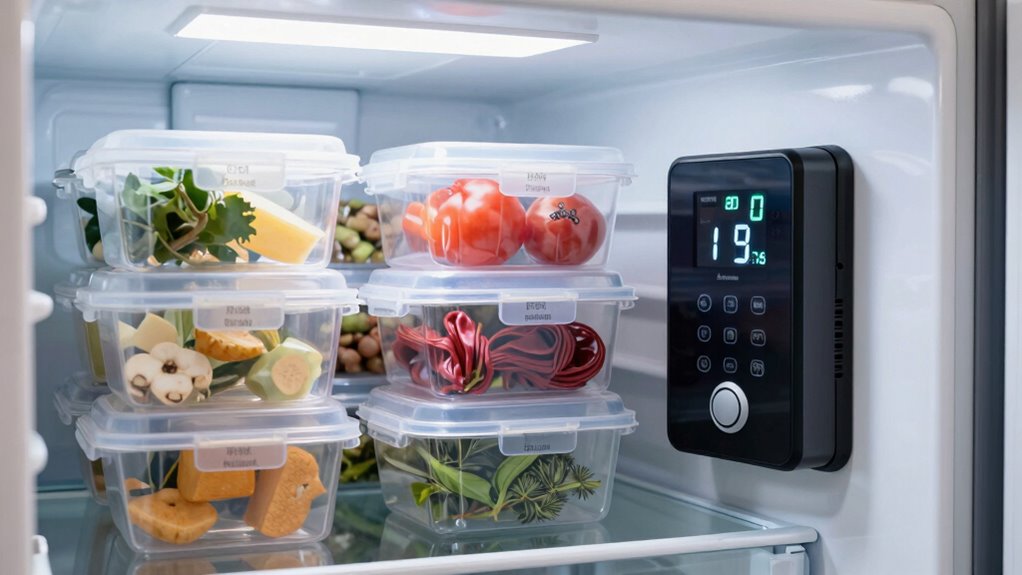
One common mistake is underestimating how much power your freezer needs, which can leave you without backup when it’s most important. Ignoring your runtime requirements can cause your system to fall short during outages, risking food loss. Additionally, overestimating your battery’s lifespan might lead to unexpected failures, so accurate calculations are vital. To ensure reliable protection, it’s also important to understand your load‑planning and how to properly size your backup system.
Inadequate Power Calculations
Many people underestimate the power requirements of their freezer, leading to undersized battery backup systems that can’t keep it running during outages. Ignoring surge power needed during startup can cause failures, especially if your freezer experiences a power surge. Failing to account for battery recycling effects, which reduce overall capacity over time, worsens the problem. To avoid this mistake, picture your system powering:
- A sudden compressor surge at startup
- Continuous operation during longer outages
- The gradual loss from battery aging
- Unexpected power spikes
- The need for extra capacity to handle load fluctuations
Without accurate calculations, your backup might fall short when it matters most, risking your harvest. Properly sizing your system ensures reliable protection against power surges and accounts for battery recycling, keeping your freezer running smoothly through outages. Additionally, understanding Free Floating systems can help optimize your backup setup for maximum efficiency and longevity.
Ignoring Runtime Needs
Ignoring how long your backup system needs to run can lead to serious issues during outages. If you don’t calculate your freezer’s runtime requirements accurately, your backup may fall short when power is out, risking spoilage. Consider insulation considerations, as well-insulated freezers lose less cold, reducing runtime needs. Additionally, solar efficiency impacts your backup’s performance; if you rely on solar power, you’ll need a system capable of running longer during low sunlight hours. Failing to account for these factors means your battery capacity might be insufficient, leaving your harvest vulnerable. Always determine how long your freezer must stay operational during outages and adjust your battery size accordingly. Proper planning guarantees your backup system provides reliable, continuous protection, regardless of external conditions. Understanding load calculations helps ensure your backup is adequately sized for your specific needs.
Overestimating Battery Lifespan
Assuming your battery will last much longer than it actually does can lead to serious backup failures. Overestimating battery lifespan skews your capacity estimation, risking insufficient backup time during outages. When you rely on an overly optimistic battery lifespan, you might select a system that can’t sustain your freezer through extended power cuts. Picture a battery that’s expected to last twice as long as it truly can, leaving you unprepared when the real test hits. Keep in mind:
- Battery performance declines over time
- Capacity diminishes with age
- External factors impact lifespan
- Proper maintenance extends usability
- Regular testing ensures reliability
Avoid these pitfalls by accurately evaluating your battery’s true capacity and lifespan, so your freezer stays protected when it matters most.
Tips to Maintain and Monitor Your Backup System for Reliable Cold Storage

Regularly maintaining and monitoring your freezer backup system is vital to guarantee reliable cold storage. Start with routine battery maintenance by checking connections, cleaning terminals, and replacing batteries before they fail. This prevents unexpected outages. System monitoring involves regularly testing your backup system’s performance, such as verifying the charge levels and ensuring alarms are functional. Keep detailed logs of maintenance activities and system checks to identify patterns or potential issues early. Conduct periodic load testing to confirm your system can handle power outages effectively. Visual inspections are also essential—look for corrosion, leaks, or damaged wiring. By staying proactive with battery maintenance and system monitoring, you guarantee your backup system remains ready, protecting your harvest from unexpected electrical failures.
Frequently Asked Questions
How Do Environmental Conditions Affect Battery Performance in Freezer Backups?
Environmental conditions critically impact your freezer backup batteries. Temperature fluctuations can cause batteries to lose capacity or fail faster, so maintaining a stable cold environment is vital. Humidity impacts performance too; high humidity can lead to corrosion or short circuits, reducing battery lifespan. By controlling these factors, you guarantee your batteries stay reliable, protecting your harvest effectively. Regular monitoring and proper storage help mitigate these environmental impacts, guaranteeing peak backup performance when you need it most.
What Are the Signs of a Failing Backup Battery System?
You’ll notice your backup battery system is failing when it doesn’t hold a charge or the freezer temperature becomes unstable. Watch for shorter battery lifespan and unexpected shutdowns. Replacement indicators include frequent recharge cycles, decreased run time, or visible corrosion. If you spot these signs, it’s time to substitute the battery to ensure your harvest stays protected and your freezer operates reliably.
Can Renewable Energy Sources Supplement Your Backup System?
Imagine you’re adding solar integration to your backup system. Yes, renewable energy sources, like solar panels, can supplement your backup by providing extra power during outages. You can enhance your energy storage options, ensuring your freezer stays cold longer. For example, a farm using solar-powered battery banks successfully reduces reliance on traditional backup batteries, extending run times and increasing resilience against power failures.
How Often Should You Test Your Freezer Backup Battery System?
You should test your freezer backup battery system at least once every three to six months. Regular battery maintenance guarantees your backup system stays reliable, so schedule these tests proactively. During each test, verify that the batteries hold a charge and operate correctly. Consistent backup scheduling helps detect issues early, preventing costly failures during power outages. Don’t wait for an emergency—stay ahead with routine testing and maintenance.
What Safety Precautions Are Necessary When Handling Backup Batteries?
When handling backup batteries, you should always prioritize safety by wearing appropriate personal protective equipment like gloves and goggles to prevent handling hazards. Make certain you’re working in a well-ventilated area, avoid sparks or open flames, and handle batteries carefully to prevent leaks or damage. Always follow manufacturer instructions and safety guidelines, and disconnect power before maintenance to minimize risks. Your safety comes first to protect both yourself and your equipment.
Conclusion
Think of your backup battery as a guardian, silently standing watch over your harvest. When storms threaten, its strength keeps your freezer’s heart beating, preserving every precious item inside. By understanding the battery’s math and maintaining it well, you guarantee your harvest’s future remains secure—an unbreakable promise of protection. With the right backup, your cold storage becomes a fortress, guarding your bounty against life’s unpredictable storms.
Fall Picks
fall essentials
As an affiliate, we earn on qualifying purchases.