To guarantee a bountiful greenhouse tomato harvest, focus on proper pruning to remove suckers and dead leaves, boosting airflow and plant health. Regular pest monitoring, using organic controls like neem oil, and maintaining a clean environment help prevent infestations. Combining strategic pruning with effective pest management keeps your plants vigorous and productive. Keep up with routine maintenance, and you’ll discover even more tips to maximize your tomato yield.
Key Takeaways
- Prune suckers early and remove dead leaves to improve airflow and direct energy towards fruit development.
- Implement regular pest monitoring and use organic controls like neem oil to protect plants.
- Use strategic pruning to control plant size, support larger tomatoes, and facilitate easier harvesting.
- Maintain a clean greenhouse environment to prevent pests and diseases, ensuring healthy plant growth.
- Combine proactive monitoring with pruning and pest management to maximize yield and fruit quality.
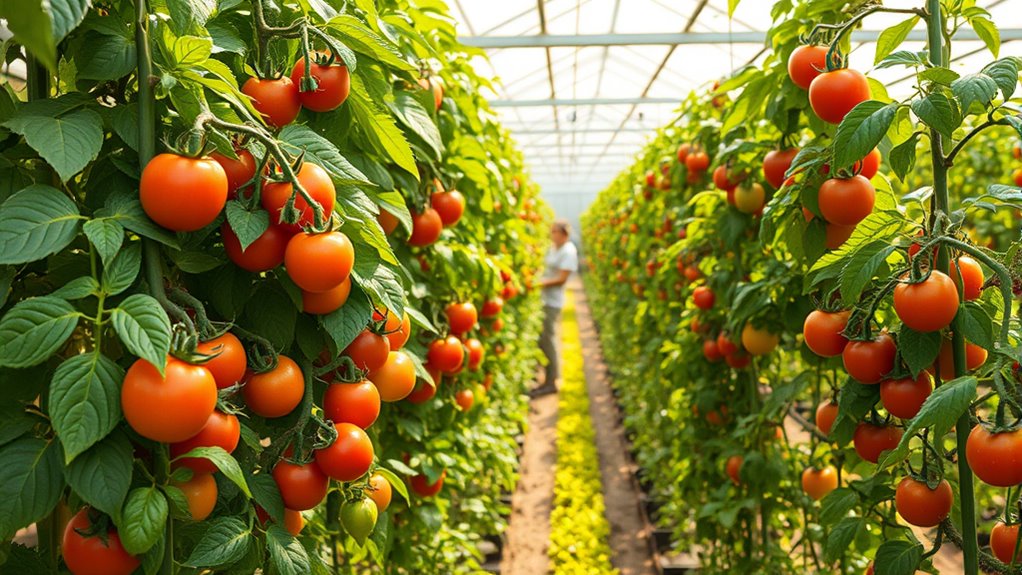
Have you ever wondered how greenhouse tomatoes can be grown year-round with consistent quality? The secret lies in mastering key cultivation techniques, particularly pruning and pest management. When you understand and apply effective pruning techniques, you control the plant’s growth, improve air circulation, and boost fruit production. Start by removing any suckers—those small shoots that emerge between the main stem and branches—early in the season. This directs the plant’s energy toward developing larger, healthier fruit rather than unnecessary foliage. As your plants grow, prune away any dead or yellowing leaves to prevent disease buildup and improve airflow. This not only keeps the plants healthier but also makes it easier for you to spot pests early. Proper pruning also encourages the plant to develop a strong structure, supporting larger, better-quality tomatoes and making harvesting more manageable. Additionally, understanding the environment’s influence on currency values can help you plan your supplies and investments for greenhouse equipment and supplies more effectively. Implementing integrated pest management strategies, such as crop rotation and proper sanitation, can further enhance pest control efforts and reduce chemical usage. Effective pest monitoring techniques, like regular plant inspections, are crucial for early detection and control of infestations. Along with pruning, pest management is essential if you want a bountiful harvest. Greenhouse environments can sometimes create ideal conditions for pests like aphids, whiteflies, and spider mites. To stay ahead, regularly inspect your plants for signs of infestation. Using sticky traps can help catch flying pests early, giving you a chance to act before they cause significant damage. Implement biological controls whenever possible, such as releasing beneficial insects like ladybugs or predatory mites, which naturally keep pest populations in check. Keep your greenhouse clean and well-maintained to remove debris and old plant material that could harbor pests or diseases. Additionally, consider integrating organic pest control methods, like neem oil or insecticidal soaps, which are effective yet gentle on your plants and the environment. Always follow application instructions carefully to avoid stressing your plants or harming beneficial insects. Employing advanced monitoring techniques, such as digital sensors and remote alerts, can help you detect pest issues even earlier and with greater precision. Combining diligent pruning techniques with proactive pest management creates a healthy, resilient environment for your greenhouse tomatoes. When you prune regularly, you improve airflow and reduce hiding spots for pests, making it easier to monitor and manage infestations. Conversely, effective pest control prevents outbreaks that can weaken or destroy your plants, ensuring they remain vigorous and productive. Remember, consistency is key; develop a routine for inspecting, pruning, and treating your plants. This approach not only minimizes the risk of disease and pest issues but also maximizes your chances of growing high-quality tomatoes year-round. With patience and attention to detail, you’ll enjoy a steady supply of delicious, ripe tomatoes, regardless of the season.
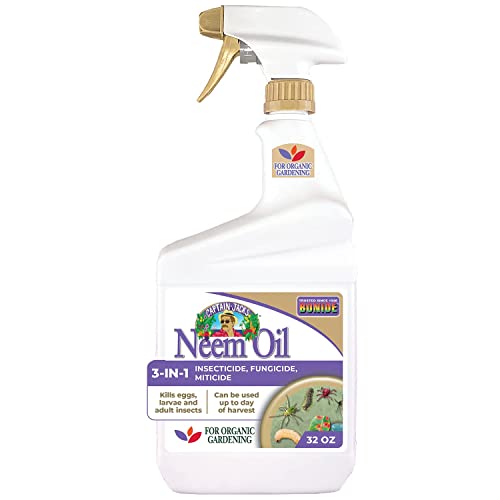
Bonide Captain Jack's Neem Oil, 32 oz Ready-to-Use Spray, Multi-Purpose Fungicide, Insecticide and Miticide for Organic Gardening
MULTI-PURPOSE BUG KILLER - Bonide Neem Oil is a perfect pest control solution for any garden dealing with...
As an affiliate, we earn on qualifying purchases.
Frequently Asked Questions
How Do I Prevent Pests in a Greenhouse Tomato Setup?
To prevent pests in your greenhouse tomato setup, start by selecting pest-resistant varieties. Keep your environment clean and monitor regularly for signs of pests. Use biological control methods like introducing beneficial insects, such as ladybugs or predatory mites, to naturally reduce pest populations. Maintain proper ventilation and avoid overwatering, which can attract pests. Combining these strategies helps protect your tomatoes and guarantees a healthy, productive harvest.
What Are the Best Companion Plants for Greenhouse Tomatoes?
When choosing companion plants for your greenhouse tomatoes, consider those that promote healthy growth through companion planting. Marigolds and basil repel pests, while flowers like nasturtiums attract beneficial insects that help control pests naturally. Plant these alongside your tomatoes to enhance pollination, reduce pests, and improve overall health. Incorporating beneficial insects through companion planting creates a balanced environment, leading to a more productive and resilient tomato crop.
How Often Should I Water My Greenhouse Tomatoes?
You should water your greenhouse tomatoes when the soil moisture drops, typically every 2-3 days, but adjust based on your greenhouse’s humidity and temperature. Keep the soil consistently moist but not waterlogged to prevent root issues. Check soil moisture regularly by feeling the top inch; if it feels dry, it’s time to water. Proper watering frequency guarantees healthy growth and a bountiful harvest.
Can I Grow Tomatoes Year-Round in a Greenhouse?
Yes, you can grow tomatoes year-round in a greenhouse if you provide adequate indoor lighting and maintain ideal conditions. Make certain you sterilize the soil regularly to prevent diseases and pests. Use grow lights during shorter winter days to supplement sunlight, and keep the temperature consistent. With proper care, including soil sterilization and sufficient lighting, you can enjoy fresh tomatoes all year long.
What Are Common Signs of Tomato Plant Diseases in Greenhouses?
You notice your tomato plants’ leaves yellowing and spots forming—these are clear signs of disease. In greenhouse environments, disease identification and symptom recognition are vital to prevent spread. Common issues include early blight, which causes dark spots, and fusarium wilt, leading to wilting. Regularly inspecting your plants helps catch problems early, allowing you to take swift action and protect your harvest. Stay vigilant for unusual growth or discoloration.

Wondercide - Outdoor Pest Control Spray with Natural Essential Oils - Mosquito, Ant, Flea, Tick, Insect Repellent, Treatment, Killer - Safe Around Pets Kids 32 oz
LAB PROVEN TO KILL & REPEL BUGS. Plant powered pest protection with natural essential oils that works. This...
As an affiliate, we earn on qualifying purchases.
Conclusion
Now that you know the basics, you’ll see that growing greenhouse tomatoes isn’t just about effort — it’s about understanding the plant’s needs. Some say tomatoes thrive on love and attention, and science suggests they do better with consistent care. So, keep your greenhouse cozy, water wisely, and enjoy the process. With a little patience and care, you’ll harvest a bountiful, delicious crop, proving that a little knowledge really does grow into a lot of flavor.

Natria Neem Oil Spray for Gardening - Ready-to-Use - Pest Control & Disease Control - Use for Houseplants and Home Gardens - 24 oz Bottle
PLANT DISEASE CONTROL: Natria Neem Oil acts as an insecticide and fungicide in one convenient spray; Ready-to-use trigger...
As an affiliate, we earn on qualifying purchases.

Safer Brand Garden Insect Control and Killer Spray – Kills Aphids Beetles, Boxelder Bugs, Caterpillars, Earwigs, Spider Mites, Stink Bugs & More – Natural Oils Gentle on Plants, SG5110 – 24 fl oz
KILLS GARDEN INSECTS: This Safer Garden multi-insect spray kills a variety of common garden pests aphids, beetles, boxelder...
As an affiliate, we earn on qualifying purchases.