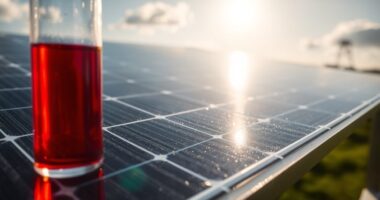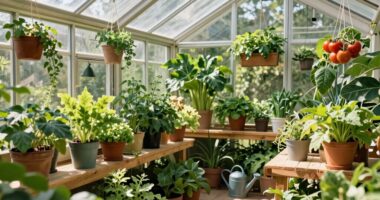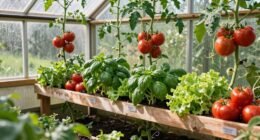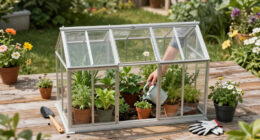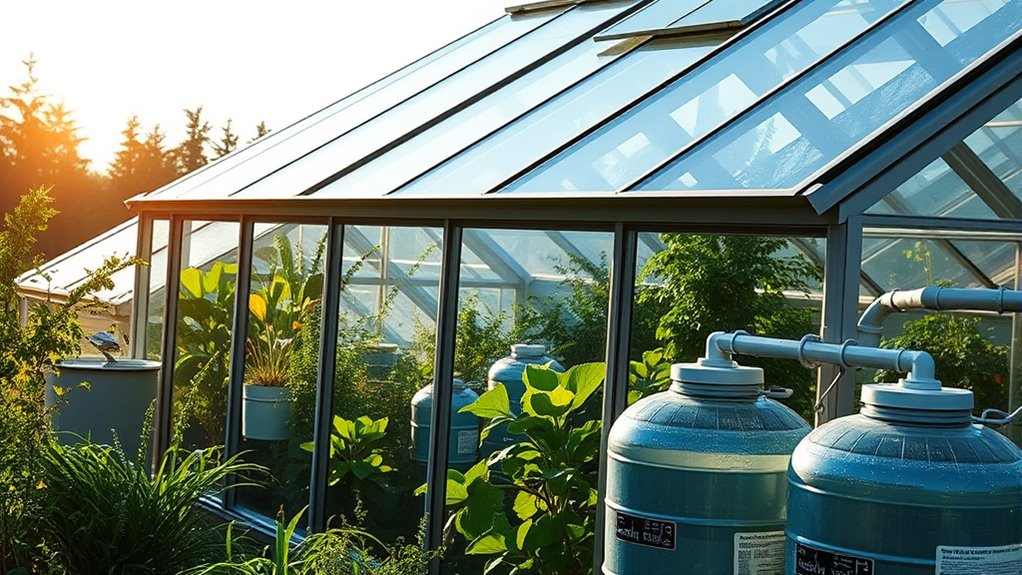
By combining solar panels and rainwater harvesting, you can create a self-sufficient greenhouse that produces fresh food year-round. You’ll harness solar power to run ventilation, lighting, and watering systems, while collecting rainwater for irrigation, reducing reliance on external resources. Installing reflective surfaces and efficient water management maximizes resources and keeps the environment healthy for plants. If you’re curious about designing a sustainable system like this, explore the details that make it possible.
Open a free Amazon Business account
Business pricing, bulk buying and tax-exempt orders.
As an affiliate, we earn on qualifying purchases.
Key Takeaways
- Integrate solar panels on the greenhouse roof to power ventilation, lighting, and watering systems sustainably.
- Implement rainwater harvesting with filtration and storage to supply irrigation and reduce external water dependency.
- Design the greenhouse for optimal sun exposure and reflectivity to maximize solar energy capture and internal light efficiency.
- Use automated, water-efficient irrigation methods like drip systems and capillary mats to conserve resources.
- Maintain a closed-loop system with regular system inspections, water quality checks, and energy storage solutions like batteries or fuel cells.
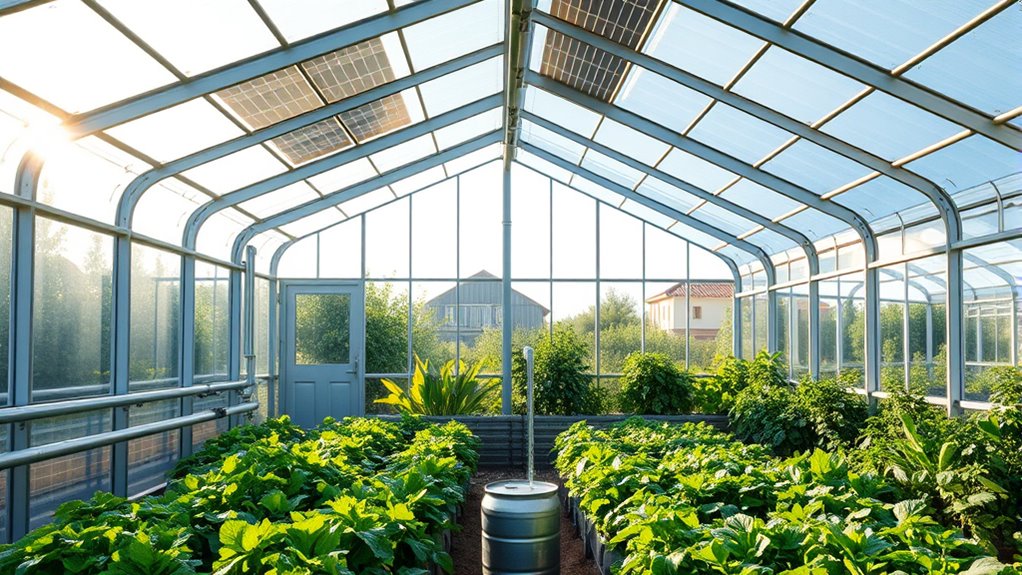
A self-sufficient greenhouse system allows you to grow fresh produce year-round with minimal external input. By integrating renewable energy sources and water management strategies, you can create a sustainable environment that reduces reliance on external resources and lowers your overall ecological footprint. Solar integration plays an essential role here, enabling you to harness sunlight to power ventilation, lighting, and even automated watering systems. With solar panels installed on the greenhouse roof or nearby, you generate clean energy during the day, which can be stored in batteries for nighttime use. This setup not only cuts energy costs but also guarantees your plants receive consistent light and climate regulation, fostering ideal growth regardless of season or weather.
Water recycling is another key component of a self-sufficient greenhouse. Instead of depending solely on municipal water supplies, you can implement a rainwater harvesting system that captures runoff from the roof. This water is then filtered and stored for later use, effectively turning your greenhouse into a mini water cycle. Recycling water reduces waste and conserves essential resources, especially in areas prone to drought or water restrictions. Additionally, incorporating drip irrigation or capillary mats ensures minimal water wastage, directing moisture precisely where plants need it most. Combining water recycling with efficient watering techniques maximizes resource use and supports healthier plant growth.
To maximize solar integration and water recycling, you should consider the placement of your greenhouse. Positioning it to maximize sun exposure enhances solar energy capture, while thoughtful design prevents excess shade that could hinder plant growth. Using reflective surfaces or light-colored materials can boost sunlight efficiency inside the greenhouse. For water recycling, installing gutters and downspouts connected to a storage tank simplifies rainwater collection. Incorporate a filtration system to remove debris and contaminants, ensuring the water remains clean and safe for plants. Hydrogen fuel cells can also be utilized to store excess renewable energy, providing a reliable power source for your greenhouse operations during periods of low sunlight. This setup creates a closed-loop system where water is reused continuously, minimizing environmental impact and operational costs.
Achieving a truly self-sufficient greenhouse isn’t just about installing solar panels and rainwater systems; it involves ongoing management and maintenance. Regularly check your solar equipment for dirt or damage to maintain efficiency. Likewise, monitor water quality and storage levels to prevent stagnation or contamination. Over time, these practices help sustain your system’s performance, ensuring a steady supply of energy and water. With careful planning, you can enjoy fresh produce year-round without relying heavily on external resources, making your greenhouse a model of sustainability and independence.

Solar Exhaust Fan, 25W Solar Panel + 8" Ventilation Vent Fan, with Power Adapter, Anti-backflow Valve, High Speed Solar Powered Exhaust Fan with Bracket for Shed, Chicken Coop, Greenhouse, Dog House
- High-Efficiency Solar Panel: 25W with 21.5% efficiency
- Powerful Airflow: 430 CFM at 2300 RPM
- Low Noise Operation: 36 decibels at full speed
As an affiliate, we earn on qualifying purchases.
As an affiliate, we earn on qualifying purchases.
Frequently Asked Questions
What Are the Initial Costs for Installing Such a System?
The initial costs for installing a self-sufficient greenhouse system vary based on size and features, but budget considerations suggest you should expect to spend between $10,000 and $30,000. Cost estimates include solar panels, rainwater harvesting equipment, and greenhouse materials. You might find that investing in quality components reduces long-term expenses, so plan your budget carefully to balance upfront costs with future savings and sustainability goals.
How Much Maintenance Does the System Require Annually?
Oh, the joy of endless maintenance! You’ll spend about 10-15 hours annually tending to your system, but don’t worry—its durability means minor upkeep. Regular cleaning of solar panels, checking rainwater filters, and inspecting greenhouse seals keep everything running smoothly. The more durable your system, the less often you’ll need maintenance. So, embrace this small commitment for big rewards, and enjoy your self-sufficient oasis without constant worry.
Can This System Support Year-Round Plant Growth?
Yes, this system can support year-round plant growth, but seasonal variations may affect crop yields. You’ll need to adjust your temperature, lighting, and watering strategies as seasons change. With proper management, you can maintain crop diversity throughout the year. The greenhouse’s insulation and solar energy help regulate conditions, guaranteeing plants stay healthy regardless of outside weather. Regular maintenance ensures the system remains efficient and productive year-round.
What Are the Potential Environmental Impacts?
You might think this system minimizes environmental impacts, but it can also affect biodiversity if not managed carefully. It reduces your carbon footprint by harnessing renewable energy and rainwater, which is great. However, if it leads to habitat disruption or resource overuse, it could harm local ecosystems. To truly support sustainability, you need to balance energy efficiency with biodiversity preservation, ensuring your system benefits the environment overall.
How Scalable Is the System for Larger Operations?
You can scale this system for larger operations, but you’ll face scaling challenges like increased infrastructure requirements and higher resource demands. As you expand, you’ll need more efficient water collection, energy storage, and distribution systems to maintain sustainability. Planning carefully and investing in robust infrastructure helps guarantee your system remains effective and environmentally friendly, even at a bigger scale. Proper design and resource management are key to successful scaling.
Conclusion
By combining a greenhouse with rainwater harvesting and solar energy, you create a self-sufficient oasis—where nature’s resources sustain your plants and reduce reliance on external power. It’s a harmony of innovation and simplicity, a balance between technology and nature. While the sun fuels your system, rain replenishes it, and your greenhouse thrives in this symbiotic dance. Embrace this approach, and watch your sustainable haven flourish—where self-sufficiency becomes your everyday reality.
Fall Picks
fall essentials
As an affiliate, we earn on qualifying purchases.