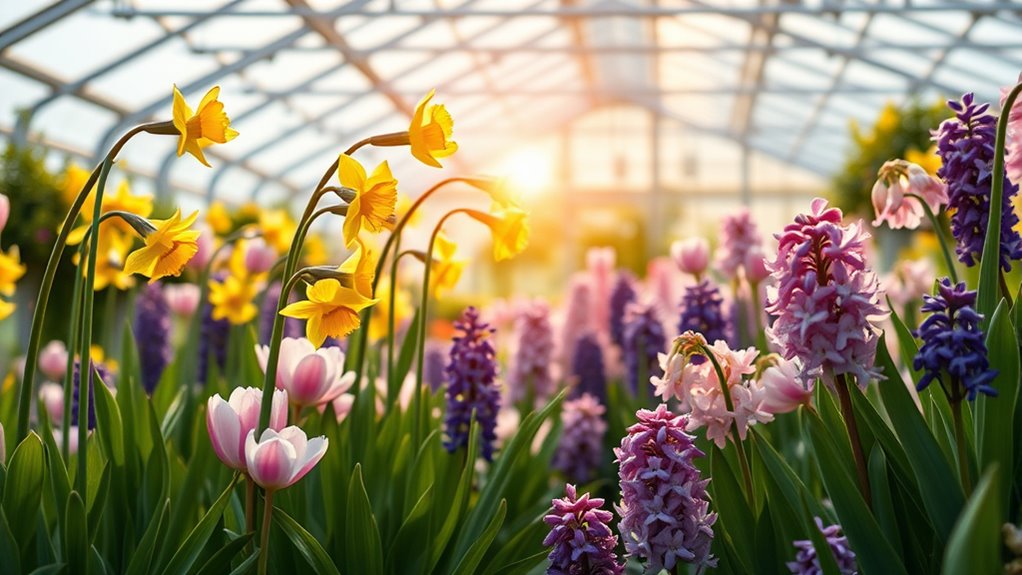

To get early spring blooms in your greenhouse, start by storing bulbs like tulips, daffodils, or hyacinths in a cool, dark place at around 40°F for several weeks to mimic winter dormancy. Once chilled, plant them in well-draining soil inside pots, and control the environment with proper lighting and temperature. This process tricks bulbs into blooming early, ensuring vibrant flowers. Keep exploring for detailed steps to perfect your forcing method.
Open a free Amazon Business account
Business pricing, bulk buying and tax-exempt orders.
As an affiliate, we earn on qualifying purchases.
Key Takeaways
- Store bulbs in a cool, dark place (~40°F/4°C) for a chilling period to simulate winter dormancy.
- After chilling, plant bulbs in well-draining soil in pots suitable for greenhouse conditions.
- Use artificial grow lights to supplement natural light, providing 12-16 hours daily for healthy growth.
- Maintain a controlled temperature environment to encourage uniform sprouting and early flowering.
- Properly timing the dormancy and forcing process ensures vibrant early spring blooms inside your greenhouse.
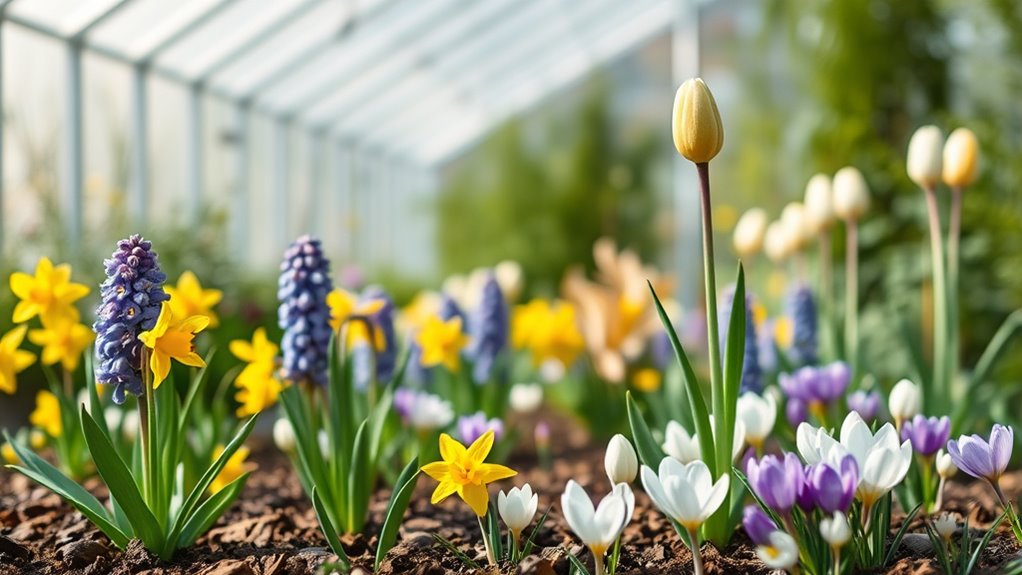
Have you ever wondered why some plants bloom earlier than others in spring? The secret often lies in how you handle bulb storage and how you provide greenhouse lighting. If you want to enjoy early blossoms, understanding these factors can make a big difference in how quickly bulbs bloom inside your greenhouse. Proper bulb storage is essential because, before forcing bulbs to bloom early, you need to keep them dormant and healthy. Typically, bulbs like tulips, daffodils, and hyacinths require a period of cold dormancy. You should store them in a cool, dark place—ideally around 40°F (4°C)—for a few weeks to mimic winter conditions. This chilling period tricks the bulbs into thinking they’ve gone through winter, which is necessary for early flowering. Once the dormancy period is complete, you can start the forcing process. When you’re ready, plant the bulbs in pots with well-draining soil, and place them in your greenhouse.
Greenhouse lighting plays a pivotal role in ensuring these bulbs bloom early. While natural light is beneficial, it’s often insufficient during early spring or in regions with limited sunlight. Supplementing with artificial greenhouse lighting helps provide the consistent light needed for healthy development. Using grow lights with the right spectrum encourages photosynthesis and mimics the sun’s rays, supporting both root growth and flower development. It’s important to keep the lighting on for about 12-16 hours daily to simulate spring conditions. Proper greenhouse lighting can also regulate the temperature around the bulbs, preventing stress and encouraging uniform growth. When the bulbs are exposed to adequate light and the right temperature, they start to sprout and develop buds sooner than they would outdoors. This controlled environment allows you to enjoy early blooms, even if the outdoor weather isn’t cooperating.

COOLJOB 2 Pairs Gardening Gloves for Women Ladies, Breathable Rubber Coated for Yard Garden, Outdoor Indoor Protective Work with Grip, Medium Size, Red & Green
- Designed for Women: Lightweight, breathable, comfortable fit
- Enhanced Hand Protection: Thickened fingertips protect nails and hands
- Long, Flexible Cuffs: Keeps dirt and debris out
As an affiliate, we earn on qualifying purchases.
Frequently Asked Questions
How Long Does It Take for Bulbs to Bloom Indoors?
It typically takes about 6 to 12 weeks for bulbs to bloom indoors after refrigeration. You should start by refrigerating the bulbs for 10-12 weeks to break dormancy, then prepare your soil with proper drainage and nutrients. Once planted in well-drained soil, place the bulbs in a bright, cool location. With patience and proper soil preparation, your bulbs will bloom indoors within this timeframe, bringing early spring cheer.
Can All Bulb Varieties Be Forced in a Greenhouse?
Forcing bulbs in your greenhouse is like opening a secret door to spring; not all bulb varieties are suitable, but many are. You can generally force popular varieties like tulips, daffodils, and hyacinths, as they’re highly compatible with greenhouse conditions. However, some bulbs may not thrive due to their specific needs. Check each bulb’s greenhouse compatibility to make sure you get vibrant blooms and a successful early spring display.
What’s the Best Temperature for Forcing Bulbs?
The best temperature for forcing bulbs is around 35-45°F (2-7°C) during their dormancy period. Proper temperature regulation is vital to break bulb dormancy and promote healthy flowering. Keep them in a cool, dark place initially, then gradually increase warmth as they develop. Maintaining this temperature range ensures steady growth and vibrant blooms, mimicking natural conditions and giving you beautiful early spring flowers.
How Often Should I Water the Bulbs During Forcing?
You should water your bulbs when the top inch of soil feels dry, typically once a week. Stick to a consistent watering schedule, ensuring you don’t overwater or let the soil dry out completely. Use humidity control to prevent excess moisture, which can cause rot. Proper watering and humidity management keep your bulbs healthy and promote vibrant blooms during forcing. Adjust frequency based on your greenhouse’s conditions for best results.
Are There Any Common Pests That Affect Forcing Bulbs?
You should watch out for common pests like aphids, spider mites, and fungus gnats that affect forcing bulbs. To prevent these, regularly inspect your plants for pest signs, keep the greenhouse clean, and avoid overwatering, which attracts gnats. Pest identification helps you catch issues early, while prevention strategies like proper ventilation and using insecticidal soap can keep pests at bay, ensuring your bulbs stay healthy and bloom beautifully.
Conclusion
As you force bulbs in your greenhouse, you bring early spring’s delicate beauty indoors. It’s a quiet miracle, a burst of vibrant color against the cozy warmth of your space. Just as winter’s chill lingers outside, your blooming bulbs remind you that hope and renewal can flourish even in the coldest times. With each blossom, you create a fleeting moment of spring’s promise—a gentle reminder that beauty can bloom anytime, anywhere.
Summer Picks
summer essentials
As an affiliate, we earn on qualifying purchases.