In late winter, focus on propagating plants from cuttings and starting seeds in your greenhouse to build a strong spring stock. Keep pests in check by inspecting plants regularly and using organic controls. Control your greenhouse environment with climate adjustments to promote healthy growth and minimize pests. Organize your workspace with sterilized tools and proper lighting. These essential tasks set the stage for a successful season—continue exploring to discover how each step boosts spring success.

Get garden gear delivered free with Prime
- Fast, free delivery on millions of items
- Prime Video, Amazon Music and more included
- Member-only deals all year
Key Takeaways
- Propagate seedlings now to ensure a healthy, diverse plant stock for spring planting.
- Prepare and sterilize tools and workspace to prevent disease and pest spread.
- Adjust greenhouse climate controls to optimize conditions for seed germination and growth.
- Inspect and manage pests early using integrated strategies to protect young plants.
- Organize supplies and set up grow lights to facilitate efficient propagation and early growth stages.
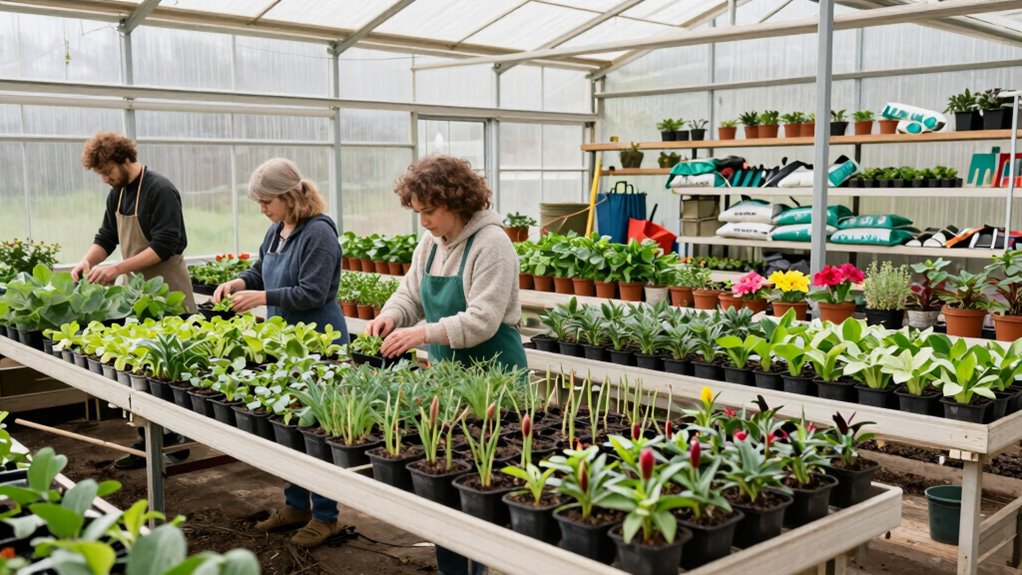
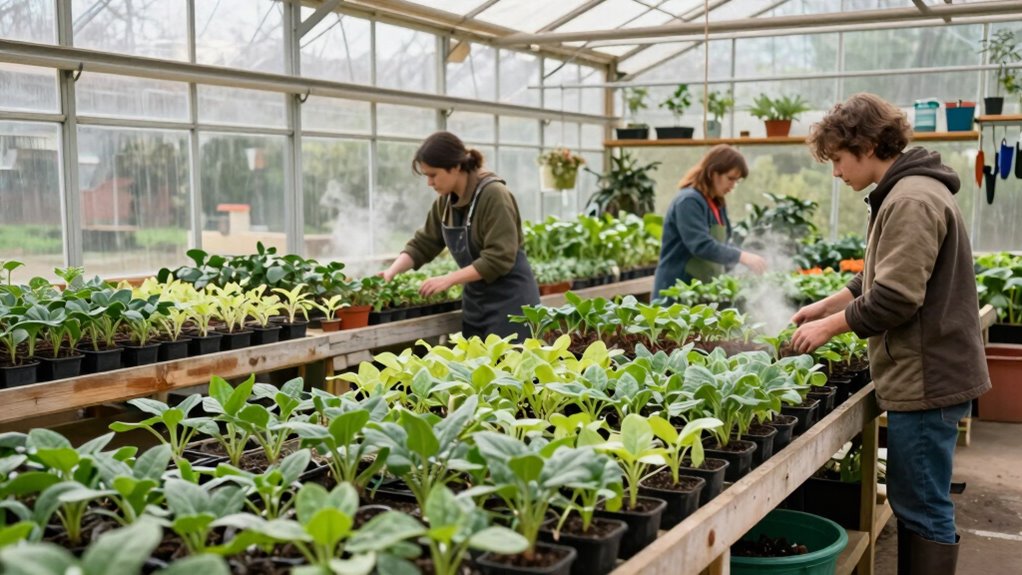
As late winter begins to give way to spring, it’s the perfect time to start thinking about greenhouse jobs that can help you stay productive and earn extra income. One of the most essential tasks during this transitional period is plant propagation. You can start by taking cuttings from healthy plants to produce new ones, which not only saves money but also guarantees you have a variety of plants ready for the upcoming growing season. Propagating plants now allows you to build a robust stock of seedlings, giving you a head start once the weather warms. You might also consider seed starting, which is particularly effective in late winter. Using your greenhouse’s controlled environment, you can nurture seedlings in trays or pots, providing them with the necessary conditions they need to thrive. This process assures you’ll have strong, healthy plants to transplant outdoors or into larger containers as spring progresses.
Alongside plant propagation, pest management becomes increasingly important during this period. As you prepare your greenhouse for the busy season, keeping pests at bay is essential to prevent infestations that could jeopardize your crops. You should regularly inspect your plants for early signs of pests like aphids, spider mites, or fungus gnats. Implement integrated pest management strategies, such as introducing beneficial insects or using organic sprays, to keep pests under control without harming your plants or the environment. Maintaining a clean and sanitized greenhouse environment also plays a critical role in pest prevention. Remove any dead plant material or debris that could harbor pests or diseases, and ensure proper ventilation to reduce humidity levels that attract pests and promote fungal growth. Additionally, understanding greenhouse environment control techniques can help optimize conditions and reduce pest issues. Incorporating biodiversity practices, like planting companion plants that attract beneficial insects, can further enhance pest management naturally. Regular monitoring and early intervention are key components of an effective pest control strategy in late winter. Moreover, leveraging climate control technologies can help maintain optimal conditions that discourage pest outbreaks while supporting healthy plant growth. Staying informed about pest identification can also make your management efforts more targeted and effective.
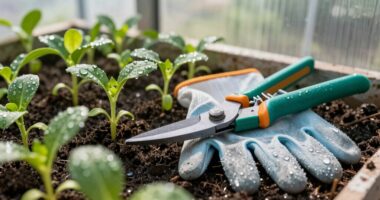
While focusing on plant propagation and pest management, don’t forget to prepare your workspace for the upcoming busy season. This might involve cleaning and sterilizing tools, organizing your supplies, and setting up your grow lights and watering systems. These preparatory steps streamline your workflow once the planting season kicks into full gear. Additionally, late winter is an excellent time to experiment with new plant varieties or try out innovative propagation techniques, which can give you an edge in the market or simply add variety to your personal garden.
As an affiliate, we earn on qualifying purchases.
Frequently Asked Questions
What Tools Are Essential for Late-Winter Greenhouse Work?
You’ll need essential tools like soil testers for soil testing and pest monitoring devices to detect and manage infestations early. Hand trowels and pruning shears are vital for preparing and maintaining plants. A thermometer helps monitor temperature, ensuring ideal conditions. Gloves protect your hands during work, and watering cans or hoses keep plants hydrated. These tools help you prepare your greenhouse efficiently for a productive spring.
How Do I Prepare the Greenhouse for Spring Planting?
To prepare your greenhouse for spring planting, start by cleaning and disinfecting surfaces to prevent pests and diseases. Use composting techniques to enrich your soil, ensuring it’s nutrient-rich for seedlings. Adjust greenhouse lighting to optimize plant growth, adding supplemental lights if necessary to compensate for shorter daylight hours. Ventilate regularly to maintain healthy air circulation. This preparation creates ideal conditions for a successful spring start.
What Pests Are Common in Late-Winter Greenhouses?
You’ll find common pests like aphids, whiteflies, and spider mites lurking in late-winter greenhouses. Pest identification helps you recognize these intruders early, while pest prevention keeps them at bay. Regularly inspect your plants, remove infected ones, and maintain proper humidity and airflow. By staying vigilant and proactive, you can effectively manage pests, ensuring your greenhouse stays healthy and ready for a vibrant spring.
How Can I Improve Greenhouse Heating Efficiency?
To improve greenhouse heating efficiency, focus on energy conservation by upgrading your insulation techniques. Use bubble wrap or thermal curtains to minimize heat loss, especially at night. Seal gaps around doors and vents to prevent drafts. Consider installing a thermostat to regulate temperature precisely, reducing unnecessary energy use. Regularly maintain your heating system for peak performance. These steps help you save energy, lower costs, and create a more consistent environment for your plants.
When Is the Best Time to Start Seedlings Indoors?
You should start seedlings indoors about 6 to 8 weeks before your last expected frost date. During this time, focus on seedling nutrition to promote healthy growth and guarantee they develop strong roots. Optimize light by placing your trays near south-facing windows or using grow lights, ensuring seedlings get enough brightness daily. Proper timing, nutrition, and light will give your seedlings the best start for a strong spring.
Conclusion
By tackling these late-winter greenhouse jobs, you’re not just preparing for spring—you’re paving the way for a bumper harvest that could feed a small army! Every seed you plant and every repair you make is like laying down the foundation of a thriving, unstoppable garden empire. Get these tasks done now, and you’ll be rewarded with a spring so abundant, it’ll make every other year look like a garden of tiny, meek flowers.
Fall Picks
fall essentials
As an affiliate, we earn on qualifying purchases.