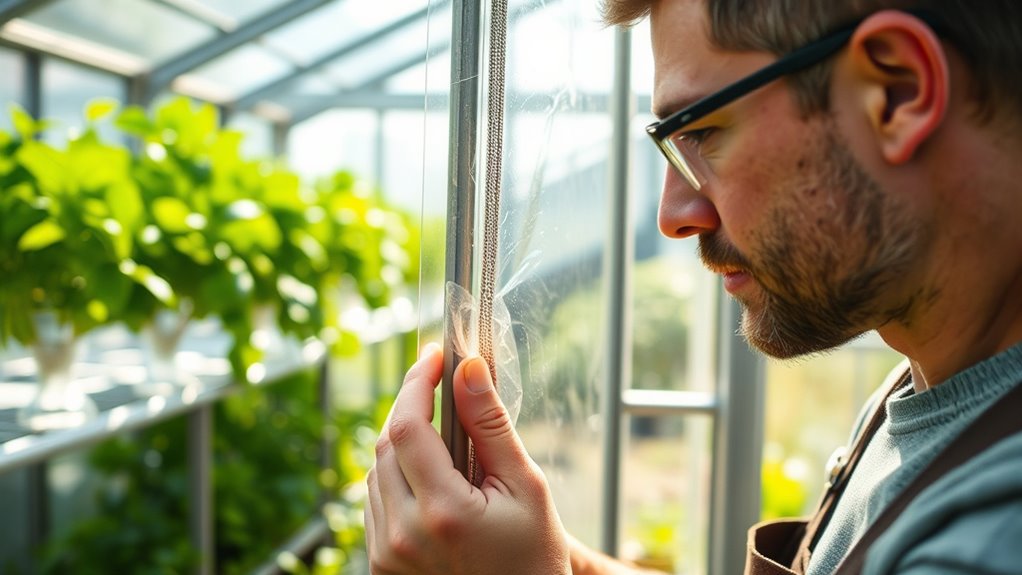

To check for greenhouse drafts, inspect edges around windows, doors, and vents for cracks or gaps. Use a flashlight at night or tissue paper to see if air flows through, indicating leaks. Seal these gaps with weatherstripping, caulk, or expanding foam, especially around structural openings. Regularly reassess to prevent new drafts and guarantee your climate stays stable. Keep up with these steps to maintain ideal conditions inside your greenhouse and discover more effective sealing tips.

Get garden gear delivered free with Prime
- Fast, free delivery on millions of items
- Prime Video, Amazon Music and more included
- Member-only deals all year
Key Takeaways
- Inspect edges of windows, doors, vents with a flashlight or tissue paper to detect airflow and identify drafts.
- Look for cracks or gaps around structural openings and seal them with weatherstripping, caulk, or expanding foam.
- Use tissue paper to feel for light filtering or fluttering, indicating possible gaps needing sealing.
- Reassess regularly, especially before cold seasons, to catch new or recurring drafts early.
- Consider professional repairs for large cracks or structural issues affecting airtightness.

Are you noticing drafts in your greenhouse that make maintaining the ideal temperature a challenge? Drafts often sneak in through tiny openings, causing temperature fluctuations that stress plants and waste energy. To keep things consistent, you need to identify where these drafts are coming from and address them effectively. One common culprit is ventilation gaps—spaces around vents, windows, doors, or even tiny cracks in the structure. These gaps can be surprisingly small but have a big impact on climate control inside your greenhouse. The good news is that sealing these gaps doesn’t require expensive equipment; simple sealing techniques can do the trick.
Start by inspecting your greenhouse thoroughly. Look around all the edges of windows and doors, paying attention to any cracks or spaces that seem less than airtight. Use a flashlight at night or a piece of tissue paper to detect drafts—if the tissue flutters or if you see light filtering through, you’ve found your ventilation gaps. Once identified, you can seal these openings with a variety of sealing techniques. Weatherstripping is an effective method, especially around doors and windows, because it creates a flexible barrier that blocks air leaks while allowing for easy opening and closing. For gaps around vents, consider using expanding foam or silicone caulk, which can fill irregular spaces and provide a durable, airtight seal.
Inspect windows, doors, and vents with tissue or flashlight to find and seal drafts effectively.
When applying sealing techniques, make sure to clean the surface thoroughly beforehand. Dust, dirt, and moisture can prevent adhesives and sealants from sticking properly, reducing their effectiveness. After sealing, check the area again to ensure the gap is fully closed and no new drafts are coming through. If you’re dealing with larger gaps, consider adding supplemental weatherstripping or using draft stoppers—these are simple fabric or foam barriers that can be placed along the bottom of doors or around window frames. For structural cracks that are too big for standard caulking, you might need to use patching materials or consult a professional for more extensive repairs.
Additionally, investing in automated ventilation systems can help regulate airflow and reduce the formation of new drafts over time, ensuring a more stable climate inside your greenhouse. Regular maintenance is key to preventing drafts from forming again. Weather conditions, temperature changes, and natural settling can create new gaps over time. Make it a habit to inspect your greenhouse periodically, especially before the colder seasons, and reapply sealing techniques as needed. By taking these proactive steps, you’ll create a more stable environment inside your greenhouse, reducing energy waste and helping your plants thrive. Remember, sealing those ventilation gaps isn’t just about comfort; it’s about creating an ideal climate that promotes healthy growth and maximizes your greenhouse’s potential.
As an affiliate, we earn on qualifying purchases.
Frequently Asked Questions
What Tools Are Best for Sealing Greenhouse Drafts?
You should use sealant options like weatherstripping or caulk to effectively seal greenhouse drafts. A foam sealant works well for larger gaps, while silicone or acrylic sealants are great for smaller cracks. Insulation techniques like bubble wrap or foam board can also help reduce drafts. Have these tools handy, and apply the sealant carefully along drafty areas, ensuring a tight seal to keep your greenhouse warm and energy-efficient.
How Often Should I Inspect My Greenhouse for Drafts?
Think of yourself as a vigilant gardener, much like a lighthouse keeper. You should conduct regular inspections, ideally every season, to catch drafts early. Seasonal monitoring helps you stay ahead of temperature fluctuations and keeps your plants cozy. During each inspection, look for gaps or cracks, especially after harsh weather. This routine guarantees your greenhouse remains a warm haven, maximizing plant health and energy efficiency year-round.
Can Plants Be Harmed by Drafts in the Greenhouse?
Yes, plants can be harmed by drafts in the greenhouse. Drafts cause plant stress by creating temperature fluctuations and dry air, which can stunt growth or cause damage. To prevent this, you should implement draft mitigation strategies like sealing gaps and using windbreaks. Regularly checking for drafts helps maintain a stable environment, ensuring your plants stay healthy and thrive without the negative effects of sudden temperature changes.
Are There Eco-Friendly Options for Sealing Drafts?
Yes, you can use eco-friendly options like recycling insulation and biodegradable sealants to seal greenhouse drafts. Recycling insulation helps reduce waste and provides effective insulation, while biodegradable sealants offer a safe, natural way to block drafts without harming the environment. These choices are sustainable and non-toxic, ensuring your greenhouse stays warm without compromising eco-standards. By opting for these materials, you support eco-conscious gardening and energy efficiency.
How Do Seasonal Changes Affect Greenhouse Draft Severity?
You’ll notice that seasonal temperature shifts and wind pattern impacts substantially influence greenhouse draft severity. During colder months, drafts can increase by up to 30%, making it harder to maintain stable temperatures. Strong winds push cold air through gaps, especially in winter and fall. As seasons change, you should regularly inspect seals and adjust coverings to prevent heat loss, ensuring your greenhouse stays warm and efficient year-round.
Conclusion
Now that you know how to spot and seal greenhouse drafts, your plants will thrive in a cozy haven. It’s easy to think of drafts as tiny annoyances, but left unchecked, they can cause big problems. By closing those gaps, you create a warm, secure environment—like wrapping your plants in a protective blanket. In the end, fixing drafts isn’t just about comfort; it’s about giving your garden the best chance to flourish.
Halloween Picks
halloween
As an affiliate, we earn on qualifying purchases.