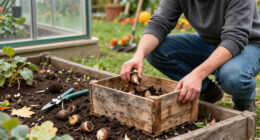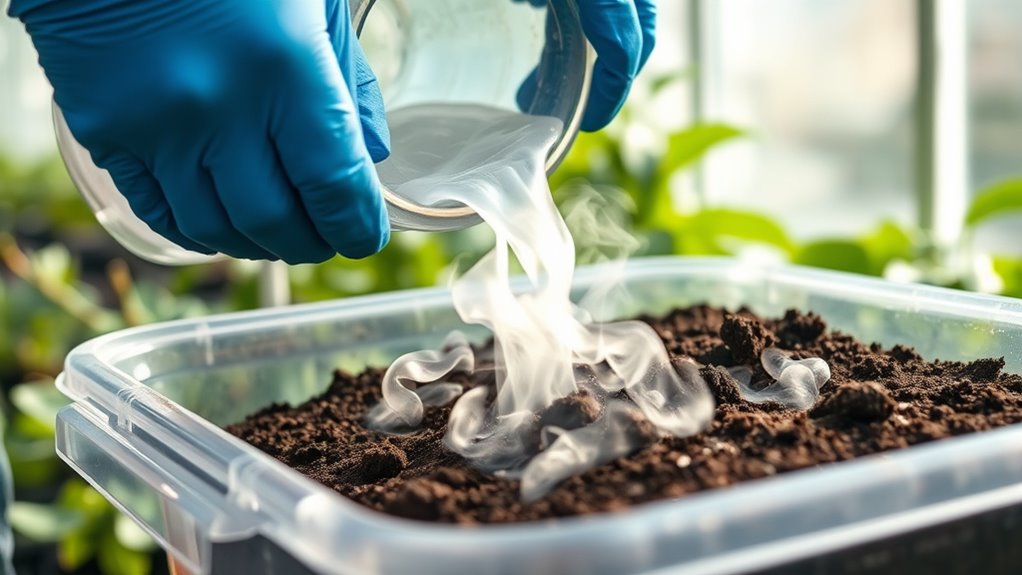

To sterilize your greenhouse soil, you can use heat treatment or soil fumigation. Heat treatment involves raising the soil temperature to around 160°F (70°C) using solarization or specialized equipment to kill pests, pathogens, and weed seeds without chemicals. Fumigation uses gaseous or chemical agents, but requires safety precautions and proper ventilation. Before starting, clear debris and weeds. Following these steps will help prevent persistent diseases—continue to explore methods to keep your plants healthy and thriving.

Get garden gear delivered free with Prime
- Fast, free delivery on millions of items
- Prime Video, Amazon Music and more included
- Member-only deals all year
Key Takeaways
- Remove weeds, debris, and infected plant material before sterilization to ensure effectiveness.
- Use soil fumigation with appropriate chemicals or gases, following safety and ventilation guidelines.
- Employ heat treatment by solarization or specialized equipment to raise soil temperature to around 160°F (70°C).
- Reintroduce beneficial microbes or organic matter after sterilization to promote healthy soil ecosystems.
- Monitor and adjust methods based on infestation severity and environmental considerations for optimal results.
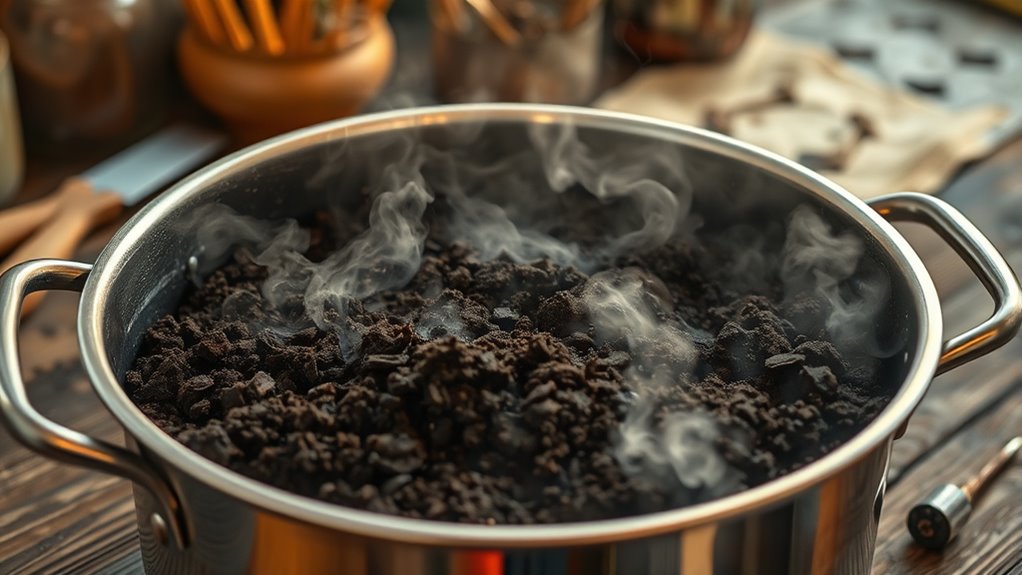
Sterilizing soil is an effective way to eliminate harmful pests, diseases, and weeds that can hinder plant growth. When you’re trying to maintain a healthy greenhouse environment, understanding how to properly sterilize your soil becomes essential. Two primary methods you can use are soil fumigation and heat treatment, each offering unique advantages depending on your situation.
Soil fumigation involves applying chemical or gaseous agents that penetrate the soil and eradicate pests, pathogens, and weed seeds. This method is particularly useful if your soil has a severe infestation or persistent diseases. You’ll need to cover the soil after application to trap the fumigant and guarantee it penetrates thoroughly. Be sure to follow safety guidelines and use appropriate protective gear, as fumigants can be hazardous. Once the chemicals have done their job, the soil needs time to vent and break down before you can safely plant in it again. Fumigation is fast and effective but requires careful handling and proper disposal of chemicals to minimize environmental impact.
Heat treatment is another reliable method you can employ, especially if you prefer chemical-free sterilization. This process involves raising the soil temperature to kill off pests, weed seeds, and disease-causing organisms. You can achieve this by using a solarization technique, where you spread the soil in the sun and cover it with clear plastic to trap heat. Alternatively, you can use specialized equipment like a steam sterilizer or a soil heater to reach the necessary temperature—typically around 160°F (70°C)—for a sustained period. Heat treatment is highly effective and eco-friendly, making it suitable for organic growers or those concerned about chemical residues. It’s essential to monitor the temperature carefully to avoid damaging beneficial soil microbes that promote healthy plant growth. Incorporating sound science sound vibrations can also enhance overall soil health after sterilization.
Both methods require preparation and proper timing. You should start by removing weeds, debris, and visibly infected plant material before sterilizing. For heat treatment, ensure even heat distribution to avoid cold spots where pests or pathogens could survive. After sterilization, you might need to reintroduce beneficial microbes or organic matter to restore soil vitality, especially after heat treatment, which can kill both harmful and helpful organisms.
As an affiliate, we earn on qualifying purchases.
Frequently Asked Questions
How Often Should I Sterilize Greenhouse Soil?
You should sterilize your greenhouse soil once a year or when you notice disease issues. Regular sterilization helps maintain soil nutrient balance and reduces pathogen buildup. However, avoid overdoing it, as it can harm microbial diversity, which is essential for healthy plant growth. After sterilization, reintroduce beneficial microbes to restore microbial diversity. Monitor plant health and adjust sterilization frequency accordingly to keep your greenhouse thriving.
Can Sterilization Harm Beneficial Soil Microbes?
Sterilization can indeed impact your soil’s microbial balance, potentially killing beneficial microbes along with harmful pathogens. Imagine a vibrant underground world, teeming with helpful bacteria and fungi that support plant health. When you sterilize, some of these helpful microbes may be lost, making it harder for your plants to thrive naturally. To minimize this impact, consider targeted sterilization methods and reintroduce beneficial microbes afterward to restore balance.
Is Chemical Sterilization Safe for Plants?
Chemical sterilization can be safe for plants if you choose the right products and follow instructions carefully. You need to take into account chemical safety and ensure proper application to avoid harming your plants or beneficial microbes. When done correctly, it minimizes risks to plant health. Always read labels, wear protective gear, and ventilate the area. Properly sterilized soil helps prevent diseases without compromising the overall health of your plants.
What Are Natural Alternatives to Sterilization?
Natural, nurturing options nurture your soil’s health without harmful chemicals. You can boost beneficial bacteria with compost teas, which introduce helpful microbes to fight pathogens naturally. Microbial inoculants also enhance soil vitality, creating a microbial mosaic that actively suppresses diseases. These techniques, combined with proper composting and crop rotation, foster a flourishing, fungus-free foundation, fostering healthy growth while safeguarding your plants and the environment.
How Do I Test if Soil Is Properly Sterilized?
You can verify soil sterilization through simple soil testing methods. After sterilization, take a small sample and incubate it in a container with moist paper towels or sterile soil in a warm, dark place for a few days. If no microbial growth appears, your sterilization is successful. This sterilization verification guarantees you’ve effectively eliminated pathogens, making your soil safe for planting and reducing disease risks.
Conclusion
By sterilizing your soil, you’re basically turning it into a fortress, an impenetrable barrier against all greenhouse diseases! No pesky pathogens can survive your efforts, and your plants will thrive like never before. Think of it as giving your garden a superpower—an unstoppable shield that keeps diseases at bay forever. So, go ahead, sterilize with confidence, and watch your greenhouse become an unstoppable, disease-free paradise where healthy plants reign supreme!
Halloween Picks
halloween
As an affiliate, we earn on qualifying purchases.