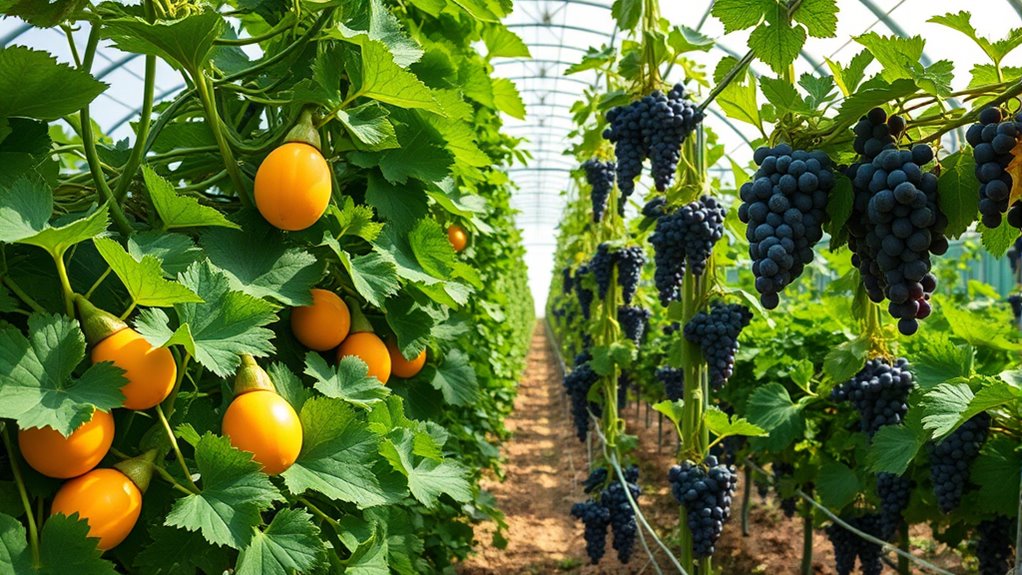
To manage vine crops like melons and grapes in greenhouses, focus on strategic pruning to promote healthy growth and better fruit production, while removing dead or diseased leaves. Maintain good airflow and control humidity to prevent diseases, and introduce beneficial insects for natural pest control. Regular inspections and targeted organic treatments help keep pests at bay. Keep your environment clean and healthy, and you’ll find more useful tips to optimize your greenhouse success.

Get garden gear delivered free — and shop member deals
- Fast, free delivery on millions of items
- Access to Prime Big Deal Days deals on October 6–7
- Prime Video, Amazon Music and more included
Key Takeaways
- Implement regular pruning to promote healthy growth, improve air circulation, and enhance fruit quality in greenhouse vine crops.
- Use integrated pest management with beneficial insects and sanitation to control pests effectively.
- Maintain optimal environmental conditions, including humidity and airflow, to reduce disease risks.
- Regularly inspect plants for signs of pests or disease and apply targeted organic treatments when necessary.
- Keep tools sterilized and dispose of infected material promptly to prevent pathogen spread and ensure plant health.
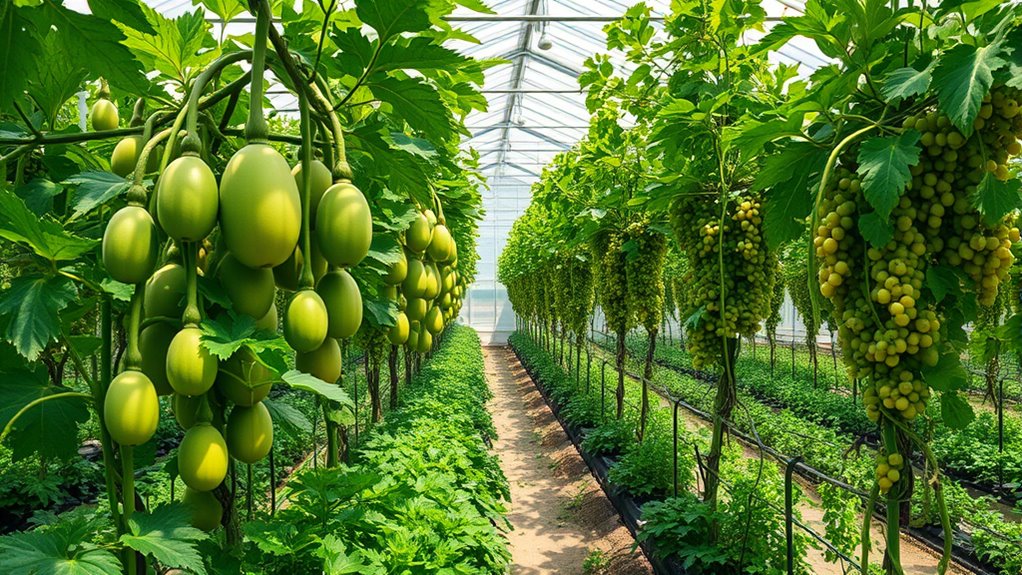
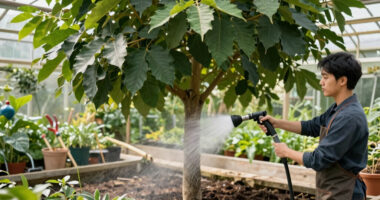
Growing vine crops in greenhouses offers a controlled environment that can boost yields and extend growing seasons. To achieve these benefits, you need to pay close attention to your pruning techniques. Proper pruning encourages healthy growth, improves air circulation, and makes pest management easier. For melons and grapes, start by removing any dead or diseased leaves and stems regularly. This prevents the spread of diseases and keeps the plant’s energy focused on producing fruit. When pruning grapes, focus on maintaining a balanced canopy by selecting a few strong canes to bear fruit and trimming back excess shoots. For melons, prune to open up the plant’s center, ensuring sunlight reaches all parts and reducing the risk of fungal infections. Consistent pruning not only improves fruit quality but also helps you spot pest issues early, making management more effective. Regular pruning also supports efficient use of portable tools that can make the process quicker and safer.
Pest management is essential in a greenhouse setting because pests can multiply rapidly in a confined space. To keep pests at bay, start with preventative measures like introducing beneficial insects, such as ladybugs or predatory mites, which naturally control common pests. Keep your greenhouse clean by removing fallen leaves and debris, as these can harbor pests and diseases. Regularly inspect your vines for signs of trouble—such as discolored leaves, sticky residue, or holes—so you can act quickly. When pests are detected, use targeted treatments like insecticidal soaps or organic pesticides to minimize chemical use and protect your plants. Quarantining new plants before introducing them to your greenhouse also helps prevent the spread of pests. Remember, good pest management isn’t just about reacting to infestations; it’s about creating a healthy environment where pests are less likely to thrive.
In addition to pruning and pest control, maintaining proper hygiene and environmental conditions supports healthy vine crops. Keep humidity levels optimized and ensure good airflow to reduce the risk of fungal diseases. Use sterilized tools for pruning to prevent pathogen transfer, and always dispose of infected plant material properly. With these practices, you’ll create a resilient greenhouse environment that promotes vigorous growth and high-quality fruit production. Managing vine crops effectively involves a combination of strategic pruning techniques and vigilant pest management. By implementing these practices consistently, you’ll maximize your greenhouse’s productivity and keep your plants healthy and productive throughout the season.
greenhouse vine crop pruning tools
As an affiliate, we earn on qualifying purchases.
As an affiliate, we earn on qualifying purchases.
Frequently Asked Questions
How Do I Prevent Pests in Greenhouse Vine Crops?
To prevent pests in your greenhouse vine crops, start by pest identification to catch issues early. Keep your greenhouse clean and remove debris that can harbor pests. Use organic pest control methods like neem oil or insecticidal soaps to target pests safely. Regularly inspect plants for signs of infestation, and encourage beneficial insects like ladybugs. Staying vigilant and proactive helps protect your crops effectively.
What Are Optimal Temperature Ranges for Different Vine Crops?
Think of your greenhouse as a delicate orchestra—each vine crop needs the right temperature to perform. For perfect growth, keep melons around 75-85°F, grapes thrive at 70-85°F, and other vines like cucumbers prefer 70-80°F. Use temperature regulation and humidity control to create these ideal conditions; just like tuning instruments, precise climate management ensures your crops flourish and resist pests effectively.
How Often Should I Water Greenhouse Vine Crops?
You should water your greenhouse vine crops about once every 2-3 days, but it depends on soil moisture management. Check the soil regularly; if it feels dry 1-2 inches below the surface, it’s time to water. Avoid overwatering, which can lead to root rot. Adjust the watering frequency based on weather conditions, pot size, and plant growth stage to keep soil moisture consistent and healthy for your vines.
Which Fertilizers Are Best for Greenhouse Vine Plants?
You should choose fertilizers rich in nitrogen, phosphorus, and potassium, like balanced granular or liquid formulations, to support healthy vine growth. Opt for organic options such as compost or fish emulsion, or synthetic fertilizers formulated for fruiting plants. Focus on nutrient management by applying these fertilizers consistently and according to plant needs, ensuring your vines receive the right mix of macro and micronutrients to thrive and produce abundant fruit.
How Can I Improve Air Circulation in Greenhouse Vine Setups?
To improve air circulation in your greenhouse vine setups, install effective ventilation systems like exhaust fans and roof vents. Make certain these systems are strategically placed for ideal airflow, and consider adding oscillating fans to enhance airflow enhancement across all plant areas. Regularly open side vents during the day, and monitor humidity levels to prevent fungal issues. Proper ventilation keeps your vines healthy and promotes even growth.
Conclusion
By mastering greenhouse vine crop management, you’re not just growing plants—you’re creating a lush, fruit-producing paradise that could rival any tropical jungle! With the right techniques, you’ll turn your greenhouse into a veritable wonderland of melons and grapes, bursting with flavor and beauty. Forget ordinary gardening—this is your chance to dominate the plant kingdom and produce harvests so abundant, they’ll leave everyone in awe. Get ready to transform your space into a vine-filled utopia!
Fall Picks
fall essentials
As an affiliate, we earn on qualifying purchases.