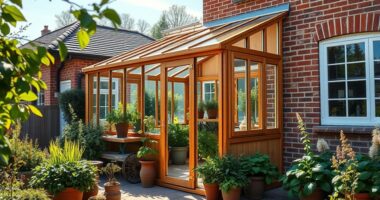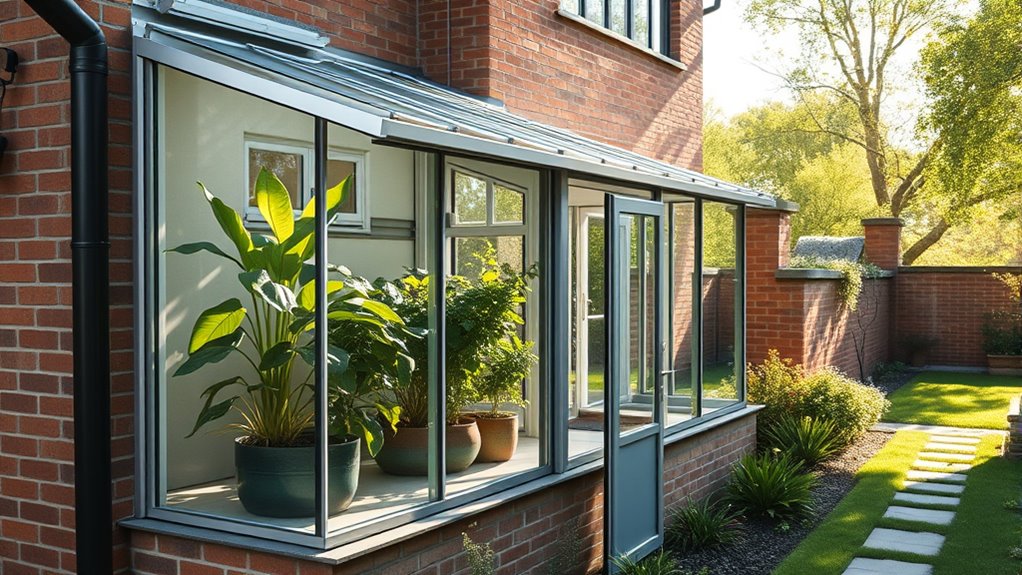

Attaching a greenhouse to your home can extend your growing season, boost your property’s value, and create a seamless outdoor space. However, it requires structural modifications like reinforcing walls and ensuring proper drainage, plus potential solar energy solutions for climate control. While the investment can be worthwhile, you’ll need careful planning and professional guidance to meet building codes. Interested in how to make this project successful? Keep exploring for more tips and insights.
Key Takeaways
- Attaching a greenhouse extends your growing season and enhances home value with aesthetic appeal.
- Structural modifications like reinforcing walls and supporting beams ensure safety and compliance.
- Solar energy integration can power climate control systems, reducing energy costs and promoting sustainability.
- Proper insulation and ventilation create a controlled environment for year-round plant growth.
- Professional consultation helps ensure safe, efficient installation and maximizes long-term gardening benefits.

Adding a greenhouse directly to your home can extend your growing season and create a seamless indoor-outdoor space. This setup allows you to cultivate plants year-round, regardless of outside weather conditions, making it a worthwhile investment for avid gardeners. However, before you begin, you need to consider the structural modifications necessary to integrate the greenhouse seamlessly with your existing home. These modifications often involve reinforcing walls, adding support beams, or altering existing rooflines to accommodate the greenhouse structure. Ensuring these changes are properly planned and executed is vital for safety and stability. Additionally, integrating solar energy solutions can substantially enhance the greenhouse’s efficiency. Installing solar panels on your roof or nearby can provide sustainable power for heating, lighting, and ventilation systems, reducing your reliance on traditional energy sources and lowering operational costs. When planning these modifications, it’s essential to evaluate your home’s current structure and consult with professionals to guarantee that your modifications are compliant with local building codes and won’t compromise your home’s integrity.
Integrate a greenhouse with your home through structural upgrades and solar energy solutions for year-round gardening.
The integration of solar energy not only makes your greenhouse more eco-friendly but also more cost-effective in the long run. Solar-powered fans, heaters, and grow lights help maintain ideal conditions inside the greenhouse without increasing your energy bills. You might also consider adding passive solar design elements, such as south-facing windows or reflective surfaces, to maximize natural heat and light. These modifications improve energy efficiency and create a more stable environment for your plants. Keep in mind that structural adjustments may involve some upfront investment, but the benefits of sustainable energy and increased growing capacity often outweigh the costs. Understanding projected energy savings and environmental benefits can motivate your planning process further.
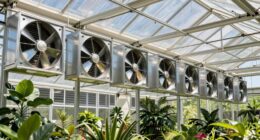
Once the structural modifications are in place, you’ll want to focus on insulation and climate control systems to maintain perfect growing conditions. Proper sealing and insulation are essential, especially if you plan to extend your grow season into colder months. Incorporating automated ventilation and heating systems powered by solar energy can help regulate temperature and humidity levels, creating an ideal environment for your plants. Be mindful of drainage and airflow, as poor circulation can lead to issues like mold or pests.
Attaching a greenhouse to your home offers many advantages, but it does require careful planning—particularly regarding structural modifications and solar energy integration. By making thoughtful modifications, you’ll create a sustainable, efficient space that enhances your gardening experience and adds value to your home. With the right approach, you’ll enjoy fresh produce and vibrant plants all year round, while also contributing to a greener lifestyle.
Frequently Asked Questions
How Much Does It Typically Cost to Attach a Greenhouse?
You can expect the cost to attach a greenhouse to your home to range from $1,000 to $10,000, depending on your material selection and size. A detailed cost estimation considers factors like foundation, framing, and glazing materials. Choosing more affordable options like polycarbonate might save money, while premium materials like glass increase costs. Always plan for extra expenses such as permits and labor to make certain your project stays within budget.
What Are the Building Code Requirements for Attached Greenhouses?
You need to check local building codes because attached greenhouses are considered permanent structures, requiring permits and compliance with zoning regulations. Make sure your plans meet setback requirements, height limits, and foundation standards. Contact your city or county building department to verify specific rules. Failing to follow these codes can lead to fines or needing to modify your greenhouse later, so it’s best to secure approvals before starting construction.
How Do I Ensure Proper Insulation Between the House and Greenhouse?
Think of your home and greenhouse as two puzzle pieces that need a perfect fit. To guarantee proper insulation, you should install moisture barriers and seal gaps carefully. Incorporate ventilation strategies like vents or exhaust fans to prevent moisture buildup and temperature swings. Use insulating materials such as foam or weatherstripping around shared walls. These steps create a cozy, energy-efficient space while keeping moisture and temperature issues at bay.
Can I Attach a Greenhouse to Any Type of Home?
You can attach a greenhouse to many home types, but house compatibility varies. Some structures, like brick or concrete, may need significant structural modifications for secure attachment. Wood-frame homes often require less work. Always assess your home’s foundation and walls, and consult a professional to guarantee safe, proper attachment. Considering house compatibility and necessary structural modifications helps prevent damage and ensures your greenhouse is stable and secure.
What Maintenance Is Required for an Attached Greenhouse?
You need to regularly inspect your attached greenhouse for proper ventilation and pest control. Guarantee ventilation requirements are met to prevent mold and humidity issues, opening vents or windows as needed. Keep an eye out for pests, and promptly treat any infestations to protect your plants. Clean your greenhouse surfaces and check seals periodically to maintain a healthy environment, making maintenance manageable and your plants thriving.
Conclusion
Attaching a greenhouse to your home can boost your property’s value and extend your growing season, making it a smart investment. With over 80% of homeowners reporting increased satisfaction after adding a greenhouse, you’re likely to enjoy both the benefits and the beauty it brings. Just weigh the pros and cons carefully, and follow our tips for a successful build. Soon, you’ll be growing fresh plants right outside your door, turning your home into a thriving garden oasis.