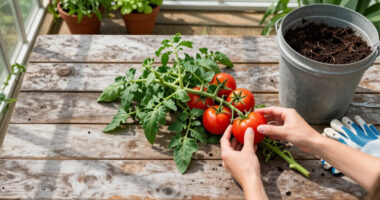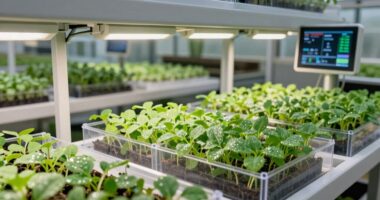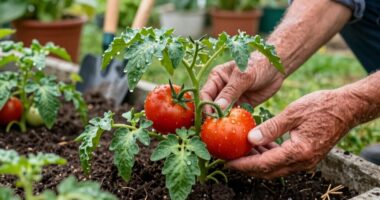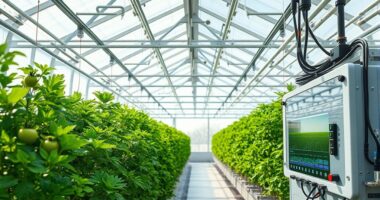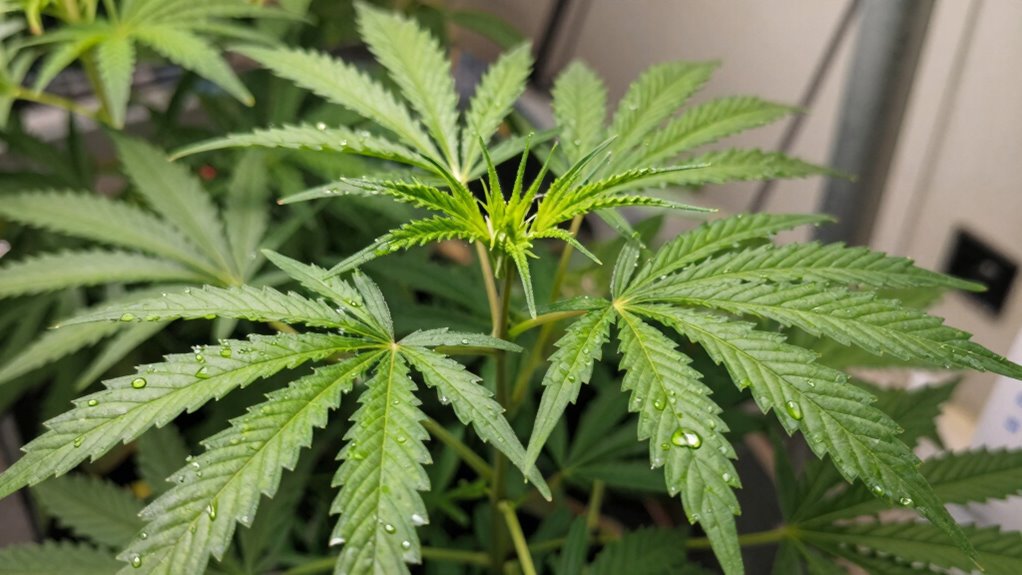

Stop chasing humidity alone and focus on managing VPD instead. VPD controls the moisture difference between air and your plants, directly influencing transpiration, nutrient uptake, and growth. By calculating and maintaining ideal VPD, you create the perfect environment without obsessing over humidity levels. This approach prevents stress, mold, and pests, helping your plants thrive faster. Continue exploring how understanding VPD can reveal your plants’ full growth potential with less hassle.
Open a free Amazon Business account
Business pricing, bulk buying and tax-exempt orders.
As an affiliate, we earn on qualifying purchases.
Key Takeaways
- VPD focuses on optimal humidity and temperature balance, not just increasing humidity, to promote vigorous plant growth.
- Proper VPD management enhances transpiration and nutrient uptake, reducing the need to chase high humidity levels.
- Monitoring VPD allows precise environmental adjustments, preventing stress and encouraging healthy, rapid plant development.
- Lowering humidity when necessary, based on VPD calculations, avoids mold, pests, and root issues caused by excess moisture.
- Using VPD as a guide streamlines environmental control, leading to stronger plants without excessive humidity chasing.
As an affiliate, we earn on qualifying purchases.
What Is VPD and Why It Matters for Your Plants

VPD, or Vapor Pressure Deficit, is a crucial measurement that indicates the difference between the amount of moisture in the air and how much moisture the air can hold at a given temperature. Understanding VPD helps you maximize plant nutrition because proper moisture levels ensure roots absorb nutrients efficiently. When VPD is too high, plants may experience stress, making them more vulnerable to pests and diseases, complicating pest management. Conversely, too low VPD can lead to excess humidity, promoting mold and other issues that harm plant health. By monitoring and controlling VPD, you create an environment where plants grow stronger, healthier, and more resistant to pests. It’s a simple yet powerful way to support ideal growth and minimize problems in your garden or grow space. Additionally, maintaining optimal VPD levels can improve overall plant transpiration and nutrient uptake efficiency. Proper environmental control of VPD is essential for optimizing plant growth and ensuring a healthy, productive garden. Knowing how to measure and adjust VPD allows growers to fine-tune their environment effectively, leading to better yields and healthier plants. Regularly checking air humidity and temperature can help prevent fluctuations that negatively impact VPD and plant health. Implementing VPD monitoring tools can further streamline this process, making it easier to maintain ideal conditions consistently.
How Humidity and Temperature Work Together in VPD Control
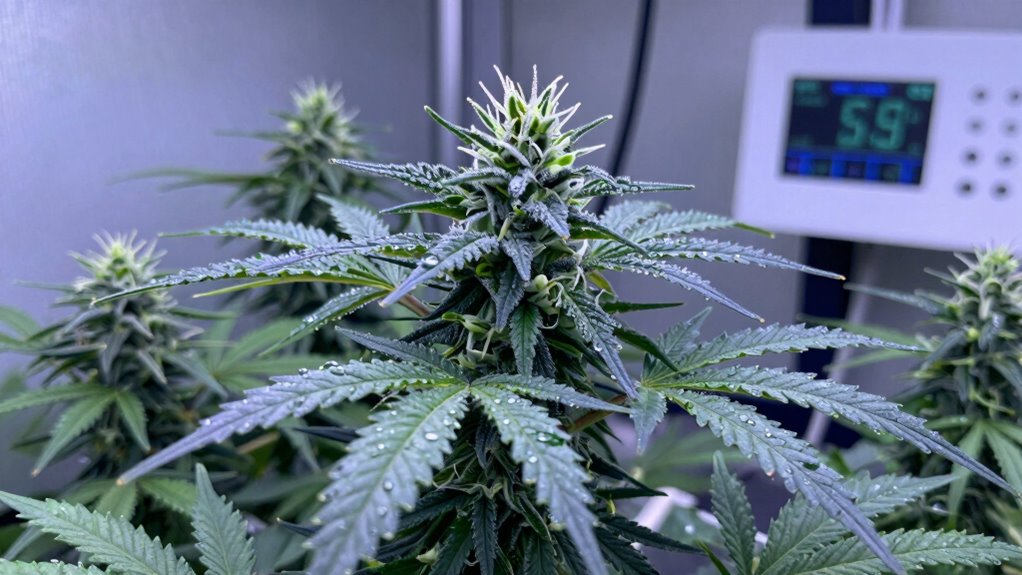
Humidity and temperature work together to influence your plant’s transpiration and overall health. When you adjust one, it affects the other, impacting how your plants absorb water. Finding the right balance helps optimize growth and prevents stress. Understanding indoor air quality factors can help you create a healthier environment for your plants and reduce potential issues. Additionally, monitoring VPD levels is crucial for maintaining optimal growth conditions. Maintaining proper air circulation also supports healthy transpiration and reduces the risk of mold or pests. Being aware of plant-specific requirements can further enhance your control over growth environments. Recognizing the influence of microclimate conditions can help fine-tune your environment for better plant health.
Balancing Humidity and Temperature
Since temperature and humidity directly influence vapor pressure deficit (VPD), you need to understand how they interact to create ideal growing conditions. Balancing these factors ensures your plants receive ideal plant nutrition and maintain healthy transpiration rates. When temperature rises, humidity should decrease to keep VPD in the ideal range. Conversely, cooler temperatures require higher humidity levels. Properly managing this balance enhances nutrient uptake and supports a healthy light spectrum for photosynthesis. Additionally, understanding credit card insights can help growers manage expenses related to climate control equipment and energy costs.
- Adjust humidity levels based on temperature fluctuations
- Use fans or dehumidifiers to maintain stability
- Monitor VPD to maximize transpiration and growth
Impact on Plant Transpiration
Adjusting humidity and temperature directly influences how plants transpire, impacting their overall health and growth. When you optimize VPD monitoring and humidity control, you regulate the vapor pressure deficit, ensuring plants transpire efficiently. Too high VPD causes excessive water loss, stressing plants and slowing growth, while too low VPD limits nutrient uptake and gas exchange. By maintaining the right balance, you encourage healthy transpiration rates that support nutrient transport and photosynthesis. Proper humidity control prevents extremes that can hinder plant processes. Monitoring VPD helps you identify when conditions are ideal for transpiration, avoiding water stress or stagnation. Halal certification ensures that the practices involved in producing food meet specific standards of compliance, which can be important when sourcing ingredients or equipment. Understanding plant physiology can further optimize your environmental controls for maximum growth efficiency. Recognizing the key environmental factors that influence transpiration enables you to fine-tune your setup for optimal plant health. Additionally, integrating technology such as sensors can provide real-time data to make precise adjustments. Ultimately, controlling humidity and temperature in tandem keeps transpiration at ideal levels, promoting vigorous growth and healthier plants.
How to Calculate VPD: A Simple Step-by-Step Guide
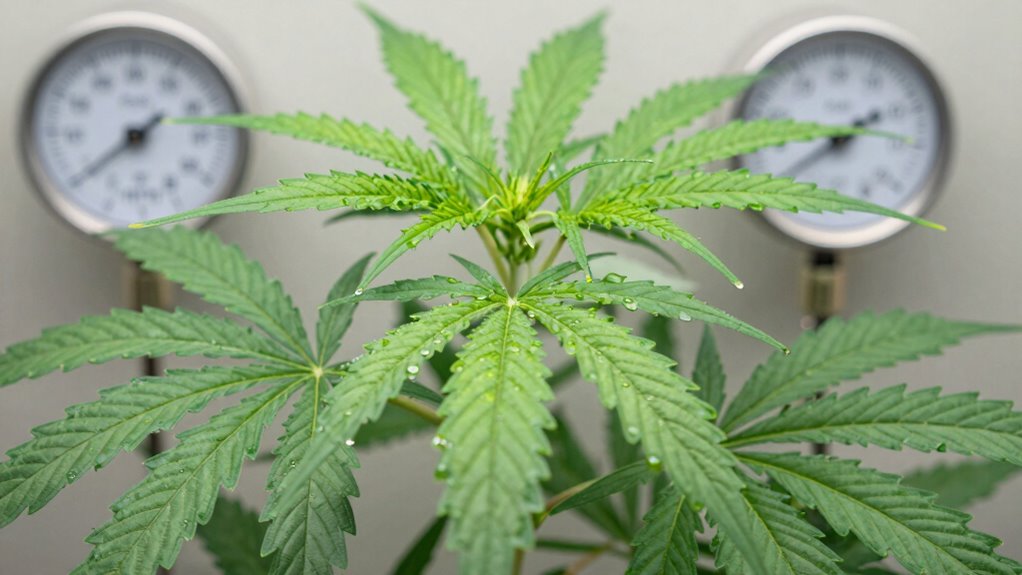
Calculating Vapor Pressure Deficit (VPD) might seem complex at first, but breaking it down into simple steps makes it manageable. First, measure your air temperature and humidity levels. Next, find the saturation vapor pressure using a chart or formula. Then, determine the actual vapor pressure by multiplying the saturation vapor pressure by the relative humidity. Subtract the actual vapor pressure from the saturation vapor pressure to get the VPD. Keep in mind, correct VPD levels help reduce plant stress and optimize airflow. When VPD is right, plants transpire efficiently, promoting healthy growth. Properly managing your plant environment can significantly enhance growth efficiency and plant health. Remember, consistent measurement and adjustment are key to maintaining ideal conditions. Developing an understanding of plant transpiration helps you fine-tune environmental factors for optimal growth. Recognizing the importance of accurate VPD calculation allows growers to make informed decisions and improve overall plant performance. With practice, calculating VPD becomes quick and easy, empowering you to create the perfect environment for your plants. Additionally, understanding the role of environmental control can help you maintain stable conditions that support plant health. Incorporating data analytics can further optimize environmental parameters for even better results.
Why Managing VPD Is Better Than Just Increasing Humidity
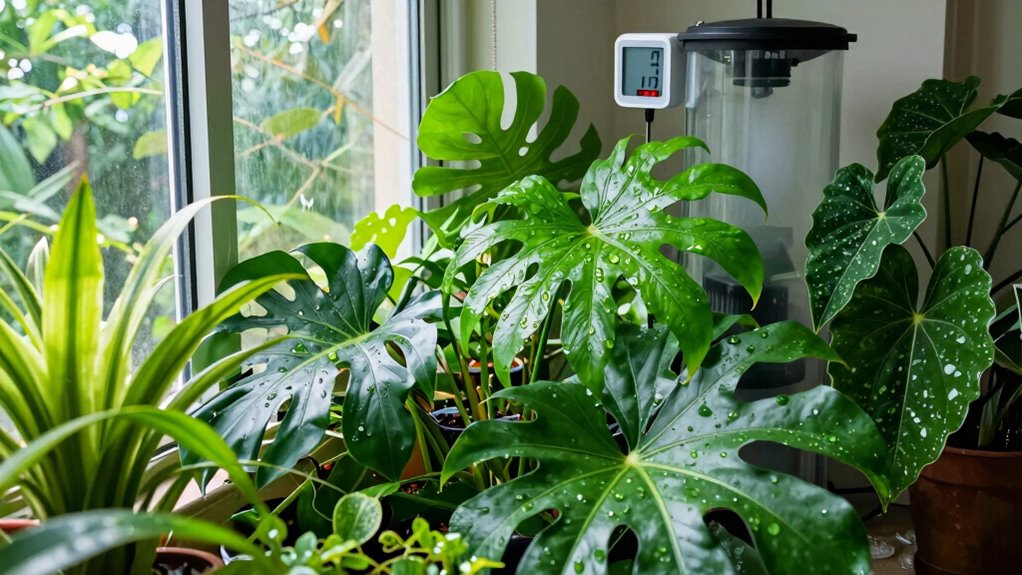
While increasing humidity might seem like an easy fix to improve plant health, it doesn’t address the underlying balance needed for ideal growth. Managing VPD ensures your plants maintain proper leaf turgor, preventing wilting or overhydration. Instead of simply raising humidity, you’re regulating the environment so stomatal regulation occurs naturally. Proper VPD levels encourage your plants to open and close stomata efficiently, maximizing gas exchange and water use. This balance promotes healthy growth, stronger leaf structure, and better nutrient uptake. Relying solely on higher humidity can lead to issues like mold or insufficient transpiration. By managing VPD, you’re providing a dynamic environment that adapts to your plant’s needs, fostering robust, vigorous growth without the risks associated with just increasing humidity. Understanding the importance of Chamber Syndicale de la Haute Couture helps illustrate how precise control and standards are essential for optimal results.
Common VPD Mistakes and How to Avoid Them
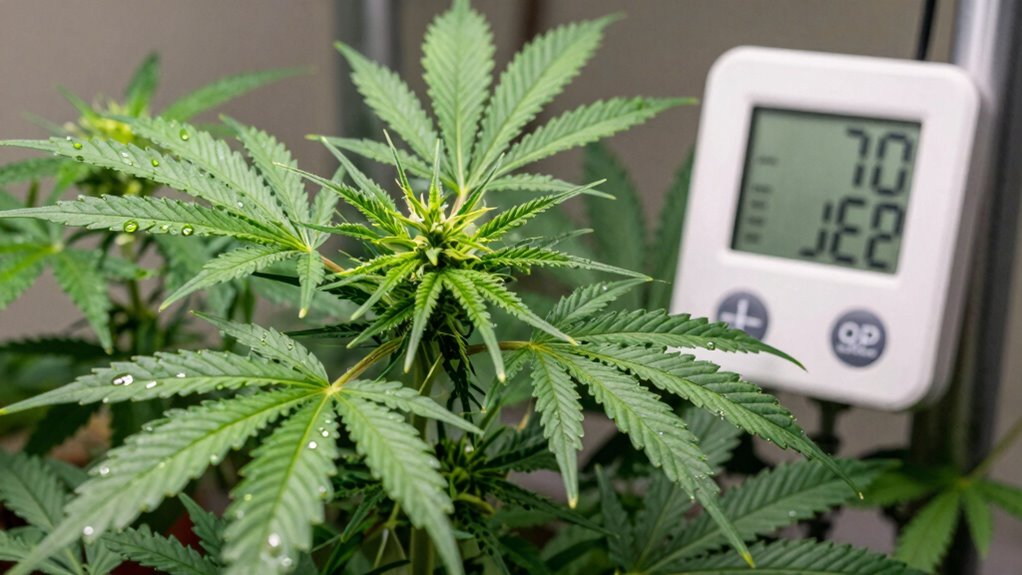
One common mistake growers make is setting VPD levels without considering the specific stage of plant growth or environmental conditions, which can cause stress or hinder development. Ignoring leaf temperature variations or poor airflow management can skew VPD calculations and lead to issues like overwatering or dry roots. To avoid this, focus on monitoring leaf temperature accurately and maintaining consistent airflow. Additionally, understanding how plants transpire can help fine-tune VPD settings for optimal growth. Recognizing plant transpiration rates can further refine environmental adjustments to promote healthy development. Incorporating environmental sensors to track real-time data can significantly improve VPD management and overall plant health. Being aware of digital asset management strategies can also help growers leverage technology for more precise environmental control.
Tips for Adjusting Temperature and Humidity to Hit the Perfect VPD
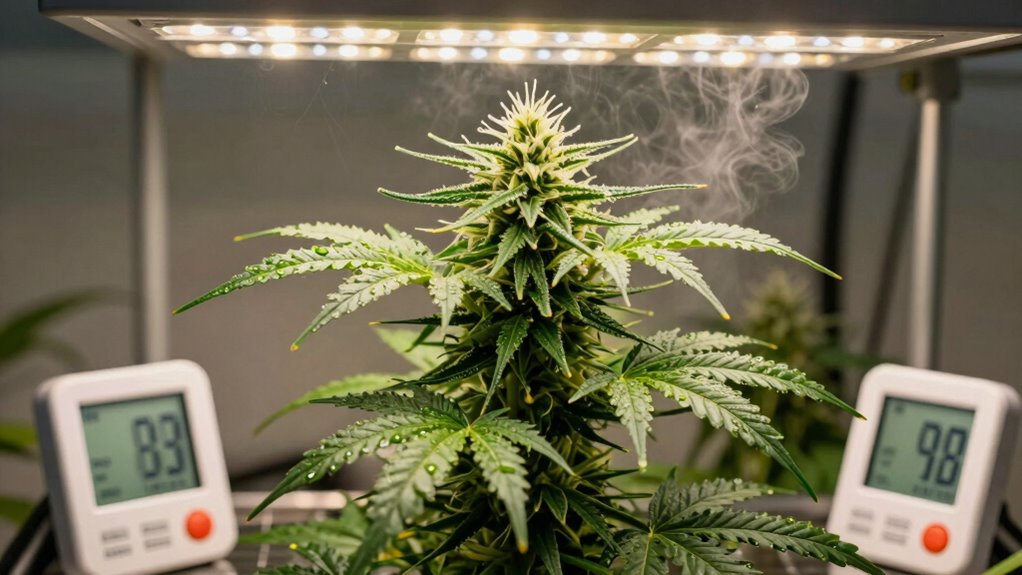
To hit the perfect VPD, you need to fine-tune your temperature and humidity settings based on your plants’ current growth stage. During vegetative growth, slightly higher humidity and moderate temps help prevent calcium deficiency, which can hinder cell wall development. As plants shift to flowering, lower humidity and increased temperatures optimize transpiration and nutrient uptake. Keep an eye on your light spectrum; full-spectrum lights promote healthy growth, supporting the balance between temperature and humidity. Adjust your environment gradually, monitoring VPD levels to avoid stress. Properly managing these factors encourages strong roots and robust foliage, reducing deficiencies. Remember, precise control over temperature and humidity, aligned with your plants’ needs, makes hitting the ideal VPD straightforward, resulting in healthier, faster-growing plants.
Using VPD Charts and Tools to Grow Stronger Plants
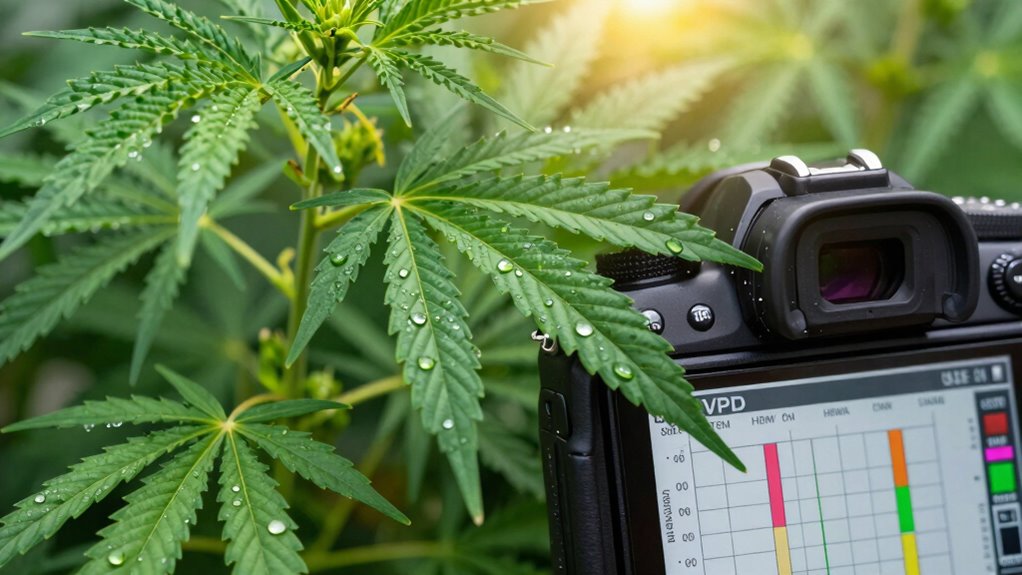
Using VPD charts and tools makes it easier to monitor and adjust your environment for ideal plant growth. By tracking vapor pressure deficit, you can enhance leaf temperature and humidity levels, ensuring your plants stay healthy and vigorous. These tools help you visualize the relationship between temperature and vapor pressure, simplifying decision-making. With accurate data, you can fine-tune conditions to promote faster growth and stronger stems.
- Use VPD charts to identify optimal leaf temperature and vapor pressure ranges
- Employ hygrometers and thermometers for real-time readings
- Adjust environmental controls based on chart feedback for consistent conditions
Mastering these tools empowers you to create the perfect environment, reducing stress and maximizing your plants’ potential.
What to Do If Your VPD Is Too High or Too Low
When your VPD is too high, it means the air is too dry for healthy plant growth, which can lead to stress and dehydration. To fix this, increase humidity with a humidifier or misting, and ensure proper airflow. Conversely, if VPD is too low, the air is too humid, risking mold, pests, and nutrient imbalance. To rectify this, reduce humidity by venting or dehumidifiers and improve air circulation. Use this table for quick ideas:
| VPD Too High | VPD Too Low | Both Conditions |
|---|---|---|
| Increase humidity | Decrease humidity | Monitor plant nutrient balance |
| Improve airflow | Vent excess moisture | Prevent pests with good hygiene |
| Use humidifiers or misting | Enhance ventilation | Adjust temperature for balance |
| Check for dehydration signs | Reduce watering carefully | Regularly observe plant health |
Frequently Asked Questions
How Does VPD Influence Plant Nutrient Uptake?
VPD influences your plant’s nutrient uptake by regulating humidity levels, which in turn affects transpiration rates. When humidity regulation is optimized, your plants transpire effectively, enhancing nutrient absorption through the roots. If VPD is too high or low, it can hinder this process, leading to nutrient deficiencies. By maintaining proper VPD, you guarantee your plants efficiently absorb essential nutrients, promoting healthier growth and better overall vigor.
Can VPD Be Different for Various Plant Types?
Yes, VPD can differ for various plant species due to environmental variability. Different plants have unique ideal VPD ranges based on their specific needs, growth stages, and native habitats. As you grow multiple plant species, you should adjust VPD levels accordingly to maximize their health and growth. Monitoring environmental variability helps you tailor conditions, ensuring each plant gets the right moisture and humidity levels for thriving development.
What Are Signs of Incorrect VPD Levels in Plants?
You’ll notice humidity stress when your plants show leaf curling or drooping, signaling VPD levels are off. Ironically, too much or too little humidity can make your plants struggle, even if you’re obsessively chasing perfect conditions. If their leaves curl or turn brown, it’s a clear sign you need to adjust VPD. Monitoring and maintaining proper VPD keeps plants happy, avoiding stress and promoting healthy growth.
How Often Should I Adjust VPD During Plant Growth?
You should adjust VPD levels daily during plant growth to maximize humidity control and maintain ideal growth rate. Regular monitoring helps you respond to changes in temperature and humidity, ensuring your plants stay in the optimal VPD range. This consistent approach prevents stress and promotes healthy development. Keep a close eye on environmental conditions and tweak your VPD settings as needed to support rapid, healthy growth throughout different growth stages.
Is VPD More Important Indoors or Outdoors?
VPD is more vital indoors because you control humidity and temperature, making VPD calibration necessary for ideal growth. Outdoors, natural conditions vary, so humidity control is less precise and VPD plays a different role. Inside, maintaining proper VPD ensures healthy transpiration and nutrient uptake. Focus on consistent humidity control and regular VPD calibration to maximize your plants’ growth, especially in controlled environments.
Conclusion
Now that you understand the power of VPD, imagine revealing your plants’ true potential. But beware—tweaking VPD isn’t a set-it-and-forget-it deal. Small adjustments can make a huge difference, and a misstep could hold your growth back. Ready to master this secret? The key to thriving plants is closer than you think. Are you prepared to take control and see just how far your plants can go? The next move is yours.
Labor Day sales Picks
labor day deals
As an affiliate, we earn on qualifying purchases.