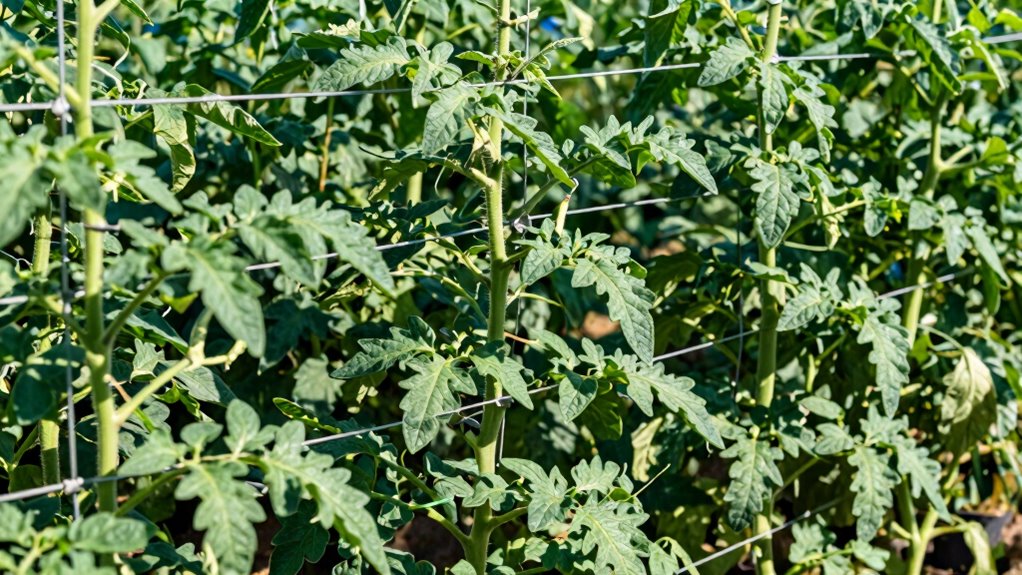
Using trellis systems helps you maximize space and increase your garden’s yield without expanding your area. By supporting climbing plants like tomatoes and cucumbers vertically, you promote better air circulation, light exposure, and fruit cleanliness. Choosing the right materials and training techniques, such as espalier or ScrOG, ensures plants grow healthy and produce more fruit. Keep your trellis maintained and adjusted as plants grow to get the best results—learn more to boost your gardening success.
Key Takeaways
- Trellis systems maximize vertical space, allowing more plants to grow in limited areas and boosting overall yield.
- Using durable materials like metal or treated wood ensures long-lasting support for heavy or tall plants.
- Techniques such as vertical gardening, espalier, and ScrOG optimize light, airflow, and space efficiency.
- Proper installation, including secure stakes and adjustable supports, maintains plant stability and promotes healthy growth.
- Regular maintenance and pruning ensure trellises support optimal airflow, reduce disease risk, and sustain high productivity.

WZQH Leather Work Gloves for Men or Women.Gardening,Welding,Coffee-grey L
- Material: 100% split cowhide leather with soft lining
- Protection: High abrasion, puncture, cut, and heat resistance
- Design: Reinforced palm and adjustable wrist for fit
As an affiliate, we earn on qualifying purchases.
Why Does Vertical Trellising Boost Your Garden’s Productivity?

Vertical trellising substantially increases your garden’s productivity by maximizing space and improving plant health. By using vertical gardening techniques, you can grow more plants in a limited area, making the most of every inch. This approach encourages better air circulation, reducing disease risks and promoting healthier growth. Additionally, trellising supports crop diversification, allowing you to grow a variety of plants simultaneously. Instead of overcrowding the ground, plants are spaced vertically, which minimizes competition for nutrients and light. Incorporating sustainable gardening practices into your trellis setup can help ensure successful and consistent results. Proper nutrient management is essential to support the increased plant density and maintain healthy growth. Overall, vertical trellising transforms your garden into a more efficient, productive space. It’s an effective way to boost yields without expanding your garden’s footprint, making it ideal for gardeners seeking higher productivity with less effort.
What Is Trellising, and Why Is It Important?
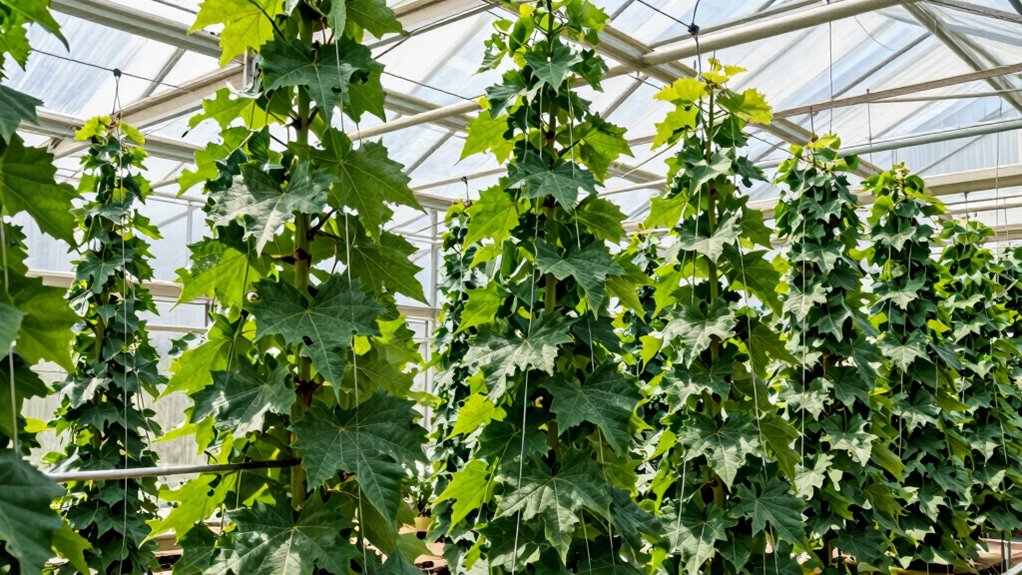
Trellising supports your plants as they grow, helping them stay healthy and strong. It also makes better use of your space by encouraging vertical growth. Plus, it improves light exposure, leading to bigger, more productive plants. An organized trellis system can also help prevent pests and diseases by keeping foliage off the ground improving plant health. Additionally, selecting the right trellis system can enhance airflow and reduce humidity around the plants, further decreasing the risk of mold and other issues. Understanding plant management techniques and other plant management factors can also contribute to overall success. Incorporating visual and auditory cues from speech therapy can be analogous to using visual guides for plant training, making the process more effective.
Supports Plant Growth
When you support your plants with trellising, you give them a structure to grow upward, which can considerably improve their health and yield. Proper support structures help keep plants upright, preventing damage from wind or heavy fruit. They also promote better air circulation and sunlight exposure, reducing disease risks. Additionally, trellising aids in plant anchoring, keeping stems secure as they grow taller. This stability encourages stronger root development and healthier growth overall. Implementing effective trellis designs can further optimize plant support and productivity. Incorporating knowledge about plant support systems can help in selecting the most suitable trellising methods for different plant types. Selecting the right support materials can also influence the durability and effectiveness of your trellis setup. Understanding quality assessment for support materials can ensure long-lasting and reliable structures. By choosing appropriate materials, you can increase the longevity and performance of your trellis systems. Here are some benefits of using trellises for support:
- Prevents sprawling and breakage
- Improves light penetration
- Enhances airflow around plants
- Keeps fruits clean and off the ground
- Supports plant anchoring for stability
Maximizes Space Efficiency
Supporting your plants with trellises not only promotes healthy growth but also helps you make the most of limited space. Trellising is a key technique in vertical gardening, allowing you to grow more plants in a smaller area by directing their upward growth. By choosing the right trellis materials—such as wood, metal, or plastic—you guarantee durability and suitability for your plants’ needs. Selecting durable materials is essential for ensuring your trellises withstand weather conditions and last for years. Using trellises maximizes space efficiency, making it possible to grow vining crops like tomatoes, peas, or cucumbers vertically instead of sprawling across the ground. This setup not only increases your yield but also keeps your garden organized and accessible. Overall, trellising transforms limited space into a productive, efficient environment that supports healthy, vigorous plants. Incorporating high-quality materials ensures your trellises remain sturdy and effective over time.
Enhances Light Exposure
By guiding your plants to grow vertically, trellising substantially improves their exposure to sunlight. This increased light access boosts photosynthesis, leading to healthier growth and higher yields. Proper trellis systems help evenly distribute sunlight, reducing shaded areas. To maximize benefits, combine trellising with pruning techniques to remove excess foliage that blocks light. Practicing crop rotation ensures that plants aren’t overexposed to pests or diseases that can hinder growth. Plus, rotating crops prevents soil depletion, supporting sustained light exposure. Consider these key points:
- Efficiently exposes all plant parts to sunlight
- Encourages uniform growth
- Reduces the need for supplemental lighting
- Promotes better airflow and less disease
- Supports pruning techniques for ideal light penetration
Implementing a well-designed trellis system can also improve support for heavy fruiting plants, reducing breakage and increasing overall productivity. Additionally, choosing the right support structures can enhance plant stability and maximize light capture. Using crop management techniques, such as staking and spacing, further optimizes light exposure, fostering healthier plants and higher yields. Incorporating proper plant training methods ensures that your plants are directed for optimal light absorption, which is essential for vigorous growth. Integrating efficient light distribution strategies can further enhance crop performance, especially in limited spaces. Trellising, combined with strategic crop management, ensures your plants get the light they need to thrive.
How Do You Choose the Best Trellis System for Your Plants?
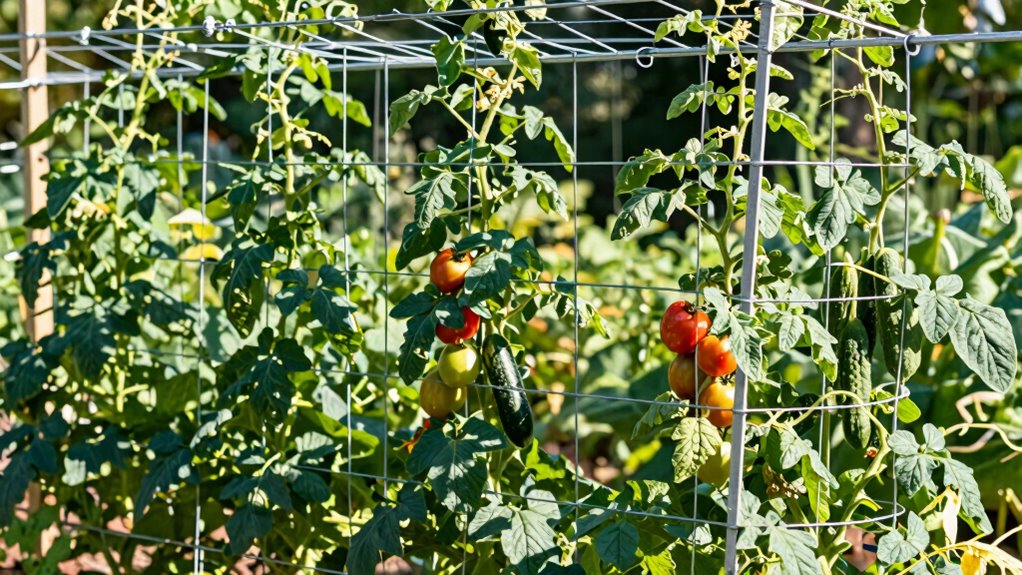
When selecting a trellis system, consider how well it fits your plants’ size and growth habits. You’ll also want to evaluate the space available and the support your plants need to thrive. Matching these factors ensures your plants stay healthy and your setup stays practical. Incorporating creative storytelling into your gardening journey can also inspire innovative trellis ideas that boost productivity. Additionally, understanding DIY tools and their applications can help you customize your trellis system for better support and durability. Exploring material options can further enhance the stability and longevity of your trellis setup. To further optimize your setup, be aware of affiliate relationships, which can influence product recommendations and provide access to quality gardening supplies at competitive prices. Recognizing potential cybersecurity challenges related to online gardening resources can help you protect your personal information while exploring new ideas.
Plant Compatibility Considerations
Choosing the right trellis system depends on understanding your plants’ specific needs and growth habits. Different crops have varying requirements for support and spacing, so consider their compatibility before selecting a system. For example, some plants need sturdy support for heavy fruits, while others thrive with minimal guidance. Think about crop diversity and how different plants will interact on the trellis. Also, assess soil compatibility, as certain trellises work better with specific soil types or moisture levels.
Consider these factors:
- Plant size and weight
- Growth speed and height
- Root system and stability
- Compatibility with crop variety
- Soil conditions and drainage needs
Matching these elements ensures your trellis system promotes healthy growth and maximizes yield.
Space and Support Requirements
How do you determine the best trellis system for your plants? First, assess your available space and plant size. Consider your soil health; healthy soil supports strong support structures and pest control. Next, evaluate support needs: taller plants may require sturdy frameworks, while sprawling varieties benefit from lower trellises. Here’s a quick guide:
| Plant Type | Trellis System |
|---|---|
| Vining vegetables | Vertical netting |
| Bush varieties | Horizontal wires |
| Climbing fruits | Arch or archway |
| Short herbs | Cage or column |
| Heavy fruits | Reinforced trellis |
Matching support with plant needs maximizes yield and maintains soil health, reducing pest issues and ensuring healthy growth.
What Are the Top Plant Training Techniques to Maximize Space?
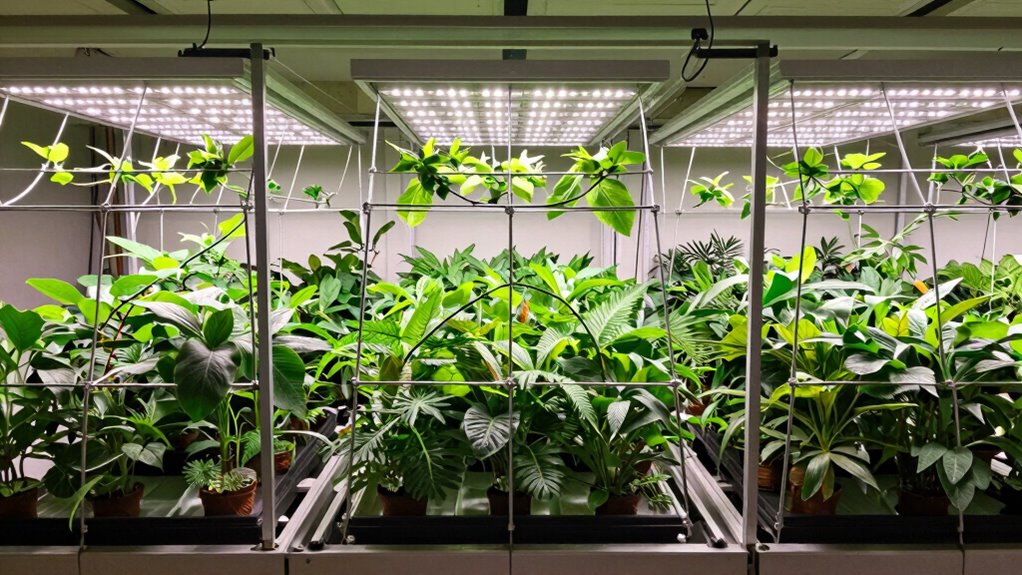
To make the most of limited space in your grow area, implementing effective plant training techniques is essential. Vertical gardening is a popular method that maximizes space by encouraging plants to grow upward rather than outward. Plant espalier involves training plants to grow flat against a support, saving valuable ground space. Other top techniques include:
Maximize limited grow space with vertical gardening, espalier, LST, topping, and ScrOG techniques.
- Low-stress training (LST) to bend and spread branches
- Topping to encourage bushier growth
- Fimming to increase bud sites
- Screen of Green (ScrOG) to create an even canopy
- Using trellises to support and guide plant growth
These methods optimize space, improve light exposure, and boost yields without needing extra room, making them ideal for small or confined grow setups.
How Do You Install a Trellis System Step-by-Step?
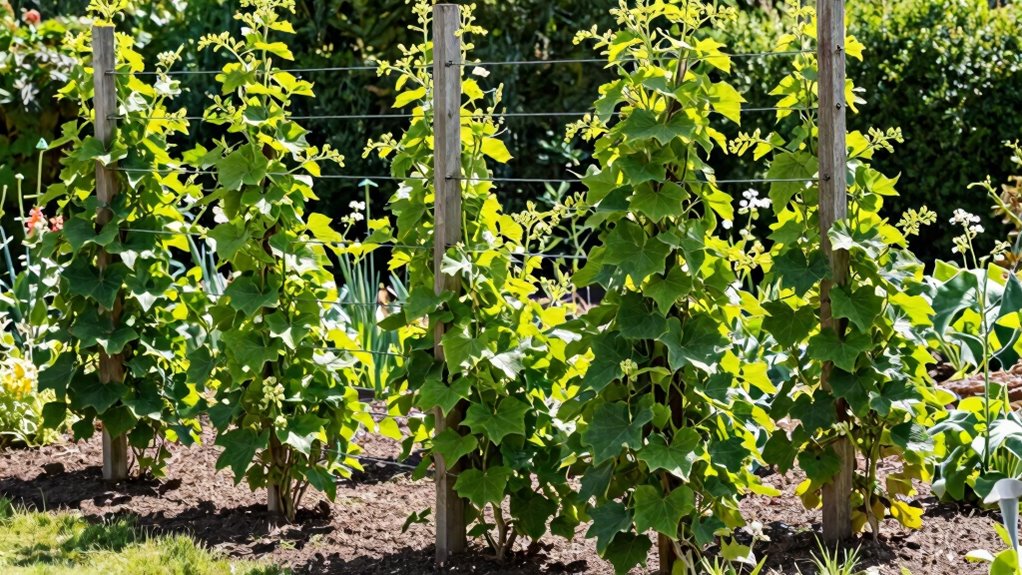
Installing a trellis system can substantially improve your plant support and maximize space, but it requires careful planning and execution. First, choose sturdy stakes or posts based on your plant type, and space them evenly. Secure the posts firmly in the ground, ensuring stability. Run horizontal wires or netting at different heights, attaching them tightly to the posts. As your plants grow, train them by gently tying stems to the trellis, using proper pruning techniques to encourage airflow and prevent overcrowding. This helps with pest management by reducing hiding spots for pests and diseases. Regularly inspect the trellis and plants, adjusting ties as needed. Proper installation ensures your plants grow vertically, increasing yield and reducing space without sacrificing health or ease of maintenance.
How Can You Maintain and Adjust Your Trellis Supports for Optimal Growth?
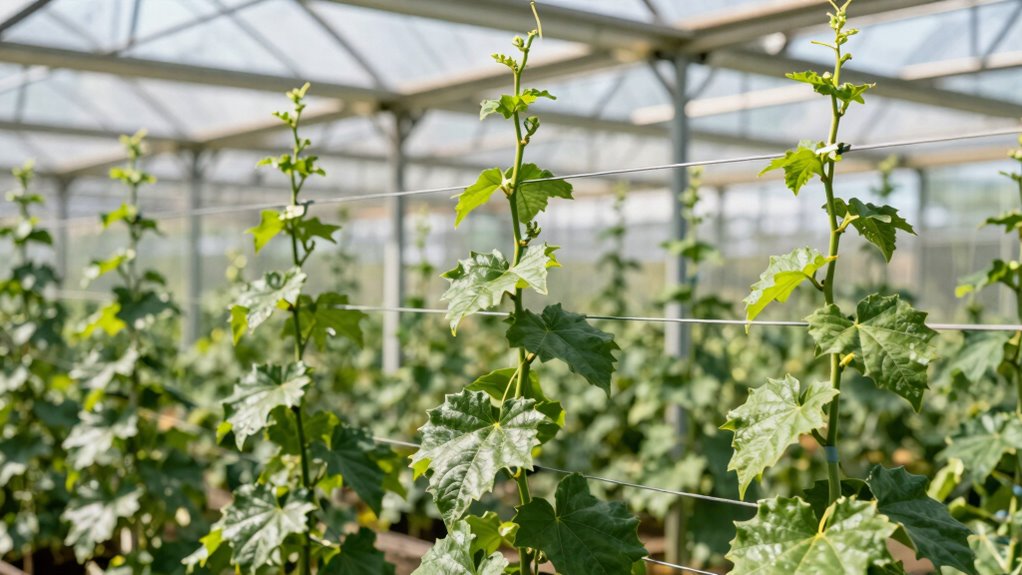
Maintaining and adjusting your trellis supports is essential to guarantee your plants grow healthily and reach their full potential. Regular checks help identify loose or damaged trellis materials and assure proper support. Adjustments might include repositioning or tightening wires as plants grow taller, preventing breakage. Incorporate pruning techniques to manage plant size and improve airflow, reducing strain on trellis supports. When selecting trellis materials, choose sturdy, weather-resistant options like metal or treated wood to prolong longevity. Keep an eye on the overall structure, and reinforce weak points promptly. By staying proactive, you’ll promote ideal growth and maximize yields. Remember, a well-maintained trellis system not only supports healthy plants but also extends the lifespan of your supports.
Which Crops Are Best Suited for Trellising?
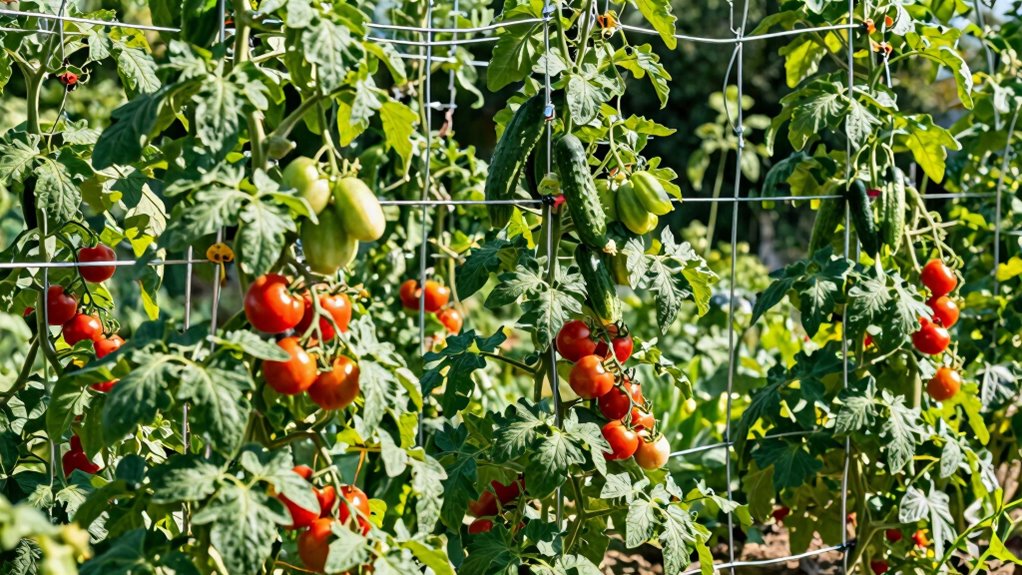
Ever wonder which crops thrive best when trellised? Many flower types, like tomatoes, cucumbers, peas, and pole beans, excel with trellis systems. These plants have vertical growth habits that benefit from support, preventing sprawling and improving air circulation. Crops with shallow root depths, such as strawberries and some lettuces, also respond well because they don’t need deep soil anchoring. Trellising helps maximize space, increase airflow, and reduce disease risk. Keep in mind, heavy crops like squash or melons may require sturdier supports, but they can still be trained vertically. Understanding each crop’s root depth and growth habit allows you to select the best trellis design, ensuring healthy growth and higher yields.
How Can You Combine Plant Training and Trellising for the Best Yields?

Combining plant training with trellising can substantially boost your garden’s productivity by directing growth and improving airflow. To maximize results, incorporate pruning techniques to remove excess foliage, which encourages better light penetration and airflow. Use trellises to support the main stems, guiding plants into ideal positions. Regular root pruning helps control plant size and promotes healthier root systems, supporting vigorous growth. Here are some tips:
Optimize your garden with plant training, trellising, and regular pruning for healthier, more productive growth.
- Prune lower branches to focus energy on top growth
- Use trellises to spread out branches evenly
- Regularly prune roots to prevent crowding
- Tie new growth gently to the trellis for support
- Monitor airflow to reduce disease risk
Frequently Asked Questions
How Does Trellising Affect Pest Control and Plant Health?
Trellising helps you improve pest deterrent strategies and plant disease prevention by keeping foliage off the ground and increasing airflow. This reduces the chances of pests settling on your plants and limits fungal growth. With better airflow and easier monitoring, you can catch problems early and apply targeted treatments. Overall, trellising promotes healthier plants and minimizes pest and disease issues, making your garden more productive and resilient.
What Materials Are Best for Durable, Long-Lasting Trellises?
For durable, long-lasting trellises, you should choose materials with high durability and trellis longevity, like galvanized steel, stainless steel, or heavy-duty PVC. Galvanized steel resists rust and weather damage, ensuring your trellis stays sturdy over time. Stainless steel offers excellent corrosion resistance, while high-quality PVC is lightweight yet durable. Investing in these materials guarantees your trellis system remains strong, supporting your plants effectively for many seasons.
Can Trellising Be Used Effectively in Small or Container Gardens?
Yes, trellising works great in small or container gardens. You can incorporate vertical gardening techniques, allowing you to maximize limited space efficiently. Using trellises, you support your plants upward, freeing up ground space for other crops. This space optimization not only boosts your yield but also keeps your garden organized and accessible. With the right trellis design, even tiny gardens can produce abundant, healthy plants.
How Does Climate Influence Trellis Design and Plant Selection?
Imagine your garden as a canvas, where climate is the brushstroke shaping your masterpiece. You need to choose trellis designs that dance with your climate’s rhythm, ensuring they’re adaptable and sturdy. Select plant varieties that thrive in your environment, whether they’re sun-loving or shade-tolerant. By tailoring your trellis system to climate conditions, you create a thriving, resilient garden that yields abundantly, no matter the weather’s mood.
What Are Common Mistakes to Avoid When Installing Trellises?
When installing supportive structures, avoid rushing the process. Make sure your trellises are properly anchored to withstand wind and plant weight. Use sturdy materials and secure all connections tightly. Don’t neglect the layout; verify the trellis height and spacing suit your plants’ growth habits. Overlooking these details can lead to structural failure or plant damage. Taking the time for proper installation guarantees a durable, effective trellis system that boosts your yield.
Conclusion
Using trellis systems can boost your garden’s yield by up to 50%, saving space while increasing productivity. By choosing the right setup and maintaining it properly, you’ll support healthy growth and maximize your harvest. Don’t overlook vertical training—it’s a game-changer for small spaces. With the right techniques, you can grow more food in less room, making your garden more efficient and rewarding. Start trellising today and watch your garden flourish!