
Using root-zone heat in your greenhouse helps you maintain ideal soil temperatures, which directly improves plant health and growth. It keeps roots active, facilitates better nutrient absorption, and encourages stronger, more resilient plants. This leads to higher yields, better crop quality, and a longer growing season. Plus, it allows you to control microclimates more efficiently and reduce energy costs. If you want to discover how this simple change can boost your greenhouse success, keep exploring the benefits.

Get garden gear delivered free — and shop member deals
- Fast, free delivery on millions of items
- Access to Prime Big Deal Days deals on October 6–7
- Prime Video, Amazon Music and more included
Key Takeaways
- Root-zone heat maintains optimal soil temperatures, promoting healthy root development and nutrient uptake during colder months.
- It extends the growing season and allows for earlier crop starts, increasing greenhouse productivity.
- Targeted zone heating reduces energy consumption while ensuring uniform plant growth.
- Consistent soil warmth minimizes root-related diseases, improving overall crop quality.
- Improved root health enhances plant resilience, leading to stronger growth and higher yields.
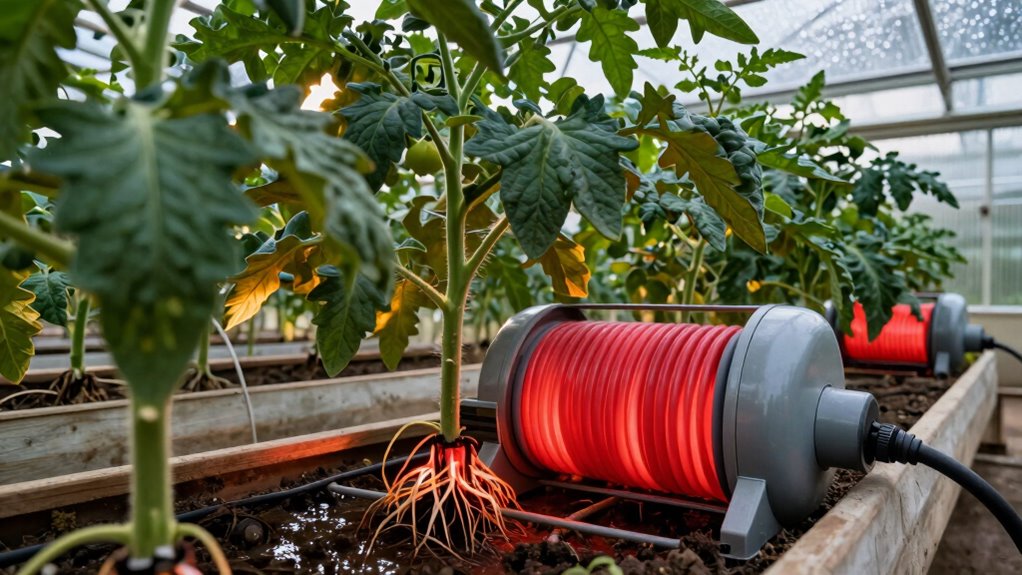
Root-zone heat is a essential tool for maintaining ideal growing conditions in greenhouses, especially during colder months. When you control the soil temperature, you directly influence the health of your plants’ roots, which are the foundation of vigorous growth. Without proper heat, roots can become sluggish, leading to poor nutrient uptake and stunted development. By installing a root-zone heating system, you guarantee that the soil remains consistently warm, promoting perfect root activity and overall plant vitality. This steady temperature helps prevent cold stress, which can cause roots to freeze or become damaged, ultimately compromising plant health and yield.
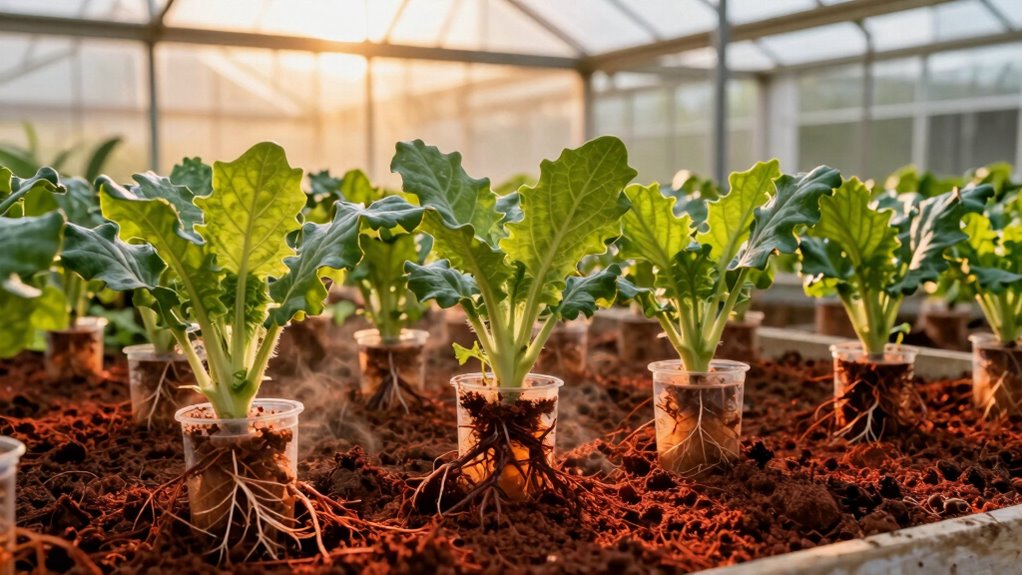
Good soil temperature is more than just a comfort factor for roots; it’s a strategic advantage in greenhouse management. When the soil stays warm, roots can absorb nutrients more efficiently, fostering stronger, more resilient plants. This consistent warmth encourages faster establishment of root systems, which translates into healthier stems, larger leaves, and more productive flowering or fruiting. Conversely, cold soil hampers root functions, leading to slower growth and increased susceptibility to diseases caused by weakened root structures. Consequently, by maintaining the right soil temperature, you actively support root health, guaranteeing your plants are better equipped to resist environmental stresses and pests. Proper soil temperature management can significantly enhance the overall productivity of your greenhouse. Additionally, understanding the importance of soil health and its relation to temperature control can help optimize your growing practices. Implementing climate control strategies that include soil heating can also help reduce energy consumption by targeting specific zones, making your operation more efficient.
Implementing root-zone heat also offers you greater control over your greenhouse’s microclimate. It allows you to extend your growing season and start crops earlier, even when outside temperatures drop. This flexibility can greatly increase productivity and profitability. Moreover, with controlled soil temperature, you reduce the need for chemical interventions since healthy roots are more resistant to pathogens and pests. You’ll notice less disease pressure and fewer issues related to root rot or damping-off, which are common in cold, damp soils. Additionally, the use of reliable heating systems ensures consistent performance and can be integrated with other climate control tools for optimal results. Incorporating soil temperature sensors can further refine your climate management by providing real-time data, helping you make precise adjustments.
Finally, investing in root-zone heat can improve the uniformity of plant growth across your greenhouse. When the soil temperature is stable, every plant receives the same conditions, leading to more uniform development. This consistency simplifies your management practices, reduces waste, and ensures a higher quality crop at harvest time. In the end, controlling soil temperature through root-zone heat isn’t just about comfort — it’s a critical factor that influences root health, plant vigor, and the overall performance of your greenhouse. It’s a strategic tool that can transform your growing practices, delivering healthier plants and more predictable, profitable results.
greenhouse root zone heating system
As an affiliate, we earn on qualifying purchases.
As an affiliate, we earn on qualifying purchases.
Frequently Asked Questions
How Does Root-Zone Heat Affect Plant Nutrient Uptake?
Root-zone heat increases soil temperature, which boosts nutrient absorption by your plants. Warmer soil helps roots stay active, making them more efficient at taking up essential nutrients like nitrogen, phosphorus, and potassium. This improved nutrient uptake promotes healthier growth and stronger plants. By maintaining crucial root-zone heat, you guarantee your greenhouse plants access nutrients more effectively, leading to better yields and overall plant vitality.
Can Root-Zone Heating Be Used for All Greenhouse Crops?
Root-zone heating is like a secret weapon, but it’s not a one-size-fits-all solution. You can’t use it for every crop, as crop compatibility varies—some plants thrive with this technique, while others may suffer. Carefully consider each crop’s specific needs before implementing root zone heating. It works wonders for many, but always tailor your approach to guarantee your plants stay healthy and productive.
What Are the Energy Costs Associated With Root-Zone Heating Systems?
You’ll find that root-zone heating systems can have higher energy costs initially, but they’re designed for energy efficiency, reducing long-term expenses. The cost comparison shows they use less energy than traditional heating methods, especially when targeted directly at the roots. While installation might be more expensive upfront, the savings in energy bills over time often justify the investment, making it a cost-effective choice for maintaining ideal greenhouse conditions.
How Does Root-Zone Heat Influence Pest and Disease Development?
You can keep pests and diseases at bay by maintaining ideal soil temperature through root-zone heat. This method prevents conditions that pests thrive in, acting as a barrier to pest development. By regulating soil temperature, you’re fundamentally killing two birds with one stone—improving plant health and reducing pest pressure. Proper heat management creates a less inviting environment for pests and diseases, making pest prevention much more manageable.
What Maintenance Is Required for Root-Zone Heating Systems?
For your root zone heating system, regular system maintenance is essential. Check the temperature controls and sensors to guarantee accurate readings, and inspect the pipes or cables for any signs of damage or wear. Clean filters and vents to prevent blockages, and flush the system periodically to avoid mineral buildup. Proper maintenance keeps your root zone heated efficiently, promoting healthy plant growth and preventing costly repairs down the line.
Conclusion
Understanding root-zone heat is like revealing a secret garden of potential in your greenhouse. When you control this hidden layer, you’re not just warming roots—you’re nurturing healthier plants, boosting growth, and transforming your greenhouse into a thriving oasis. Think of it as tuning a delicate instrument; with the right temperature, every plant plays its part perfectly. Embrace root-zone heat, and watch your greenhouse flourish like a well-orchestrated symphony.
Evergreen bestsellers Picks
bestsellers
As an affiliate, we earn on qualifying purchases.