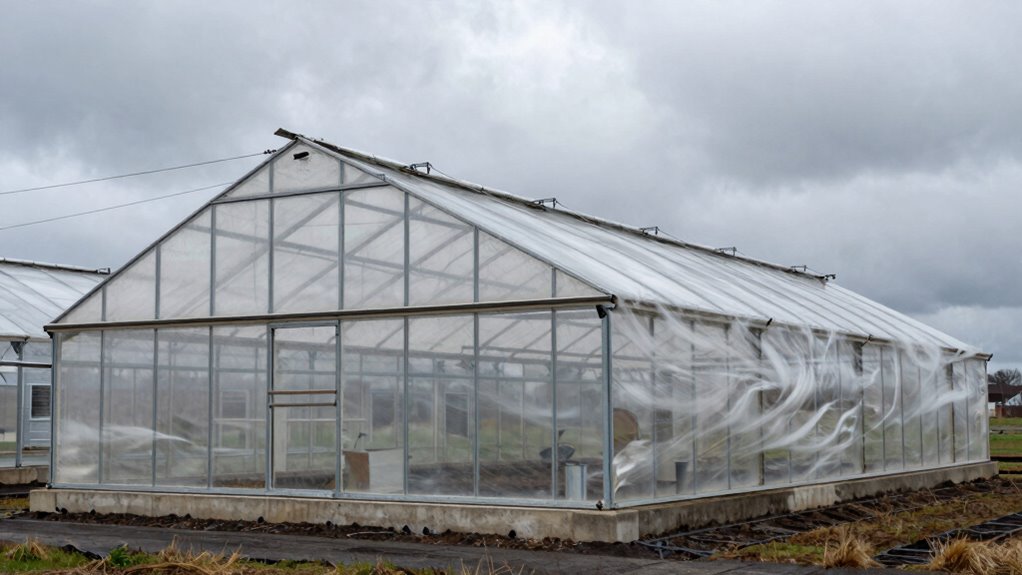
Wind poses the biggest threat to your greenhouse, risking structural damage or collapse. To keep it standing, you need strong anchoring methods like deep metal or concrete anchors tailored to your soil type. Proper installation and regular maintenance are key to withstand high winds. Choosing durable materials and upgrading your system guarantees long-lasting stability. Continue exploring to discover essential techniques that protect your greenhouse from the force of the wind.

Get garden gear delivered free with Prime
- Fast, free delivery on millions of items
- Prime Video, Amazon Music and more included
- Member-only deals all year
Key Takeaways
- Use deep, heavy-duty anchors like concrete or high-tensile steel for secure attachment to withstand strong winds.
- Ensure proper installation techniques, including level, deep placement and tight fastening, to prevent shifting during storms.
- Select soil-compatible anchors; deeper or wider anchors are necessary in loose or sandy ground for stability.
- Regularly inspect and maintain anchors and fasteners to detect corrosion, wear, or loosening, enhancing wind resistance.
- Incorporate advanced materials and design upgrades, such as coatings and additional anchors, to improve durability against environmental stresses.
Why Wind Is the Biggest Threat to Your Greenhouse

Wind poses the most significant threat to your greenhouse because strong gusts can cause structural damage or even topple the entire structure. To combat this, adopting a wind resistant design is essential. A well-designed greenhouse minimizes wind pressure, reducing the risk of damage during storms. Additionally, considering the environmental impact of your anchoring methods helps guarantee sustainability and safety. Proper anchoring prevents your structure from being displaced or damaged, which could lead to debris and environmental harm. Using sturdy materials and secure foundations not only protects your greenhouse but also reduces the need for repairs and replacements, lowering your ecological footprint. Moreover, integrating advanced nanomaterials into your anchoring systems can enhance their durability and resistance to harsh weather conditions, ensuring long-term stability. Ultimately, understanding wind’s threat and designing with resilience in mind helps safeguard your investment and supports environmentally responsible gardening practices.
What Factors Make Wind a Big Problem for Your Greenhouse
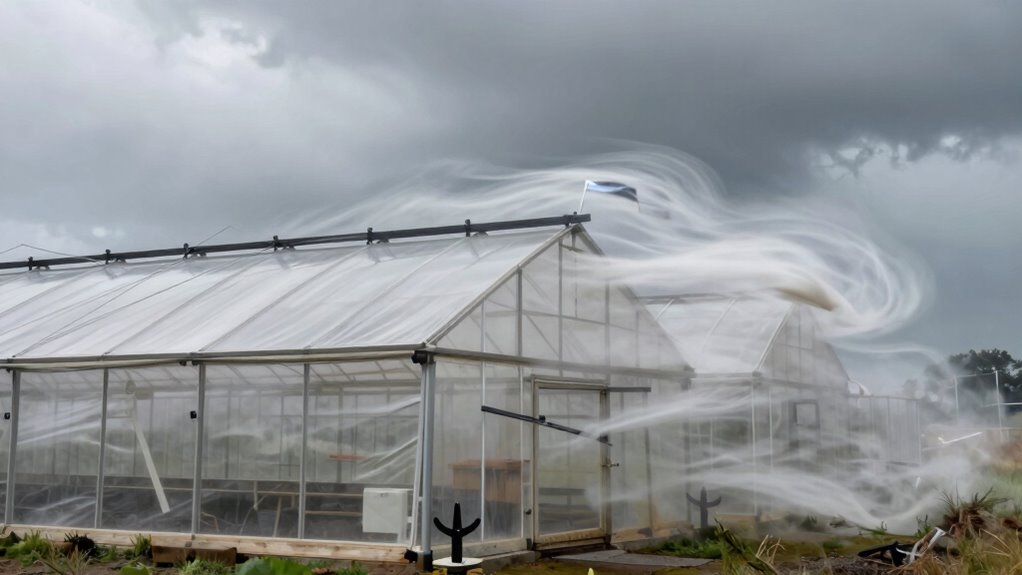
Wind exerts pressure on your greenhouse, increasing the risk of structural failure. Weak points in the design can be exposed, making it easier for high winds to cause damage. Understanding these factors helps you choose better anchoring methods to withstand strong gusts. Additionally, incorporating high-quality projectors with higher contrast ratios can improve visual clarity in a well-designed space, which is essential for monitoring your greenhouse’s structure and environment.
Wind Load Pressure
Ever wondered why some greenhouses struggle more than others during storms? The answer lies in wind load pressure, which directly impacts your structure’s stability. Wind pressure exerts force on the greenhouse surfaces, and if not properly managed, can cause severe damage or overturning. Understanding how wind load pressure works helps you choose effective anchoring techniques that resist these forces. Strong anchors distribute wind forces evenly and prevent movement. Factors like greenhouse shape, height, and location influence the amount of wind pressure it faces. Without adequate anchoring, even a slight increase in wind speed can threaten your greenhouse’s integrity. Properly evaluating wind load pressure and implementing robust anchoring techniques ensures your greenhouse remains secure, no matter how fierce the storm. Incorporating total‑cost clarity into your planning helps you select cost-effective, durable anchoring solutions that withstand high wind pressures.
Structural Weaknesses Exposed
When your greenhouse isn’t built with sturdy, well-designed features, it becomes more vulnerable to the forces of a storm. Structural weaknesses can quickly turn into disaster during high winds. You might face:
- Foundation failure, causing the entire structure to shift or topple.
- Frame deformation, which weakens the greenhouse’s integrity and invites wind damage.
- Loose or poorly secured panels that can be torn away or shattered by gusts.
- Incorporating free floating design elements without proper anchoring can also compromise stability, making the entire structure susceptible to wind forces.
These issues expose your greenhouse to significant wind damage, making it less resilient and increasing the risk of costly repairs. Without proper reinforcement, even moderate winds can expose vulnerabilities and threaten your investment. Ensuring a strong foundation and solid framework helps prevent these weaknesses from escalating during storms.
High Wind Speeds
High wind speeds can pose a serious threat to your greenhouse’s stability, especially if it isn’t properly anchored or reinforced. Wind resistant design is essential to minimize damage, but even the best design can fail without durable anchors. Strong winds exert pressure on the structure, making anchor durability vital for holding everything in place. To combat high winds, ensure your anchoring methods use high-quality materials that withstand constant stress. Reinforced anchors with deep, secure placements prevent shifting or uplift. Regular inspections help identify wear and tear, maintaining their effectiveness. Without proper reinforcement, your greenhouse risks collapsing or suffering structural damage during storms. Prioritizing wind-resistant design and durable anchors keeps your greenhouse standing firm, regardless of how fierce the wind blows. Incorporating seasonal checklists for maintenance can help ensure your anchoring system remains effective over time.
How to Choose the Right Anchors for Your Greenhouse
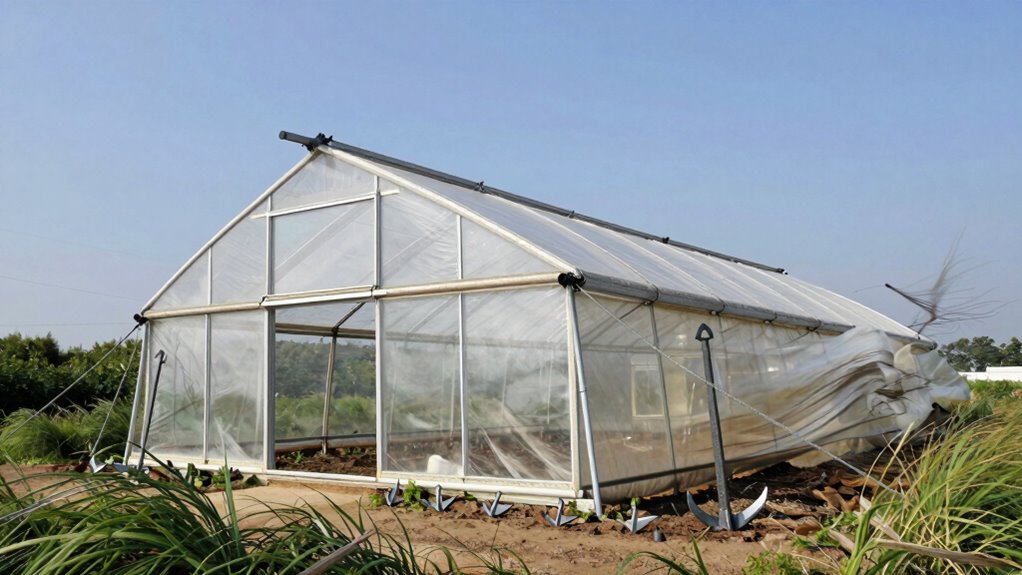
Choosing the right anchors depends on your soil conditions and the type of greenhouse you have. You need to take into account soil compatibility to guarantee the anchors hold firmly in your ground. Selecting the appropriate anchor type is essential for providing the stability your greenhouse needs against wind and other forces. Incorporating smart anchoring systems can further enhance stability by adapting to changing soil and weather conditions.
Soil Compatibility Factors
The soil type and its properties play a crucial role in selecting the right anchors for your greenhouse. Understanding your soil’s characteristics ensures stability and durability. Consider these key factors:
- Soil nutrients: Nutrient-rich soils may require more robust anchors to prevent shifting caused by organic activity.
- pH levels: Acidic or alkaline soils affect corrosion and anchor materials; choose compatible metals or composites.
- Soil compaction: Loose or sandy soils need deeper or wider anchors for better grip, while dense soils provide more natural support.
- Soil properties: Soil composition and texture influence how well different anchor types will perform in your specific environment.
Anchor Type Selection
Selecting the right anchor type is essential to guaranteeing your greenhouse remains stable and secure. Your choice depends on factors like soil conditions, wind load, and material durability. For instance, metal anchors offer high durability and strength, making them ideal for windy areas. Concrete anchors provide excellent stability in firm soil, while plastic or fabric anchors might suit lighter structures or softer ground. Consider the material durability to ensure your anchors withstand harsh weather without corroding or degrading. Steel anchors resist rust but need proper coating, whereas galvanized options last longer. Always assess your site’s specific conditions to choose the most appropriate anchor type, ensuring your greenhouse stays firmly anchored, no matter how strong the wind blows. Additionally, understanding sustainable construction practices can help optimize anchor selection for both durability and environmental impact.
Best Materials and Equipment for Greenhouse Anchoring

To securely anchor a greenhouse, you need durable materials and reliable equipment designed to withstand environmental forces. Using advanced materials guarantees strength and longevity, while innovative equipment improves installation efficiency. Here are three top choices:
- High-tensile steel anchors provide exceptional durability and resistance to corrosion, perfect for challenging weather.
- Heavy-duty concrete anchors offer stability on uneven or rocky ground, preventing shifting during storms.
- Industrial-grade ratchet straps allow for adjustable tension, securing the structure firmly in place.
- Selecting proper materials ensures the longevity and stability of your greenhouse in diverse conditions.
Choosing these materials and equipment ensures your greenhouse stays grounded despite wind or other environmental stresses. Investing in high-quality, innovative equipment makes all the difference in maintaining long-term stability.
How to Install Anchors Step-by-Step for Stability
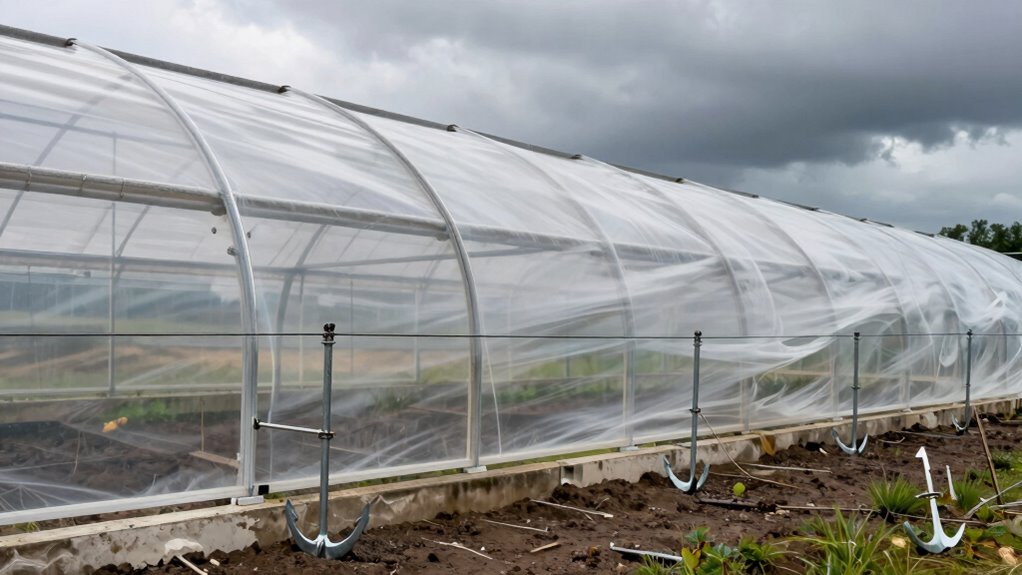
Installing anchors properly is key to guaranteeing your greenhouse remains stable against environmental forces. Follow these steps for effective anchor installation and stability enhancement. First, mark anchor points based on your greenhouse’s layout. Next, dig holes deep enough for the anchors, making sure they’re firm and level. Secure the anchors tightly into the ground, using appropriate tools. Attach the greenhouse frame to the anchors with heavy-duty fasteners, maintaining tension. Regularly check the stability of the anchors and reinforce as needed. Ensuring proper anchoring techniques are used is essential for long-term stability, especially in windy conditions. Here’s a visual guide:
| Step | Action | Tip |
|---|---|---|
| Mark points | Identify anchor locations | Use a measuring tape |
| Dig holes | Prepare for anchor placement | Deep enough for stability |
| Secure anchors | Install firmly into ground | Ensure level and tight |
Maintaining and Upgrading Your Wind Anchoring System
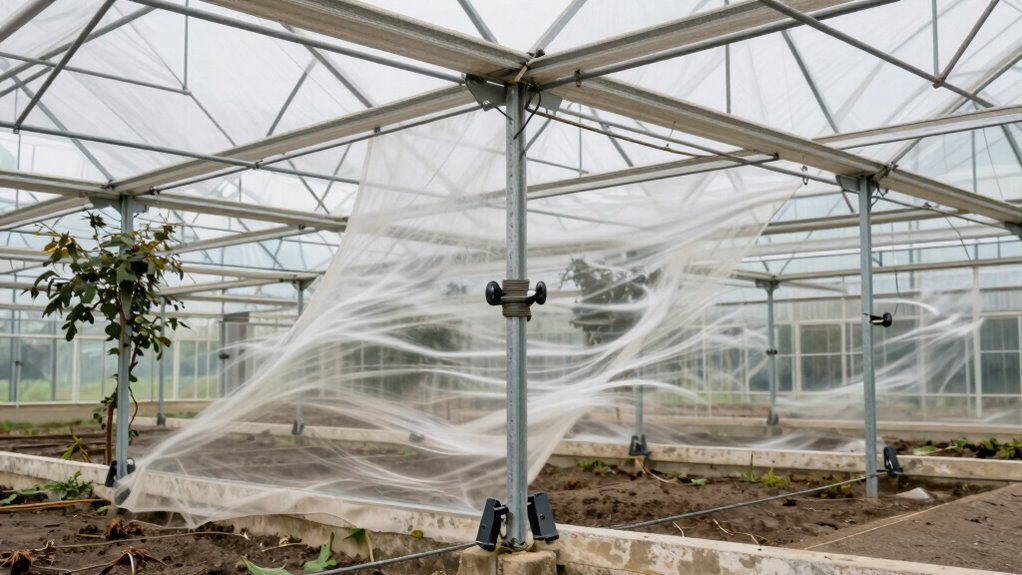
Regular maintenance is essential to guarantee your wind anchoring system remains effective over time. You should routinely inspect your anchors for signs of wear, corrosion, or loosening. To keep your system in top condition, consider these steps:
Regularly inspect and maintain your wind anchors for lasting effectiveness and safety.
- Perform anchor maintenance by tightening bolts and replacing rusted components.
- Assess your current setup for potential upgrade considerations, like stronger materials or additional anchors for extra stability.
- Update your system based on recent wind load data or new greenhouse designs to ensure maximum resistance.
Frequently Asked Questions
How Do Seasonal Wind Patterns Affect Greenhouse Anchoring Strategies?
Seasonal wind patterns greatly influence your greenhouse anchoring strategies. You need to account for changing wind direction and increased wind load during certain seasons. By reinforcing anchors and choosing flexible yet sturdy materials, you guarantee stability against stronger gusts. Adjust your anchoring methods as wind patterns shift, and always monitor local weather forecasts. This proactive approach helps prevent damage, keeping your greenhouse secure no matter the season.
Can Anchoring Systems Be Customized for Different Greenhouse Sizes and Designs?
Yes, you can customize anchoring systems for different greenhouse sizes and designs. Many options offer design flexibility, allowing you to choose from various materials, anchoring types, and installation techniques. This customization guarantees your greenhouse remains stable regardless of its structure or size. By tailoring the anchoring system, you improve durability against wind forces, providing peace of mind and long-term protection for your greenhouse investment.
What Are the Signs That Your Current Anchoring System Needs Reinforcement?
You’ll notice your greenhouse’s foundation feels less stable or shifts during strong winds, which signals it might need reinforcement. Coincidentally, signs like visible cracks or loosened anchoring material fatigue indicate your current anchoring system is wearing out. If these issues appear, it’s time to reevaluate your anchoring methods to guarantee foundation stability and prevent costly damage from wind forces.
Are There Eco-Friendly or Sustainable Anchoring Options Available?
Yes, eco-friendly anchors are available, offering sustainable solutions for greenhouse stability. You can choose options like biodegradable stakes, recycled metal anchors, or natural stone weights that minimize environmental impact. These sustainable solutions help protect the ecosystem while ensuring your greenhouse remains secure against wind. Switching to eco-friendly anchors not only supports environmental conservation but also aligns with green building practices, making your greenhouse more sustainable overall.
How Do Local Building Codes Influence Greenhouse Anchoring Requirements?
Your local building codes notably influence greenhouse anchoring requirements by establishing strict anchoring regulations to ensure safety and stability. You must comply with building code compliance, which often dictates specific anchoring methods, materials, and installation standards. Failing to meet these regulations can lead to legal issues or structural failure. Consequently, it’s essential to review local codes, consult with authorities, and choose anchoring solutions that align with these guidelines to keep your greenhouse secure.
Conclusion
When you realize that a simple, well-chosen anchoring system can be the difference between a sturdy greenhouse and costly damage, it feels like fate. By selecting the right anchors and installing them properly, you’re not just protecting your plants—you’re ensuring your hard work endures through unpredictable weather. Sometimes, the smallest details make all the difference, turning a potential disaster into a story of resilience. Stay proactive, and wind will no longer be your greenhouse’s biggest enemy.
Halloween Picks
halloween
As an affiliate, we earn on qualifying purchases.