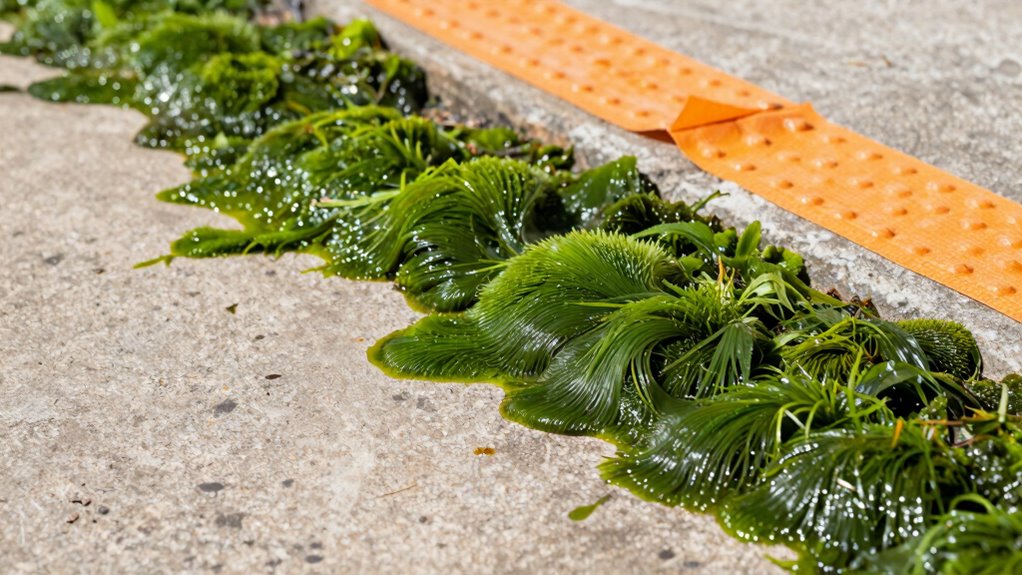
Algae on walkways can make surfaces dangerously slippery and pose slip hazards, especially when it’s green, black, or blue-green algae. Instead of using harsh chemicals that harm plants and the environment, opt for eco-friendly, biodegradable cleaners like plant-based enzymes or acids. These products are safe for your plants and soil while effectively removing algae. Proper application, drainage improvements, and sunlight management help prevent regrowth. Keep exploring to learn how to maintain a safe, plant-safe walkway.
Key Takeaways
- Use eco-friendly, biodegradable algae cleaners like plant-based acids or enzymes to remove algae safely without harming surrounding plants.
- Improve drainage and manage shade to reduce moisture and sunlight conditions that promote algae growth.
- Regularly inspect and maintain walkways, applying cleaning treatments during dry, calm weather for better effectiveness.
- Reapply eco-friendly cleaners as needed, especially after rain, to prevent algae re-growth and maintain slip resistance.
- Trim overhanging vegetation and install shading structures to limit shaded, damp areas where algae thrive.

Collapsible Rain Barrel Water Storage Containers-53 Gallon Portable Rainwater Collect System Water Tank to Collect Rainwater from Gutter Downspout Water Catcher with Spigots,Filter&Overflow Kits
【Leak-Proof Design】Unlike typical rain barrels, our product features an integrated design with a straightforward screw-in faucet, eliminating the...
As an affiliate, we earn on qualifying purchases.
Why Algae on Walkways Is a Safety Hazard

Algae on walkways creates a significant safety hazard because it makes surfaces extremely slippery. When algae growth occurs, it forms a slick layer that can easily cause slips and falls, especially when the surface is wet or moist. This not only endangers pedestrians but also increases the risk of serious injuries. Maintaining walkway safety means regularly inspecting and removing algae buildup before it becomes a problem. Algae thrives in damp, shaded areas, making outdoor walkways particularly vulnerable. Ignoring algae growth can lead to accidents, lawsuits, and costly repairs. Understanding the fundamentals of safe maintenance and algae control can help you take proactive steps to keep surfaces safe and prevent potential injuries caused by slippery, algae-covered paths.

RTS Home Accents 50-Gallon Rain Barrel with Brass Spigot, Flat Back Rain Water Collection Barrel, Walnut Color
50-Gallon Capacity: Provides ample storage for harvested rainwater, ideal for watering gardens, lawns, and plants.
As an affiliate, we earn on qualifying purchases.
How to Identify Different Types of Algae on Your Paths
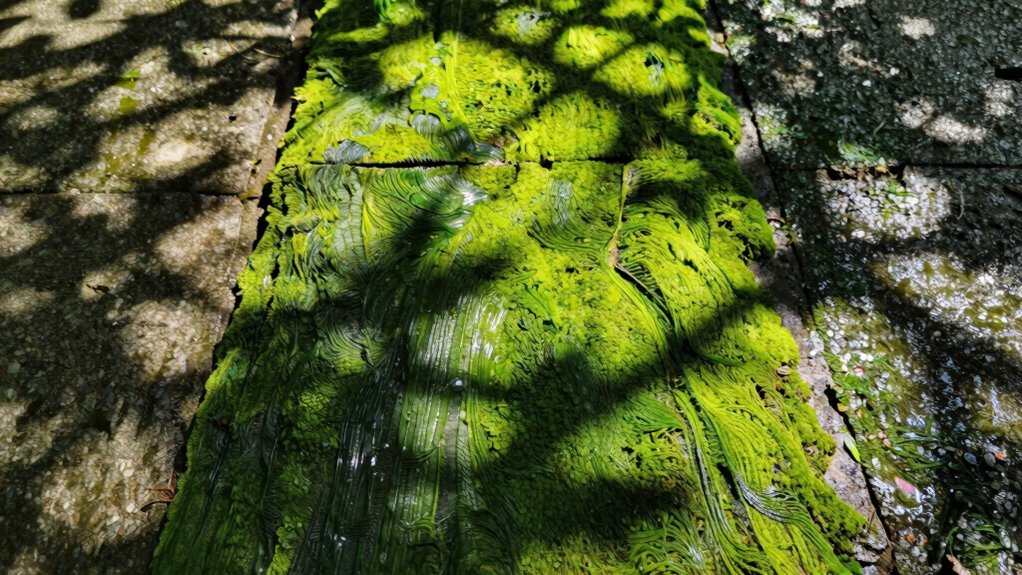
To identify different types of algae on your paths, start by examining their appearance—color, texture, and sheen. You’ll notice common types like green, black, or blue-green algae, each with distinctive features. Keep in mind that environmental factors like moisture, shade, and temperature influence which algae thrive there. Additionally, understanding color accuracy can help distinguish between algae types based on their hue and reflectivity.
Visual Characteristics of Algae
You can often spot algae on walkways by their distinct colors and textures. The algae color varies from bright green to dark green, sometimes with yellow or brown tints, making them stand out against concrete or stone surfaces. Their texture can range from slimy and slippery to rough and powdery, depending on the type and environmental conditions. Smooth, glossy patches usually indicate a moist, algae-covered area, while fuzzy or filmy growths might look like a thin layer of moss. Pay attention to the surface feel—slippery patches suggest algae buildup, while rougher textures might be more difficult to clean. Recognizing these visual cues helps you identify algae early, so you can take appropriate steps to remove and prevent slip hazards efficiently. Awareness of natural filtration systems can also guide environmentally friendly cleaning methods.
Common Algae Types Found
Understanding the different types of algae that can grow on walkways is essential for effective removal and prevention. Proper algae identification helps you distinguish between common varieties, such as green algae, black algae, and blue-green algae. Green algae, often slimy and bright green, thrive in moist, shaded areas and are easy to spot on concrete or stone surfaces. Black algae appear as dark, stubborn patches that penetrate porous materials, making them harder to remove. Blue-green algae, or cyanobacteria, form bluish-green mats and can produce unpleasant odors. Familiarity with algae classification allows you to recognize these types quickly, ensuring you choose the right cleaning methods and preventive measures to keep your paths safe and algae-free.
Environmental Factors Influencing Growth
Environmental conditions play a crucial role in determining which algae types grow on your walkways. Factors like moisture, sunlight, and nutrients influence algae development. Urban runoff brings nutrients and pollutants that promote algae growth, especially in shaded areas. Atmospheric moisture from rain or humidity sustains algae and encourages spreading. To better understand, consider this table:
| Condition | Typical Algae Type | Indicators |
|---|---|---|
| High atmospheric moisture | Green algae | Slimy, vibrant green patches |
| Urban runoff | Blue-green algae | Mucilaginous, often in water pockets |
| Low sunlight | Black or dark brown algae | Matte, crusty surface |
| Frequent wetness | Filamentous algae | Stringy, moss-like growth |
Recognizing these factors helps you identify algae types and assess environmental influences effectively. Understanding environmental factors can aid in implementing targeted removal and prevention strategies.

Rihogar 100 Gallon Rain Barrel Water Tank - Portable Collapsible Rain Water Collection Barrel - Large Water Storage Tank - Stable Water Barrels Rain Catcher with Spigot Overflow Kit, Black
Large Capacity & Efficient Water Collection: The upgraded 100-gallon rain barrel offers ample water storage for gardening, cleaning,...
As an affiliate, we earn on qualifying purchases.
Why Traditional Cleaning Methods Can Harm Your Plants and Environment

Traditional cleaning methods often rely on harsh chemicals like bleach and strong detergents, which can do more harm than good. When you use these substances, chemical runoff can seep into nearby soil and waterways, contaminating the environment. This runoff can affect plants by increasing plant toxicity, making them vulnerable to damage or death. Even if your primary goal is to clean algae or grime, these chemicals can harm surrounding vegetation and disrupt local ecosystems. Additionally, repeated use of harsh cleaners can degrade soil quality and harm beneficial microorganisms. By sticking to aggressive chemical solutions, you risk creating long-term environmental issues that outweigh their immediate benefits. Choosing safer, plant-friendly cleaning alternatives helps protect your landscape while effectively maintaining walkways. Implementing eco-friendly practices can further minimize environmental impact and promote healthier outdoor spaces.

EJWOX Fruit and Apple Crusher - 7L Manual Juicer Grinder, Portable Fruit Scratter Pulper for Home Brewing & Cider Pressing (Stainless Steel, 1.8 Gallon, Green)
LARGE CAPACITY – Extra-large hopper holds up to 7 L/1.8 gallons of fruit. Efficient design can process 35–45...
As an affiliate, we earn on qualifying purchases.
How to Choose a Safe, Eco-Friendly Algae Cleaner
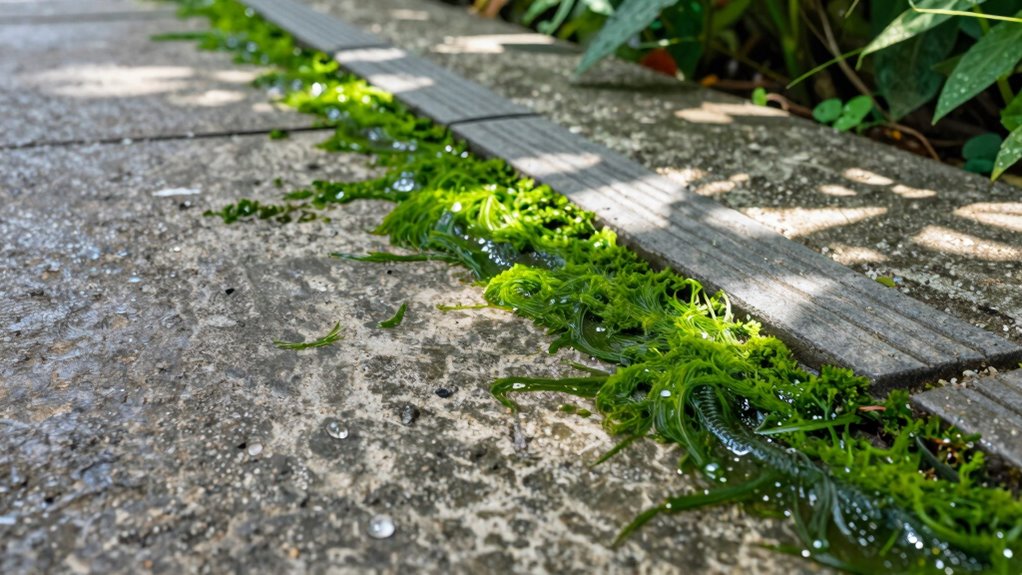
Choosing an eco-friendly algae cleaner starts with reading labels carefully and looking for natural ingredients. Understanding the algae lifecycle helps you select products that target algae at different stages without harsh chemicals. Look for cleaners that disrupt the algae’s growth naturally, rather than relying on toxic substances. Chemical safety is essential; avoid products with strong acids or harmful biocides that can damage plants, pets, and soil. Instead, choose solutions labeled as biodegradable and plant-safe, which break down safely after use. Check for ingredients like enzymes or plant-based acids that control algae without disrupting the environment. By prioritizing products made with the algae lifecycle in mind and safe chemical profiles, you guarantee effective cleaning while protecting your walkway, plants, and the planet. Additionally, being aware of pinball machine weights can help when considering transportation and installation of large cleaning equipment, ensuring safety and ease of handling.
How to Properly Apply Natural Algae Removers
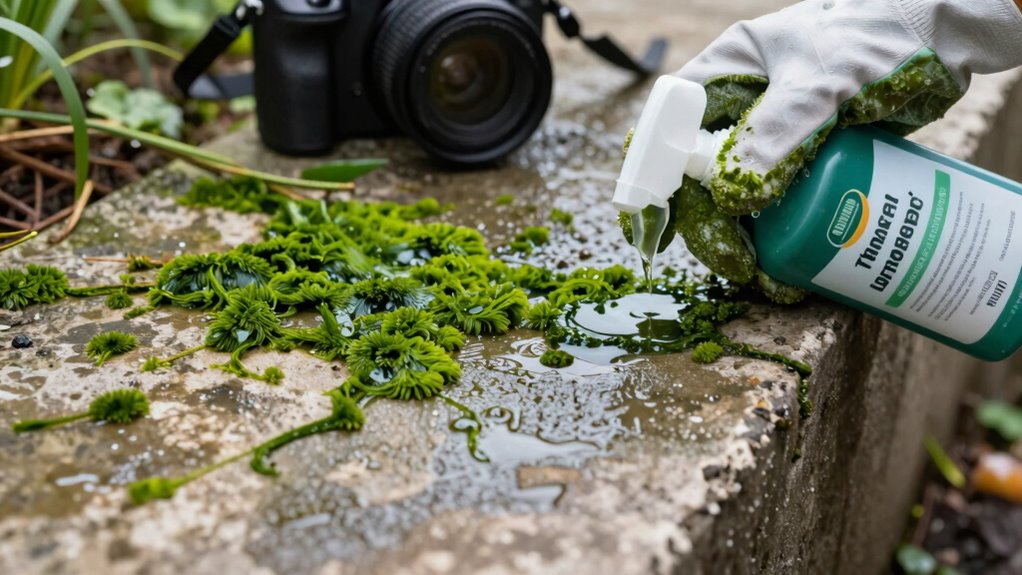
To guarantee natural algae removers work effectively, you need to apply them correctly and consistently. Start by cleaning the walkway surface to remove loose debris. Then, follow the instructions on your natural remedies product, applying the solution evenly with a sprayer or brush. Allow it to sit for the recommended time to penetrate algae. For best algae control, reapply after heavy rains or if algae returns. Use the table below as a quick guide:
| Step | Method | Timing |
|---|---|---|
| Surface Preparation | Sweep and hose down | Before application |
| Application | Spray or brush evenly | During dry weather |
| Reapplication | Repeat as needed | Every 2-4 weeks |
| Post-treatment | Rinse walkway with water | After 24 hours |
Consistent application guarantees natural remedies effectively control algae without harming plants. Additionally, selecting plant-safe solutions helps maintain a healthy environment for your garden or landscaping.
Tips to Prevent Algae From Growing Back on Your Walkways
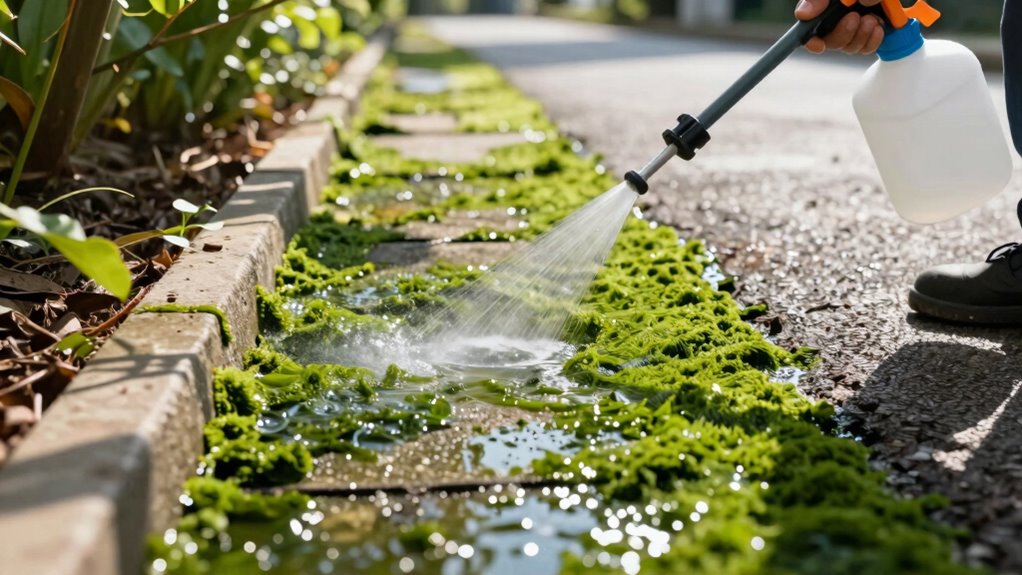
To keep algae from returning, you should improve drainage around your walkway to prevent excess moisture. Using eco-friendly cleaners can help keep the surface clean without harming the environment. Additionally, managing shade and sunlight exposure can create less favorable conditions for algae growth. Supporting personal transformation through mindful practices can also foster a deeper connection with your outdoor spaces and encourage sustainable maintenance.
Improve Drainage Effectively
Improving drainage is essential to prevent algae from returning on your walkways. Effective drainage reduces water pooling, which creates a damp environment perfect for algae growth. Start by evaluating your current drainage system and identify areas where water tends to accumulate. Incorporate drainage improvement techniques like adding slope or installing channels to direct runoff away from walkways. Proper runoff management ensures water flows smoothly off surfaces, preventing persistent moisture. Consider installing a French drain or gravel beds to enhance water absorption and movement. Regularly clear debris and check for clogged gutters or drains that could hinder runoff. By optimizing drainage and managing runoff effectively, you’ll keep your walkways drier, safer, and less inviting for algae to thrive. Proper runoff management is a key component of effective drainage solutions.
Use Eco-Friendly Cleaners
Using eco-friendly cleaners is an effective way to prevent algae from returning on your walkways without harming the environment. Look for biodegradable solutions that break down naturally, reducing pollution and protecting nearby plants. These cleaners often contain plant-safe ingredients, ensuring they won’t damage your landscaping or soil health. Apply the solution thoroughly to the affected areas, focusing on spots prone to algae growth. Regular use helps keep algae at bay and maintains a clean, safe surface. Unlike harsh chemicals, eco-friendly cleaners are safer for pets and children, making them a responsible choice for your outdoor space. biodegradable solutions break down naturally, supporting environmental health while effectively controlling algae buildup on your walkways.
Maintain Shade and Sunlight
Controlling the amount of shade and sunlight on your walkways can substantially reduce algae growth. Proper shade maintenance helps limit areas that stay damp and promote algae development. Trim overhanging branches or install shade structures to manage sunlight exposure effectively. Keep in mind that too much shade encourages algae, while excessive direct sunlight can also promote algae if moisture remains. Aim for balanced sunlight exposure by ensuring your walkways get enough sunlight to dry quickly after rain, reducing damp spots. Regularly inspect shaded areas and adjust plantings or coverings as needed. By managing shade and sunlight, you create an environment less hospitable to algae, making your walkways safer and easier to maintain. Proper sunlight exposure is key to preventing algae from returning.
Troubleshooting Common Issues With Eco-Friendly Algae Cleaners
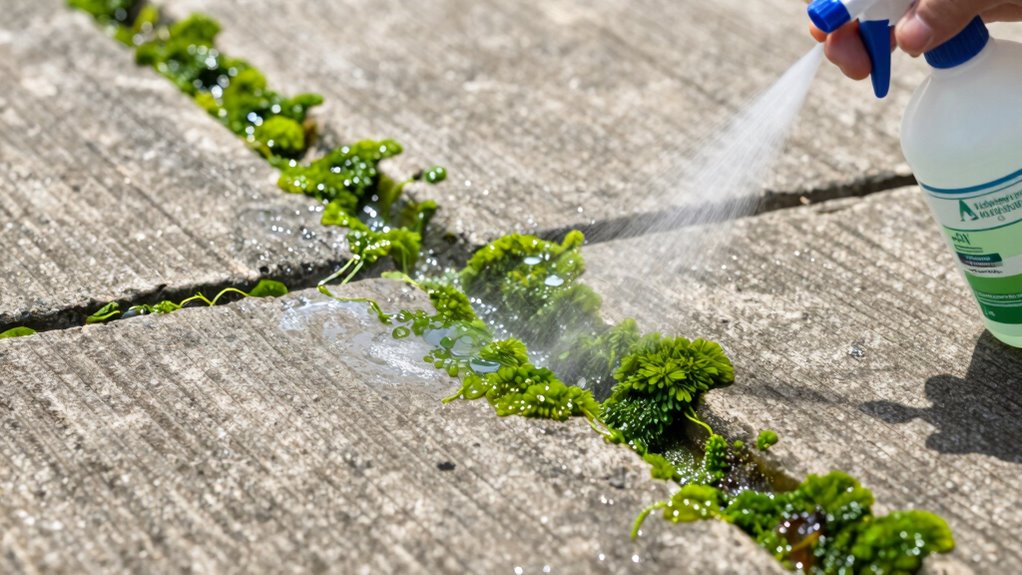
Eco-friendly algae cleaners are effective, but you might encounter some common issues during application. Understanding the algae lifecycle and chemical interactions can help you troubleshoot problems more effectively. If algae resists removal, it could be due to its resilient lifecycle stage or chemical reactions that neutralize cleaning agents. Sometimes, the cleaner may not fully penetrate porous surfaces, leading to incomplete removal. Weather conditions like rain or humidity can also interfere with the treatment. To address these issues, consider the following:
Understanding algae lifecycle and weather effects ensures effective eco-friendly cleaning results.
- Confirm proper surface preparation before applying the cleaner
- Use the correct concentration for your specific algae type
- Apply during dry, calm weather for ideal results
- Allow sufficient dwell time for the cleaner to work
- Reapply if algae persist after initial treatment
These steps help maximize safety and effectiveness.
Frequently Asked Questions
Are Natural Algae Removers Safe for Pets and Children?
Yes, natural algae removers are generally safe for pets and children, making them a good choice if you’re concerned about pet safety and chemical concerns. These eco-friendly options often use plant-based ingredients that don’t pose harmful risks. You can confidently apply them around your home, knowing they effectively eliminate algae while keeping your loved ones safe from toxic chemicals. Always check labels for specific safety instructions to guarantee peace of mind.
How Often Should I Reapply Eco-Friendly Algae Treatments?
Reapplying eco-friendly algae treatments is like watering a plant—relies on the conditions. Typically, you should do it every 2 to 4 weeks to maintain algae prevention and keep surfaces safe. Factors like weather, shade, and moisture affect treatment frequency. Monitor the walkway closely; if algae starts to reappear, it’s time for another round. Regular application ensures a clean, slip-free surface while being gentle on plants and the environment.
Can Algae on Walkways Indicate Underlying Drainage Issues?
Yes, algae on walkways can indicate underlying drainage issues. When water doesn’t drain properly, it creates moist conditions ideal for algae growth. Conduct a drainage assessment to identify pooling or poor runoff, then implement algae prevention strategies like improving slope or installing drainage systems. Addressing drainage problems helps keep walkways safer and reduces algae buildup, ensuring your pathways stay clean and slip-resistant over time.
Are There Seasonal Factors That Influence Algae Growth?
Ever noticed how algae seems to flourish during certain times of the year? Seasonal fluctuations and weather patterns markedly influence algae growth. Warmer temperatures, increased moisture, and sunlight during spring and summer create ideal conditions. Conversely, cooler, drier months tend to slow growth. So, if you’re wondering why algae appears more at specific times, it’s largely driven by these seasonal factors, making it essential to adjust your maintenance routines accordingly.
What Are Cost-Effective Solutions for Large or Commercial Areas?
You can implement cost-effective solutions like regular pressure washing and eco-friendly algaecides to keep large commercial areas safe and clean. Scheduling routine maintenance minimizes algae buildup, reducing long-term costs and slip hazards. Using environmentally safe products guarantees plant safety while maintaining walkway safety. Additionally, applying preventative treatments seasonally can save money over time, making your commercial area maintenance more efficient and budget-friendly.
Conclusion
Using eco-friendly algae cleaners might seem like extra work, but it’s worth it to protect your plants and the environment. Safe solutions prevent slips without harming nearby greenery, saving you money on repairs and replacements later. Don’t let the fear of effort hold you back—your walkways can stay clean and safe naturally. By choosing sustainable methods, you create a healthier space for everyone, proving that caring for your landscape doesn’t have to come at a cost to nature.