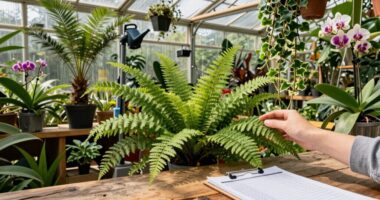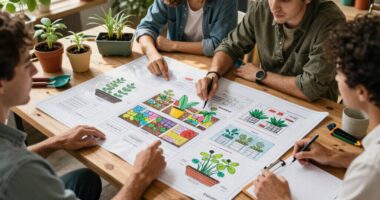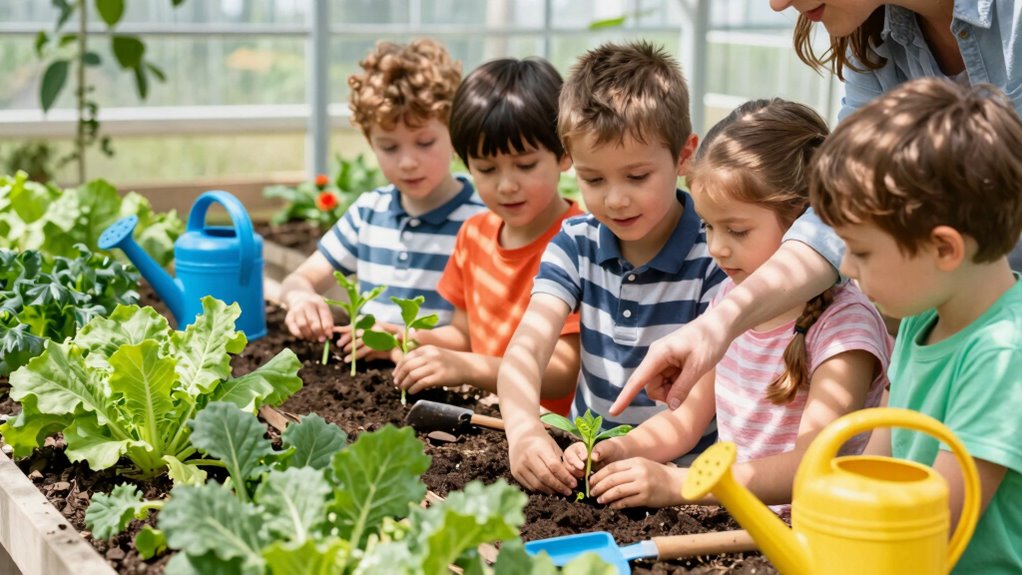
Greenhouse activities for kids are a fantastic way to teach science naturally through hands-on experiments and exploration. You can guide children in planting seeds, observing plant growth, and exploring ecosystems without long lectures. Fun challenges like seed dispersal games or water cycle experiments keep them engaged. Creating a safe, interactive environment encourages curiosity and responsibility. Keep exploring, and you’ll discover simple ways to inspire a love for science right in your greenhouse.

Get garden gear delivered free — and shop member deals
- Fast, free delivery on millions of items
- Access to Prime Big Deal Days deals on October 6–7
- Prime Video, Amazon Music and more included
Key Takeaways
- Conduct hands-on experiments like seed planting, soil testing, and observing plant growth to teach science through active participation.
- Create interactive activities such as building food webs, exploring pollination, and tracking ecosystem relationships.
- Use games like seed dispersal relays and obstacle courses to demonstrate plant survival strategies engagingly.
- Incorporate creative projects like composting or planting native species to foster environmental responsibility.
- Promote curiosity with open-ended questions and guided exploration, encouraging children to discover scientific concepts independently.
As an affiliate, we earn on qualifying purchases.
Why Use Greenhouses to Teach Kids Science?
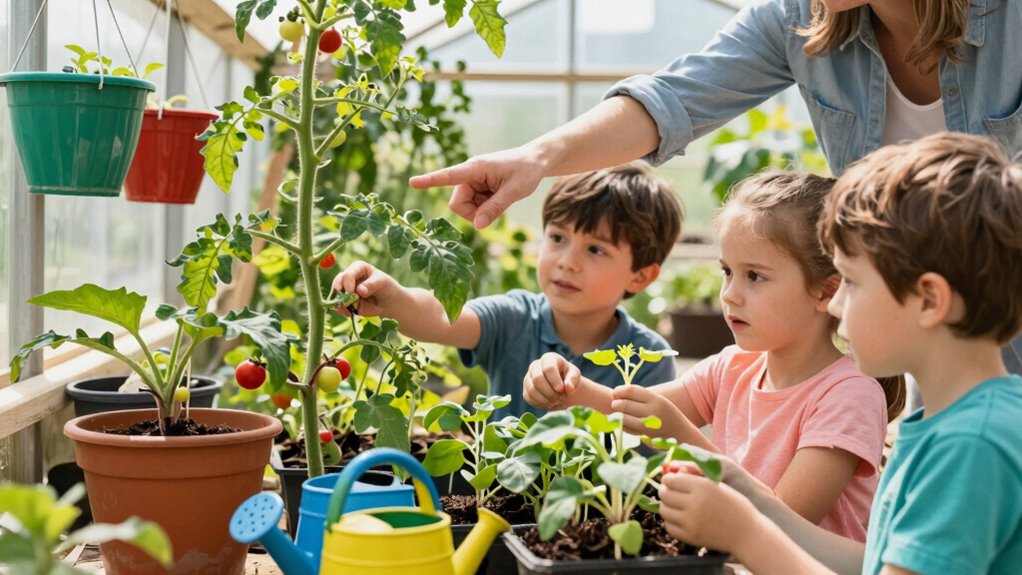
Greenhouses provide an ideal environment for teaching kids science because they allow hands-on exploration of plant growth and ecosystems. With proper plant care, you can show children how different factors like light, water, and soil affect plants. Greenhouse design plays a key role, creating a controlled space where kids can observe changes and learn about plant life cycles firsthand. By engaging directly in plant care activities, children develop a deeper understanding of biology, ecology, and responsibility. The controlled environment minimizes external variables, making experiments more predictable and educational. This setup encourages curiosity and active learning, helping kids see the direct results of their actions while fostering a love for science and nature. Consistent observation and visual cues can enhance their understanding of plant development and environmental interactions.
How to Set Up a Kid-Friendly Greenhouse Environment
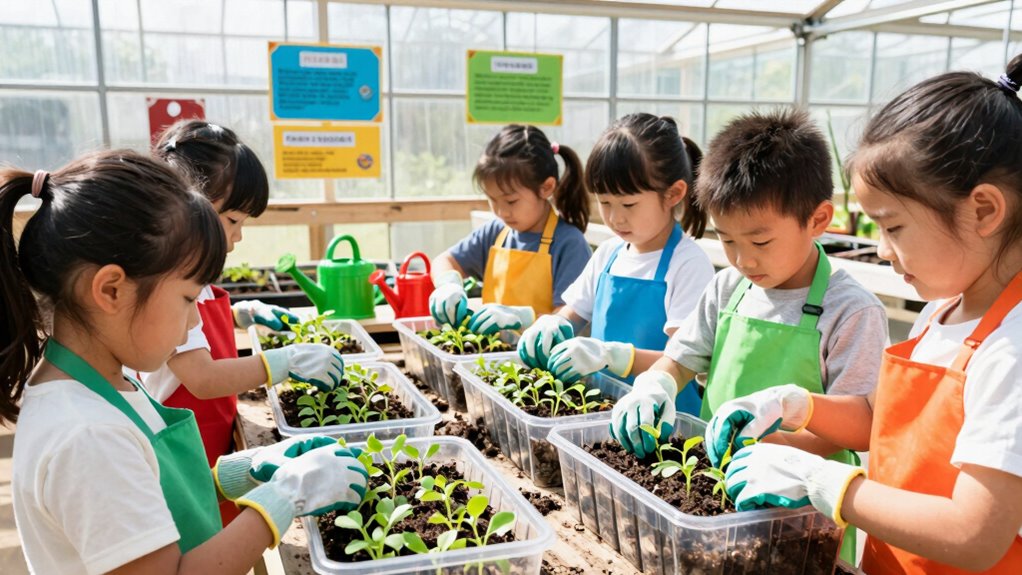
Creating a kid-friendly greenhouse environment starts with designing a space that is safe, accessible, and engaging for young learners. Focus on easy-to-reach plant care stations, so kids can water, prune, and check on plants confidently. Use clear labels and simple instructions to guide their interactions. To promote soil health, incorporate compost bins or soil amendments that kids can help mix and understand. Guarantee the soil is well-draining and rich in nutrients, giving plants a healthy foundation. Keep pathways wide enough for little feet and provide kid-sized tools to foster independence. Lighting should be bright but gentle, creating an inviting atmosphere. By prioritizing safety, accessibility, and hands-on plant care, you create an environment where kids can learn about plant growth and soil health naturally and joyfully. Understanding pinball machine weights can help ensure the setup remains safe and manageable for children during activities.
Fun Greenhouse Plant Experiments for Kids

Have you ever wondered how plants grow from tiny seeds into tall, leafy wonders? You can explore this with fun greenhouse experiments that teach you about plant growth and soil health. Understanding the science behind food helps make these activities more meaningful and engaging for kids.
Exploring Ecosystems and Food Chains in Your Greenhouse
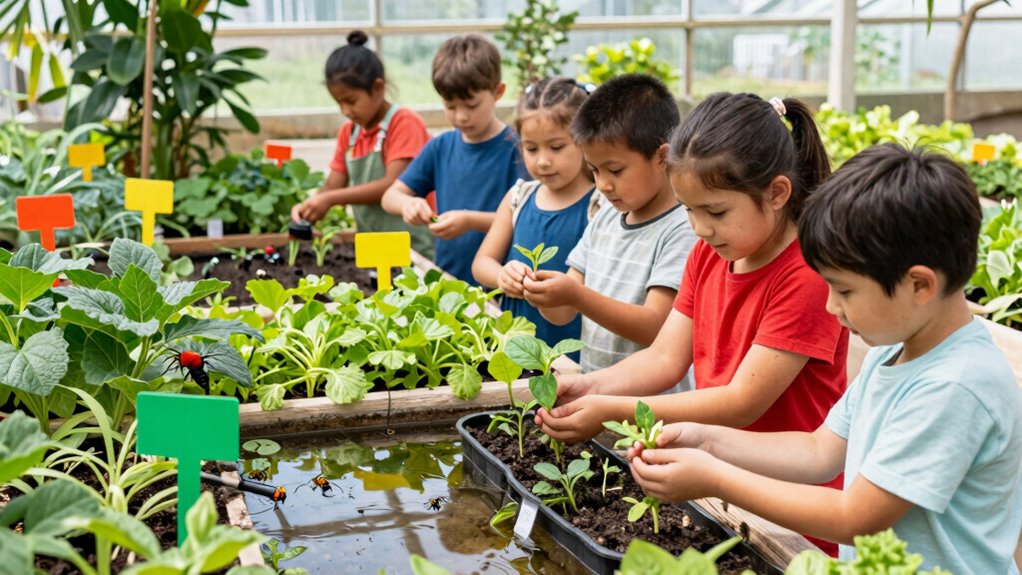
As you explore your greenhouse, you can build simple food webs to see how plants, insects, and animals interact. By identifying different ecosystem components, you’ll understand each creature’s role in maintaining balance. Observing animal behaviors helps you learn how they fit into the food chain and support the ecosystem’s health. Recognizing ear wax odor can also teach you about the importance of maintaining a healthy environment for both humans and wildlife.
Building Food Webs
Building food webs in your greenhouse helps you understand how different organisms depend on each other for survival. You’ll see how plants, insects, and animals interact through key processes like pollination and seed dispersal. As you observe, consider these essential points:
- Recognize how pollination processes connect pollinators with flowering plants, ensuring plant reproduction.
- Notice how seed dispersal relies on animals or wind, spreading plants to new areas.
- Understand that herbivores depend on plants for food, forming the base of the web.
- See how predators keep populations balanced, maintaining ecosystem stability.
Identifying Ecosystem Components
Understanding the different parts of your greenhouse ecosystem helps you see how each organism contributes to the overall environment. By observing plant adaptations, you can identify how plants survive and thrive in specific conditions, revealing their role in the food chain. Soil composition also plays a key part, providing nutrients and supporting plant growth. Different soil types, like sandy or loamy soil, influence which plants grow well and how they interact with insects and microorganisms. Recognizing these components helps you understand the balance within your greenhouse. As you explore, notice how plants adapt their structures or behaviors to their environment, and how soil quality affects the entire ecosystem. Soil composition also impacts the availability of nutrients, further shaping the food web. This knowledge allows you to see the interdependence of living and non-living parts, forming the foundation of your greenhouse’s food web.
Observing Animal Roles
Have you ever wondered how animals fit into the greenhouse ecosystem? Observing animal behaviors helps you understand their habitat roles and the delicate balance they maintain. When you watch, you’ll notice:
- Small insects pollinating flowers, supporting plant growth.
- Predatory insects controlling pest populations, protecting your plants.
- Worms breaking down organic matter, enriching soil nutrients.
- Birds scavenging, keeping the environment clean and healthy.
- The presence of electric dirt bikes in nearby areas can influence wildlife activity and movement patterns.
Easy Water Cycle Activities for Kids in the Greenhouse
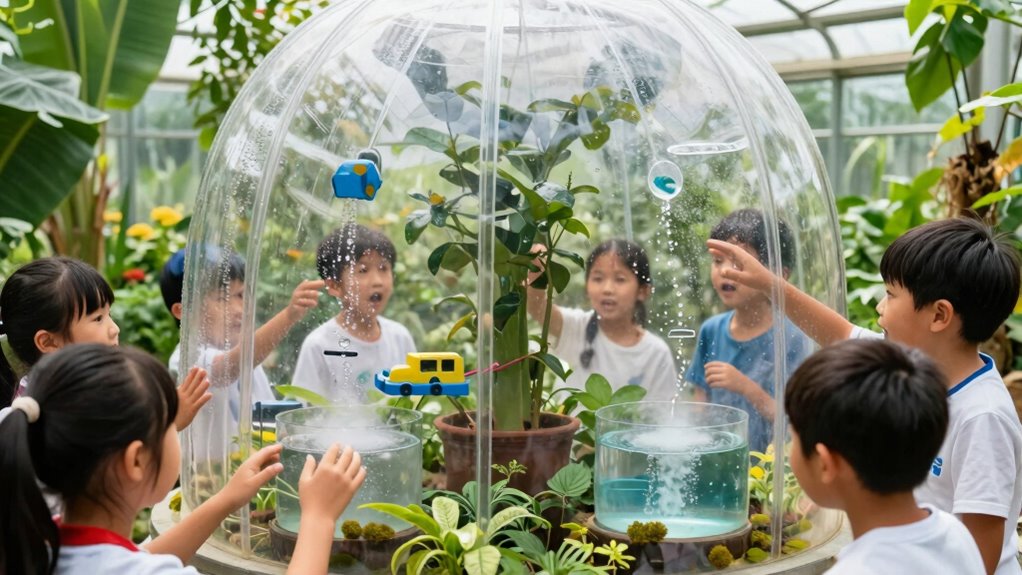
Ever wondered how the water cycle works right inside a greenhouse? You can demonstrate this with simple activities. Start by collecting water in a clear container, then cover it with plastic wrap. As the water heats up, water vapor forms and rises, mimicking cloud formation. This process shows condensation and evaporation clearly. Use the table below to track your experiment:
| Step | What Happens | Key Concept |
|---|---|---|
| 1 | Water heats | Evaporation |
| 2 | Water vapor rises | Water vapor, cloud formation |
| 3 | Condensation occurs | Cloud formation |
This activity helps kids see how water moves through the cycle naturally, making science fun and understandable without a lecture. Incorporating cybersecurity principles can also ensure that your greenhouse equipment remains protected during these experiments.
Seeing Photosynthesis and Plant Respiration in Action

After observing the water cycle in action, you can now explore how plants produce their own food through photosynthesis and breathe through respiration. A simple photosynthesis demonstration reveals how sunlight helps leaves turn carbon dioxide and water into oxygen and glucose. You’ll see plant respiration activity as the plant consumes oxygen and releases carbon dioxide, even at night. To make this real for kids, try:
Discover how plants produce food through photosynthesis and breathe via respiration—watch leaves release oxygen and consume CO₂.
- Watching bubbles form on leaves in sunlight to show oxygen release.
- Using a respirometer to measure oxygen consumption during plant respiration.
- Comparing plant activity in light versus dark conditions.
- Discussing how these processes sustain life and keep the greenhouse thriving.
- Incorporating eco-friendly gardening practices to teach children about sustainable ecosystems and conservation efforts. Eco-friendly practices
This hands-on approach helps kids understand the essential roles of photosynthesis and plant respiration in a lively, memorable way.
Eco-Friendly Projects to Teach Sustainability to Kids
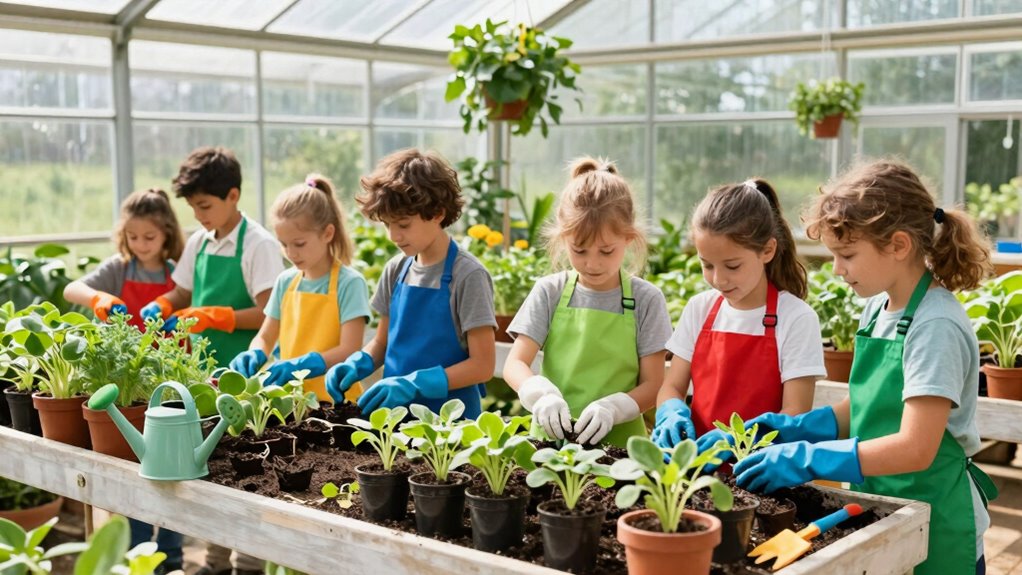
Introducing eco-friendly projects into kids’ activities makes learning about sustainability engaging and impactful. You can teach kids about plant care by involving them in planting native species or recycling compost to enrich soil health. These activities show how healthy soil supports plant growth and reduces environmental impact. Encourage children to observe soil’s role in plant care, emphasizing how composting reduces waste and improves soil quality. By integrating simple projects like creating mini gardens with sustainable materials, kids learn responsible habits early on. These projects foster an understanding of eco-friendly practices and highlight their importance for future generations. As they care for plants and observe soil changes, children develop a hands-on appreciation for sustainability that sticks with them long-term. Additionally, incorporating support breakfast concepts such as using local and sustainable ingredients can further reinforce eco-friendly habits in everyday life.
Games and Challenges to Make Greenhouse Learning Fun
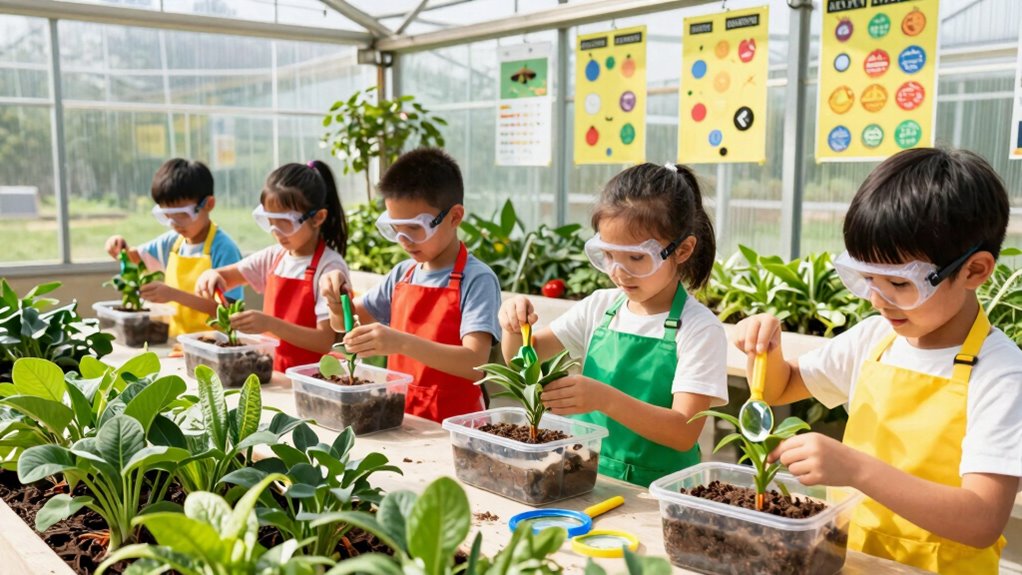
How can you make learning about greenhouses exciting for kids? Turn it into fun games and challenges that illustrate seed dispersal and plant adaptations. For example:
- Create a seed dispersal relay race, where kids mimic how plants spread seeds using wind, animals, or water.
- Design an obstacle course representing different plant adaptations, like thorns or thick leaves, to teach survival strategies.
- Hold a “Seed Treasure Hunt,” where children find and identify seeds with unique dispersal methods.
- Challenge kids to invent their own seed dispersal devices, fostering creativity and understanding.
- Incorporate natural processes like seed dispersal mechanisms to help children grasp how plants spread and survive in various environments.
These activities make science tangible and engaging, helping kids see how plants adapt and disperse seeds naturally. It’s fun, interactive, and educational—all at once.
Tips for Safe and Engaging Greenhouse Science Activities
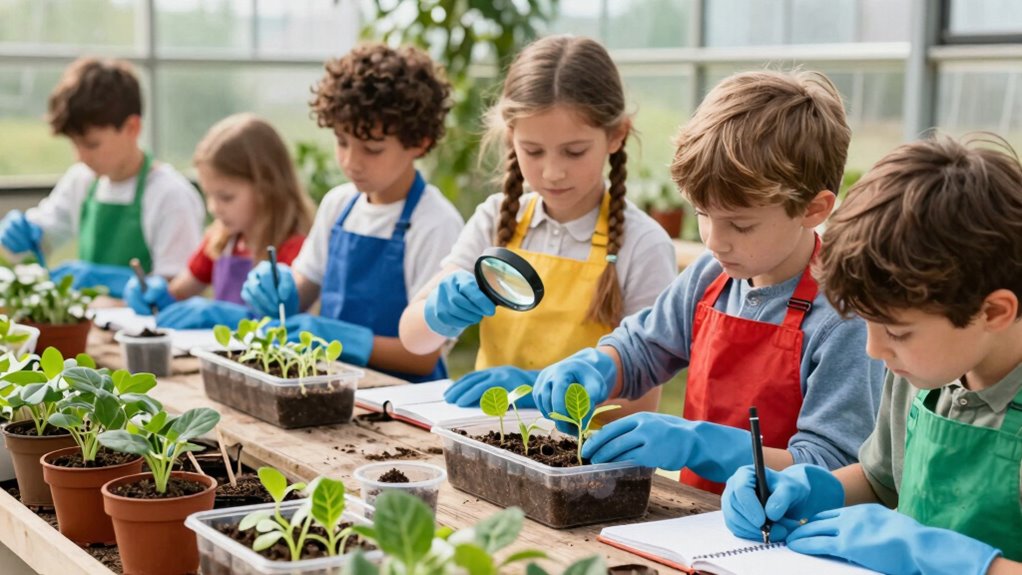
When planning greenhouse activities, make sure to supervise kids at all times to keep them safe. Use age-appropriate, safe equipment to prevent accidents and build confidence. Encourage their natural curiosity by asking open-ended questions and allowing exploration, making the experience both fun and educational.
Supervise All Activities
To guarantee safety and keep activities engaging, it’s essential to closely supervise kids during greenhouse science experiments. Supervision importance can’t be overstated; it ensures activity safety and keeps kids focused. When you oversee activities, you create a secure environment where curiosity flourishes. Here are four key ways to maintain supervision effectiveness:
- Stay attentive and watch for risky behavior or mishandling equipment.
- Guide kids gently, correcting mistakes before they become accidents.
- Keep an eye on time and progress, ensuring no one gets discouraged or overwhelmed.
- Set clear boundaries for safe exploration, empowering kids to learn confidently.
Use Safe Equipment
Using safe equipment is essential to keep kids protected and engaged during greenhouse activities. When working on DIY models or art projects, choose child-friendly tools like plastic scissors, blunt-tip knives, and non-toxic paints. Verify all equipment is age-appropriate and in good condition to prevent accidents. Supervising proper tool use builds confidence while minimizing risk. Here’s a quick guide:
| Equipment | Safety Tip |
|---|---|
| Scissors | Use plastic or safety scissors for young kids |
| Cutting tools | Supervise closely, avoid sharp blades |
| Paints | Select non-toxic, washable options |
| Soil and seeds | Teach proper handling to prevent ingestion |
| Measuring cups | Use lightweight, easy-to-handle tools |
Encourage Curiosity Naturally
Ever wondered how to spark your kids’ natural curiosity in the greenhouse? You can do this by encouraging them to observe plant adaptation and soil health firsthand. Here are four simple ways:
- Ask open-ended questions about how plants adapt to different environments, inspiring them to think critically.
- Create hands-on experiments where kids can explore soil composition, noticing how soil health affects plant growth.
- Encourage observation of leaves and stems, helping kids see adaptations that help plants survive.
- Use real-life examples of plants thriving in unusual conditions, fostering wonder and understanding.
These activities naturally ignite curiosity and build a deeper connection to science, all while keeping safety and engagement at the forefront.
Frequently Asked Questions
How Can I Adapt Greenhouse Activities for Different Age Groups?
You can adapt greenhouse activities for different ages by adjusting garden design complexity and plant selection. For younger kids, create simple, colorful displays with easy-to-grow plants, encouraging hands-on exploration. For older kids, introduce more detailed tasks like soil testing or designing mini gardens. Tailor activities to their developmental levels, making science engaging and accessible while fostering curiosity through age-appropriate plant choices and interactive garden projects.
What Safety Precautions Are Necessary for Young Children in Greenhouses?
Think of the greenhouse as a delicate ecosystem that needs your protection. You must guarantee young children wear protective gear like gloves and goggles to safeguard against potential hazards. Follow strict supervision protocols, keeping a watchful eye to prevent accidents and ensure safe exploration. By doing so, you create a secure environment where children can learn about nature confidently, fostering curiosity while prioritizing their safety.
How Do I Involve Parents or Communities in Greenhouse Projects?
To involve parents and communities in greenhouse projects, actively promote community engagement through open house events and volunteer involvement opportunities. You can invite parents to participate in planting days, offer workshops, and share progress updates through newsletters or social media. Encourage local organizations to support or sponsor the project. By fostering a sense of ownership and partnership, you’ll strengthen relationships and guarantee sustained support for your greenhouse initiatives.
What Are Inexpensive DIY Greenhouse Setups for Schools?
Imagine turning a plastic storage bin into a mini greenhouse—it’s simple and cost-effective. For schools, DIY greenhouse kits are a fantastic option, offering inexpensive setups that teach kids science hands-on. You can repurpose old windows or build frames with PVC pipes, making your greenhouse both affordable and educational. These cost-effective solutions promote active learning, helping students understand plant growth without hefty expenses or complex structures.
How Can I Assess Kids’ Understanding After Greenhouse Activities?
You can assess kids’ understanding by giving them quizzes that cover key concepts learned during greenhouse activities, ensuring they grasp scientific principles. Additionally, observe their participation and interactions to see how well they apply what they’ve learned. Ask open-ended questions during or after activities to gauge their thinking, and encourage them to explain their observations. This combination of quizzes and observation helps you determine their comprehension effectively.
Conclusion
As you immerse yourself in these greenhouse activities, you’ll discover how effortlessly kids connect with science—sometimes even when they least expect it. Watching their curiosity grow, you realize that learning becomes a natural part of the environment, just like the plants themselves. It’s no coincidence that hands-on, fun experiments spark a lifelong love for science. Keep exploring and you’ll see how these simple activities plant the seeds for a future of curious, eco-minded thinkers.
Fall yard work Picks
leaf blowers
As an affiliate, we earn on qualifying purchases.