To make your greenhouse feel more consistent across seasons, you should use adjustable lighting, humidifiers, and ventilation systems to control environmental factors precisely. Incorporate sensors to monitor conditions in real-time and automate adjustments for ideal light, humidity, and airflow. This balance prevents seasonal fluctuations and keeps your plants healthy year-round. If you want to discover more tips on creating a stable environment, keep exploring ways to fine-tune your greenhouse setup.

Get garden gear delivered free — and shop member deals
- Fast, free delivery on millions of items
- Access to Prime Big Deal Days deals on October 6–7
- Prime Video, Amazon Music and more included
Key Takeaways
- Implement automated environmental controls for lighting, humidity, and ventilation to maintain stable conditions year-round.
- Use sensors to monitor real-time data and adjust systems promptly for consistency.
- Incorporate adjustable grow lights and timers to mimic natural sunlight across seasons.
- Maintain balanced humidity levels with humidifiers or dehumidifiers based on seasonal needs.
- Regularly calibrate and fine-tune environmental systems to prevent seasonal fluctuations.
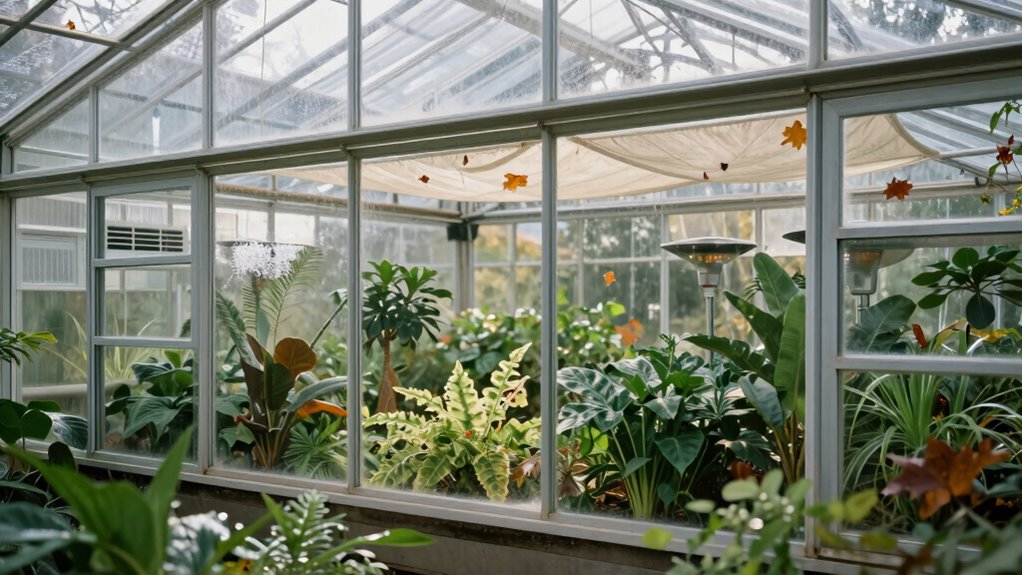
Maintaining a consistent environment in your greenhouse across different seasons can be challenging, but it’s crucial for healthy plant growth year-round. To achieve this, you need to focus on two critical factors: lighting control and humidity management. These elements directly influence plant health and help your greenhouse stay stable, no matter what outside conditions are like.
Lighting control is essential because natural sunlight varies throughout the year. During shorter winter days, supplementing sunlight with grow lights ensures your plants receive the right amount of light for photosynthesis. Installing adjustable lighting systems allows you to tailor light intensity and duration, mimicking natural conditions and preventing stress caused by too little or too much light. For example, using timers and dimmable lights, you can extend daylight hours or simulate overcast days, helping plants maintain consistent growth cycles. Proper lighting also influences temperature regulation, as more light increases heat, so controlling light intensity becomes a key part of managing the greenhouse’s overall environment.
Adjustable grow lights and timers help mimic natural sunlight, maintaining consistent plant growth and temperature regulation year-round.
Humidity management is equally important because humidity levels fluctuate with the seasons, affecting plant transpiration, disease susceptibility, and nutrient uptake. During winter, indoor humidity can drop sharply, leading to dry air that stresses plants. Conversely, summer humidity might become too high, promoting mold and fungal growth. To keep humidity levels steady, consider deploying humidifiers or dehumidifiers as needed. Ventilation also plays a critical role; opening vents or installing exhaust fans helps regulate moisture and air circulation, preventing conditions that favor pests or diseases. You might also use misting systems to increase humidity during dry periods or absorb excess moisture during humid months. The key is maintaining a balanced humidity level that supports your specific plants’ needs year-round.
Additionally, understanding and utilizing caffeine science can help optimize environmental conditions indirectly, since certain plants respond positively to specific light and humidity levels, much like how caffeine influences plant growth in coffee cultivation. Recognizing the importance of climate control systems can further enhance your ability to create a stable environment by integrating automated solutions that respond to sensor data and adjust conditions accordingly. The key is maintaining a balanced humidity level that supports your specific plants’ needs year-round.
Combining effective lighting control with proactive humidity management creates a stable environment that doesn’t shift dramatically between seasons. Regularly monitoring these factors with sensors provides real-time data, allowing you to make quick adjustments. For example, if sensors detect low humidity in winter, activating a humidifier can prevent plant dehydration. If sunlight diminishes, turning on supplemental grow lights ensures consistent light exposure. By staying attentive to these environmental cues, you give your plants a steady foundation for growth, no matter what the outdoor weather is doing.
In essence, controlling lighting and humidity forms the backbone of creating a greenhouse environment that feels consistent across seasons. This approach minimizes stress on your plants, encourages healthy development, and makes your greenhouse a reliable space for year-round gardening success.
adjustable greenhouse grow lights
As an affiliate, we earn on qualifying purchases.
As an affiliate, we earn on qualifying purchases.
Frequently Asked Questions
How Can I Prevent Temperature Fluctuations in My Greenhouse?
To prevent temperature fluctuations, you should monitor soil temperature regularly and use insulation like thermal blankets or bubble wrap to stabilize it. Ventilate properly during warm days to avoid overheating, and use fans or heaters when it’s cold. Keep pest control in mind, as pests can affect plant health and temperature regulation. Consistent watering and shading also help maintain a steady environment, making your greenhouse more reliable year-round.
What Are the Best Materials for Year-Round Insulation?
You should use thermal curtains and insulating panels for year-round insulation in your greenhouse. Thermal curtains help retain heat during cold months and can be drawn back in warmer seasons. Insulating panels, like polycarbonate or foam boards, line the walls to reduce heat loss and keep temperatures stable. Combining these materials guarantees consistent conditions, protecting your plants from temperature fluctuations and creating a comfortable environment year-round.
How Often Should I Adjust Ventilation Settings Seasonally?
You should adjust your ventilation settings seasonally, typically every few weeks or as weather changes. Climate control is key to maintaining consistent conditions, so regularly fine-tune your ventilation strategies to prevent overheating in summer and retain warmth in winter. Remember, the environment inside your greenhouse responds dynamically, and proactive adjustments guarantee plants thrive year-round. Monitoring temperature and humidity helps you make informed decisions, keeping your greenhouse balanced through seasonal shifts.
What Lighting Options Work Best for All Seasons?
For all seasons, you should use supplemental lighting with energy-efficient bulbs like LEDs or fluorescents. These bulbs provide consistent light, helping plants thrive regardless of natural sunlight variations. Place them strategically to guarantee even coverage and consider timers to automate lighting schedules. This approach maintains a stable environment, reduces energy costs, and promotes healthy plant growth year-round, making your greenhouse more consistent across different seasons.
How Do I Manage Humidity Levels Consistently?
A stitch in time saves nine, so you should regularly monitor your greenhouse’s humidity levels. Keep plants spaced properly to prevent excess moisture buildup and fungal issues. Adjust watering schedules to avoid overwatering or drought stress, which can disrupt humidity balance. Use a hygrometer to track levels and incorporate ventilation or a dehumidifier when needed. Consistent management guarantees your greenhouse stays healthy and productive across all seasons.
Conclusion
By nurturing your greenhouse through each season, you’re cultivating a sanctuary that embodies resilience and hope. Think of it as a lighthouse standing steadfast in shifting tides—guiding your plants and spirit alike. As you adjust and care, you’re not just maintaining a space for growth; you’re creating a symbol of perseverance. With each passing season, your greenhouse becomes a beacon of consistency, reminding you that beauty and stability can flourish even in the face of change.
Fall yard work Picks
leaf blowers
As an affiliate, we earn on qualifying purchases.