
To boost your greenhouse efficiency, consider incorporating solar panels to power ventilation, grow lights, and climate control—this cuts energy costs and guarantees continuous operation during outages. Pair it with an automated watering system that provides precise, consistent hydration tailored to your plants’ needs. Combining these systems saves time, reduces waste, and enhances plant health. Keep exploring to uncover more smart strategies that can make your greenhouse even more productive and sustainable.
Get ready for Prime Big Deal Days — try Prime free
Exclusive member deals on October 6–7, plus fast free delivery. Cancel anytime.
As an affiliate, we earn on qualifying purchases.
Key Takeaways
- Integrate solar panels to power ventilation, lighting, and climate control, reducing energy costs and increasing self-sufficiency.
- Implement automated watering systems with soil moisture sensors for precise, consistent irrigation and water conservation.
- Combine solar power with automation to optimize energy use and maintain stable plant care regardless of external conditions.
- Use renewable energy sources and automated systems to enhance greenhouse resilience against power outages and rising costs.
- Streamline maintenance and improve plant health through data-driven automation and sustainable technology integration.
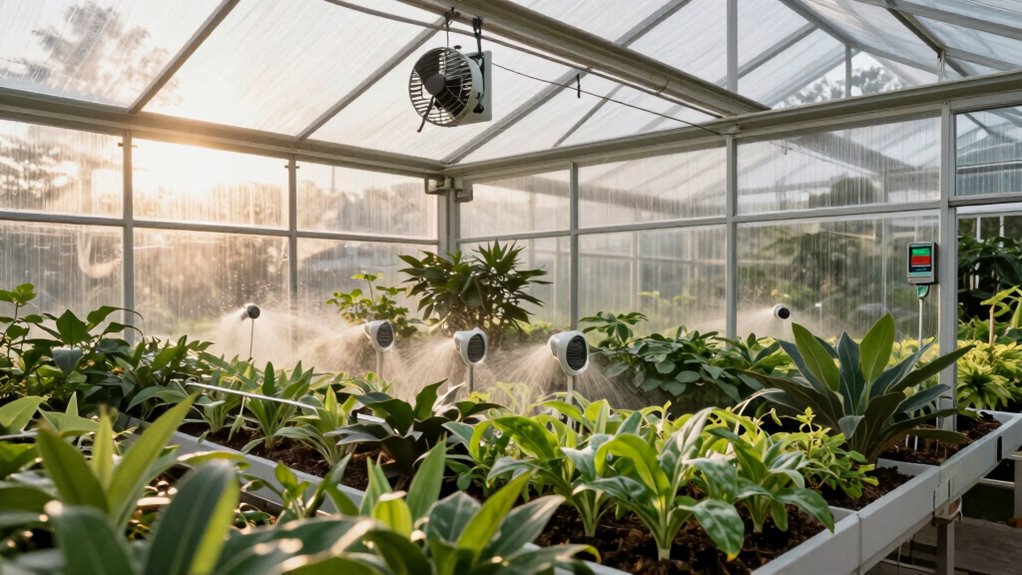
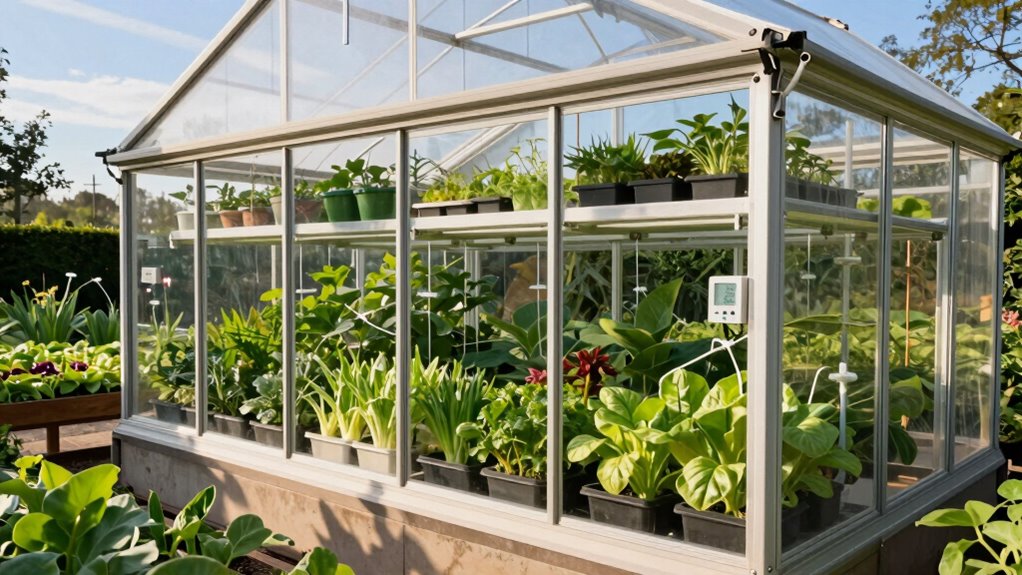
Are you maximizing your greenhouse’s potential for healthy, abundant growth? If not, there are simple yet effective ways to boost efficiency that can transform your gardening experience. One of the most impactful upgrades is solar panel integration. By installing solar panels on your greenhouse roof, you harness the power of the sun to generate clean energy. This energy can run your ventilation systems, grow lights, and climate control equipment, significantly reducing your electricity bills. Solar panels also help you become more self-sufficient, especially in areas where power outages are common or electricity costs are high. With the right setup, you can automate much of your greenhouse’s electrical needs, making maintenance easier and operations more sustainable. Renewable energy is a key component of modern greenhouse optimization, offering both environmental and economic benefits.
Alongside renewable energy, automated watering systems are a game-changer. These systems ensure your plants receive consistent, precise amounts of water, which is crucial for healthy growth. You don’t need to worry about forgetting to water or overwatering, both of which can harm your plants. Automated watering can be programmed to water at specific times and durations, matching the needs of different crops or growth stages. This not only saves you time but also conserves water, making your greenhouse more environmentally friendly. When combined with soil moisture sensors, automated watering becomes even smarter, adjusting watering schedules based on real-time conditions. Incorporating efficient water use practices can further enhance the sustainability of your greenhouse. Additionally, integrating smart technology can make managing these systems even more seamless and efficient. Using data-driven insights, you can fine-tune your watering and energy use to optimize plant health and resource conservation. Furthermore, incorporating climate control systems can help maintain optimal conditions, ensuring your plants thrive regardless of external weather variations.
Implementing solar power and automated watering together creates a synergy that maximizes your greenhouse’s efficiency. Solar energy can power your irrigation system, reducing reliance on external power sources and lowering operational costs. The automation ensures your plants are consistently cared for, regardless of your schedule. You’ll notice improvements in plant health, faster growth, and fewer problems caused by inconsistent watering or energy shortages.
These upgrades also make your greenhouse more resilient. Solar panels protect you from rising energy prices and power interruptions, while automated watering reduces the risk of drought stress or overwatering. Both systems are relatively straightforward to install and maintain, especially with modern, user-friendly technology. Plus, they align with sustainable gardening goals, helping you reduce your environmental footprint.
In short, integrating solar panels and automating watering are some of the most practical efficiency gains for home growers. They streamline maintenance, cut costs, and promote healthier plants. With these improvements, you’re not just growing more — you’re growing smarter.
solar powered greenhouse ventilation system
As an affiliate, we earn on qualifying purchases.
As an affiliate, we earn on qualifying purchases.
Frequently Asked Questions
How Much Does Installing Energy-Efficient Equipment Typically Cost?
Installing energy-efficient equipment typically costs between a few hundred to several thousand dollars, depending on the size of your greenhouse and the upgrades you choose. You might spend less on LED indoor lighting, which uses less energy and lasts longer, and invest in water conservation systems to reduce water bills. While initial costs vary, these investments pay off over time by lowering energy and water expenses, increasing your greenhouse’s overall efficiency.
What Are the Best Materials for Insulating a Home Greenhouse?
You should prioritize using insulation panels and thermal curtains for your greenhouse. Studies show that well-insulated greenhouses can reduce heating costs by up to 50%. Insulation panels, like foam or polystyrene, provide a solid barrier against drafts, while thermal curtains trap heat during cold nights. Together, these materials create an effective thermal envelope, keeping your plants warm and energy bills low.
Can Automation Improve Greenhouse Energy Efficiency?
Yes, automation can greatly improve your greenhouse’s energy efficiency. Automated ventilation adjusts airflow based on temperature and humidity, reducing energy waste. Regular sensor calibration guarantees these systems operate accurately, preventing over- or under-ventilation. By integrating automation and maintaining calibrated sensors, you optimize climate control, minimize energy consumption, and create a more sustainable environment for your plants, ultimately saving you money and enhancing growth conditions.
How Do Climate Conditions Affect Greenhouse Efficiency Strategies?
Climate conditions dictate your greenhouse strategies, forcing you to adapt quickly. Extreme heat or cold challenges your efficiency, requiring climate adaptation measures that balance energy use and plant health. By adjusting ventilation, insulation, or shading, you reduce environmental impact while maintaining ideal growth. Ignoring these conditions risks waste and decreased yields. So, stay flexible, and tailor your approach to your local climate to maximize efficiency and sustainability.
What Are the Maintenance Requirements for Energy-Efficient Greenhouse Systems?
You need to regularly inspect and clean your energy-efficient greenhouse systems to guarantee peak performance. Maintain soil health by adding organic matter and avoiding over-tilling, which keeps plants healthy and resilient. Implement pest control measures, like biological controls or organic sprays, to prevent infestations that can weaken systems. Regularly check insulation, ventilation, and heating elements, and schedule routine maintenance to prevent equipment failure and sustain efficiency.
Conclusion
By implementing these practical greenhouse tips, you’ll maximize your space and energy, much like a well-tuned orchestra. Small changes, like optimizing ventilation or using simple shading, can lead to big gains in plant health and yield. Remember, efficiency isn’t about perfection but progress. Keep experimenting, stay attentive, and enjoy the journey—your thriving greenhouse is just a few smart adjustments away, shining brighter than a beacon in your gardening adventure.
NFL season / tailgating Picks
team gear
As an affiliate, we earn on qualifying purchases.