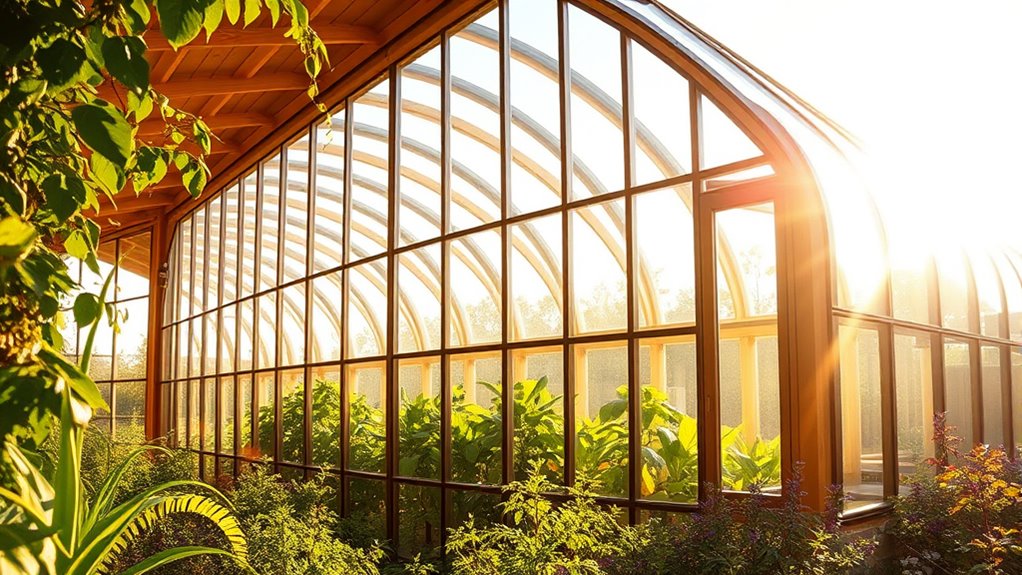

To build an energy-efficient greenhouse using passive solar design, position it so its longest side faces true south, maximizing winter sunlight. Incorporate thermal mass materials like concrete or water along the south-facing walls or floors to absorb and release heat gradually. Use large south-facing windows and strategic shading overhangs to control heat gain during summer. Combining proper orientation and thermal mass helps create a self-regulating, sustainable environment—keep exploring for tips to optimize your greenhouse’s passive solar potential.

Get garden gear delivered free — and shop member deals
- Fast, free delivery on millions of items
- Access to Prime Big Deal Days deals on October 6–7
- Prime Video, Amazon Music and more included
Key Takeaways
- Orient the greenhouse’s longest side to true south to maximize winter sunlight exposure.
- Incorporate large south-facing windows and glazing to enhance passive solar heat gain.
- Use thermal mass materials along south walls or floors to absorb and slowly release heat.
- Design overhangs and shading devices to prevent overheating during summer months.
- Combine proper orientation, thermal mass, and ventilation to create a self-regulating, energy-efficient greenhouse.

Have you ever wondered how buildings can stay warm in winter without relying heavily on artificial heating? The secret lies in passive solar design, which harnesses the natural energy of the sun to maintain comfortable temperatures. One key element in this approach is understanding the sun path—how the sun moves across the sky throughout the day and year. By carefully analyzing the sun’s trajectory, you can position your greenhouse to maximize sunlight exposure during the colder months. This means orienting the structure so that the longest side faces true south (in the northern hemisphere), capturing the most sunlight during winter when the sun is lower in the sky. Conversely, during summer, proper shading can prevent overheating, maintaining a stable internal climate without mechanical cooling.
Another essential component is thermal mass, which acts as a heat buffer within your greenhouse. Think of thermal mass as a kind of heat storage that absorbs sunlight during the day and releases it slowly at night. Materials like concrete, brick, or water can serve as thermal mass, helping to regulate temperature swings and keep your greenhouse warmer during cold nights. When sunlight hits the thermal mass, it heats up, and because these materials retain heat well, they gradually release it into the interior space when outdoor temperatures drop. This process reduces the need for additional heating sources and guarantees a more consistent environment for your plants. Incorporating thermal mass into your design can significantly improve the energy efficiency of your greenhouse. Additionally, choosing materials with high thermal conductivity can further enhance heat transfer and storage capacity.
To effectively integrate thermal mass, you should incorporate it into the greenhouse’s design—placing it where it can absorb the maximum amount of sunlight, typically along the south-facing wall or floor. During the day, these surfaces warm up, and at night, they radiate heat back into the greenhouse, stabilizing the internal temperature. It is also essential to consider the sun’s path when designing the placement of windows and glazing. Large, south-facing windows allow maximum solar gain in winter, while strategic overhangs or shading devices prevent excessive heat gain during the summer months. This thoughtful orientation, combined with thermal mass, creates a self-regulating system that minimizes energy use and enhances sustainability. Furthermore, understanding the sun’s path can help in designing features that optimize the greenhouse’s passive solar performance throughout the year. Incorporating solar angles into your planning can further enhance efficiency and comfort.
Furthermore, the use of passive solar design principles can guide the placement of other elements such as vents and insulation, further improving energy efficiency.
Frequently Asked Questions
What Materials Are Best for Passive Solar Greenhouse Construction?
When choosing materials for your passive solar greenhouse, focus on those that optimize thermal mass and glazing options. Use materials like concrete, brick, or water barrels to absorb and store heat during the day, releasing it at night. For glazing, opt for double or triple-pane glass or polycarbonate to maximize insulation and sunlight transmission. These choices help maintain a stable temperature, making your greenhouse energy-efficient and comfortable year-round.
How Does Seasonal Sunlight Variation Affect Greenhouse Design?
You notice how the changing seasons alter the sunlight that enters your greenhouse, affecting plant growth. Seasonal sunlight variation impacts your design by requiring adjustments to the solar angle and daylight hours. In winter, you’ll want steeper angles to maximize solar gain, while summer adjustments help prevent overheating. Understanding these shifts allows you to optimize insulation and shading, ensuring your greenhouse stays efficient year-round.
What Are Common Challenges in Maintaining Passive Solar Greenhouses?
You’ll often face ventilation challenges and insulation issues in maintaining passive solar greenhouses. Proper ventilation is vital to prevent overheating and humidity buildup, while insulation problems can lead to heat loss during colder months. You need to balance airflow and insulation effectively, ensuring your greenhouse stays warm in winter and cool in summer. Regular checks and upgrades help you overcome these challenges, keeping your greenhouse energy-efficient and productive year-round.
How Can I Optimize Airflow Without Active Systems?
Think of your greenhouse as a living organism that breathes naturally. To optimize airflow without active systems, you should design natural ventilation pathways, like wind corridors, that guide air smoothly through the space. Position vents and windows strategically to catch prevailing winds, creating a gentle breeze that circulates air efficiently. This passive approach keeps your greenhouse comfortable, reduces energy use, and sustains a healthy, thriving environment for your plants.
What Are the Cost Differences Between Passive and Active Systems?
When comparing costs, passive systems generally have a lower initial investment and minimal maintenance costs since they rely on natural processes like solar gain and ventilation. Active systems, however, involve higher upfront expenses for equipment like fans and heaters, plus ongoing energy and maintenance costs. Overall, passive designs are more cost-effective long-term, but active systems can offer better control and efficiency if budget allows.
Conclusion
By mastering mindful, minimalist methods, you make your greenhouse graciously grow. Embrace eco-friendly, energy-efficient designs that delight and diminish your dependence on external power. With wise window placement and thoughtful thermal tricks, you’ll create a cozy, climate-controlled haven. Let the sunlight’s splendor seep in, and enjoy the ease of an eco-conscious environment. Ultimately, your passion for passive solar design promises a greener, greater garden — a glorious gift to both you and the planet.
Fall yard work Picks
leaf blowers
As an affiliate, we earn on qualifying purchases.