Smart greenhouse systems save energy by integrating solar power directly into their structures, reducing reliance on fossil fuels and cutting costs. They use automation and sensors to regulate climate, irrigation, and shading efficiently, preventing waste and optimizing conditions for crops. Excess solar energy can power automation tools, enhancing resilience and performance. These adaptable systems support sustainable farming and continuous improvements over time, helping you grow more with less energy. Keep exploring to uncover how you can implement these innovative solutions.

Get garden gear delivered free — and shop member deals
- Fast, free delivery on millions of items
- Access to Prime Big Deal Days deals on October 6–7
- Prime Video, Amazon Music and more included
Key Takeaways
- Integrating solar panels into greenhouse structures harnesses renewable energy to reduce reliance on external power sources.
- Automation systems optimize climate control, irrigation, and shading, minimizing energy waste and enhancing crop growth.
- Excess solar energy is stored or used for automation, improving energy efficiency and resilience against outages.
- Scalable and adaptable designs allow for continuous system upgrades, ensuring long-term energy savings.
- The combination of solar and automation promotes sustainable, cost-effective agriculture with lower carbon footprints.

Greenhouse systems designed for energy savings are transforming modern agriculture by reducing operational costs and environmental impact. At the heart of these innovations lies solar integration, which harnesses the sun’s abundant energy to power essential systems within the greenhouse. By integrating solar panels directly into the structure, you can considerably cut down on electricity expenses and decrease reliance on fossil fuels. This not only promotes sustainability but also offers a dependable, renewable energy source that can operate year-round, regardless of external grid fluctuations. Solar integration effectively turns your greenhouse into a self-sufficient unit, reducing your carbon footprint and ensuring consistent energy availability, which is essential for maintaining ideal plant growth conditions.
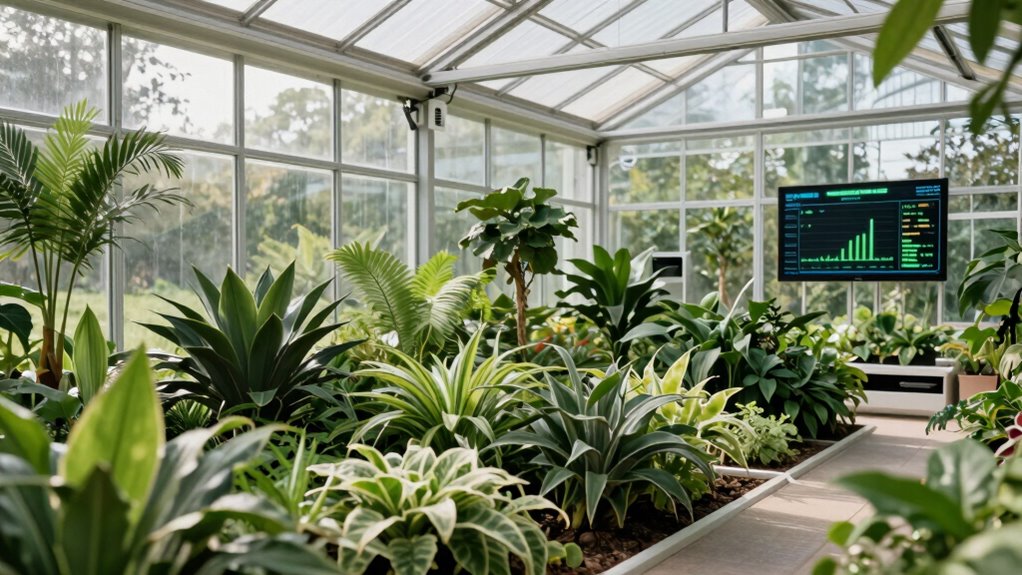
Alongside solar integration, automation optimization plays a key role in making greenhouses smarter and more energy-efficient. Automation systems control everything from climate regulation to irrigation, and when optimized, they operate at peak efficiency, minimizing waste and energy consumption. For example, advanced sensors monitor temperature, humidity, and light levels continuously, feeding data into automated systems that adjust ventilation, heating, or shading in real time. This dynamic response prevents overheating or overcooling, saving energy that would otherwise be wasted. Automation also enables you to fine-tune your greenhouse environment based on crop needs, enhancing growth rates while conserving resources. Incorporating smart technology into these systems further enhances their efficiency and responsiveness.
Automation systems optimize climate control with sensors, reducing waste, conserving energy, and enhancing crop growth.
Together, solar integration and automation optimization create a cohesive energy-saving approach that transforms how you manage your greenhouse. Instead of manually adjusting systems or relying on outdated infrastructure, you can rely on intelligent, integrated solutions that work seamlessly to reduce energy use. For instance, during peak sunlight hours, solar panels generate excess power, which can be stored or used to run automation systems, ensuring continuous operation without drawing from external power sources. This synergy not only cuts costs but also enhances resilience against power outages and fluctuating energy prices. Implementing energy-efficient designs can further enhance overall savings and system performance.
Moreover, these systems are designed to be scalable and adaptable, so you can start small and expand as needed. As technology advances, integrating new features becomes easier, making your greenhouse more efficient over time. The focus on energy savings doesn’t mean sacrificing productivity; instead, it’s about intelligently balancing resource use with optimal crop yields. By prioritizing solar integration and automation optimization, you’re investing in a future where agriculture is more sustainable, cost-effective, and environmentally friendly, all while maintaining the high standards necessary for successful crop production. Incorporating renewable energy sources, such as solar power, is crucial for achieving long-term sustainability in modern farming practices.
As an affiliate, we earn on qualifying purchases.
Frequently Asked Questions
How Do Greenhouse Systems Adapt to Changing Weather Conditions?
You can adapt greenhouse systems to changing weather conditions by utilizing climate resilience strategies and advanced weather forecasting. These systems automatically adjust ventilation, shading, and heating based on real-time data, helping you maintain ideal growth conditions. By predicting weather patterns, your greenhouse becomes more efficient and resilient, reducing energy waste and protecting your crops from extreme weather. This proactive approach ensures consistent yields, even amid unpredictable climate changes.
What Are the Initial Costs of Installing Energy-Saving Features?
The initial costs of installing energy-saving features vary, but a thorough cost analysis helps you understand the investment. You might face higher upfront expenses for smart climate controls, insulation, or solar panels. However, financial incentives like tax credits or rebates can offset these costs, making it more affordable. By evaluating these factors, you can plan effectively and guarantee your greenhouse system is both energy-efficient and financially sustainable from the start.
How Do Smart Systems Monitor Plant Health Automatically?
Think of smart systems as vigilant gardeners. They monitor plant health by detecting signs of plant stress through sensors that measure temperature, humidity, and soil moisture. These sensors are regularly calibrated to guarantee accuracy, much like tuning a musical instrument. When stress levels rise, the system automatically adjusts conditions or alerts you, helping maintain ideal plant health without constant manual oversight. This continuous, real-time monitoring keeps your greenhouse thriving effortlessly.
Can These Systems Be Integrated With Existing Greenhouse Setups?
Yes, these systems can be integrated with your existing greenhouse setups. They often support automation integration, allowing seamless control over climate, watering, and lighting. Plus, many are designed to work efficiently with renewable energy sources, reducing your overall carbon footprint. You’ll benefit from enhanced energy efficiency, smarter plant management, and simplified operations. Just guarantee compatibility with your current equipment, and consider professional installation for ideal integration.
What Is the Typical Lifespan of Energy-Efficient Greenhouse Equipment?
Energy-efficient greenhouse equipment typically lasts between 10 to 15 years, depending on usage and maintenance. You can expect good energy resilience and equipment longevity if you follow proper upkeep routines. Regular inspections, timely repairs, and quality parts help extend the lifespan. Investing in high-quality equipment initially ensures better durability, allowing you to maximize energy savings and reduce replacement costs over time.
Conclusion
Now that you see how smarter greenhouse systems can cut energy use, imagine what’s next. Could these innovations reveal even greater savings and productivity? The potential is vast, and the next breakthrough might be just around the corner. Stay tuned—you won’t want to miss what’s coming next in sustainable agriculture. The future of greenhouses is brighter and more efficient than ever—and you’re right at the forefront of it.
Fall Picks
fall essentials
As an affiliate, we earn on qualifying purchases.