To effectively reduce pests in your greenhouse, use companion planting strategies like placing pest deterrent plants such as marigolds and basil near your crops, which confuse or repel pests. Attract beneficial insects like ladybugs and lacewings by planting dill, fennel, or yarrow to naturally control pest populations. Combining these methods creates a balanced environment that minimizes chemical use, promotes plant health, and keeps pests at bay. Explore more ways to optimize your system and guarantee a thriving greenhouse environment.

Get garden gear delivered free — and shop member deals
- Fast, free delivery on millions of items
- Access to Prime Big Deal Days deals on October 6–7
- Prime Video, Amazon Music and more included
Key Takeaways
- Incorporate pest deterrent plants like marigolds and basil to naturally repel common greenhouse pests.
- Plant beneficial insect attractants such as dill, fennel, and yarrow to promote natural pest predators.
- Use strategic plant combinations, e.g., marigolds near tomatoes, to enhance pest resistance through symbiotic relationships.
- Integrate pest deterrent and beneficial insect plants to create a balanced ecosystem that minimizes chemical use.
- Optimize greenhouse conditions with proper lighting and plant placement to support healthy plant growth and pest management.
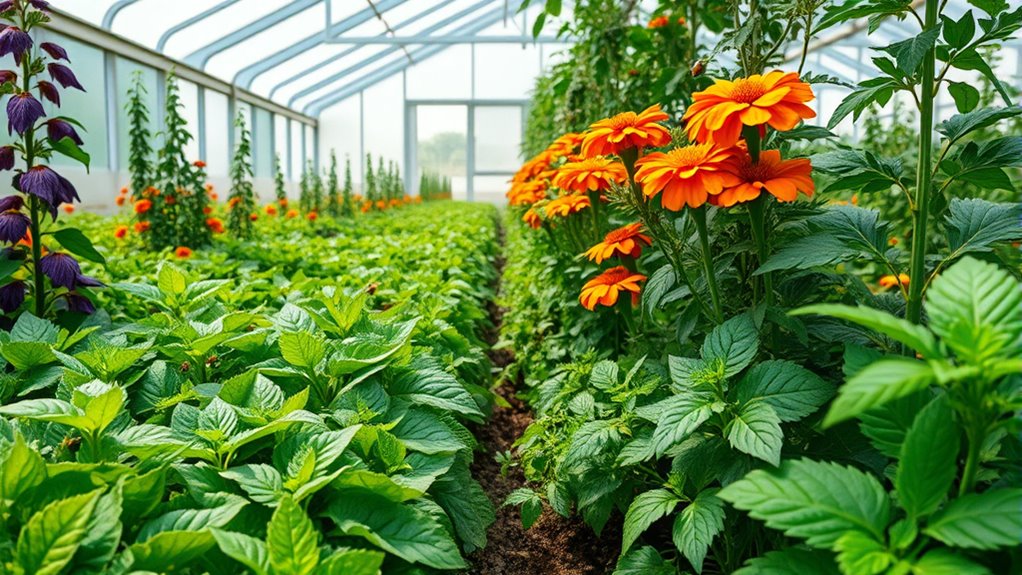
Have you ever wondered how some gardeners naturally keep pests at bay? It’s a question many growers ask when trying to reduce reliance on chemical pesticides. The answer lies in companion planting, which involves strategically pairing plants to create a pest-resistant environment. One effective approach is using pest deterrent plants—certain species that emit scents or produce compounds that repel common pests. For instance, marigolds are well-known for their ability to deter aphids, nematodes, and whiteflies. Their strong aroma confuses pests and makes your crops less appealing. Similarly, basil can repel thrips and mosquitoes, making it a valuable addition to your greenhouse. These pest deterrent plants act as natural barriers, reducing the likelihood of infestations without harmful chemicals.
Another essential element in companion planting is attracting beneficial insects. These insects, such as ladybugs, lacewings, and parasitic wasps, are natural predators of pests and can dramatically reduce pest populations. By planting specific beneficial insect attractants—flowers like dill, fennel, or yarrow—you encourage these helpful creatures to settle in your greenhouse. These plants produce nectar and pollen that serve as food sources, drawing beneficial insects closer to your crops. When beneficial insects are present in sufficient numbers, they keep pest populations under control, maintaining a balanced ecosystem. This natural pest management reduces the need for sprays and enhances the overall health of your plants.
Plant dill, fennel, or yarrow to attract beneficial insects and naturally control pests in your greenhouse.
Incorporating pest deterrent plants alongside beneficial insect attractants creates a symbiotic relationship that promotes a healthier greenhouse environment. For example, planting marigolds near tomatoes can repel nematodes and aphids while also attracting ladybugs. Similarly, planting dill or fennel near leafy greens draws in beneficial insects that hunt down aphids and other pests. This combination not only keeps pests away but also fosters a diverse and resilient ecosystem within your greenhouse. It’s a sustainable strategy that leverages nature’s own pest control methods.
Additionally, understanding the importance of color accuracy in your plant displays and lighting setup can enhance your greenhouse’s visual appeal and plant health. When selecting plants and designing your space, consider how proper lighting and calibration can improve growth and pest resistance. Ultimately, your goal is to create a harmonious environment where beneficial insects thrive and pests are naturally kept in check. Using pest deterrent plants and beneficial insect attractants allows you to reduce chemical inputs, improve plant health, and produce healthier crops. It’s a proactive approach that works with nature rather than against it, giving your greenhouse a more sustainable and productive future. With careful planning and strategic planting, you can enjoy a pest-free greenhouse while supporting a vibrant, balanced ecosystem that benefits both your plants and the environment.
marigolds for pest control in greenhouse
As an affiliate, we earn on qualifying purchases.
As an affiliate, we earn on qualifying purchases.
Frequently Asked Questions
Which Invasive Pests Are Best Managed With Companion Planting?
You can effectively manage invasive pests like aphids, whiteflies, and spider mites with companion planting. By planting marigolds, basil, or nasturtiums near your vegetables, you attract beneficial insects that prey on these pests. This natural pest management approach reduces the need for chemical controls, helping you protect your greenhouse crops sustainably. Incorporate these companion plants into your setup to create a balanced ecosystem that naturally suppresses invasive pests.
How Do I Select Plants Compatible With My Greenhouse Environment?
Imagine your greenhouse as a delicate dance floor where each plant must move harmoniously. To select compatible plants, analyze your microclimate adjustments—temperature, humidity, and light. Use plant compatibility charts as your choreography guide, ensuring each species complements the others. This careful pairing helps prevent conflicts, enhances growth, and creates a balanced environment. Trust your observations and these tools to craft a thriving, pest-resistant greenhouse ecosystem.
Can Companion Planting Replace All Chemical Pest Controls?
Companion planting can’t fully replace chemical pest controls, but it substantially reduces your reliance on them. By integrating natural predators and choosing compatible plants, you create a balanced ecosystem that naturally suppresses pests. Additionally, companion planting improves soil health benefits, strengthening plant resilience. This approach promotes a healthier greenhouse environment, minimizes chemical use, and supports sustainable gardening. However, for severe infestations, combining methods remains the most effective strategy.
What Are the Best Timing Strategies for Planting Companions?
You should plan your planting schedules around seasonal timing to maximize the benefits of companion planting. Start by understanding the growth cycles of your plants and stagger planting times accordingly, ensuring beneficial companions are mature when pests are most active. Use early or late-season planting to establish protective combinations, and adjust your timing based on local climate conditions. Proper seasonal timing helps your companion plants work effectively for pest control.
How Do I Troubleshoot if Pest Issues Persist Despite Companion Planting?
If pest issues persist despite companion planting, start by pest identification to understand which insects you’re dealing with. Then, make environmental adjustments like improving airflow, reducing humidity, or removing infested plants. You might also introduce natural predators or use organic insecticides sparingly. Regular monitoring helps catch problems early, ensuring your pest control efforts are effective and your greenhouse stays healthy.
Conclusion
By using companion planting strategies, you can naturally reduce pests and protect your greenhouse crops. Imagine planting marigolds alongside tomatoes—research shows they repel nematodes and aphids, leading to healthier plants. In your greenhouse, this simple pairing could cut down on chemical use and boost yields. Start experimenting with beneficial plant combinations today, and watch your pest problems diminish while your plants thrive. It’s an easy, eco-friendly way to grow smarter and healthier.
Fall yard work Picks
leaf blowers
As an affiliate, we earn on qualifying purchases.