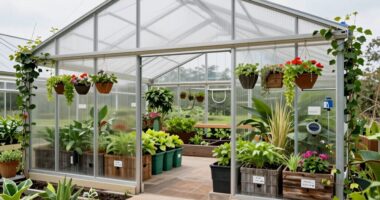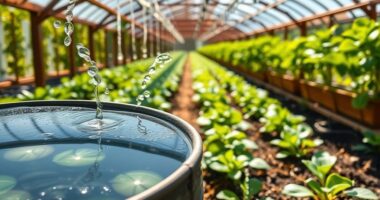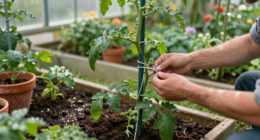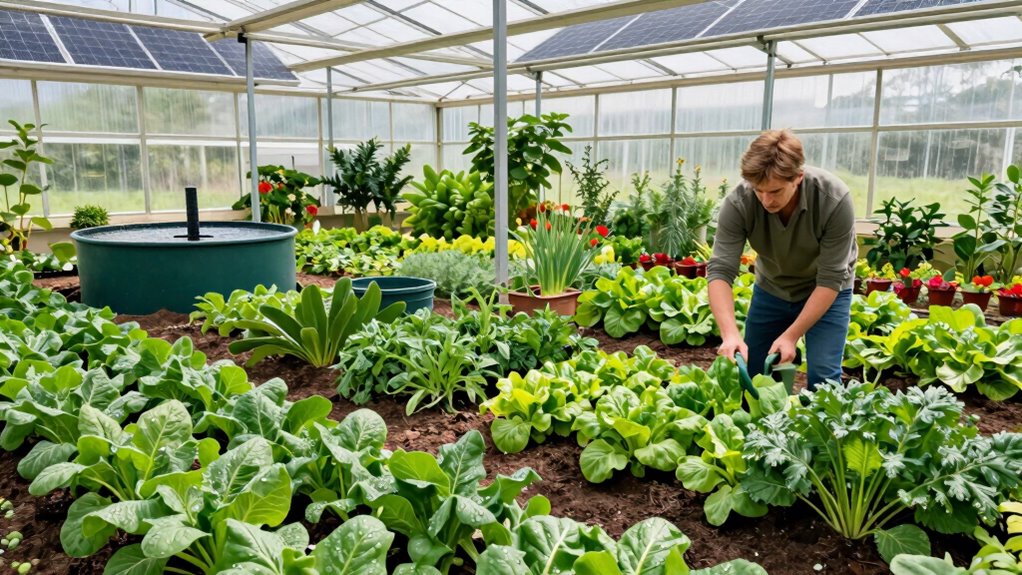
Adopting a resource-saving greenhouse mindset is crucial for sustainable gardening. You can extend your growing season, protect plants from harsh weather, and boost resilience by using eco-friendly practices like composting, efficient watering, and rainwater harvesting. These strategies help save money, minimize your environmental impact, and promote healthier plants. By focusing on conservation and sustainability, you’ll set yourself up for long-term gardening success. Keep exploring to discover more ways to maximize your greenhouse’s potential.

Get garden gear delivered free with Prime
- Fast, free delivery on millions of items
- Prime Video, Amazon Music and more included
- Member-only deals all year
Key Takeaways
- Emphasize sustainable water practices like drip irrigation and rainwater harvesting to conserve resources.
- Incorporate composting to enrich soil naturally and reduce reliance on chemical fertilizers.
- Use greenhouses to extend growing seasons, maximizing space efficiency and reducing resource waste.
- Adopt water-efficient techniques and monitor soil moisture to prevent overwatering and runoff.
- Foster a resource-saving mindset to lower costs, support biodiversity, and promote long-term gardening resilience.
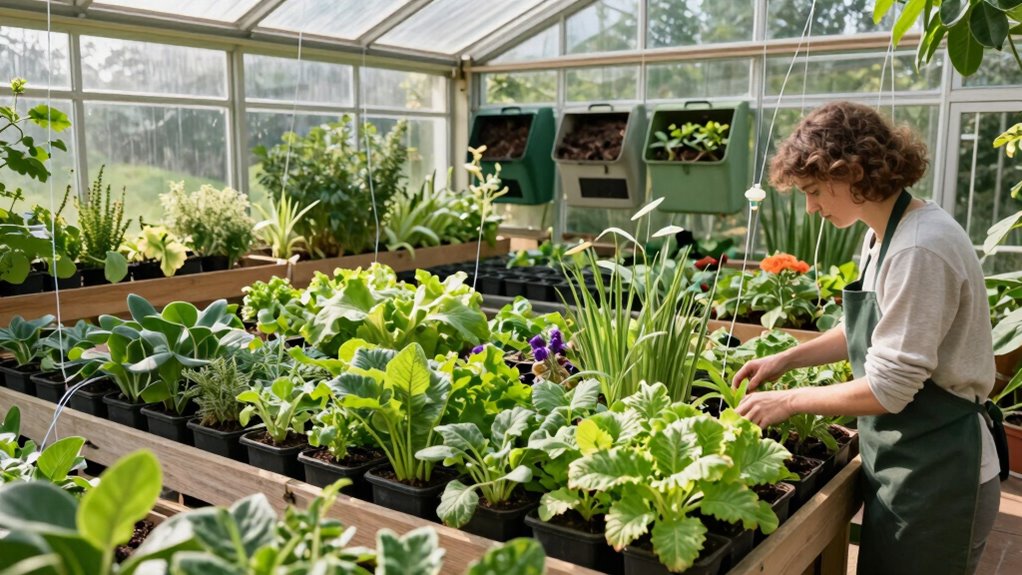
Greenhouses have become essential tools for gardeners looking to extend their growing season and protect delicate plants from harsh weather. But beyond just sheltering your plants, adopting a resource-saving mindset can notably boost your gardening efforts. This mindset revolves around making the most of every resource, reducing waste, and fostering sustainability. Two key practices support this approach: sustainable watering and composting techniques. Together, they help you conserve water, enrich your soil naturally, and minimize environmental impact.
When it comes to sustainable watering, think about how you can optimize water use without compromising plant health. Instead of frequent, wasteful watering, consider installing drip irrigation systems or soaker hoses that deliver water directly to the roots. This reduces runoff and evaporation, ensuring your plants get the moisture they need efficiently. Collect rainwater using barrels or other containers and use it for watering your greenhouse plants. Not only does this cut down on municipal water use, but it also taps into a free, natural resource. Additionally, monitor your soil’s moisture levels regularly to avoid overwatering, which can lead to water waste and root rot. Using mulch around your plants further conserves moisture by reducing evaporation and maintaining consistent soil moisture levels. These small adjustments help you minimize water consumption, lower utility bills, and support a healthier environment. Incorporating water-efficient techniques can significantly enhance your sustainability efforts. Moreover, understanding the importance of water conservation can help you develop even more effective strategies. Including sustainable gardening practices in your routine can also amplify your efforts and promote long-term environmental health. Implementing these practices aligns with biodiversity goals by supporting diverse and resilient plant ecosystems.
Equally important is your composting technique. Composting transforms organic waste—kitchen scraps, plant debris, and other biodegradable materials—into nutrient-rich soil amendments. Instead of discarding food peels or plant trimmings, turn them into compost that feeds your greenhouse plants naturally. Use a compost bin or pile in a well-ventilated area, layering green materials like vegetable scraps with brown materials such as dried leaves or shredded paper. Turn the compost regularly to aerate and speed up decomposition. This process not only reduces waste sent to landfills but also produces an organic fertilizer that improves soil structure and fertility. Proper composting also involves maintaining the right balance of green and brown materials, which enhances decomposition and ensures a rich end product. By composting effectively, you decrease reliance on chemical fertilizers, which can be costly and environmentally damaging. The resulting compost enhances your greenhouse’s soil health, leading to healthier plants and higher yields over time.
Embracing a resource-saving mindset in your greenhouse includes these sustainable watering and composting practices. They require a little effort upfront but pay off in long-term savings, healthier plants, and a smaller ecological footprint. When you prioritize conserving water and recycling organic waste, you’re not just supporting your garden’s growth—you’re actively contributing to a more sustainable future. With every drop of water saved and every bit of compost produced, you’re cultivating a greener, more resilient gardening practice. This mindset empowers you to be a more responsible gardener, making a meaningful difference through simple, effective techniques.
drip irrigation system for greenhouse
As an affiliate, we earn on qualifying purchases.
As an affiliate, we earn on qualifying purchases.
Frequently Asked Questions
How Can I Start Implementing a Resource-Saving Mindset in My Garden?
Start implementing a resource-saving mindset by enriching your soil with compost, which improves fertility and reduces reliance on chemical fertilizers. Practice water recycling by collecting rainwater and using drip irrigation to minimize waste. These steps help conserve resources and boost garden health. Over time, you’ll develop habits that promote sustainability, making your garden more eco-friendly and resilient. Small changes like these can make a significant difference in resource efficiency.
What Are the Biggest Challenges to Adopting Green Gardening Habits?
Imagine trying to steer a ship through stormy seas; that’s what adopting green habits feels like. The biggest challenges are maintaining soil health and managing pests without chemicals. You might struggle with balancing soil fertility or finding eco-friendly pest solutions. It takes patience and learning, but with persistence, you’ll navigate these obstacles, transforming your garden into a resilient, resource-efficient haven that thrives naturally.
How Does Resource Conservation Impact Plant Growth and Yield?
Resource conservation boosts plant growth and yield by enhancing soil health and water efficiency. When you conserve resources, you improve soil structure, increase nutrient retention, and prevent erosion. Using water wisely prevents drought stress, encouraging stronger roots and healthier plants. These practices create a sustainable environment, leading to more robust growth and higher yields. By focusing on resource efficiency, you support long-term productivity and reduce environmental impact.
Are There Specific Tools or Technologies That Support Eco-Friendly Gardening?
You can use tools like smart irrigation systems to efficiently water your garden, reducing waste and conserving resources. Additionally, adopting composting techniques helps recycle organic waste into nutrient-rich soil, supporting eco-friendly gardening. These technologies make it easier to maintain healthy plants while minimizing environmental impact. By integrating smart irrigation and composting, you actively contribute to sustainable gardening practices that save water, reduce waste, and promote healthier plant growth.
How Can Community Efforts Enhance Sustainable Greenhouse Practices?
You can boost sustainable greenhouse practices by joining community efforts that focus on composting techniques and water recycling. Participating in local composting programs helps reduce waste and creates nutrient-rich soil for everyone. Additionally, community water recycling initiatives conserve resources and promote eco-friendly watering methods. Together, these efforts foster a resource-saving greenhouse mindset, making sustainable gardening more accessible and effective for everyone involved.
Conclusion
By embracing a resource-saving greenhouse mindset, you become the steward of a delicate ecosystem, nurturing growth while conserving precious resources. Think of your greenhouse as a sanctuary where harmony between nature and innovation blossoms, like a well-tended garden in spring. When you garden with intention and respect, you’re not just growing plants—you’re cultivating a sustainable future. Let your green thumb be a beacon of mindful stewardship, guiding others toward a greener, more resilient world.
Fall Picks
fall essentials
As an affiliate, we earn on qualifying purchases.