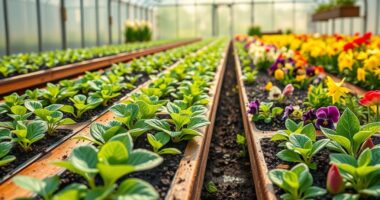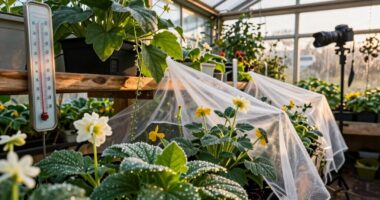
In winter, you need to focus on retaining heat, extending daylight, and providing proper insulation because plants grow slower and need warmer conditions. In summer, you must cool the greenhouse, control humidity, and manage ventilation to prevent overheating and dehydration. The environmental demands shift seasonal growth patterns, making different climate adjustments necessary. Understanding these seasonal needs helps you optimize your greenhouse’s conditions throughout the year—if you want to discover how to do that, keep going.
Listen free for 30 days with Audible
Thousands of audiobooks and originals — cancel anytime.
As an affiliate, we earn on qualifying purchases.
Key Takeaways
- Winter requires heat retention and supplemental lighting to support slower plant growth and shorter days.
- Summer demands cooling, ventilation, and humidity control to prevent overheating and stress.
- Seasonal temperature and light changes influence plant development stages, necessitating different climate adjustments.
- Environmental stability is vital year-round, but specific strategies vary between conserving heat in winter and reducing heat in summer.
- Recognizing seasonal needs allows optimized growth, better yields, and healthier plants despite environmental fluctuations.
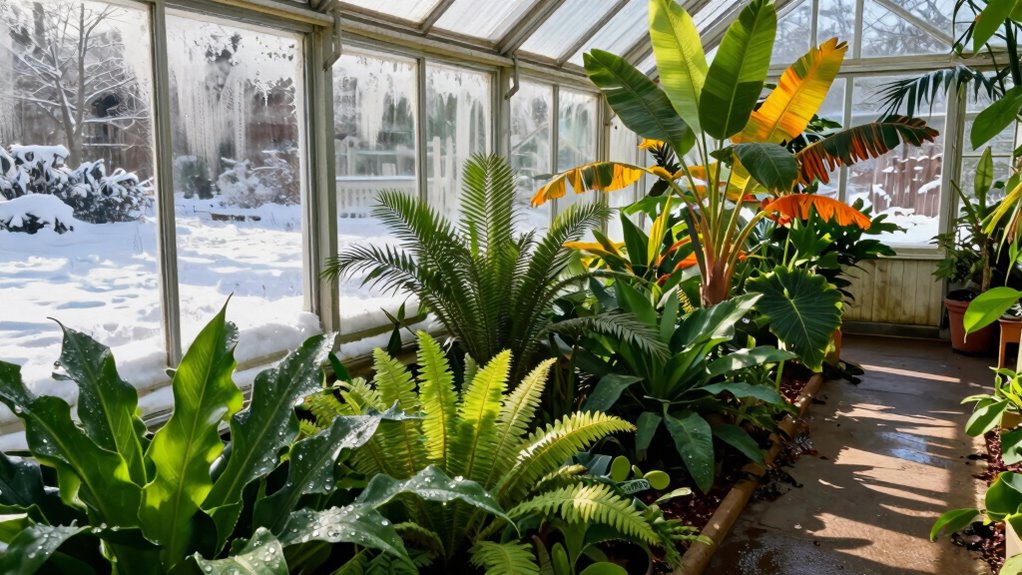
Have you ever wondered why the same greenhouse can produce different results in winter and summer? It all comes down to the changing needs of your plants and how you manage their environment. During winter, your plants’ growth patterns shift because of the cooler temperatures and shorter days. They’re naturally inclined toward slower, more deliberate growth, which means you need to pay close attention to seasonal growth patterns. To support this, climate control becomes crucial. You might need to increase heating, insulate better, or use supplemental lighting to mimic the longer daylight hours of summer. Without these adjustments, plants struggle to thrive, and their growth stalls or becomes uneven.
Seasonal changes require adjusting your greenhouse climate for optimal plant growth year-round.
In contrast, summer presents a different set of challenges. The heat and extended daylight hours can push plants into rapid growth, but if left unchecked, it can also lead to stress, dehydration, or even damage. That’s why climate control in summer focuses on cooling and humidity regulation. Ventilation, shading, and misting can help keep temperatures within ideal ranges, preventing overheating. This management ensures your plants stay healthy and grow at a steady pace rather than becoming leggy or scorched. You need to adapt your strategies constantly, depending on the season, to maintain the perfect environment. Proper climate management allows for a more resilient greenhouse, capable of adjusting to seasonal fluctuations.
Your greenhouse’s ability to support seasonal growth hinges on how well you control its climate. In winter, you’re working to retain heat and extend daylight hours, creating a warm, bright environment that encourages steady growth despite the cold outside. In summer, your goal shifts to dissipating heat and reducing excessive sunlight. By adjusting ventilation, shading, and humidity, you can create a stable climate that promotes consistent growth regardless of the season. This flexibility is essential because understanding seasonal growth patterns enables you to fine-tune conditions for each stage of plant development, whether it’s seedling, flowering, or fruiting. Recognizing the importance of seasonal climate control helps you optimize your greenhouse’s performance throughout the year.
Ultimately, understanding that each season demands different climate control strategies helps you get the most out of your greenhouse. You learn to anticipate the needs of your plants, adjusting temperature, light, and humidity accordingly. This awareness ensures your plants grow healthily and produce better yields year-round. Your greenhouse becomes a dynamic space, capable of supporting seasonal growth patterns by adapting to the changing environment. The key lies in recognizing that winter and summer ask different things from your setup—and responding with precision and care. Recognizing the importance of climate control in seasonal growth enables you to optimize your greenhouse’s performance throughout the year.

BioGreen Electric Greenhouse Heater & Fan with Digital Thermostat PALMA | 1500 Watts, 5100 BTU/hr | 5800 ft³/h Air Circulation -58 to 210.2°F | Stainless Steel | Spraywater Proof
- Adjustable Heating Elements: 750W or 1500W power options
- Precise Temperature Control: Automatic thermostat from 32°F to 185°F
- Air Circulation Mode: Functions as a fan to prevent heat buildup
As an affiliate, we earn on qualifying purchases.
As an affiliate, we earn on qualifying purchases.
Frequently Asked Questions
How Do Seasonal Changes Affect Greenhouse Plant Growth Differently?
Seasonal changes influence your greenhouse plant growth by affecting temperature, light, and humidity. In winter, you need to adjust by reducing seasonal watering and encouraging plant dormancy, which helps conserve energy. Summer requires increased watering and more ventilation to prevent overheating. These adjustments guarantee your plants thrive year-round, adapting to the seasonal shifts in environment and growth needs.
What Specific Equipment Differs Between Winter and Summer Greenhouses?
In winter, your greenhouse needs enhanced insulation, so you’ll use heaters and humidity control to maintain warmth and moisture. You’ll also rely on ventilation systems to prevent condensation and mold. During summer, you switch to more robust ventilation systems, like exhaust fans and shade cloths, to keep temperatures down. Humidity control becomes vital to prevent overheating and excessive moisture. These equipment adjustments help you create ideal growing conditions year-round.
How Do Sunlight Requirements Vary Between Seasons Inside a Greenhouse?
You need to adjust sunlight exposure seasonally inside your greenhouse. In winter, you’ll make photoperiod adjustments by increasing artificial lighting or positioning your greenhouse to maximize natural sunlight, as days are shorter. During summer, you reduce sunlight intake through shading. Humidity control also plays a role, helping prevent issues caused by excessive or insufficient sunlight, ensuring your plants get ideal conditions year-round.
What Are the Common Pests Encountered in Winter Versus Summer Greenhouses?
In winter greenhouses, pests like aphids and spider mites are common, thriving in the warm, dry conditions. During summer, you’ll encounter whiteflies and thrips more frequently due to increased humidity and heat. To manage this, focus on pest control and prevention strategies such as regular inspections, proper sanitation, and introducing beneficial insects. Staying vigilant helps prevent infestations year-round, ensuring healthy plants regardless of the season.
How Do Temperature Regulation Strategies Differ for Winter and Summer Conditions?
Like a captain steering shifting seas, you adjust your temperature regulation strategies for each season. In winter, you rely on humid climate management and insulation to retain heat, using ventilation techniques to prevent condensation. During summer, you open vents to promote airflow and prevent overheating. Your adaptability ensures plants thrive year-round, balancing warmth and airflow with precision, much like a skilled sailor adjusting sails to the wind.
Conclusion
As winter and summer dance around your greenhouse, they whisper different needs, like a song that shifts with the seasons. You’re the conductor, adjusting the lights, warmth, and watering to match their tune. When you listen closely, you see that each season paints a different picture—winter’s quiet snow versus summer’s vibrant bloom. Embrace these changes, for your greenhouse is a living canvas, constantly shifting, constantly thriving under your caring hand.
Flea & tick season Picks
flea and tick prevention
As an affiliate, we earn on qualifying purchases.