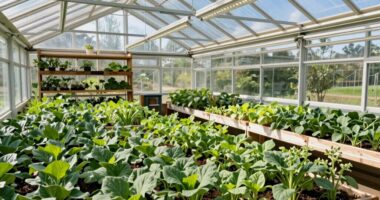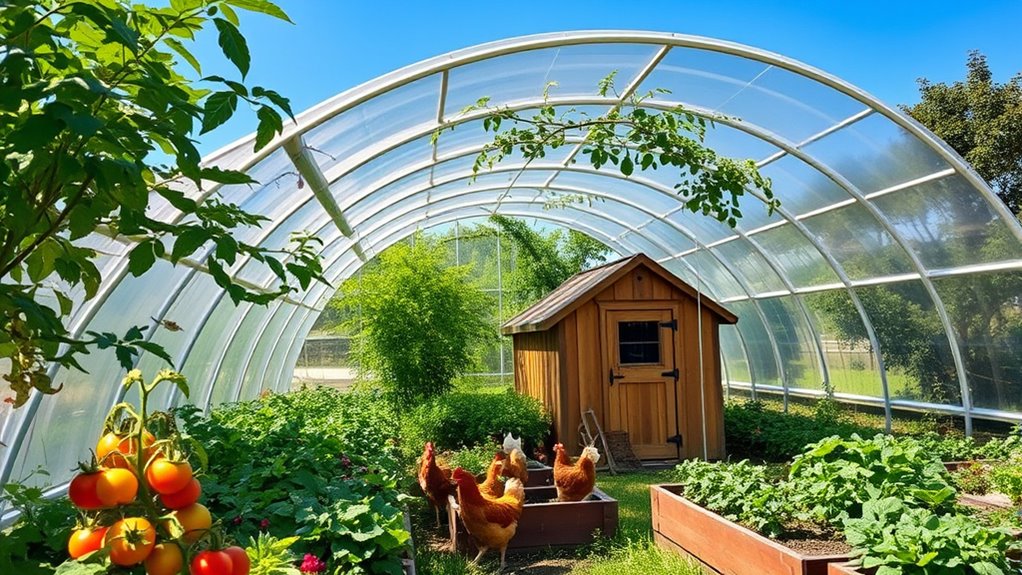

A greenhouse chicken coop combo offers a sustainable, energy-efficient way to raise poultry and grow food in limited space. By integrating natural sunlight, insulation, and ventilation, you create a controlled environment for hens and plants to thrive year-round. Using solar power and composting waste helps reduce your ecological footprint. This innovative design fosters a self-sufficient micro-ecosystem that supports eco-friendly urban farming. If you want to learn how to optimize yours, there’s more to discover below.
Key Takeaways
- Combines poultry shelter and plant growth space to create a self-sustaining, eco-friendly urban farm.
- Uses renewable energy sources like solar panels to power climate control and lighting systems.
- Incorporates insulation and natural ventilation for a stable environment, ensuring poultry health year-round.
- Enables waste recycling through composting chicken manure to fertilize plants, promoting a closed-loop system.
- Ensures safety and airflow with proper venting, maintaining optimal air quality and environmental stability.
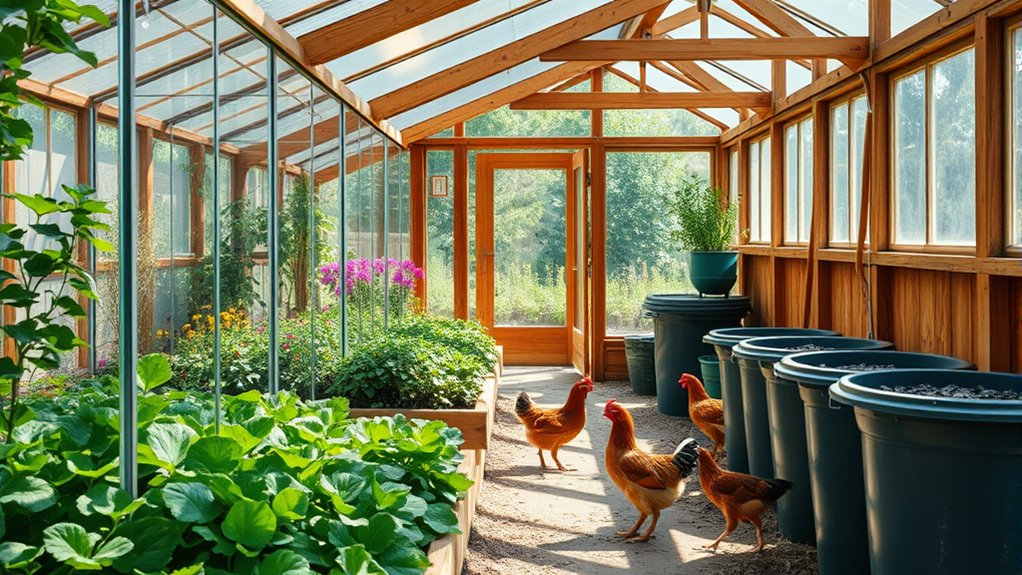
A greenhouse chicken coop offers a unique way to keep your hens protected while benefiting from natural sunlight and a controlled environment. This setup is especially appealing if you’re into urban farming, where space is limited but productivity is key. By integrating a greenhouse with your chicken coop, you create a sustainable system that maximizes land use and promotes eco-friendly practices. The greenhouse acts as both a shelter for your poultry and a space for growing plants, making it an efficient use of your property. In urban settings, where access to fresh produce can be a challenge, this design allows you to produce eggs, herbs, and vegetables all in one compact area. Plus, it minimizes the need for external energy sources, aligning with renewable energy principles.
Utilizing renewable energy sources like solar panels or wind turbines can power your greenhouse chicken coop, reducing reliance on conventional electricity. This not only lowers your carbon footprint but also cuts ongoing operational costs. Solar-powered fans and lighting help regulate temperature and lighting conditions, ensuring your hens stay comfortable year-round. Incorporating renewable energy makes your setup more autonomous, so you’re less affected by grid outages or rising energy prices. This approach supports your goal of creating a truly sustainable, eco-conscious urban farm.
The design of your greenhouse chicken coop should prioritize insulation and ventilation to maintain a stable environment. During colder months, the greenhouse traps heat from the sun, keeping your hens warm without additional heating. In the summer, natural ventilation prevents overheating, ensuring your chickens stay healthy and stress-free. The greenhouse’s transparent walls let sunlight in, which is essential for the health of both your poultry and your plants. This synergy creates a micro-ecosystem where waste from chickens can be composted and used to fertilize your plants, enhancing soil health and reducing waste. Additionally, proper venting requirements are crucial to ensure safe and efficient operation, preventing issues like smoke buildup or improper airflow.

erifyng Solar Powered Fan, Solar Fan for Shed, Chicken Coop, Greenhouse, Outside with Two IPX7 Waterproof 5In Fans 13Ft On/Off Switch Cable Exhaust Intake Mounting Way and Installation Kits
- Efficient Solar-Powered Ventilation: Provides cooling for small outdoor spaces
- High Airflow with Monocrystalline Panels: Delivers increased airflow in sunlight
- Weatherproof and Durable Design: IPX7 waterproof with shock-resistant housing
As an affiliate, we earn on qualifying purchases.
As an affiliate, we earn on qualifying purchases.
Frequently Asked Questions
How Does the Greenhouse Affect Chicken Health During Winter?
During winter, your greenhouse provides essential warmth that keeps chickens comfortable and reduces stress. This controlled environment helps prevent cold-related illnesses and promotes healthy growth. The warmth also supports disease prevention by minimizing exposure to harsh outdoor elements. By maintaining consistent winter warmth, you guarantee your chickens stay active and healthy, reducing the risk of illness and boosting overall well-being throughout the colder months.
What Are the Best Materials for Insulation in This Design?
You should prioritize materials with excellent thermal insulation and durability, like rigid foam boards or insulated panels, to keep your coop warm. These materials resist moisture and wear, ensuring long-lasting performance. Additionally, using straw bales or thick straw mats can boost insulation naturally. By selecting durable, high-quality insulation materials, you’ll create a cozy environment for your chickens during winter, reducing energy costs and maintaining their health.
Can This Setup Be Scaled for Larger Flocks Easily?
Scaling this setup for larger flocks is definitely doable, though you’ll need to plan for scaling logistics and flock management. You might worry about maintaining the eco-friendly benefits, but with modular design adjustments, you can expand without sacrificing sustainability. Properly organizing feeding, watering, and ventilation systems helps ensure smooth operation. With careful planning, you’ll efficiently grow your flock while preserving the eco-conscious essence of the design.
How Are Pests Managed Within the Combined Structure?
You manage pests effectively by incorporating pest deterrents like natural repellents and physical barriers within the combined structure. Using integrated pest management (IPM) strategies, you monitor for pests regularly, encouraging beneficial insects, and applying targeted, eco-friendly treatments when necessary. This approach keeps pests under control without harming your chickens or plants, ensuring a healthy, balanced environment that promotes sustainability and minimizes chemical use.
What Are the Cost Implications Compared to Traditional Coops?
Imagine planting seeds of sustainability; your initial investment in a greenhouse chicken coop combo is higher than traditional setups, but it pays off. The cost comparison shows you’ll save long-term on feed, energy, and maintenance, as natural processes reduce expenses. While the upfront cost is greater, the eco-friendly design offers savings over time, making it a smart choice for those committed to sustainable farming.
Conclusion
By now, you see how this greenhouse chicken coop combo blends old-world charm with modern sustainability, almost like a medieval monastic garden but with a dash of 21st-century innovation. This design not only nurtures your flock but also transforms your space into a self-sustaining ecosystem—think of it as your own digital-age Robin Hood, redistributing resources wisely. Embrace this timeless approach, and watch your farm flourish, proving that good ideas truly are timeless.