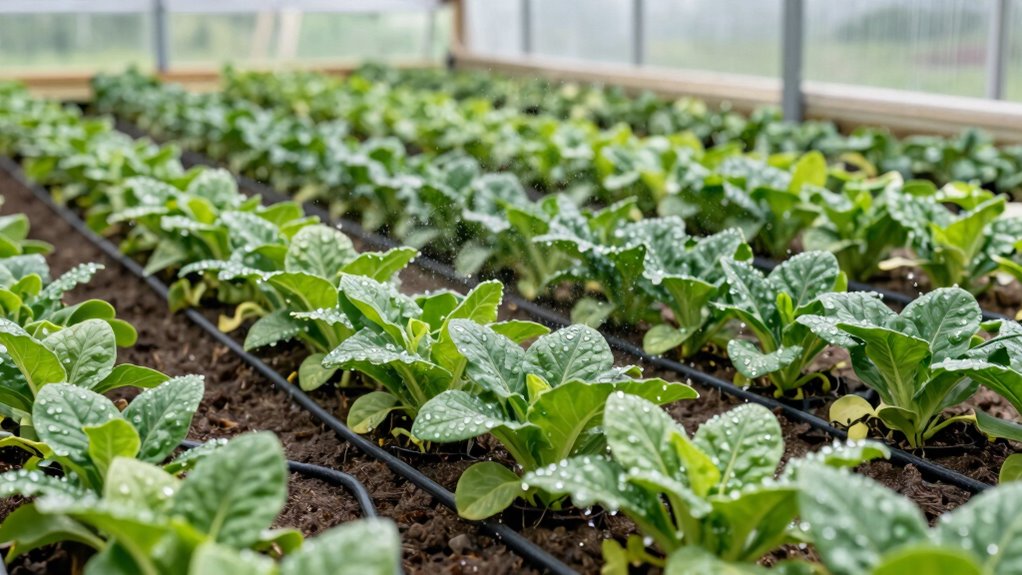
Drip systems fit well with sustainable greenhouse gardening because they deliver water directly to plant roots, reducing waste through runoff and evaporation. They help you maintain consistent soil moisture, which promotes healthy plants and prevents diseases. By automating watering schedules and using sensors, you can save time, lower costs, and conserve water. This eco-friendly approach supports soil health, minimizes pollution, and boosts plant resilience—making your greenhouse more sustainable. Keep exploring to discover more benefits.

Get garden gear delivered free — and shop member deals
- Fast, free delivery on millions of items
- Access to Prime Big Deal Days deals on October 6–7
- Prime Video, Amazon Music and more included
Key Takeaways
- Drip systems deliver water directly to roots, minimizing waste through runoff and evaporation.
- They maintain consistent soil moisture, promoting healthy plant growth and reducing disease risk.
- Automated timers and sensors optimize water use, lowering operational costs and supporting sustainability.
- By preventing overwatering, drip systems help preserve soil structure and reduce erosion.
- They enhance plant resilience and reduce chemical interventions by ensuring healthier, stress-free plants.
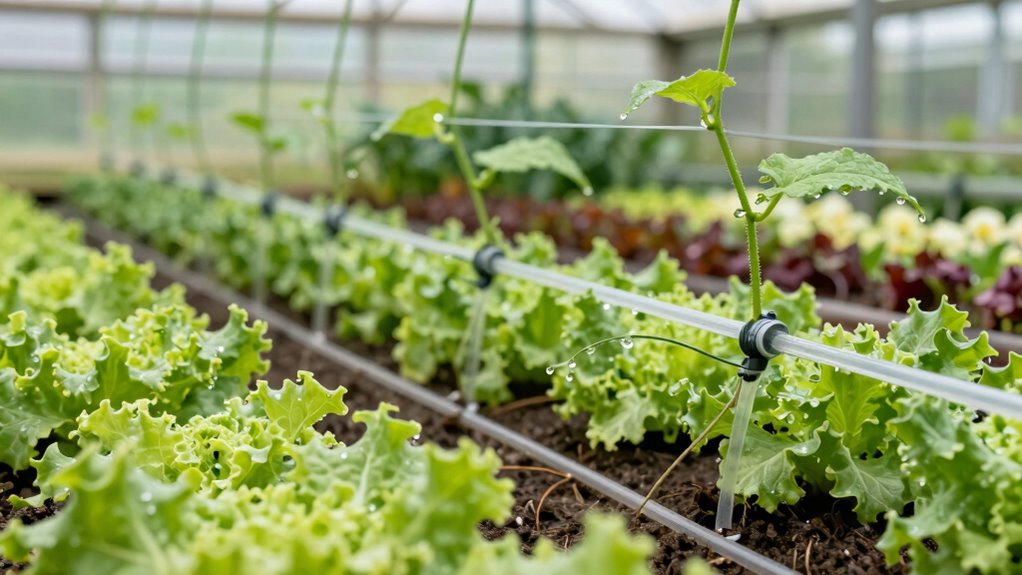
Greenhouse gardening can thrive sustainably when you incorporate drip irrigation systems, which deliver water directly to plant roots with minimal waste. This targeted approach helps maintain ideal soil moisture levels, ensuring your plants receive just the right amount of water without excess runoff or evaporation. When soil moisture is consistently maintained, your plants stay healthy, growing stronger and more resistant to pests and diseases. Drip systems enable you to fine-tune watering schedules, preventing overwatering and underwatering, both of which can harm plant health. By delivering water precisely where it’s needed, you reduce water consumption, making your greenhouse more eco-friendly and cost-effective.
Drip irrigation optimizes water use, promoting healthy, resilient plants with minimal waste and eco-friendly efficiency.
One of the key benefits of drip systems is their ability to support sustainable practices by reducing water waste. Traditional watering methods often waste significant amounts of water through runoff or evaporation, especially in a greenhouse environment where humidity levels are already high. With drip irrigation, water is applied slowly and directly to the soil, ensuring better absorption and minimizing waste. This not only conserves water but also helps keep the soil in a healthy moisture balance, which is crucial for the roots’ development. Healthy roots promote vigorous plant growth and improve crop yields, making your greenhouse more productive and sustainable.
Another advantage is that drip systems help prevent issues related to inconsistent soil moisture, which can lead to plant stress and disease. When roots sit in overly wet or dry conditions, plant health suffers, and the risk of fungal infections or root rot increases. By maintaining steady soil moisture, drip irrigation supports a stable environment where plants can thrive. This consistency promotes stronger root systems and enhances nutrient uptake, further boosting plant vitality. When your plants are healthy and well-hydrated, they’re better equipped to resist pests and adapt to environmental changes, reducing the need for chemical interventions. Additionally, the use of efficient watering techniques with drip systems aligns with sustainable gardening practices by conserving resources and promoting environmental health. Incorporating soil moisture sensors can optimize water use further by providing real-time data, helping you to maximize water efficiency. Using water-efficient systems also reduces operational costs and is a key component of sustainable greenhouse management. Moreover, these systems can be integrated with water conservation strategies into your overall greenhouse management plan, reducing waste and operational costs.
Furthermore, drip irrigation simplifies water management, saving you time and effort. Automated timers ensure your plants receive water at regular intervals, freeing you up to focus on other aspects of greenhouse management. Since the system delivers water directly to the roots, you avoid overwatering larger areas, which can lead to waterlogged soil and root damage. This precision helps maintain soil structure and prevents erosion, supporting a sustainable cycle of plant growth. Overall, integrating drip systems into your greenhouse cultivates a more responsible, efficient, and productive gardening environment, aligning perfectly with sustainable principles and fostering healthier plants through ideal soil moisture management.
drip irrigation system for greenhouse
As an affiliate, we earn on qualifying purchases.
As an affiliate, we earn on qualifying purchases.
Frequently Asked Questions
How Do Drip Systems Reduce Water Waste Compared to Traditional Watering Methods?
Drip systems reduce water waste by delivering water directly to the plant roots, ensuring efficient watering. This targeted approach minimizes runoff and evaporation, promoting water conservation. Unlike traditional methods that often overwater or water non-essential areas, drip systems provide precise amounts of water, conserving resources. By using less water, you support sustainable practices while maintaining healthy plants, making drip systems an eco-friendly choice for greenhouse gardening.
Are Drip Systems Suitable for All Types of Greenhouse Plants?
Drip systems are generally suitable for most greenhouse plants, but you should consider plant compatibility and soil types. For instance, plants with delicate root systems or specific moisture needs benefit the most. Loamy or sandy soils work well, as they allow efficient water absorption. However, heavy clay soils might require soil amendments or different irrigation methods to prevent waterlogging. Overall, customizing your drip system guarantees ideal growth for your plants.
What Are the Initial Costs of Installing a Drip Irrigation System?
The initial costs of installing a drip irrigation system vary, but they’re generally moderate compared to the long-term savings. You’ll find a cost comparison shows that while the installation process may seem upfront, it reduces water waste and labor costs over time. Expect to spend on tubing, emitters, and filters—though simpler setups cost less. Investing now pays off through healthier plants and more efficient resource use.
How Often Should Drip System Filters Be Maintained?
You should check and clean your drip system filters every 4 to 6 weeks to guarantee ideal fertilizer delivery and pest control. Regular maintenance prevents clogging, maintaining consistent water flow. When you clean the filters, inspect for debris and replace them if necessary. Doing this keeps your greenhouse’s irrigation efficient, supports healthy plant growth, and helps you effectively manage pests and nutrients, making your sustainable gardening efforts more successful.
Can Drip Systems Be Automated for Remote Monitoring?
Yes, you can automate drip systems for remote monitoring by integrating remote sensors and automation technology. These sensors track moisture levels, temperature, and system performance, sending real-time data to your control system. With automation integration, you can adjust watering schedules remotely, ensuring ideal plant health and water efficiency. This setup reduces manual intervention, saves time, and enhances sustainability by maintaining precise, consistent irrigation tailored to your greenhouse’s needs.
Conclusion
Incorporating drip systems into your greenhouse not only boosts water efficiency but also supports sustainable gardening practices. Did you know that drip irrigation can reduce water use by up to 50% compared to traditional methods? By choosing this system, you’re helping conserve essential resources while ensuring your plants thrive. Embrace drip systems today, and make your greenhouse more eco-friendly and productive—because sustainable gardening starts with smart watering solutions.
Fall Picks
fall essentials
As an affiliate, we earn on qualifying purchases.