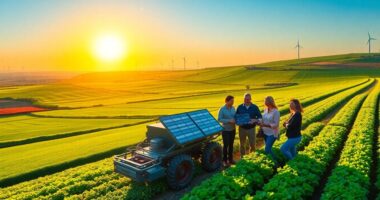
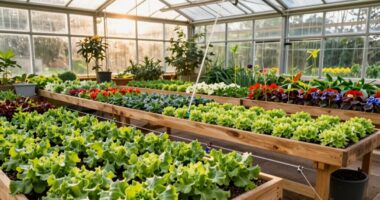
A solar-powered greenhouse uses renewable energy to create an eco-friendly, cost-effective environment for growing plants. You can harness sunlight through carefully oriented structures and high-quality materials, while solar panels generate electricity for climate control, irrigation, and lighting. This setup reduces reliance on external power and lowers operating costs. By optimizing design and energy use, you’ll maximize productivity and sustainability. To discover how to implement these innovative solutions effectively, keep exploring this topic further.
Open a free Amazon Business account
Business pricing, bulk buying and tax-exempt orders.
As an affiliate, we earn on qualifying purchases.
Key Takeaways
- Solar-powered greenhouses harness renewable energy to reduce reliance on traditional power sources and lower operational costs.
- Proper orientation and passive solar design maximize sunlight capture, improving energy efficiency and plant growth.
- High-transparency materials and integrated solar panels ensure optimal sunlight entry without hindering ventilation.
- Solar energy systems stored in batteries or used directly support climate control, lighting, and irrigation needs.
- These greenhouses operate independently of the grid, promoting sustainability and resilient agricultural practices.
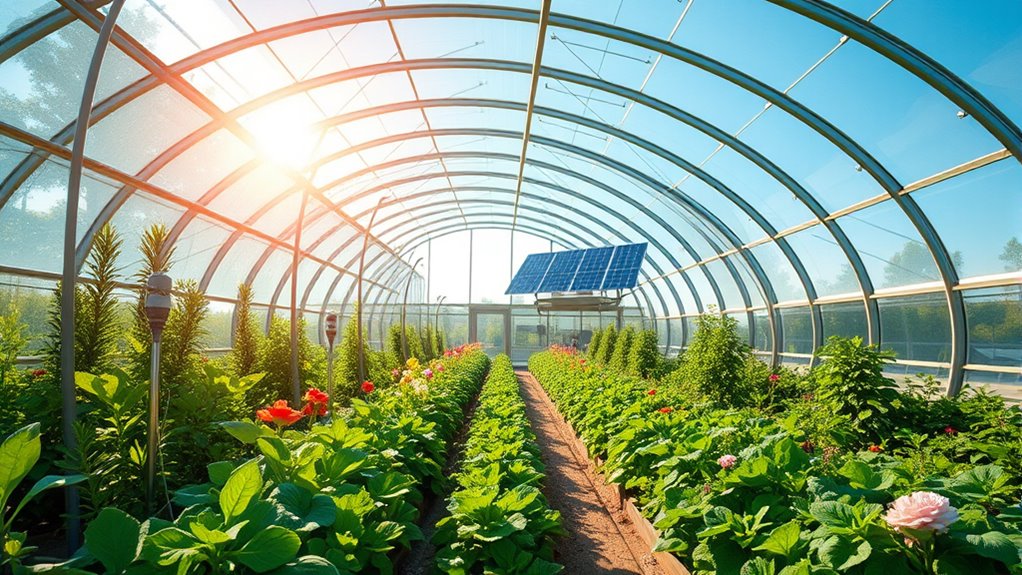
Solar-powered greenhouses are transforming agriculture by harnessing renewable energy to create sustainable growing environments. You might be surprised to learn how effectively solar energy can power an entire greenhouse, reducing reliance on traditional power sources and lowering operating costs. The secret lies in innovative greenhouse design, which maximizes sunlight capture to generate the energy needed for climate control, irrigation, and lighting. When you incorporate solar energy into greenhouse design, you’re not just making a sustainable choice—you’re maximizing space and resources for maximum productivity.
Solar greenhouses harness renewable energy, boosting efficiency and sustainability through innovative design and optimal sunlight utilization.
The key to a successful solar-powered greenhouse is understanding how greenhouse design influences energy efficiency. Proper orientation, for example, ensures that your structure captures the maximum amount of sunlight throughout the day. Typically, a south-facing orientation in the northern hemisphere allows the greenhouse to soak up the most sunlight, which is then converted into solar energy. This energy can be stored in batteries or used immediately to power fans, heaters, or automated watering systems. Such efficiency means you can maintain ideal growing conditions with minimal external energy input. Additionally, selecting energy-efficient materials can further reduce energy consumption and improve overall sustainability. Incorporating passive solar design principles can optimize natural heat gain and distribution within the greenhouse, further reducing energy needs.
In designing your greenhouse, you should also consider the materials used. Clear, high-transparency glazing materials like tempered glass or specialized plastics allow sunlight to enter freely, reducing the need for supplemental lighting. These materials, combined with well-placed vents and insulation, help regulate internal temperatures naturally. This thoughtful greenhouse design reduces the need for artificial heating and cooling, which can be energy-intensive. Integrating solar panels seamlessly into the structure can further augment energy production without sacrificing aesthetics or functionality. Incorporating solar energy systems that are optimized for your specific setup can significantly improve energy harvesting efficiency.
Another essential aspect is the layout that facilitates airflow and sunlight penetration. A well-thought-out design minimizes shading and maximizes exposure to sunlight, ensuring that your plants receive consistent light and warmth. Solar energy systems can be integrated into the roof or sides of the greenhouse, making use of available space without hindering plant growth or ventilation. This integration allows your greenhouse to operate independently of external power grids, making your operation more resilient and environmentally friendly. Additionally, understanding solar energy efficiency can help you optimize your system’s performance and reduce costs even further.
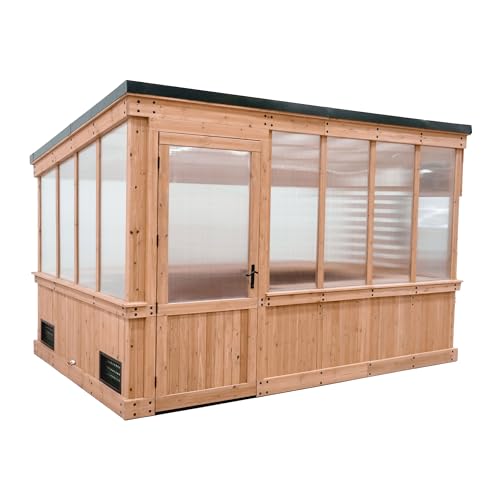
Backyard Discovery Zalie 11' x 7' Cedar Wood and Polycarbonate Walk-in Greenhouse Kit with Exhaust Fan, Windows, Hose Hook-Ups, PowerPort, Staging Shelves for Year-Round Outdoor Gardening
- All-Weather Durability: Withstands heavy snow and high winds
- Industry-Leading Warranty: 5-year warranty included
- Enhanced Insulation: Polycarbonate panels improve heat retention
As an affiliate, we earn on qualifying purchases.
As an affiliate, we earn on qualifying purchases.
Frequently Asked Questions
What Are the Initial Costs of Installing Solar-Powered Greenhouses?
The initial investment for solar-powered greenhouses varies based on size and technology but generally includes installation costs for solar panels, batteries, and system setup. You can expect higher upfront expenses compared to traditional greenhouses due to equipment costs and labor. However, these installation costs pay off over time with reduced energy bills. Careful planning and budgeting help you manage installation costs, making solar greenhouses a smarter, eco-friendly investment in the long run.
How Do Solar Greenhouses Perform in Different Climate Zones?
You’ll find that solar greenhouses perform differently across climate zones due to regional efficiency and climate adaptability. In sunnier, warmer areas, they generate ample energy and support crop growth effectively. In colder or cloudier regions, you might need additional insulation or backup systems, but they still provide renewable energy benefits. Overall, their success depends on tailoring designs to regional conditions, maximizing efficiency, and ensuring consistent climate adaptability.
What Maintenance Is Required for Solar Panels in Greenhouses?
You need to regularly perform panel cleaning to guarantee your solar panels operate efficiently, especially in greenhouse environments where dust and moisture can accumulate. System inspections are also essential to check for damage, loose connections, or shading issues. By keeping panels clean and inspecting your system periodically, you maximize energy production and extend the lifespan of your solar setup, ensuring your greenhouse stays sustainable and productive.
Can Solar Greenhouses Be Integrated With Other Renewable Energy Sources?
You can definitely integrate solar greenhouses with other renewable energy sources. By using hybrid systems, you combine solar power with wind or geothermal energy, improving overall efficiency. Incorporating energy storage allows you to store excess energy for cloudy days or nighttime use. This integration enhances sustainability, reduces reliance on fossil fuels, and guarantees a consistent energy supply, making your greenhouse more eco-friendly and cost-effective.
How Long Is the Typical Lifespan of Solar Panels Used in Greenhouses?
Imagine you’re in the 1800s, marveling at modern tech—like solar panels. Usually, these panels last 25-30 years, thanks to good panel durability and low degradation rates. Over time, they slowly lose efficiency, but many still produce usable energy well beyond a quarter-century. Regular maintenance can extend lifespan, making solar panels a reliable, long-term investment for greenhouses, helping you harness clean energy for many growing seasons.
Conclusion
By embracing solar-powered greenhouses, you open a world where sustainability blooms like a garden in spring. Harnessing renewable energy, you transform glass walls into portals of hope, nurturing crops while protecting the planet. This innovation isn’t just a step forward; it’s a leap into a future where green technologies weave seamlessly into our daily lives. As the sun fuels your greenhouse, you become part of a cycle—nature’s symphony—resonating with promise and resilience.
Grilling season Picks
grills
As an affiliate, we earn on qualifying purchases.