Yes, you can support bees in your greenhouse by creating a pollinator-friendly environment that attracts and shelters them. Choose native and flowering plants that bloom at different times to guarantee continuous nectar sources, and add shelter options like bee hotels or nesting sites. Manage pesticides carefully and choose safe alternatives to protect these essential pollinators. By incorporating these strategies, you’ll promote healthy bee populations under cover—discover more ways to make your greenhouse a bee haven.

Get garden gear delivered free with Prime
- Fast, free delivery on millions of items
- Prime Video, Amazon Music and more included
- Member-only deals all year
Key Takeaways
- Incorporate native flowering plants and continuous bloomers to attract and support pollinators inside the greenhouse.
- Install bee shelters, nesting sites, and habitat features to provide safe resting and breeding spaces for bees.
- Manage pesticide use carefully, opting for pollinator-friendly methods and timing applications to minimize harm.
- Create a diverse environment with varying plant species and bloom times to ensure a steady nectar and pollen supply.
- Regularly monitor bee activity and habitat conditions to promote healthy, thriving pollinator populations indoors.
pollinator-friendly greenhouse plants
As an affiliate, we earn on qualifying purchases.
As an affiliate, we earn on qualifying purchases.
Why Supporting Bees Matters in Greenhouse Gardening
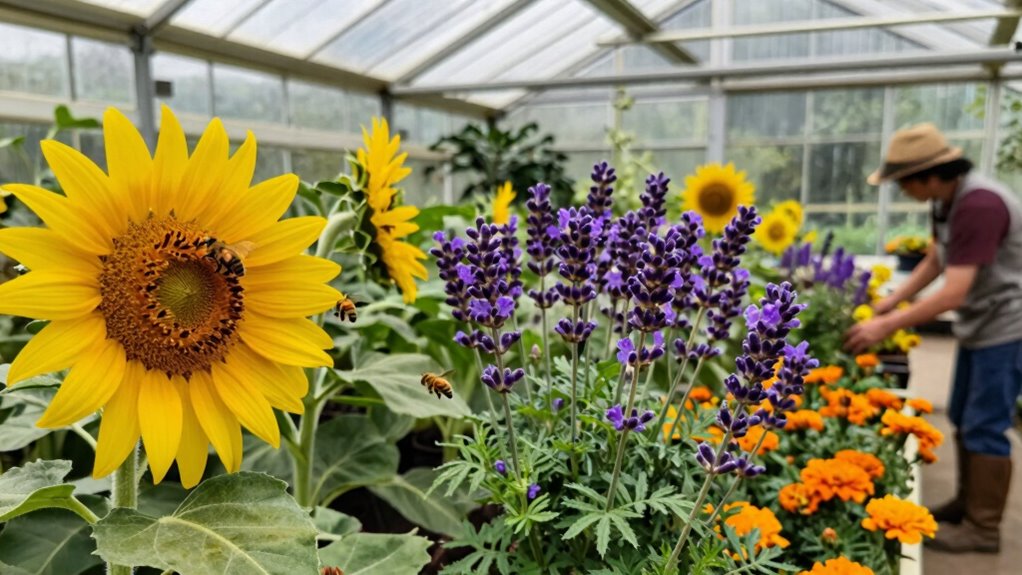
Supporting bees in your greenhouse is vital because they play a key role in pollination, which directly impacts the health and productivity of your plants. When bees thrive, pollinator health improves, leading to better fruit and flower yields. Healthy bees are more efficient at transferring pollen, ensuring your plants produce strong seeds and vibrant blooms. By actively supporting bee conservation, you help maintain a balanced ecosystem inside your greenhouse. This not only benefits your plants but also contributes to the broader effort to protect declining bee populations. Prioritizing bee health creates a sustainable environment where pollination happens naturally, reducing the need for manual pollination or chemical aids. Additionally, understanding pollination techniques can further enhance your greenhouse’s productivity. Ultimately, supporting bees ensures your greenhouse remains productive and ecologically resilient.
How to Create a Pollinator-Friendly Environment Inside Your Greenhouse
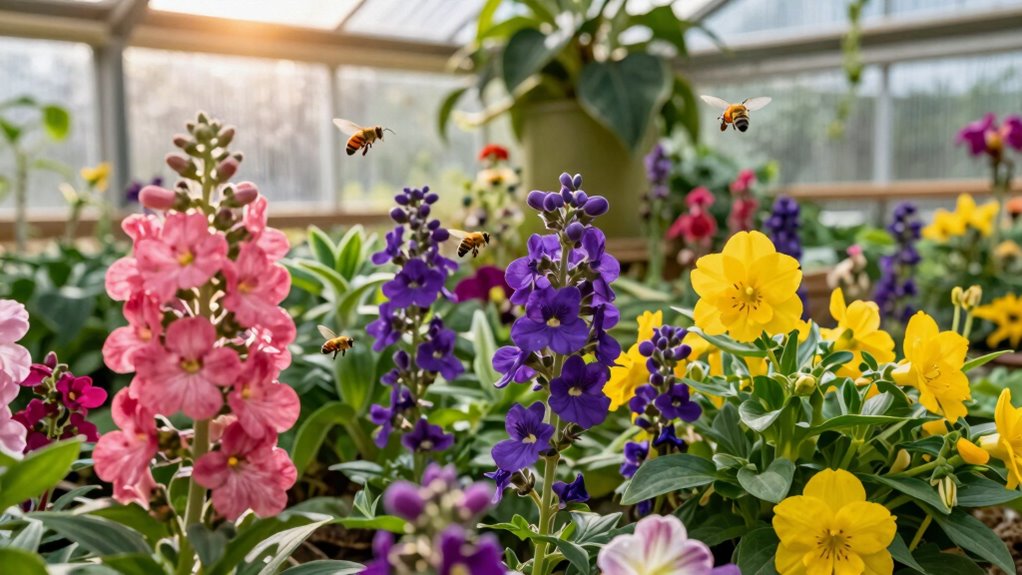
To create a pollinator-friendly environment inside your greenhouse, start by selecting plants that attract and support pollinators. Adding habitat features like bee hotels or native flowering plants can boost their presence, while managing pesticide use guarantees their safety. With these steps, you’ll foster a healthy, thriving ecosystem for your pollinators. Additionally, avoiding cryptocurrency scams ensures a safe space for your gardening investments.
Select Pollinator-Friendly Plants
Choosing the right pollinator-friendly plants is essential for creating a vibrant, healthy greenhouse environment. Select a variety of flowering plants that bloom at different times to provide continuous nectar and pollen sources. Incorporate native species adapted to your region, as they attract local bees and pollinators. Consider plants with diverse flower shapes to support various pollinator species. Keep your beekeeping equipment in mind for hive management, ensuring bees have ample foraging options nearby. Regularly rotate plants to prevent pests and encourage healthy pollinator activity. Additionally, selecting plants with high pollination efficiency can significantly boost pollinator visitation rates. By choosing the right plants, you foster a thriving ecosystem that benefits both your greenhouse and the bees visiting it. This strategic selection helps maintain pollinator populations and supports sustainable beekeeping practices.
Provide Habitat Features
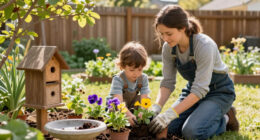
Creating a pollinator-friendly environment inside your greenhouse involves more than just selecting the right plants. You need to add habitat features that support bee health and activity. Incorporate bee shelters like small wooden or bamboo structures where bees can rest or hide. These shelters provide safe spaces and encourage bees to stay nearby, increasing pollination efficiency. Include gentle, native plants or flowering shrubs that bloom at different times to provide continuous nectar and pollen sources. Consider adding undisturbed areas with natural debris or soil patches for ground-nesting bees. Additionally, planting a variety of pollinator-friendly plants can significantly attract and support diverse bee populations. By creating diverse habitat features, you make your greenhouse a welcoming environment for pollinators, boosting their populations and ensuring better pollination for your plants. This simple step considerably enhances your greenhouse’s pollinator friendliness.
Manage Pesticide Use
Managing pesticide use carefully is essential for maintaining a healthy pollinator environment inside your greenhouse. Pesticides can harm bees and other beneficial insects, so you need to adopt safer pest management strategies. Focus on integrated pest management (IPM) techniques that target pests without chemicals. Practice crop rotation to disrupt pest life cycles and reduce infestations naturally. Always choose pesticides labeled as pollinator-friendly, applying them during times when pollinators are least active. Keep detailed records of pesticide use to monitor its impact. Regularly inspect plants for pests so you can intervene early. Incorporating European cloud innovation can enhance data management and help optimize pest control strategies. By minimizing chemical applications and prioritizing natural pest control, you create a safer space for your pollinators to thrive inside your greenhouse.
Choosing Bee-Friendly Plants for Better Pollination Under Cover
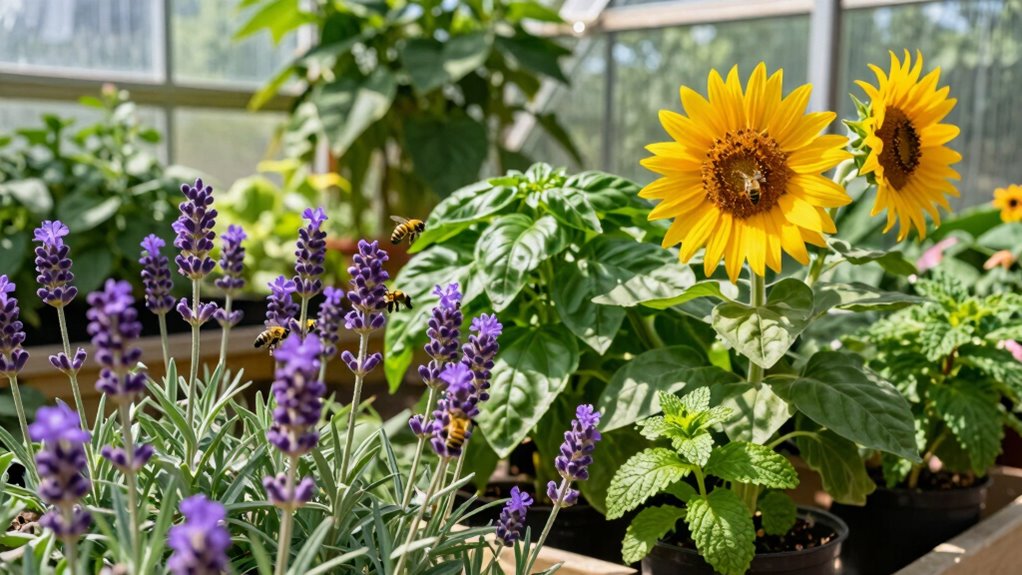
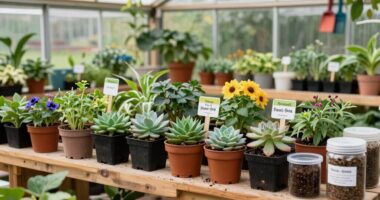
To guarantee effective pollination inside your greenhouse, selecting bee-friendly plants is essential. Choose varieties that attract native bees and support their activity, especially when using hydroponic systems where natural pollinators are limited. These plants not only boost pollination but also aid pest management by encouraging healthy ecosystems. Consider a mix of flowering herbs, perennial blooms, and annuals that bloom at different times. Here’s a quick guide:
| Plant Type | Bloom Time | Pollinator Appeal |
|---|---|---|
| Lavender | Summer | Strong nectar source |
| Basil | Warm months | Aromatic attractant |
| Sunflowers | Summer | Large, accessible flowers |
| Coreopsis | Late spring | Bright, easy nectar |
| Coneflower | Summer | Long-lasting blooms |
Incorporating native plant species into your greenhouse can further enhance bee activity and sustainability.
Providing Food and Shelter to Keep Bees Happy in Your Greenhouse
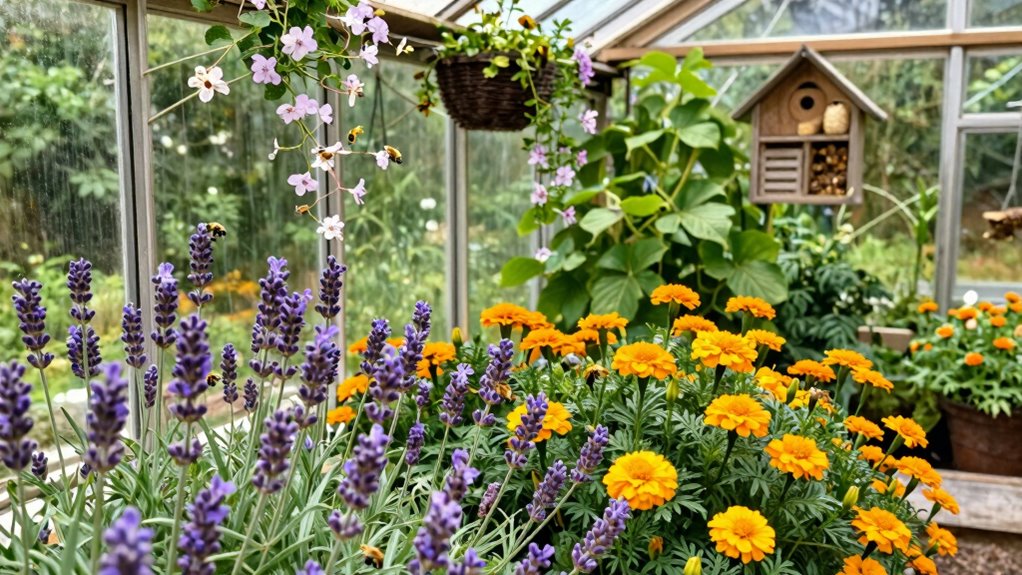
Ensuring bees stay healthy and active in your greenhouse requires providing them with adequate food sources and shelter. You can support their well-being by incorporating pollinator-friendly plants and nesting spaces. Using pollination technology and proper greenhouse ventilation encourages natural bee activity and keeps conditions comfortable. To create a welcoming environment, consider these options:
- Plant diverse, bee-attracting blooms throughout your greenhouse
- Install bee nests or shelter boxes in shaded, protected areas
- Maintain good airflow with ventilation to prevent overheating and stress
- Offer supplementary food sources like nectar-rich plants during scarce periods
- Regularly monitor bee populations and habitat conditions to ensure ongoing health and activity pollinator habitat
These steps help keep bees happy and productive, supporting effective pollination and healthy plant growth under cover. By fostering a bee-friendly habitat, you actively contribute to sustainable greenhouse gardening.
How to Manage Pesticides and Chemicals Safely to Protect Pollinators
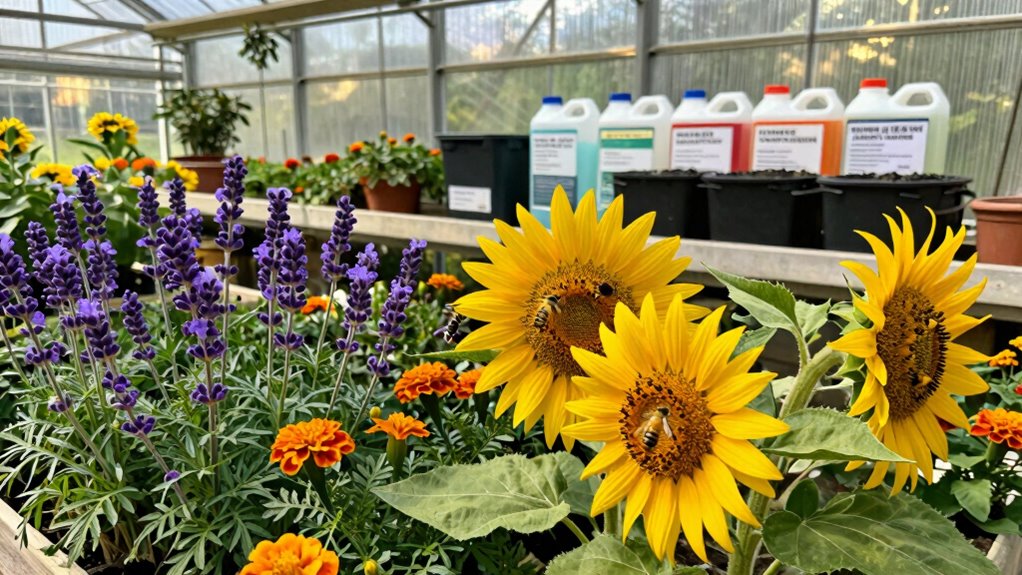
To safeguard pollinators, you need to select bee-friendly pesticides that minimize harm. Timing chemical applications carefully guarantees pollinators aren’t exposed during peak activity. Always dispose of chemicals safely to prevent unintended contamination in your greenhouse environment. Incorporating sustainable practices can further support pollinator health and promote eco-friendly gardening.
Choosing Bee-Friendly Pesticides
Choosing bee-friendly pesticides is essential for protecting pollinators while maintaining effective pest control in your greenhouse. Focus on options that minimize harm to bees and other beneficial insects. Look for pesticide alternatives that are less toxic and specifically labeled as safe for pollinators. Use bee friendly fungicides when necessary, as they pose fewer risks compared to traditional chemicals. Always read labels carefully to ensure products are safe for use around bees. Apply pesticides during times when pollinators are less active, and avoid drift into blooming plants. Consider integrated pest management strategies that combine biological controls and cultural practices. Being aware of the best-rated pinball machines of 2024 can inspire you to create a fun and engaging environment in your greenhouse, encouraging healthy plant pollination and growth. By selecting the right products and following best practices, you can safeguard pollinators while keeping your greenhouse healthy.
Timing Chemical Applications
Timing pesticide applications carefully is key to protecting pollinators while maintaining effective pest control in your greenhouse. You should plan your pesticide scheduling around times when pollinators are least active, such as early mornings or late evenings. This reduces their exposure to harmful chemicals. Always read labels for application instructions and avoid applying pesticides during flowering periods when bees are most likely to visit. Use the table below as a quick reference:
| Time of Day | Best Practice | Reason |
|---|---|---|
| Early Morning | Apply pesticides before bees become active | Minimize pollinator contact |
| Midday | Avoid application during peak flowering | Protect pollinator visits |
| Evening | Spray after bees have returned to hive | Reduce exposure risk |
Proper timing in chemical applications safeguards pollinators and keeps your greenhouse pest-free. Being mindful of pollinator activity patterns can further enhance your efforts to protect these vital insects.
Safe Disposal Practices
Proper disposal of pesticides and chemicals is essential to prevent environmental contamination and protect pollinators from accidental exposure. To do this, follow safe disposal practices that minimize harm. First, never pour chemicals down drains or onto the ground. Instead, use designated waste recycling facilities or collection programs. When disposing of empty containers, rinse them thoroughly to remove residue and recycle if possible. Using proper composting techniques is vital—avoid composting chemical-laden materials, as it can spread toxins. Always read label instructions for disposal guidance. Keep chemicals stored securely until disposal, and consider participating in local hazardous waste collection events. By managing waste responsibly, you help safeguard pollinators and maintain a healthy, eco-friendly greenhouse environment.
Incorporating Native and Wildflower Plants for Better Bee Support
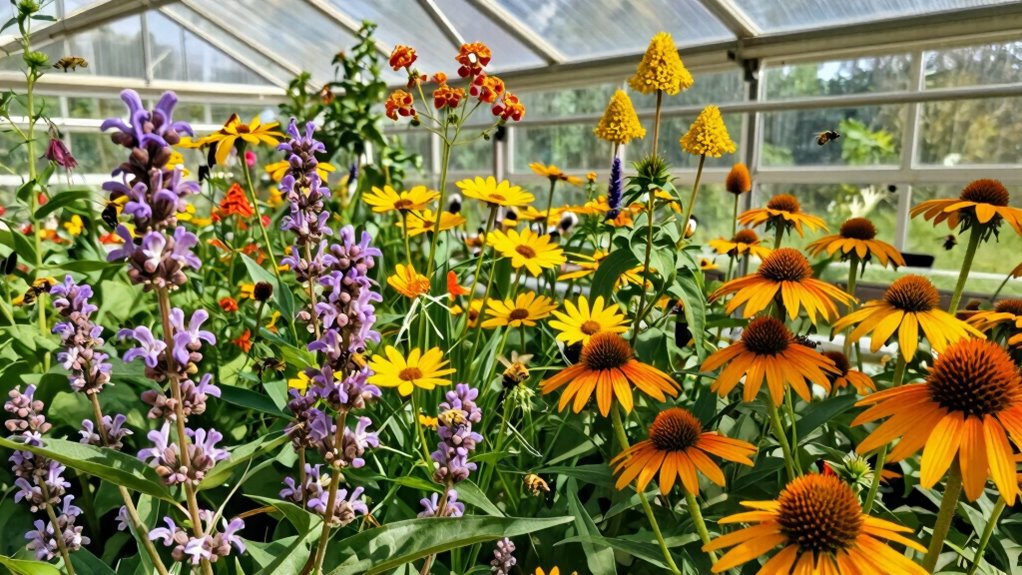
Incorporating native and wildflower plants into your greenhouse creates an essential refuge for bees and other pollinators. When selecting plants, focus on species native to your region, as they provide the best nectar and pollen resources. Native plants are adapted to local conditions, making them resilient and low-maintenance, while also supporting the natural habitat creation for pollinators. Mix a variety of flowering plants that bloom at different times to ensure a steady food supply throughout the season. This diversity encourages bees and other pollinators to frequent your greenhouse regularly. By carefully choosing plant species that thrive in your environment, you foster a thriving ecosystem that benefits pollinators and enhances your greenhouse’s overall health.
Designing Your Greenhouse Layout to Encourage Bee Activity
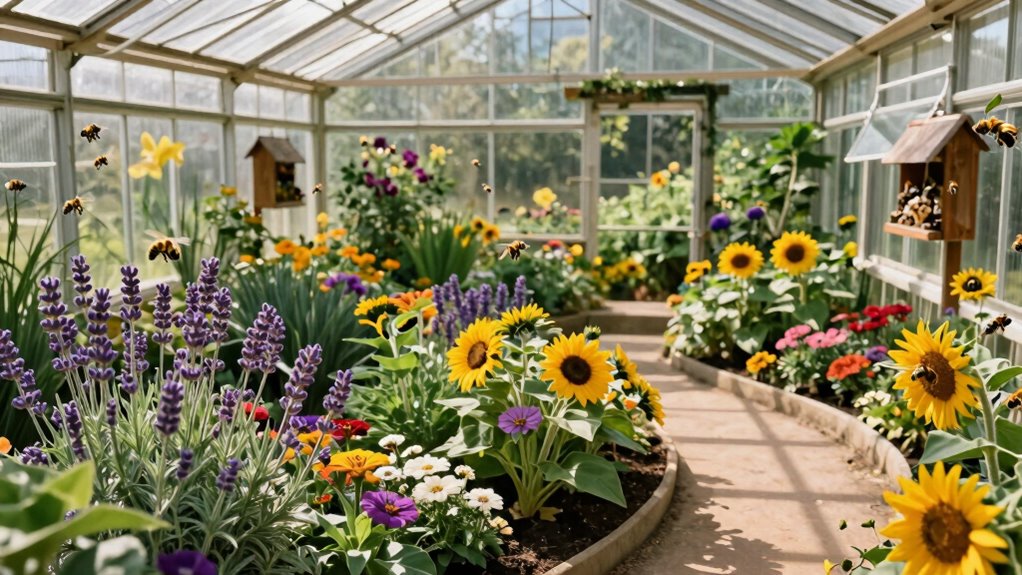
Designing your greenhouse layout thoughtfully can considerably boost bee activity and pollination efficiency. To do this, position flowering plants near entrances and along pathways to attract bees easily. Incorporate beekeeping techniques, like installing bee-friendly habitats or nesting sites, to support bee presence. Ensure proper greenhouse ventilation to regulate temperature and humidity, making the environment inviting for pollinators. Consider grouping plants with similar bloom times to sustain bee activity throughout the season. Keep pathways clear and accessible to encourage bee movement without disturbance. Use natural light effectively, as bees are more active under bright conditions. By aligning your layout with bee behavior and needs, you create a thriving pollinator-friendly space that enhances crop yields and plant health.
Monitoring Bee Populations and Maintaining Their Health
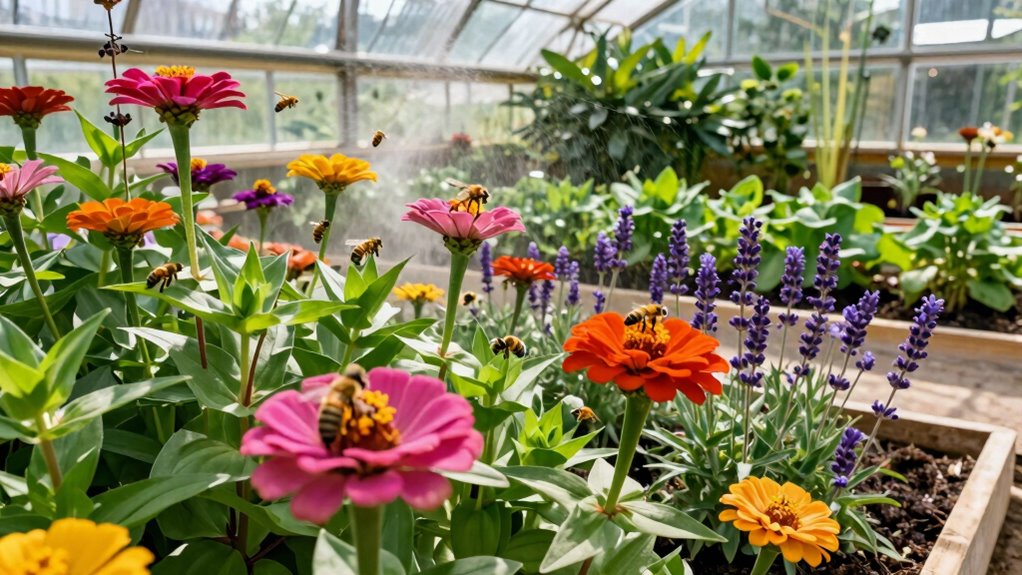
Monitoring bee populations is essential for maintaining a healthy and productive greenhouse environment. Regularly observe bee activity and guarantee their bee habitat remains accessible and safe. Keep an eye out for signs of stress or decline, such as reduced foraging or unusual behavior, which can indicate issues with pollinator health. Track the diversity and number of bees visiting your plants to gauge overall pollination success. Providing diverse flowering plants and limiting pesticide use support their well-being. Maintaining ideal conditions like proper ventilation, humidity, and clean hive areas also promotes pollinator health. By actively monitoring and adjusting your greenhouse environment, you help sustain thriving bee populations, ensuring continuous pollination and a vibrant, productive garden.
Troubleshooting Common Challenges in Supporting Bees in Your Greenhouse
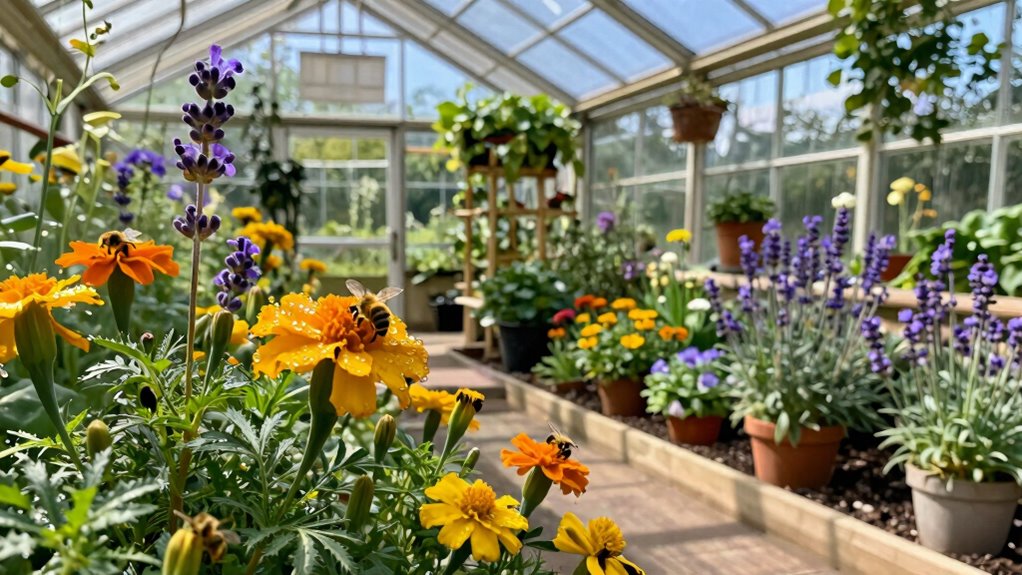
Supporting bees in your greenhouse can sometimes present unexpected challenges, but addressing them promptly guarantees healthy pollinator populations. Common issues include pest control problems that threaten bee health, or climate control mishaps that disrupt their activity. To troubleshoot effectively:
- Regularly inspect for pests and use bee-safe pest control methods.
- Maintain consistent temperature and humidity levels suited for both plants and bees.
- Ensure good ventilation to prevent mold and excessive humidity.
- Adjust lighting and airflow to mimic natural conditions, encouraging bee activity.
Frequently Asked Questions
How Can I Attract Native Bee Species to My Greenhouse?
To attract native bee species to your greenhouse, focus on creating native bee habitat and choosing the right flowering plant selection. Plant a variety of native flowers that bloom at different times to provide consistent nectar and pollen sources. Avoid pesticides, and include bee-friendly features like small nesting sites or bare soil patches. These efforts will draw native bees in, supporting their populations and enhancing pollination inside your greenhouse.
What Are the Best Times of Day for Bee Activity Indoors?
The best times of day for bee activity indoors are early morning and late afternoon when temperatures are moderate. During these times, bees are most active and efficient at pollination, making it the most suitable timing for your greenhouse activities. To maximize bee activity, open vents or doors during these periods to encourage natural movement. Keep conditions stable with gentle lighting and avoid harsh midday heat, ensuring your bees stay active and healthy.
How Do I Prevent Bees From Escaping My Greenhouse?
To prevent bees from escaping your greenhouse, you should implement effective bee containment methods such as using fine mesh screens on vents and openings. Additionally, ventilation strategies like installing adjustable vents or fans can control airflow without creating escape routes. Keep doors and windows closed when not in use, and regularly check seals to maintain containment. These steps guarantee bees stay safely inside while allowing proper airflow for healthy greenhouse conditions.
Are There Specific Tools to Monitor Bee Health Indoors?
Yes, you can use sensor tools for health monitoring inside your greenhouse. These devices track essential signs like temperature, humidity, and bee activity levels, giving you real-time data on bee health. By regularly checking these sensors, you can quickly identify issues such as stress or disease. This proactive approach helps maintain a healthy environment for your bees, ensuring they thrive while under cover.
Can I Safely Introduce Honeybees Into My Greenhouse Environment?
You can safely introduce honeybees into your greenhouse if you follow proper greenhouse hive management and habitat enhancement techniques. Did you know that a healthy hive can pollinate up to 80% of flowering plants? Guarantee the environment is clean, well-ventilated, and free from pesticides. Providing water sources and native plants inside the greenhouse supports their health. With careful planning, you create a thriving habitat that benefits both your plants and the bees.
Conclusion
Think of your greenhouse as a bustling bee sanctuary, where your care turns it into a vibrant hive of life. By nurturing pollinators, you’re planting seeds of harmony and growth. Your efforts create a safe haven amid the concrete jungle, just like a garden sheltering bees from storms. Keep tending this delicate ecosystem, and watch how it flourishes—proof that even under cover, your green thumb can cultivate a thriving, pollinator-friendly paradise.
Fall Picks
fall essentials
As an affiliate, we earn on qualifying purchases.