Evaporative cooling works by passing warm, dry air through water-saturated pads, which absorbs heat and lowers the temperature naturally. The key components include a water reservoir, pads, a fan, and a blower, all working together for efficient airflow. The cooling chart shows how temperature and humidity levels influence performance, helping you optimize the system. If you keep exploring, you’ll uncover how to make the most of this eco-friendly method in suitable climates.
Key Takeaways
- The chart correlates indoor and outdoor temperatures with cooling effectiveness, showing how evaporative cooling performs best in dry, hot climates.
- It highlights humidity levels’ impact, indicating reduced efficiency as humidity increases beyond optimal low-humidity ranges.
- The chart helps users adjust their system settings by matching environmental conditions to expected cooling performance.
- It explains how temperature and humidity interact to influence moisture evaporation and indoor temperature reduction.
- Proper maintenance, water quality, and airflow management are essential for maximizing the cooling benefits illustrated in the chart.
What Is Evaporative Cooling and How Does It Work?
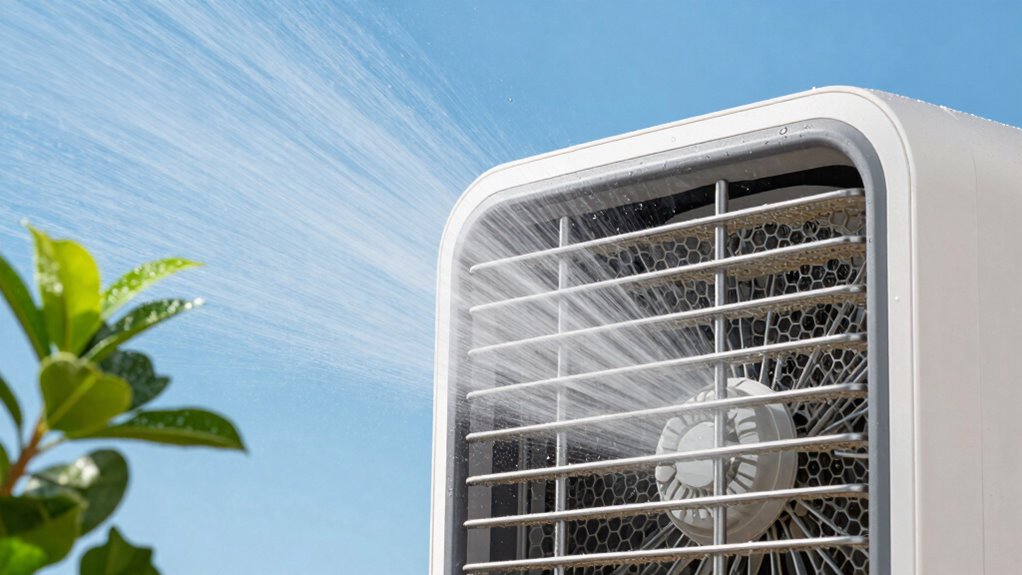
Evaporative cooling is a natural process that lowers air temperature through the evaporation of water. When warm, dry air passes over water-saturated pads, it absorbs moisture, which causes the temperature to drop. This process is highly energy-efficient because it uses minimal power compared to traditional air conditioning systems. By relying on the natural cooling effect of water evaporation, you reduce energy consumption and lower your utility bills. Additionally, evaporative cooling has a smaller environmental impact since it produces fewer greenhouse gases and reduces reliance on refrigerants that can harm the environment. This method is especially effective in arid climates, offering a sustainable and eco-friendly way to keep indoor spaces comfortable without sacrificing efficiency. Understanding the fundamentals of craftsmanship behind these systems can help in proper installation and maintenance for optimal performance.
The Main Parts of an Evaporative Cooler and How They Function
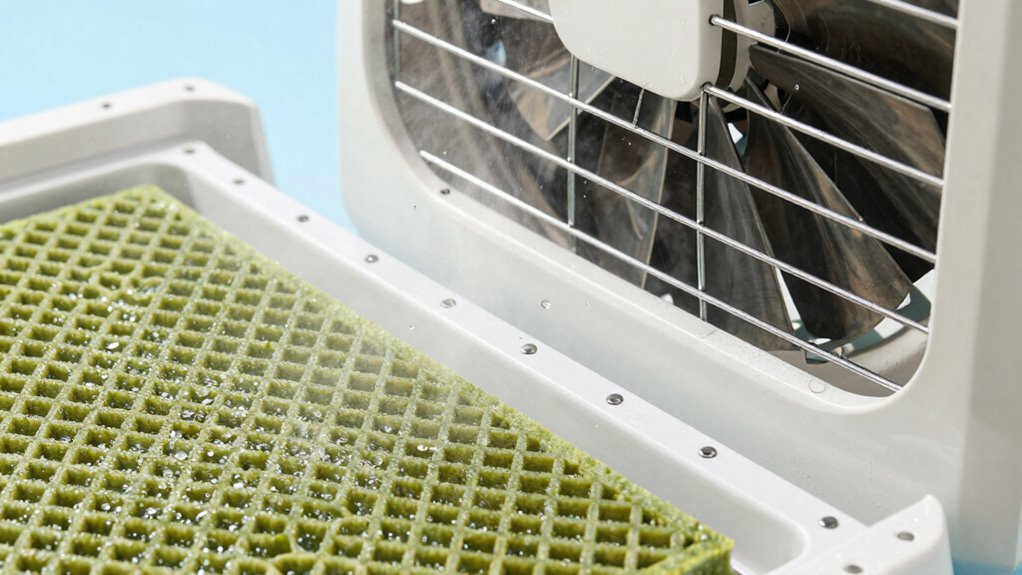
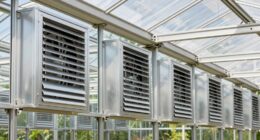
Understanding the main parts of an evaporative cooler is essential to grasp how it effectively cools your indoor space. The cooler parts include the water reservoir, pads, fan, and blower. The water reservoir holds the water needed for evaporation. The pads, soaked with water, are vital for the cooling process—they increase the surface area for evaporation. The fan draws warm air through the water-saturated pads, creating the airflow mechanism that cools the air. As air passes through, moisture evaporates, reducing the temperature before the cooled air enters your space. The blower then pushes this cooled, moist air into your room. Each part works together seamlessly, ensuring efficient cooling through a simple, effective airflow mechanism. Understanding these components helps you optimize your cooler’s performance and maintain proper system operation.
How to Read the Evaporative Cooling Chart: A Simple Step-by-Step
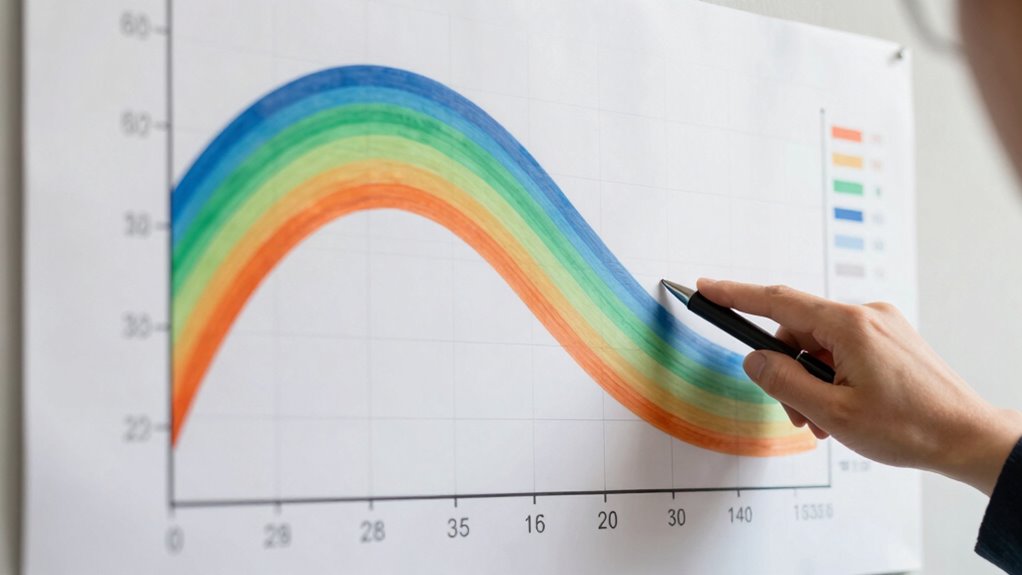
To understand the evaporative cooling chart, start by looking at the temperature lines and see where they intersect with your current humidity level. This helps you determine how much cooling to expect. Keep in mind, matching humidity levels accurately is key to making the most of the chart’s information. Additionally, understanding the concept of Free Floating can help you optimize your cooling strategies effectively.
Interpreting Temperature Lines
When looking at an evaporative cooling chart, the temperature lines serve as your key reference points. These lines show how cooling performance varies with different indoor and outdoor conditions, helping you optimize humidity control and energy efficiency. To interpret them, note where your current temperature falls relative to these lines. For example:
| Temperature Line | Indoor Temperature | Outdoor Temperature |
|---|---|---|
| 70°F | Comfortable cooling | Less cooling needed |
| 75°F | Slightly warm | Moderate cooling |
| 80°F | Warm | More cooling |
| 85°F | Hot | Maximum cooling |
Understanding these lines allows you to adjust settings effectively, ensuring efficient operation and better humidity management. Additionally, grasping how evaporative cooling interacts with ambient conditions can help you optimize energy consumption and maintain optimal indoor comfort.
Matching Humidity Levels
Matching humidity levels on an evaporative cooling chart helps you determine how well your system is maintaining ideal moisture conditions. To do this, compare the moisture level line on the chart with your current indoor humidity reading. Proper humidity control means moisture levels stay within a comfortable range, preventing dryness or excess humidity. If your humidity is too low, your system may need adjustment to add moisture. Conversely, if it’s too high, you might need to reduce moisture addition. By aligning your indoor humidity with the chart’s recommended levels, you guarantee maximum comfort and efficiency. Regularly checking and matching moisture levels helps prevent issues like static electricity or mold growth, keeping your environment balanced and comfortable. Ensuring your system maintains appropriate humidity levels is essential for optimal performance and comfort.
How Does Evaporative Cooling Compare to Traditional Air Conditioning?
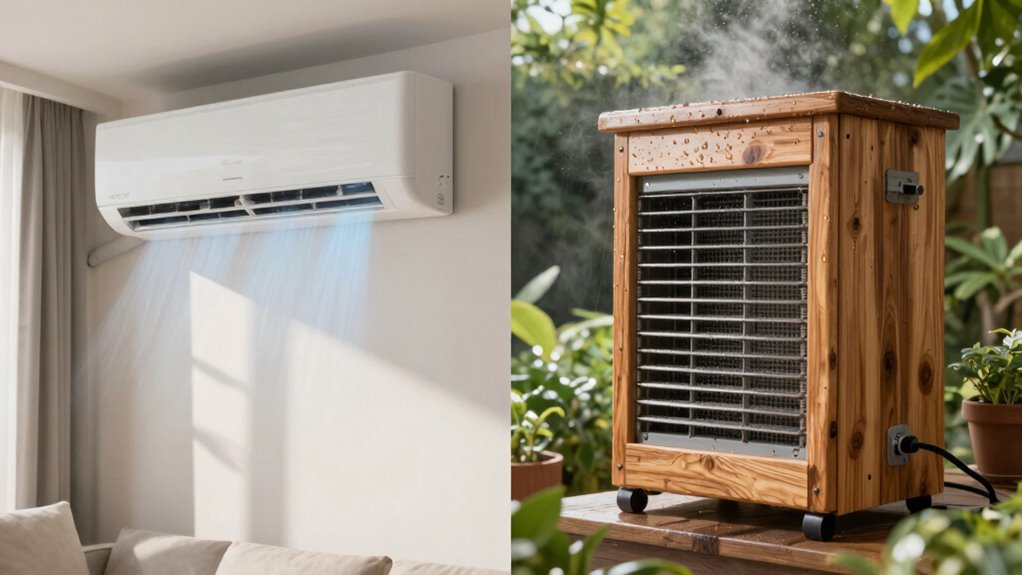
Evaporative cooling offers a more energy-efficient and environmentally friendly alternative to traditional air conditioning. Unlike standard systems that rely on refrigerants and consume a lot of power, evaporative coolers use water evaporation to lower temperatures, reducing energy use markedly. This leads to a smaller carbon footprint and less environmental impact. Imagine:
Evaporative cooling is an eco-friendly, energy-saving alternative to traditional air conditioning systems.
- Lower electricity bills with less energy consumption
- No need for chemical refrigerants, reducing pollution
- Simpler maintenance and fewer parts to break
- Better performance in dry, hot climates
- Reduced greenhouse gas emissions
While traditional AC units excel in humid environments, evaporative coolers shine where humidity is low. By choosing evaporative cooling, you embrace a sustainable, cost-effective way to stay comfortable while protecting the planet. Additionally, understanding the regulatory environment surrounding these systems ensures compliance with local standards and promotes responsible adoption.
When Is Evaporative Cooling Most Effective?
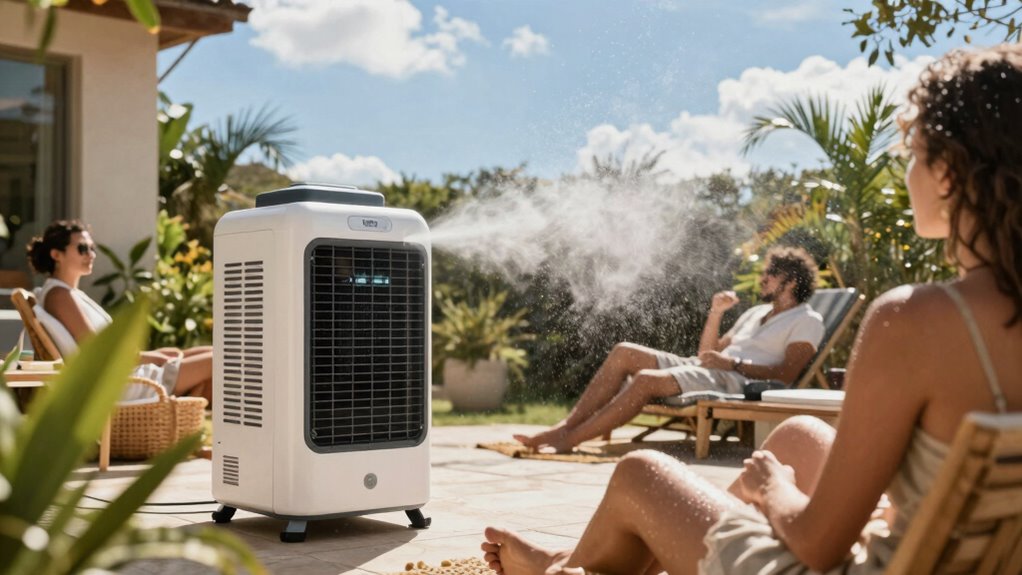
Evaporative cooling works best in dry, hot climates where low humidity allows water evaporation to efficiently reduce air temperatures. When humidity is low, the evaporation process absorbs heat from the air, providing maximum cooling. This makes evaporative coolers highly effective in arid regions, especially during summer months. Proper humidity control is key—high humidity levels reduce evaporation efficiency, so these systems perform poorly in humid environments. By choosing evaporative cooling in suitable climates, you can enjoy significant energy savings compared to traditional air conditioning, since they use less electricity and require fewer maintenance resources. You’ll find these coolers most effective when outdoor humidity stays below 50%, ensuring water evaporation maximizes cooling potential and keeps indoor temperatures comfortable and energy-efficient. Additionally, understanding thermal behavior of the cooling system can help optimize its performance and longevity.
Common Myths About Evaporative Cooling Debunked
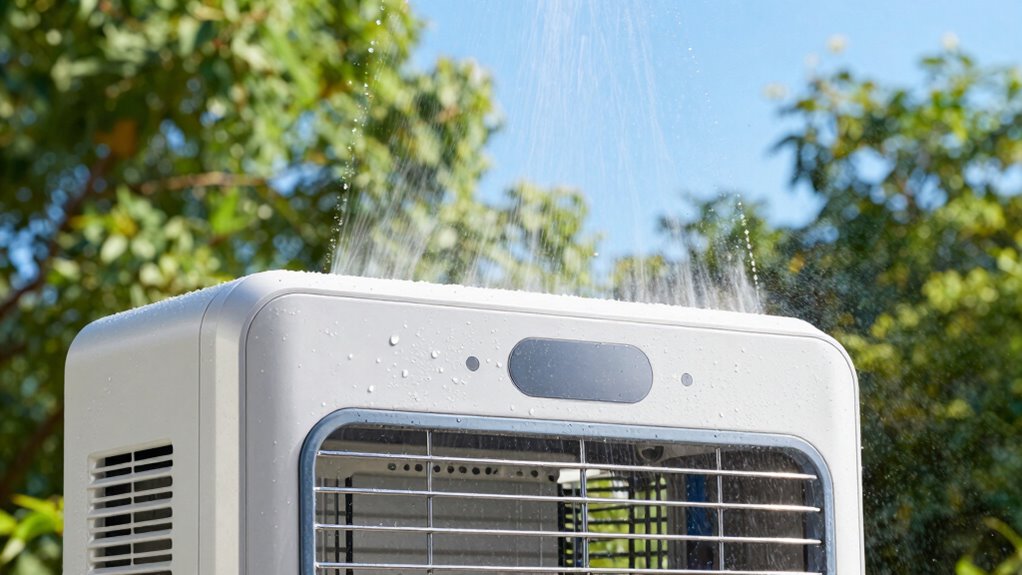
Many people believe that evaporative cooling is only suitable for extremely dry conditions, but this isn’t true. This is a common misconception in the myth vs fact debate. While it’s true that evaporative cooling works best in dry climates, it can still be effective in moderate humidity levels. Don’t fall for the myth that it won’t work outside desert areas. Here are some common misconceptions debunked:
- Evaporative coolers increase humidity indoors excessively
- They only work in arid environments
- They waste a lot of energy
- They require constant maintenance
- They can cause mold or damage
Understanding the facts helps you make smarter decisions about cooling options. Evaporative cooling is versatile, efficient, and more adaptable than many believe. Proper use of evaporative coolers in various climates can optimize their performance and longevity.
Tips to Maximize Your Evaporative Cooler’s Performance

To get the most out of your evaporative cooler, it’s essential to optimize its settings and maintenance routines. Regularly clean or replace pads to ensure optimal water absorption and airflow, boosting energy efficiency. Keep the water reservoir filled and free of debris to prevent strain on the motor. Proper airflow is crucial—use the correct fan speed and position vents for maximum cooling. Regular maintenance tips include checking for mold and mineral buildup, which can hinder performance. Here’s a quick guide:
| Maintenance Tip | Benefit | Frequency |
|---|---|---|
| Clean or replace pads | Improves airflow, efficiency | Monthly |
| Inspect water levels | Prevents strain on components | Weekly |
| Clean water reservoir | Reduces mold, bacteria | Bi-weekly |
| Check for debris and mold | Maintains air quality | Weekly |
Additionally, ensuring proper airflow management can significantly enhance the cooler’s effectiveness.
Consistent upkeep guarantees energy-efficient operation and prolonged cooler lifespan.
Is Evaporative Cooling Suitable for Your Climate? Find Out Here?
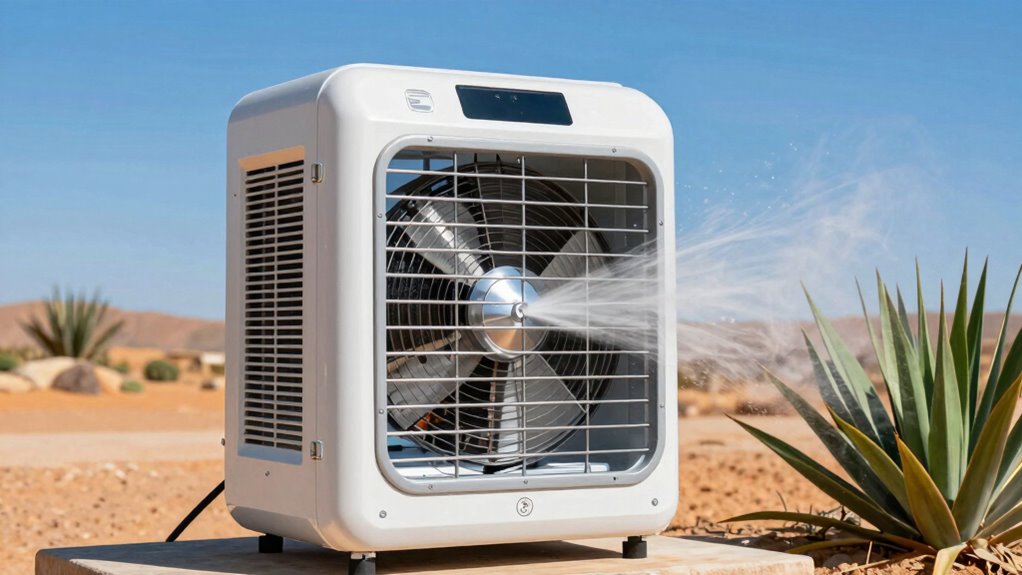
If you’re considering an evaporative cooler, it’s important to evaluate whether your climate is suitable for this energy-efficient cooling method. Climate considerations, especially humidity impact, play a key role in its effectiveness. Evaporative cooling works best in dry, low-humidity environments where moisture can efficiently lower air temperature. In contrast, high humidity can reduce its performance, making the cooler less effective or even counterproductive. Understanding your climate helps determine if evaporative cooling will keep you comfortable without wasting energy. If humidity is high, alternative cooling methods might be better suited for your needs. AI tools can assist in analyzing climate data to help make an informed decision.
Frequently Asked Questions
Can Evaporative Coolers Increase Indoor Humidity Levels Significantly?
Yes, evaporative coolers can substantially increase indoor humidity levels, especially in dry climates. As they cool the air, they add moisture, which can boost indoor humidity. This increase may improve comfort and air quality but might reduce cooling efficiency if humidity becomes too high. Keep an eye on indoor humidity levels to balance comfort and cooling efficiency, ensuring your space stays pleasantly cool without becoming overly humid.
What Maintenance Is Required to Keep an Evaporative Cooler Running Efficiently?
You need to perform regular maintenance to keep your evaporative cooler running like a well-oiled machine. Change filters frequently to prevent clogs, and always guarantee your water quality is pristine—dirty water can turn your cooler into a breeding ground for mold and bacteria. Clean the pads and water tank weekly, and check for any mineral buildup. With consistent care, your cooler will perform flawlessly, saving you energy and money in the long run.
Are There Specific Materials or Designs That Enhance Evaporative Cooling Effectiveness?
You should look for cooler materials like cellulose or rigid media, which maximize water retention and airflow. Design innovations, such as honeycomb or corrugated structures, improve evaporation efficiency by increasing surface area and airflow paths. These materials and designs work together to enhance cooling performance, reduce water usage, and extend the unit’s lifespan. Choosing the right combination guarantees your evaporative cooler operates at peak efficiency, providing consistent, effective cooling during hot weather.
How Does Altitude Affect the Performance of Evaporative Cooling Systems?
Imagine nature’s own air conditioner—the higher you go, the better evaporative cooling works. Altitude effects markedly boost cooling efficiency, because thinner air holds less moisture, making evaporation faster. As you ascend, expect your evaporative system to perform more effectively, lowering temperatures more efficiently. Just remember, at lower altitudes, the moisture content is higher, so cooling efficiency decreases. So, altitude directly influences how well your system cools your space.
Can Evaporative Cooling Be Used Effectively in Humid Environments?
Evaporative cooling isn’t very effective in humid climates because the high moisture levels challenge its core principle of evaporating water to cool the air. Humid climate challenges prevent this process from cooling efficiently, making it less reliable. In such environments, you should consider alternative cooling methods like air conditioning or dehumidifiers, which better manage humidity levels and provide more consistent comfort.
Conclusion
Now that you understand how evaporative cooling works, you’re ready to decide if it’s right for your climate. For example, imagine a small business in a dry desert area saving energy and costs by switching to an evaporative cooler. If you live in a dry, warm environment, this eco-friendly option could be your perfect solution. So, give it a try and enjoy cool, fresh air without breaking the bank!