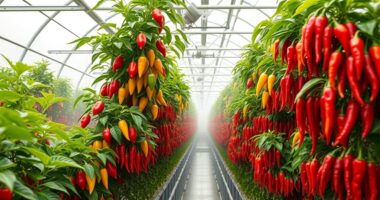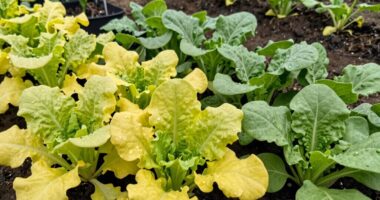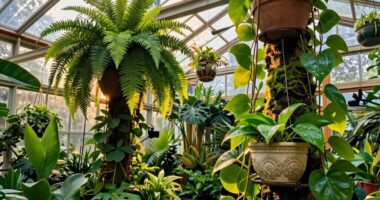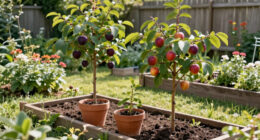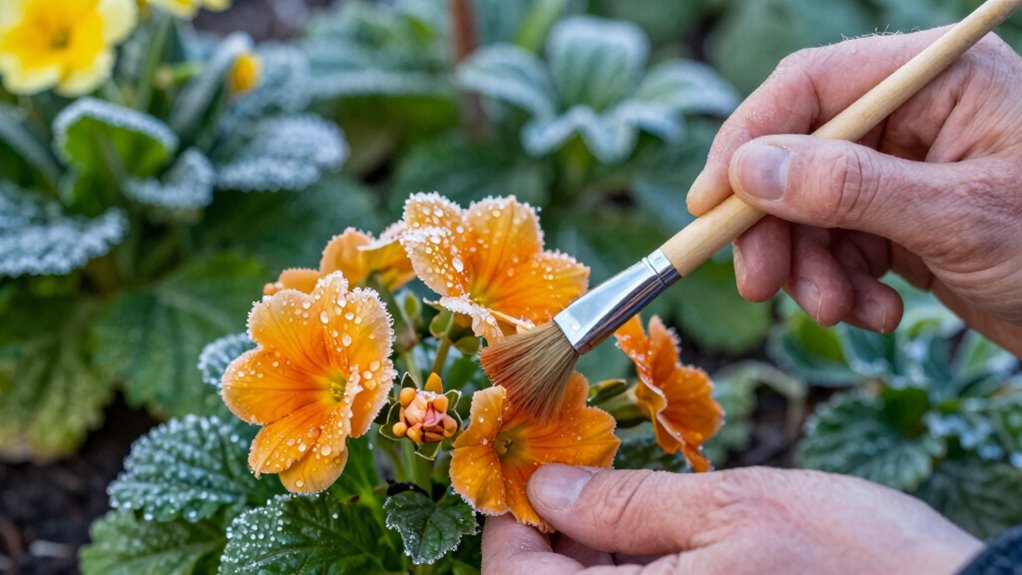

During winter, natural pollinators like bees are less active, so you’ll need to take control. Hand pollination is your best hack; gently transfer pollen from anther to stigma using small brushes, cotton swabs, or toothpicks. For indoor or greenhouse plants, you can also shake or tap flowers to mimic insect activity. Ensuring your plants are healthy and in ideal conditions boosts success. Keep exploring to discover more effective tips and tricks for winter blooms!

Get garden gear delivered free with Prime
- Fast, free delivery on millions of items
- Prime Video, Amazon Music and more included
- Member-only deals all year
Key Takeaways
- Use small brushes or cotton swabs to manually transfer pollen between flowers.
- Bring plants indoors or into greenhouses to simulate favorable pollination conditions.
- Select winter-blooming, hardy plants like hellebores and witch hazel for better success.
- Pollinate during peak flowering, ensuring tools are clean to prevent disease.
- Support plant health with proper watering, fertilization, and protection from frost to enhance pollination results.
As an affiliate, we earn on qualifying purchases.
Why Winter Makes Pollinating Your Garden Difficult
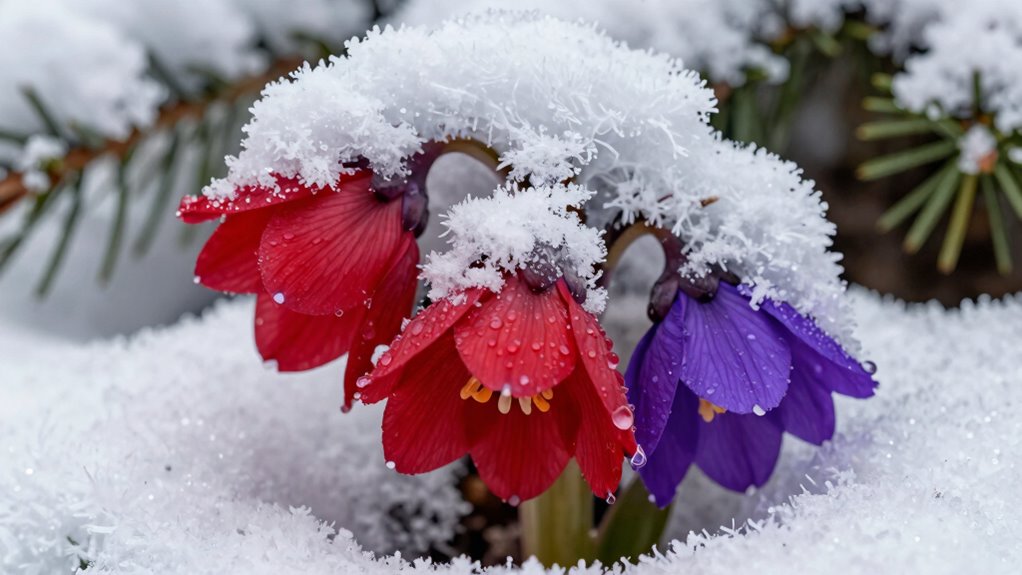
Have you ever wondered why pollinating your garden in winter is so challenging? Seasonal pollination challenges become more pronounced during colder months because many plants aren’t naturally prepared for winter’s conditions. Lower temperatures, shorter days, and reduced sunlight slow down plant growth and flowering, making pollination harder. Additionally, pollinator activity drops dramatically, leaving fewer natural helpers like bees and butterflies. To overcome these hurdles, plants need effective acclimation strategies—such as selecting cold-hardy varieties or providing additional warmth through protective coverings. Understanding these seasonal pollination challenges helps you adapt your gardening approach, ensuring your plants can set blooms despite the winter’s harshness. Climate resilience in plants is crucial for maintaining pollination success during colder months. Proper plant acclimation strategies are essential for keeping your garden thriving through the colder months. Addressing pollination success in winter also involves creating environments that attract or support any available pollinators, even in the off-season. Incorporating seasonal plant selection can further enhance your chances of successful winter pollination.
How to Hand Pollinate Indoor and Greenhouse Winter Flowers
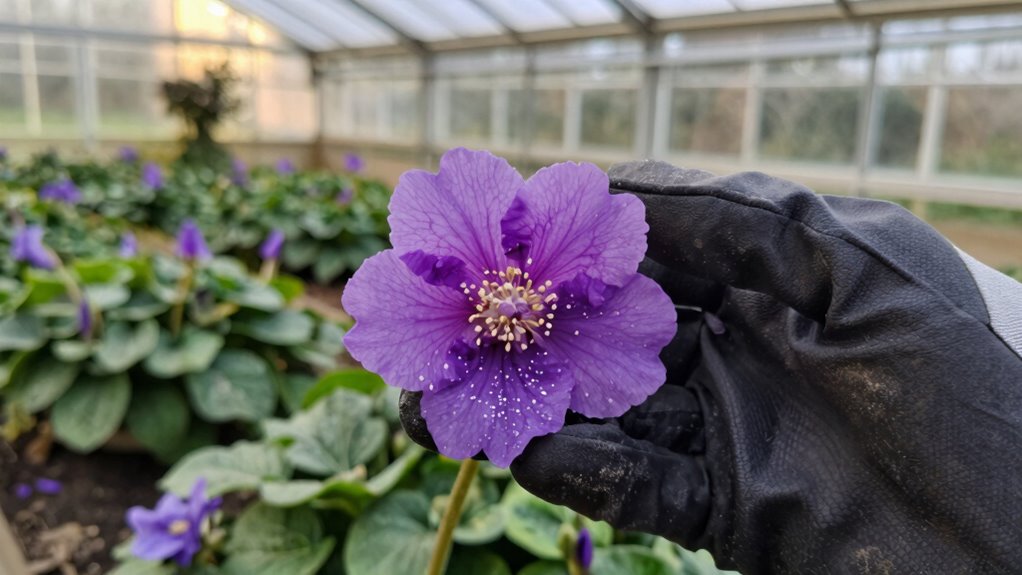
When outdoor pollination becomes difficult during winter, bringing flowers indoors or into a greenhouse can help maintain your garden’s productivity. To successfully hand pollinate indoor and greenhouse flowers, understanding the truth behind pollination myths is essential. Many believe that natural pollination only occurs through insects, but cultural practices like gently shaking or tapping flowers can mimic insect activity. Use a small brush or a cotton swab to transfer pollen from the anthers to the stigma, ensuring good contact. Be consistent with your efforts, as some plants require multiple pollination attempts. Remember, effective hand pollination relies on understanding your plant’s specific needs, not on relying solely on myths about natural pollination. Utilizing techniques such as essential oils for pollination can also support healthy flowering and fruiting. This approach keeps your winter blooms thriving and productive.
Tools and Techniques for Winter Plant Pollination
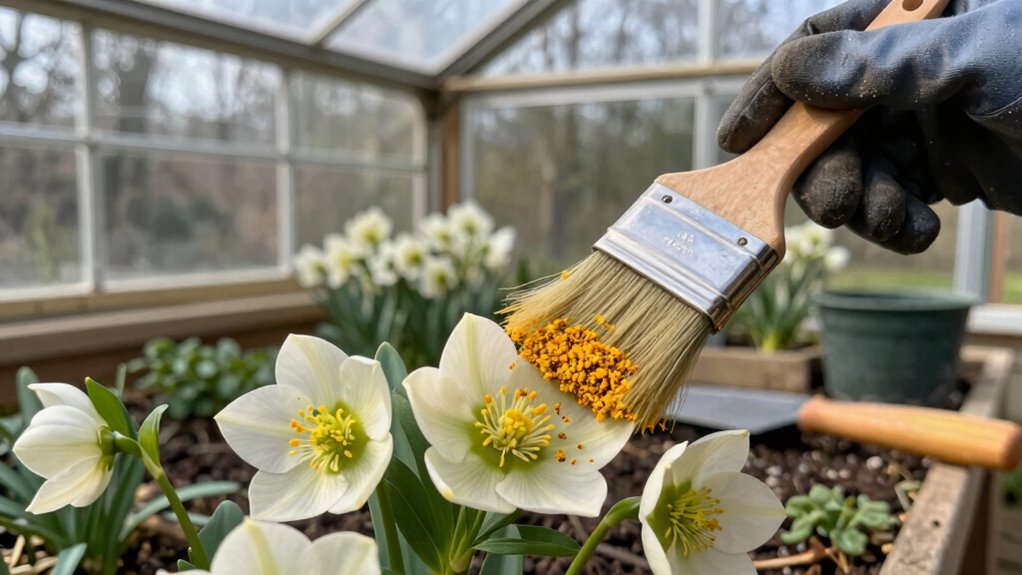
To effectively pollinate your winter indoor and greenhouse flowers, selecting the right tools is essential. Using small brushes, cotton swabs, or even toothpicks allows precise transfer of pollen, mimicking natural pollination. Maintain proper cultural practices by ensuring your plants are healthy, well-watered, and properly fertilized, which boosts their receptivity. Timing is critical; pollinate during the plant’s peak flowering period when pollen is most viable. Keep your tools clean to prevent disease spread and use gentle, deliberate motions to transfer pollen effectively. A magnifying glass can help you see pollen details, improving accuracy. Incorporating proper cultural practices into your routine ensures optimal plant health and enhances pollination success. Understanding the regulatory considerations surrounding plant handling can help you avoid issues with local laws. Additionally, using appropriate tools tailored for delicate pollination tasks can further improve your results. Selecting correct pollination techniques tailored to your specific plant species can greatly improve your success rate. By combining these tools with careful attention to cultural practices and pollination timing, you increase your success rate in achieving vibrant winter blooms. Also, being aware of youngster choice and other related trends might inspire innovative approaches to plant care.
Best Plants and Conditions for Successful Winter Pollination
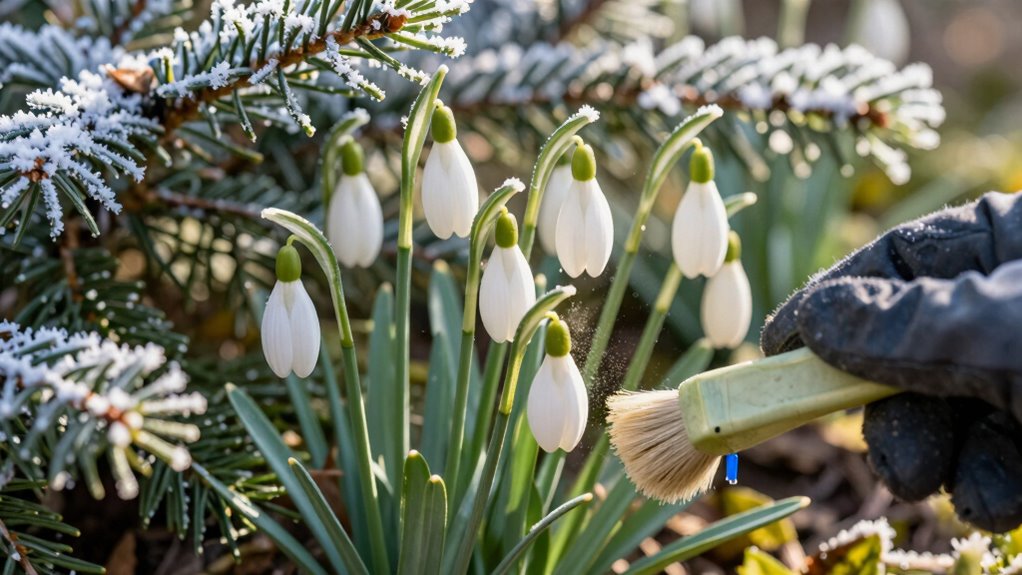
Choosing the right plants and creating ideal conditions are key to successful winter pollination. Focus on pollination strategies that work well during colder months, such as selecting plants with high pollination compatibility. Hardy, winter-blooming species like witch hazel, hellebores, and winter jasmine thrive when conditions are right. Guarantee your plants are placed in areas with good air circulation, adequate sunlight, and protection from harsh winds. Maintaining proper soil moisture and avoiding frost damage also supports effective pollination. By pairing compatible plants that bloom simultaneously, you increase the chances of successful pollination without bees. Incorporating pollination mechanisms suitable for winter conditions can further improve your results during the winter season. Understanding local climate factors can help optimize your garden’s winter pollination success. Additionally, ensuring proper plant spacing can improve air flow and reduce disease risk, further aiding in successful winter blooms. Tailoring your plant choices and conditions to winter-specific needs helps ensure your garden produces vibrant, healthy blooms even in the cold months. Recognizing the importance of pollination biology can help you better understand how to support natural pollination processes in winter.
Troubleshooting Common Winter Pollination Problems
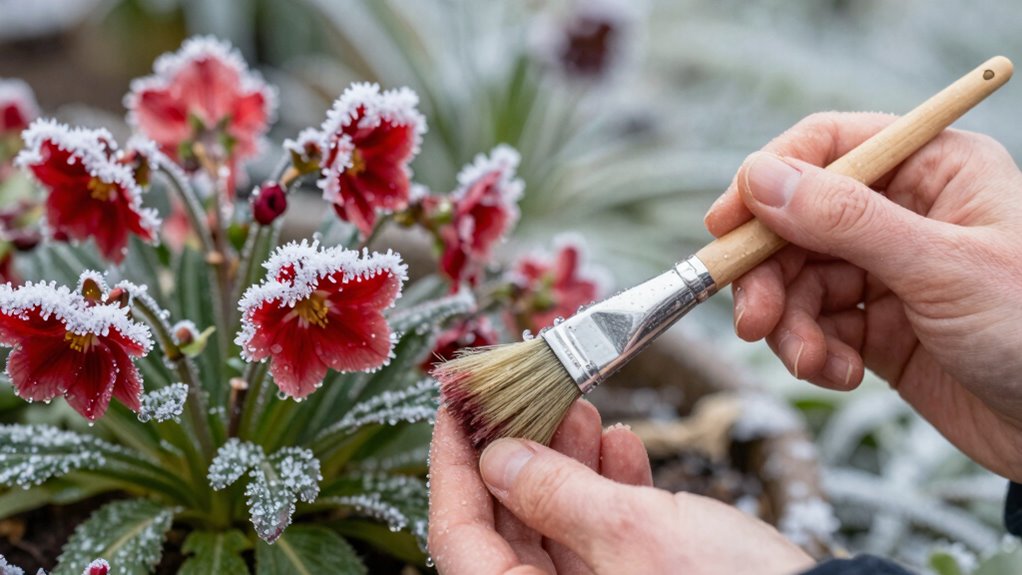
Winter pollination can face several challenges, especially as cold temperatures and reduced pollinator activity hinder the process. The bees’ decline due to habitat loss and pesticides makes relying solely on natural pollinators less effective during winter. Climate change further complicates matters by causing unpredictable weather, early frosts, and inconsistent flowering times. To troubleshoot these issues, consider supplementing natural pollination with manual methods like hand-pollination or using pollination tools. Keep plants accessible by pruning or protecting them from harsh weather, ensuring pollen transfer is easier. Additionally, creating environments that attract alternative pollinators, such as flies or beetles, can help. Understanding these problems and implementing proactive solutions—such as pollinator diversity—can improve your winter bloom success despite the challenges posed by climate change and declining bee populations. Incorporating habitat enhancement strategies can also support a broader range of pollinators year-round. Providing a variety of flowering plants and nesting sites can boost overall pollinator health and resilience during the winter months. Promoting auditory processing techniques in your gardening practices can help identify early signs of pollinator decline or environmental stress, allowing for timely interventions.
Frequently Asked Questions
Can Artificial Pollination Methods Replace Natural Pollinators Entirely?
Artificial pollination methods can’t fully replace natural pollinators because they often lack the pollination efficiency bees provide, especially for diverse crops. You’ll find that relying solely on manual or mechanical pollination increases labor and costs, and it doesn’t match the effectiveness of bee dependency. While artificial techniques can supplement natural pollination in certain scenarios, they can’t yet match the adaptability and productivity bees naturally offer.
What Are the Environmental Impacts of Using Non-Bee Pollination Techniques?
You might be surprised, but non-bee pollination techniques can still carry environmental impacts. As you replace natural methods, you risk disrupting ecosystems already strained by honey bee decline and pesticide impacts. These artificial methods often require energy and resources, potentially adding pollution and waste. By considering these factors, you realize that while they help maintain crop yields, they could also contribute to environmental imbalances, highlighting the need for sustainable solutions.
How Do I Select the Best Tools for Delicate Winter Flowers?
To select the best tools for delicate winter flowers, focus on precision tools that offer fine control, like small tweezers or brushes. Guarantee the tools are durable enough to withstand cold conditions without bending or breaking. Look for stainless steel or high-quality materials that resist rust. Choosing lightweight, ergonomic tools also helps you work gently and accurately, minimizing damage to fragile blooms during winter pollination efforts.
Are There Specific Indoor Lighting Needs for Successful Hand Pollination?
Think of indoor lighting as the sun’s gentle touch for your flowers. For successful hand pollination, you need bright, indirect light that mimics natural sunlight, ideally around 12-16 hours daily. Use full-spectrum grow lights if natural light isn’t enough. Proper indoor lighting boosts pollination success by encouraging flower activity and pollen transfer. Keep the lights consistent to create a stable environment, ensuring your winter blooms thrive indoors.
How Long Does Manual Pollination Last Before Needing to Be Redone?
Manual pollination typically lasts about 24 to 48 hours before it needs to be redone, depending on the plant species and environmental conditions. You should monitor your blooms closely, as the pollination duration can vary. To guarantee consistent fruit or flower production, plan for a maintenance interval of every one to two days, especially during periods of rapid growth or changing indoor conditions. Regular re-pollination helps maintain healthy, productive plants.
Conclusion
So, who needs bees when you’ve got DIY pollination skills? With a little patience and these clever hacks, you’ll have a winter garden bursting with blooms—no buzzing required. Just think, while nature takes a winter nap, you’re the undercover pollination hero. Next time someone marvels at your lush indoor garden, you can smugly claim you’re the secret agent of winter blooms—no bees, no problem. Happy gardening, you botanical genius!
Fall yard work Picks
leaf blowers
As an affiliate, we earn on qualifying purchases.