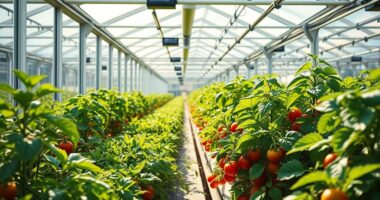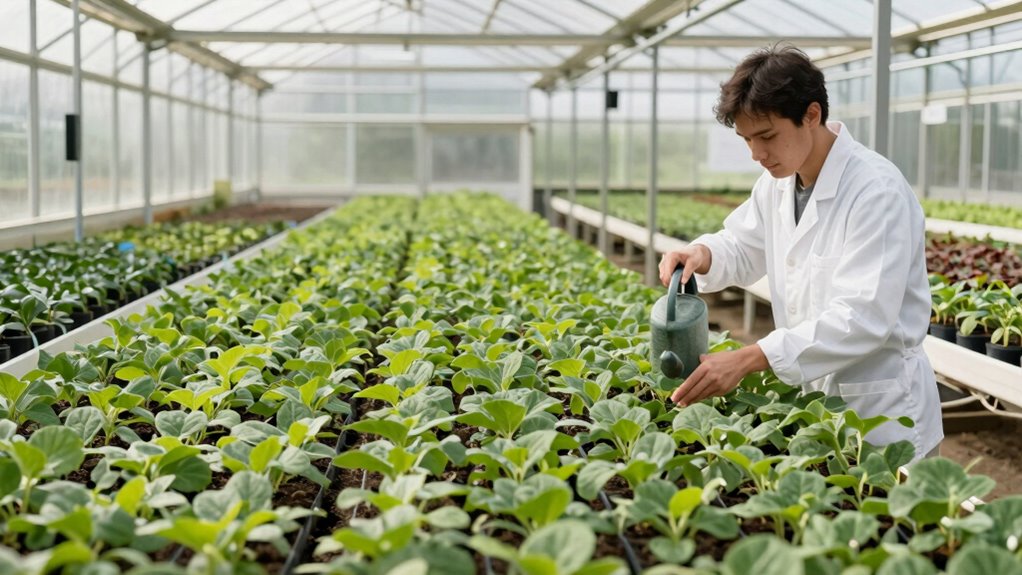

To build a more predictable greenhouse, establish consistent routines for watering, lighting, and temperature control to create a steady environment for your plants. Conduct regular pest inspections and manage pests early using integrated methods. Plan crop rotations to prevent pests and nutrient depletion while keeping detailed logs for future planning. Incorporating biodiversity into your routines supports natural pest control and soil health. Keep following these practices to enhance your greenhouse’s resilience and reliability.
Listen free for 30 days with Audible
Thousands of audiobooks and originals — cancel anytime.
As an affiliate, we earn on qualifying purchases.
Key Takeaways
- Establish consistent daily routines for watering, lighting, and temperature control to create stable plant growth conditions.
- Conduct scheduled pest inspections and implement integrated pest management to prevent infestations.
- Plan and rotate crops systematically to reduce pest buildup and maintain soil health.
- Use environmental controls and routines to anticipate and address potential issues proactively.
- Incorporate biodiversity practices within routines to enhance ecosystem resilience and natural pest regulation.
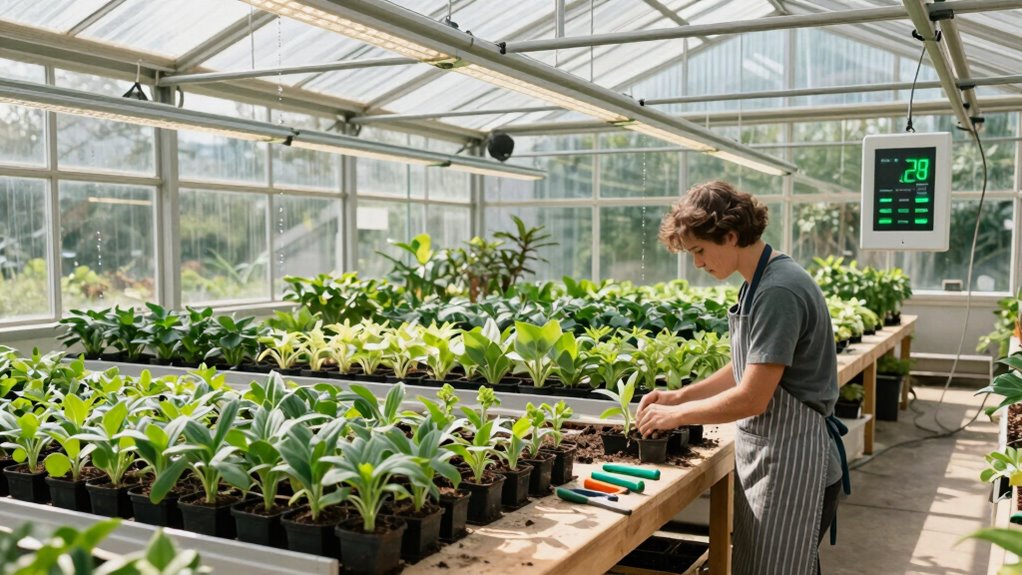
Creating a predictable greenhouse environment starts with establishing consistent routines. When you develop reliable patterns for watering, temperature control, and lighting, you set the foundation for steady plant growth. But to truly enhance predictability, you also need to focus on managing pests effectively and implementing smart crop rotation strategies. These practices help prevent unexpected setbacks and keep your crops healthy.
Consistent routines in watering, pests, and rotation create a reliable, healthy greenhouse environment.
Pest management is essential in maintaining a stable greenhouse environment. Instead of reacting to infestations once they happen, you should establish a routine for regular inspections. Walk through your greenhouse at the same time each day, checking leaves, stems, and soil for signs of pests. Early detection allows you to act swiftly, preventing a minor problem from escalating into a full-blown infestation. Incorporate integrated pest management (IPM) techniques into your routine, such as introducing beneficial insects or applying organic controls on a set schedule. This consistency minimizes pest outbreaks and reduces the need for emergency interventions that can disrupt your schedule and compromise plant health.
Crop rotation is another key element in creating predictability. By planning your planting schedule around different crop families, you decrease the risk of soil-borne diseases and pest buildup. For example, if you grow tomatoes in one section this season, you might rotate to herbs or leafy greens next season. Keep a detailed calendar or log of your crop rotations so you can anticipate planting times and prepare your soil accordingly. This routine helps you avoid problems like nutrient depletion and pest resistance, which often result from planting the same crops repeatedly in the same space. When your crop rotation follows a consistent pattern, you gain better control over soil health and pest populations, leading to more predictable yields.
Incorporating these routines into your daily and seasonal practices allows you to anticipate issues before they become emergencies. Stick to your pest management inspections, crop rotation plans, and environmental controls because consistency is key to predictability. When your actions become habitual, you’ll notice fewer surprises and more reliable crop production. Over time, these routines will streamline your workflow, reduce stress, and give you confidence in your greenhouse’s resilience. Ultimately, building a predictable environment isn’t about perfection but about creating a system that responds effectively to challenges, keeping your plants healthy and your harvests consistent. Developing a biodiversity approach within your routines can further enhance resilience by promoting natural pest control and soil health.

HEKIWAY 60FT Drip Irrigation System with Smart Water Timer
- Smart Timer for Automatic Watering: Fully programmable with rain delay mode
- Durable Brass Connectors: Heavy-duty, UV-resistant, long-lasting build
- 360° Adjustable Nozzles: Precise watering with bendable tubing
As an affiliate, we earn on qualifying purchases.
As an affiliate, we earn on qualifying purchases.
Frequently Asked Questions
What Are the Essential Routines for Greenhouse Temperature Control?
You should establish routines for climate regulation that include regular monitoring of temperature and humidity levels. Implement effective ventilation strategies, like opening vents or using exhaust fans, to maintain consistent conditions. Schedule these checks at predictable times, especially during temperature fluctuations, to prevent overheating or cold stress. Automate systems where possible to guarantee stability, and keep detailed logs to identify patterns and adjust routines for ideal climate control in your greenhouse.
How Can I Optimize Watering Schedules for Different Plants?
Think of yourself as a gardener’s alchemist, balancing soil moisture for each plant. To optimize watering schedules, monitor soil moisture levels regularly and adjust based on plant needs. Group plants with similar hydration requirements, and use timers or sensors for consistency. Remember, proper plant hydration promotes healthy growth, so fine-tuning your watering routine guarantees each plant gets the right amount of water at the right time, like a well-conducted symphony.
What Tools Help Track Routine Greenhouse Tasks Effectively?
You can use automation systems like smart timers and automated watering devices to track routine greenhouse tasks effectively. Data logging tools help you record environmental conditions and task completion times, giving you clear insights into your routines. These tools work together to enhance predictability, reduce manual effort, and guarantee your plants receive consistent care. By integrating automation and data logging, you’ll keep your greenhouse running smoothly and efficiently.
How Often Should Routine Inspections Be Performed?
You should perform routine inspections weekly—because who doesn’t love a surprise, right? In reality, regular greenhouse maintenance demands consistent routine scheduling, ideally once every 7 days, to catch issues early. This frequency helps prevent bigger problems and keeps your plants thriving. Skipping inspections might save time initially but risks costly damage later. So, stay ahead with weekly checks, and your greenhouse will stay predictable and healthy.
How Do Routines Impact Pest and Disease Management?
Your routines play a vital role in pest prevention and disease monitoring. By establishing consistent schedules for cleaning, inspecting, and removing debris, you reduce pest habitats and catch problems early. Regularly monitoring plants helps you identify symptoms of disease quickly, preventing outbreaks. These routines keep your greenhouse predictable, allowing you to act swiftly and effectively, ultimately maintaining healthier plants and a more productive environment.
Conclusion
By establishing solid routines, you turn your greenhouse into a well-oiled machine, where each task flows smoothly like a gentle stream. Consistency is your secret weapon, helping you anticipate challenges and nurture healthier plants. When routines become second nature, unpredictability fades into the background, leaving you with a thriving, reliable oasis. Keep fine-tuning your habits, and watch your greenhouse blossom into a symphony of growth—beautiful and predictable like the sunrise.
Baby shower & registry season Picks
baby registry must-haves
As an affiliate, we earn on qualifying purchases.