
To successfully graft greenhouse plants, select the right rootstock for your needs and guarantee it matches your soil and climate. Use sharp, sterilized tools to make precise cuts, aligning the cambium layers of the scion and rootstock for a strong vascular connection. Secure the graft with tapes and apply sealants to protect the union from moisture. Mastering these techniques will boost your grafting success, and if you keep exploring, you’ll discover even more tips for thriving greenhouse plants.
Key Takeaways
- Select compatible rootstock and scion to ensure successful grafting and healthy plant development.
- Use sterilized, sharp tools to make precise cuts that align the cambium layers accurately.
- Ensure proper matching and secure connection of grafted parts with tapes or clips for stability.
- Apply sealants or wax to protect the graft union from moisture, pathogens, and environmental stress.
- Maintain clean workspace and optimal environmental conditions to promote quick healing and high graft success rates.

Grafting techniques are essential methods used to join parts of plants to grow stronger, healthier, or with desired traits. When you’re starting out, one of the most important steps is selecting the right rootstock. Your choice of rootstock determines not only the vigor and disease resistance of the grafted plant but also influences its adaptability to your greenhouse environment. You want a rootstock that matches the growth habit and size you aim for, while also tolerating the specific soil and climate conditions of your greenhouse. By choosing the appropriate rootstock, you set a solid foundation for the graft to thrive, ensuring better nutrient uptake and overall plant health.
Selecting the right rootstock is crucial for healthy, resilient greenhouse plants.
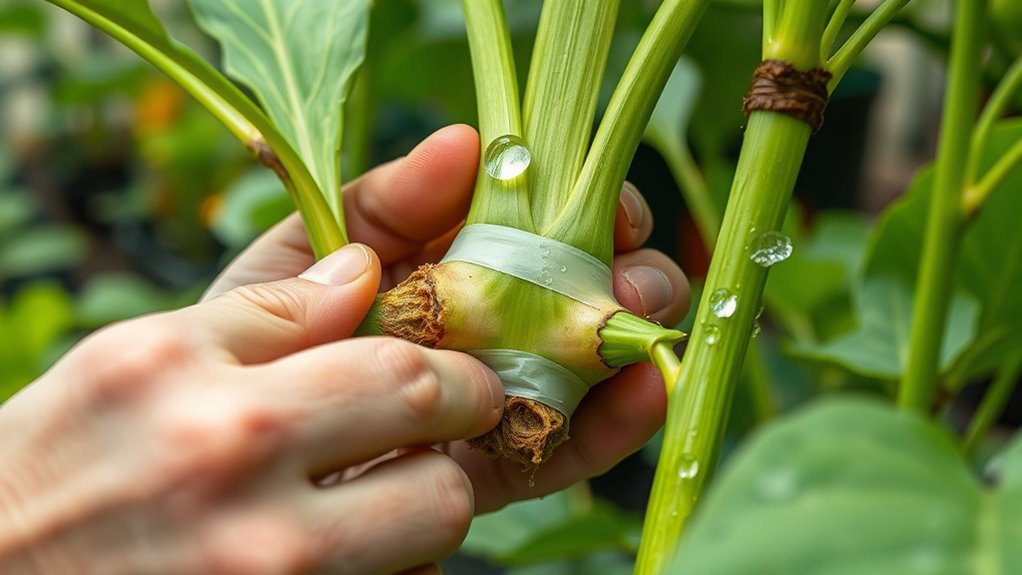
Equally important is having the right grafting tools. These tools include sharp knives, grafting tapes, and sealing compounds, all designed to make precise cuts and secure the graft properly. Sharp knives are essential for clean cuts, which promote quick healing and reduce the risk of infection. You should always ensure your tools are sterilized before use to prevent the spread of diseases. Grafting tapes or clips help hold the scion and rootstock firmly together, maintaining good contact during the healing process. Some growers also use grafting wax or sealants to protect the graft union from moisture loss and pathogen entry, especially in the humid conditions of a greenhouse.
Once you’ve selected your rootstock and gathered your grafting tools, the actual process begins. You’ll need to make precise cuts on both the rootstock and the scion, ensuring that the cambium layers are aligned for ideal vascular connection. The cambium is the crucial tissue just beneath the bark, responsible for the plant’s growth. Proper alignment of these layers maximizes the chances of successful grafting. Using your grafting tools carefully, you will make the cuts, fit the scion onto the rootstock, and secure everything with your grafting tape. Applying a sealant can provide extra protection, especially if you’re working in a humid greenhouse environment. Remember, understanding the biological processes involved can significantly improve grafting outcomes.
Throughout the process, cleanliness and precision are key. Your choice of rootstock influences the long-term success of your graft, so take your time selecting the best one for your needs. Meanwhile, your grafting tools make the difference between a successful union and a failed graft. Proper handling, sterilization, and accurate cuts set the stage for healthy growth. With practice and attention to detail, you’ll improve your grafting success rate, resulting in robust, high-yielding plants that thrive in your greenhouse.
Frequently Asked Questions
What Are the Best Grafting Tools for Greenhouse Plants?
You should use a sharp grafting knife for precise cuts and clean unions, making the grafting process smoother. Pair it with budding tape to secure the graft and promote proper healing. These tools are essential for successful grafts in greenhouse plants, ensuring stability and reducing infection risk. Investing in high-quality grafting knives and durable budding tape will improve your success rate and make the process more efficient.
How Does Grafting Affect Plant Disease Resistance?
Grafting enhances disease resistance by combining healthy rootstocks with desirable scions, reducing the risk of disease spread. It also promotes greater genetic diversity within your plants, making them more resilient against pests and pathogens. When you graft, you’re fundamentally strengthening your plants’ ability to withstand diseases. This technique creates robust, adaptable plants, so you can enjoy healthier growth and better yields in your greenhouse.
Can Grafting Be Performed on All Types of Greenhouse Plants?
Grafting isn’t suitable for all greenhouse plants because plant compatibility varies. You need to choose species with similar vascular structures and growth habits to increase grafting success rates. If the plants aren’t compatible, the graft may fail, leading to wasted time and resources. Before attempting, research specific plant pairings, and practice proper techniques to improve your chances of success. Not all plants respond well to grafting, so select carefully.
What Is the Optimal Temperature for Grafting Procedures?
You should aim for a temperature between 20-25°C (68-77°F) for essential grafting. Maintaining temperature stability is vital, as fluctuations can hinder healing. It’s best to choose your grafting timing during periods of consistent warmth and avoid extreme heat or cold. This helps the graft union form properly, ensuring better success rates. Consistent, controlled temperatures during grafting promote healthy tissue fusion and faster recovery.
How Long Does It Typically Take for Grafted Plants to Establish?
You can expect grafted plants to establish roots and achieve transplant success within 2 to 4 weeks. Remarkably, plants grafted during ideal conditions tend to root faster, with some establishing in just two weeks. Proper care, including consistent watering and maintaining ideal temperatures, accelerates root establishment. Keep an eye on the graft union for signs of healthy growth, ensuring your grafted plant shifts smoothly and thrives in its new environment.
Conclusion
You’ve now learned how grafting can transform your greenhouse plants into stronger, more productive varieties. Think of it like a puzzle—each piece fitting perfectly to create a vibrant, resilient whole. I once watched a novice gardener successfully graft tomatoes, and their plants thrived beyond expectations. With patience and practice, your grafted plants will flourish, proving that even small techniques can lead to big results. Embrace grafting, and watch your greenhouse thrive like never before.