
To start upgrading your greenhouse’s efficiency, focus on careful observation of its current conditions across different times and seasons. Monitor climate control systems, water usage, and humidity levels to identify issues like heat loss, water pooling, or inadequate ventilation. These insights let you make targeted adjustments that improve energy use and plant health. Continuing to pay close attention will reveal more ways to optimize your greenhouse’s performance effectively.

Get garden gear delivered free — and shop member deals
- Fast, free delivery on millions of items
- Access to Prime Big Deal Days deals on October 6–7
- Prime Video, Amazon Music and more included
Key Takeaways
- Conduct regular monitoring to identify climate control issues and natural patterns before implementing upgrades.
- Use real-time data to fine-tune ventilation, heating, cooling, and humidity management.
- Assess water usage and soil moisture to optimize irrigation systems and prevent plant stress.
- Analyze combined climate and water data to improve system responsiveness and environmental stability.
- Make small, observation-based adjustments to maximize savings, plant health, and overall greenhouse efficiency.
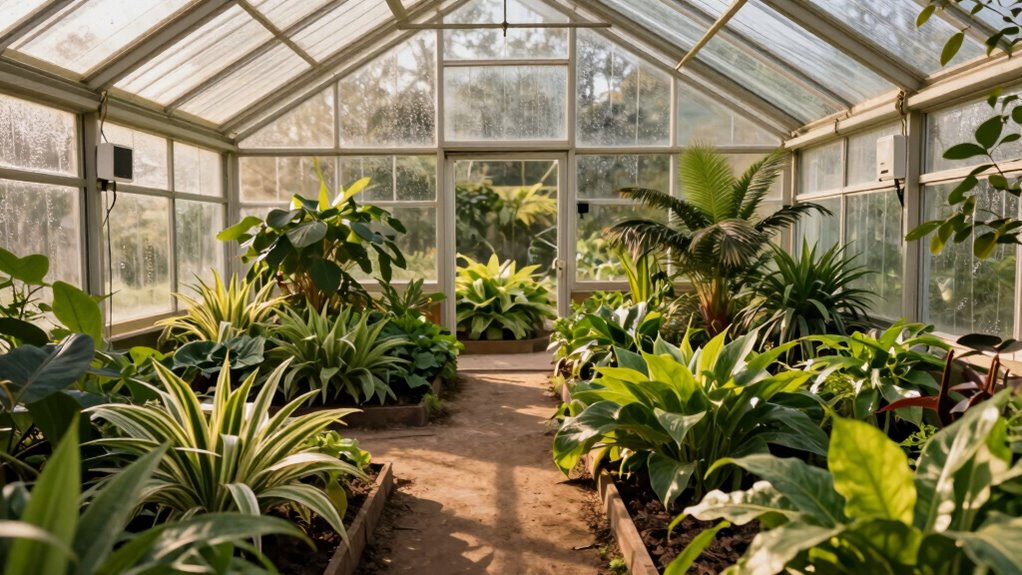
Are you looking to maximize your greenhouse’s productivity and reduce energy costs? The key to achieving that starts with careful observation. Before jumping into costly upgrades, spend time monitoring how your greenhouse operates throughout different times of the day and seasons. Pay close attention to climate control—how well your heating, cooling, and ventilation systems are regulating temperature and humidity levels. Notice areas where heat escapes or where humidity becomes excessive, as these are clues to where adjustments are needed. By understanding your greenhouse’s natural patterns, you can identify specific issues that, when addressed, will improve overall efficiency.
Water management is equally crucial in this process. Observe how water is used and distributed across your space. Are you over-irrigating certain plants while others remain under-watered? Is water pooling in some areas, causing potential issues with disease or mold? These observations help you fine-tune your watering schedules and systems, reducing waste and lowering water costs. Implementing drip irrigation or automated watering systems based on actual plant needs ensures water is delivered precisely where it’s needed, avoiding runoff and evaporation losses. Additionally, inspecting your drainage system and soil moisture levels will help prevent overwatering or underwatering, which can stress plants and decrease growth rates. Recognizing the importance of sensor and monitoring tools can significantly enhance your ability to gather accurate data and make informed decisions.
As you observe, take note of how climate control and water management interact. For instance, if high humidity levels persist, they can hinder plant transpiration and promote disease, meaning you might need to adjust ventilation or dehumidification. Conversely, if your temperature swings are too extreme, consider upgrading insulation or shading systems. These adjustments, based on real-time observations, help create a stable environment that supports healthy plant growth while conserving energy. Paying attention to climate control systems and their responsiveness can reveal opportunities for energy savings and system improvements. Recognizing the impact of environmental factors on your greenhouse’s performance is essential for targeted upgrades. Understanding how climate and environmental conditions influence your greenhouse allows for more precise and effective interventions.
The beauty of starting with observation is that it allows you to make informed decisions rather than guesswork. Small tweaks based on what you see can lead to significant savings in energy and water. For example, optimizing ventilation can reduce the workload on your climate control systems, saving energy. Upgrading watering systems based on observed plant needs can lower water bills and improve plant health. Over time, these improvements create a more sustainable, efficient greenhouse that maximizes productivity.
In essence, the foundation of any effective efficiency upgrade lies in your ability to observe and understand your greenhouse’s unique conditions. By paying attention to climate control and water management, you gather the insights needed to prioritize upgrades that deliver real results. This approach ensures that your investments are targeted, cost-effective, and truly enhance your greenhouse’s overall performance.
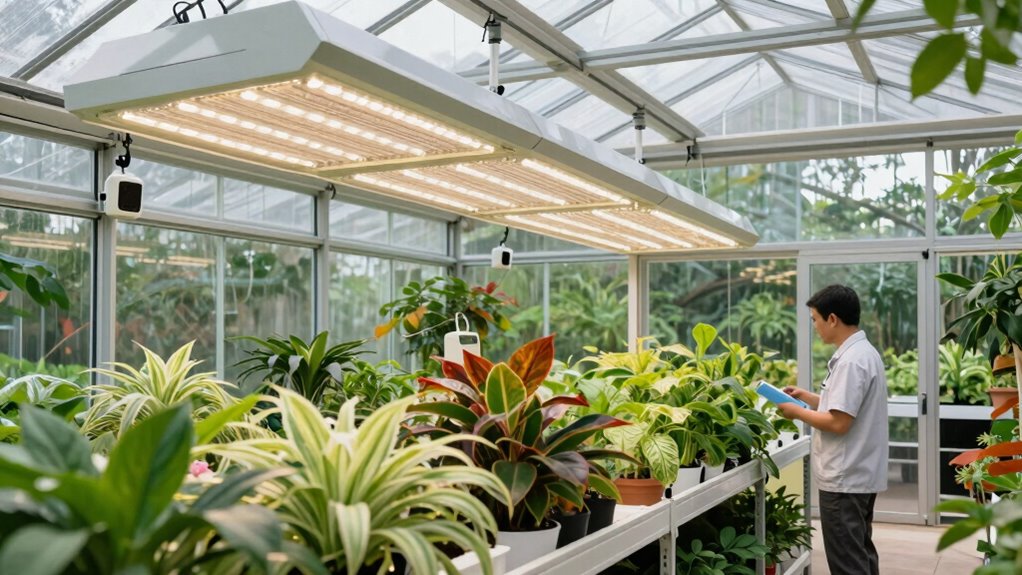
greenhouse climate control monitoring system
As an affiliate, we earn on qualifying purchases.
As an affiliate, we earn on qualifying purchases.
Frequently Asked Questions
How Often Should I Perform Greenhouse Observations for Efficiency?
You should perform greenhouse observations daily, especially during peak growth periods. Regular checks help you monitor plant health closely and catch pest issues early. By observing daily, you can identify signs of stress, disease, or pests quickly, allowing you to take prompt action. Consistent monitoring guarantees ideal conditions, promotes healthy growth, and maximizes efficiency. Don’t wait too long between observations—being proactive makes a significant difference in greenhouse management.
What Tools Are Best for Monitoring Greenhouse Conditions?
You should use a combination of digital sensors, like temperature, humidity, and light sensors, for monitoring greenhouse conditions. Make sure sensor calibration regularly to maintain accuracy. Data logging devices are essential for tracking changes over time, helping you identify patterns and optimize conditions. Look for tools with user-friendly interfaces and reliable connectivity, so you can quickly analyze data and make informed adjustments to keep your greenhouse efficient.
Can Observation Alone Identify All Greenhouse Inefficiencies?
Observation alone can help you identify many greenhouse inefficiencies, especially by monitoring plant health and detecting pests early. You’ll notice stressed or unhealthy plants, which indicate issues like improper watering, lighting, or ventilation. However, relying solely on observation might miss subtle problems or pests hidden from sight. Combining observation with tools like sensors or pest traps provides an all-encompassing approach, ensuring you catch and address all inefficiencies effectively.
How Do Seasonal Changes Affect Observation-Based Upgrades?
Seasonal changes profoundly impact your observation-based upgrades, as they influence seasonal patterns and plant growth. You’ll notice shifts in temperature, sunlight, and humidity, which affect plant health and greenhouse performance. By carefully observing these variations, you can adjust ventilation, shading, or heating systems accordingly. This ongoing vigilance helps optimize conditions year-round, ensuring healthy plant growth despite seasonal fluctuations and enhancing overall greenhouse efficiency.
Are There Cost-Effective Observation Techniques for Small Greenhouses?
Yes, there are cost-effective observation techniques for small greenhouses. You can regularly monitor plant health by inspecting leaves for discoloration or spots, which helps catch issues early. Use simple tools like a magnifying glass for pest detection and keep a journal to track changes over time. Installing affordable sensors or cameras can also provide continuous observation, enabling you to quickly identify problems and improve overall efficiency without significant expense.
Conclusion
Think of your greenhouse as a delicate garden of possibilities, where each observation is like tending to a tiny seed. When you notice the smallest change—like a leaf’s whisper—you nurture growth and efficiency. Just as a gardener patiently cultivates, your keen eye transforms your greenhouse into a thriving oasis. Embrace observation as your guiding compass, and watch your plants flourish, turning your greenhouse into a lush paradise born from mindful care and constant discovery.
Fall Picks
fall essentials
As an affiliate, we earn on qualifying purchases.