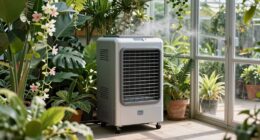
Misting and fogging are effective tools for controlling humidity, pests, and pathogens, but they serve different needs. Misting disperses larger droplets suitable for outdoor or indoor plant watering, while fogging creates a fine mist ideal for disinfecting or pest control in enclosed spaces. Understanding how each works, their benefits, and when to use them helps you choose the best option without getting overwhelmed by hype. Keep exploring to find out more about choosing the right system for your needs.
Key Takeaways
- Misting disperses larger droplets for outdoor cooling and garden watering, while fogging produces fine mist for pest and mold control indoors.
- Misting systems are generally cheaper and easier to maintain but offer less uniform humidity; fogging provides consistent coverage with higher initial costs.
- Misting is suitable for small spaces and plant hydration; fogging is ideal for large areas like greenhouses and enclosed environments.
- Regular nozzle cleaning is crucial for misting to prevent clogging; fogging requires periodic refilling and sanitization.
- Both methods impact water and air quality, so sustainable use depends on proper application and environmental awareness.
What Are Misting and Fogging? Understanding the Basics
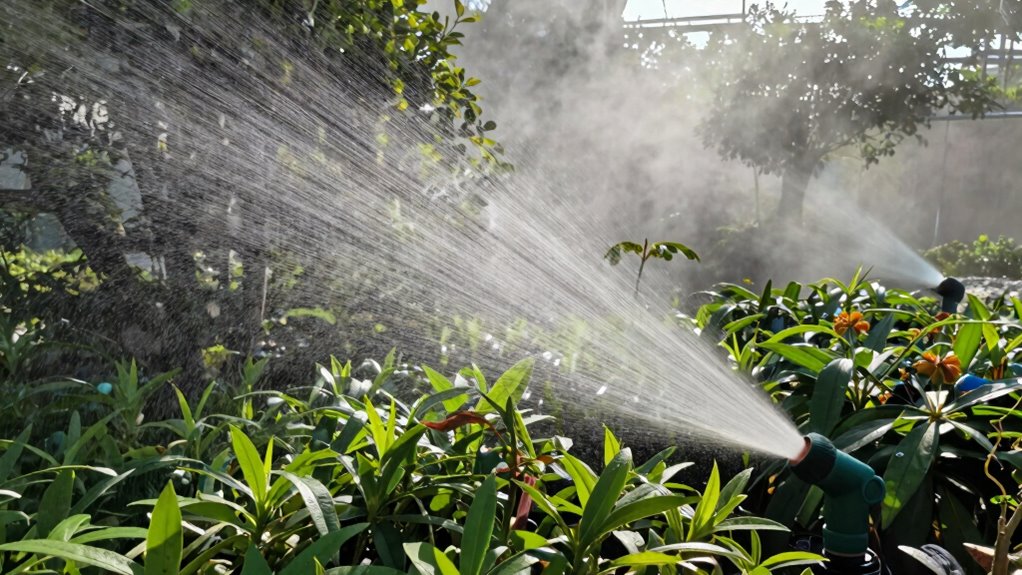
Misting and fogging are two popular methods for controlling pests, disinfecting spaces, or creating specific environments. Historically, both techniques have evolved from simple practices to advanced, specialized systems. Misting, originally used in agriculture, developed into a method to maintain humidity and deliver treatments efficiently. Fogging, with roots in sanitation and pest control, gained prominence for its ability to disperse fine droplets over large areas. While effective, these methods can have environmental impacts. Misting can contribute to water wastage and chemical runoff, affecting local ecosystems. Fogging, especially with chemical pesticides, raises concerns about air quality and non-target species. Understanding their development and impacts helps you make informed choices about using these tools responsibly and sustainably. Understanding their environmental impacts is essential for sustainable application and minimizing ecological harm.
How Do Misting and Fogging Work? Key Mechanisms Explained
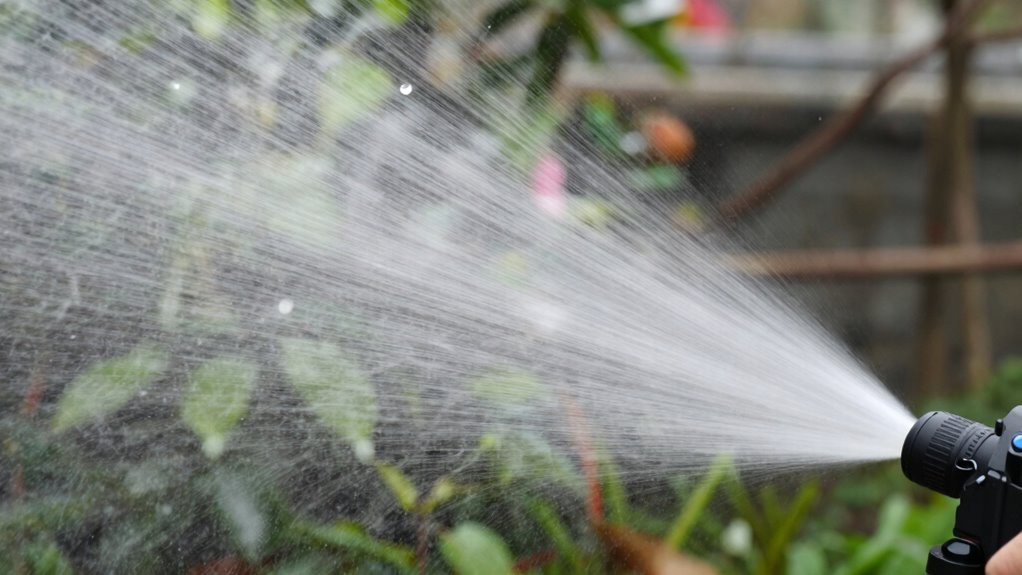
Have you ever wondered how misting and fogging systems disperse tiny droplets into the air? They use specialized nozzles that create a fine spray, which quickly evaporates, increasing humidity. The process relies on precise humidity measurement to guarantee the right moisture levels are maintained. Misting systems typically produce larger droplets, ideal for outdoor cooling, while fogging systems generate ultra-fine mist for enclosed spaces. Regular system maintenance is essential to keep nozzles clean and functioning properly, preventing clogging that can disrupt droplet size and spray consistency. Proper maintenance also ensures accurate humidity control, avoiding over- or under-humidification. Additionally, understanding the energy efficiency of these systems can help optimize their operation and reduce energy consumption, contributing to more sustainable humidity management. Understanding these mechanisms helps you optimize your system’s performance and longevity, ensuring you get the desired humidity boost without unnecessary issues.
When Should You Use Misting or Fogging? Applications and Scenarios
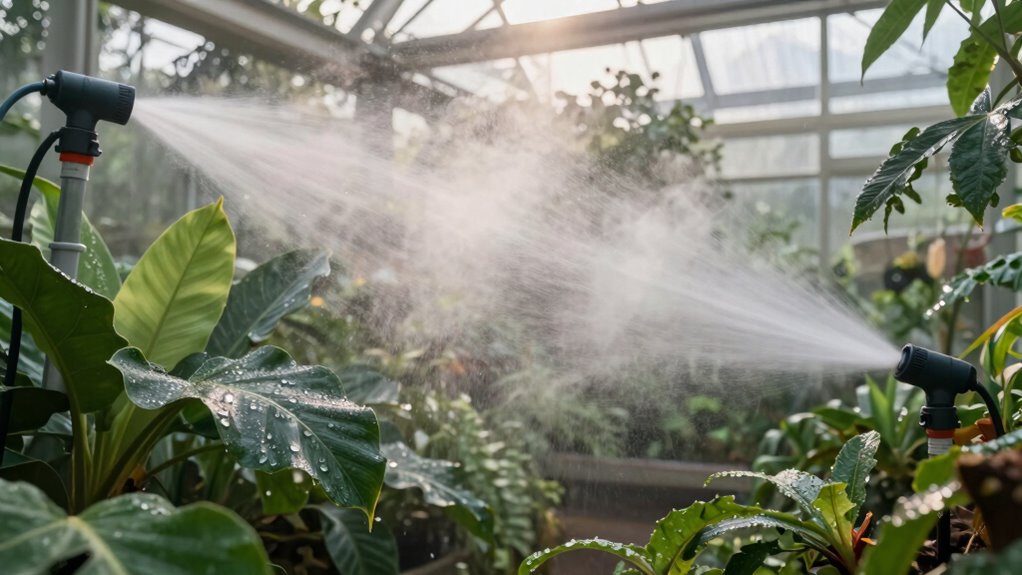
Choosing between misting and fogging depends on your specific needs and the environment. For indoor gardening, misting is ideal when you need to hydrate plants gently, promote healthy growth, or increase humidity gradually without oversaturating the air. It’s perfect for delicate plants that require targeted moisture. Fogging, on the other hand, is better suited for pest control, especially in larger or enclosed spaces. It creates a fine, even layer of moisture that can help eliminate pests or mold without drenching surfaces. Use misting for regular watering and humidity maintenance in indoor gardens, but turn to fogging when pests become a problem or you need a more all-encompassing treatment. Both tools serve different purposes, so choose based on your specific application needs. Additionally, understanding the environmental impact of each method can help you select the most sustainable option for your space.
Misting vs. Fogging: Pros, Cons, and Which Is Better
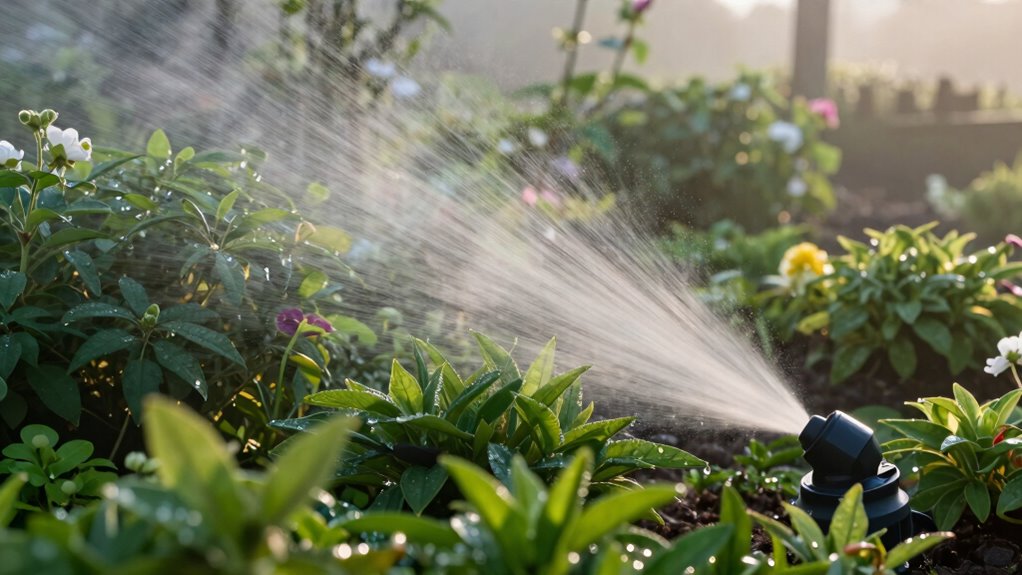
Both misting and fogging offer distinct advantages, making it important to understand their pros and cons to determine which method suits your needs best. Misting is cost-effective initially but requires frequent maintenance, such as nozzle cleaning and water quality checks. Fogging provides more uniform humidity distribution with less upkeep but has higher installation costs. Additionally, selecting the appropriate method depends on the specific humidity control needs of your environment.
| Feature | Misting | Fogging |
|---|---|---|
| Cost comparison | Lower upfront, higher ongoing | Higher initial, lower ongoing |
| Maintenance requirements | Frequent nozzle cleaning | Less frequent maintenance |
| Humidity control | Less uniform | More consistent |
| Application suitability | Small areas, plants | Large spaces, greenhouses |
| Efficiency | Moderate | High |
How to Choose the Right Humidity System for Your Needs
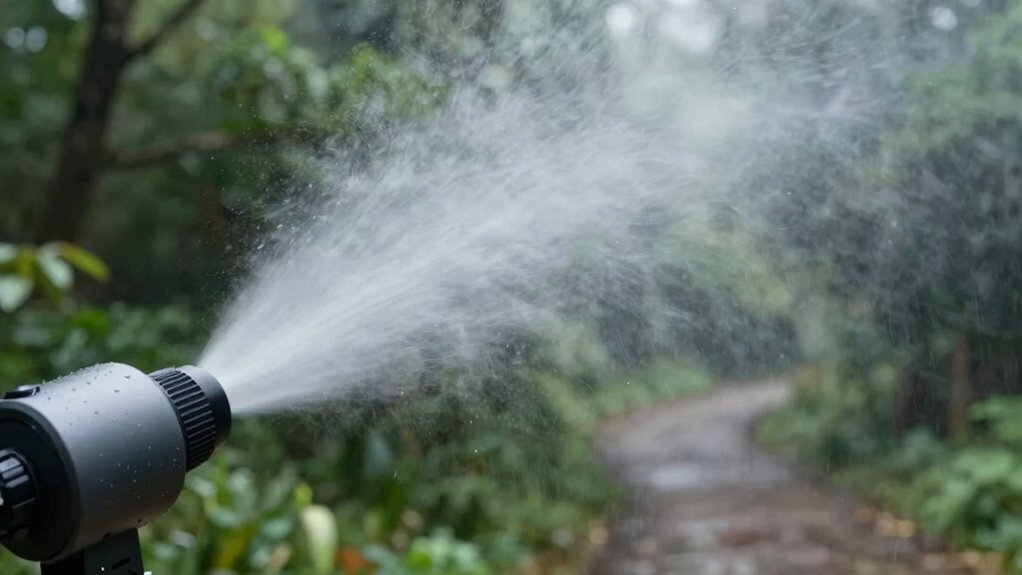
Selecting the right humidity system depends on evaluating your specific needs, space size, and budget. Start by comparing costs—misting systems generally have a lower initial investment but may incur higher maintenance costs over time, while fogging systems tend to be more expensive upfront but require less frequent upkeep. Consider maintenance requirements: misting systems often need regular cleaning and filter replacements, whereas foggers might need occasional refilling and sanitizing. Think about your environment’s size and humidity goals; smaller spaces may do well with misting, while larger areas can benefit from fogging’s broader coverage. Additionally, understanding trusted resources and reliable companies can help you make an informed decision. Ultimately, balancing your budget with maintenance demands helps ensure you choose a system that’s both effective and sustainable for your needs.
Frequently Asked Questions
Are Misting and Fogging Systems Energy-Efficient Options?
Yes, misting and fogging systems are generally energy-efficient options. They consume less energy compared to traditional cooling methods, making them cost-effective for maintaining ideal humidity. You’ll find that their low energy consumption translates to lower utility bills and better cost efficiency over time. Plus, because they operate effectively with minimal power, they’re a smart choice for saving energy while keeping your environment comfortable.
Can Misting or Fogging Harm Plants or Animals?
Misting and fogging can harm plants or animals if not used properly. Over-saturation can lead to plant health issues like mold or root rot, and improperly maintained equipment may spray harmful chemicals or bacteria. To prevent this, make certain your equipment is clean and safe, and monitor humidity levels carefully. By doing so, you protect plant health and ensure your equipment remains safe for both plants and animals.
What Maintenance Is Required for Misting and Fogging Equipment?
Think of your misting or fogging system as a well-tuned instrument. You need to regularly calibrate the system to guarantee even humidity distribution and replace filters to prevent clogs and bacteria buildup. Check nozzles for blockages, clean them as needed, and inspect hoses for leaks. Consistent maintenance keeps the equipment running smoothly, protecting your plants and animals while maintaining ideal humidity levels with minimal fuss.
How Do Weather Conditions Affect Misting and Fogging Effectiveness?
Weather conditions considerably impact misting and fogging effectiveness. Humidity fluctuations can reduce the ability to maintain consistent moisture levels, making your system less effective. Atmospheric stability plays a role too; stable air tends to prevent proper dispersion, while unstable conditions help distribute mist or fog evenly. To optimize results, you should monitor weather forecasts closely and schedule misting or fogging during periods of high humidity and stable atmospheric conditions.
Are There Safety Concerns With High Humidity Levels?
High humidity levels can pose safety concerns, especially for indoor air quality and mold growth. When humidity stays elevated, it creates a perfect environment for mold and mildew to thrive, potentially causing health issues. You should monitor indoor humidity levels closely, aiming for 30-50%. Use dehumidifiers if needed, and guarantee good ventilation to reduce risks, protecting both your health and your home’s structural integrity.
Conclusion
Choosing between misting and fogging depends on your specific needs, like a gardener watering delicate plants or a warehouse controlling humidity. Think of it like tuning a guitar—striking the right balance produces harmony. I once helped a greenhouse find the perfect system, and their plants thrived. Remember, understanding your environment makes certain you pick the right tool, keeping humidity levels just right—no hype, just effective solutions for healthy, happy spaces.