To trellis and train plants vertically in your greenhouse, start by selecting the right support systems like trellises, stakes, or cages suited to your plant types. Gently attach plants using soft ties to guide their upward growth while promoting healthy airflow and reducing disease. Regular pruning and proper attachment ensure vigorous growth and easier harvesting. Keep exploring these techniques further, as mastering them can maximize your space and boost your crop yields effectively.
Key Takeaways
- Select appropriate support systems like trellises, stakes, or cages based on plant type and growth habits.
- Install supports early to guide plant growth and prevent damage during development.
- Use soft ties or plant-friendly fasteners to attach plants securely without damaging stems.
- Prune regularly to remove overcrowded or dead branches, promoting healthy vertical growth.
- Incorporate visual aids and expert resources, such as instructional videos, to improve training and support techniques.

Growing plants vertically in a greenhouse can considerably optimize space and improve crop yields. When you train your plants to grow upward, you’re making the most of limited space while boosting productivity. To do this effectively, you need to understand proper pruning techniques and select appropriate plant support systems. Pruning is essential because it encourages healthy growth, removes dead or overcrowded branches, and directs energy toward fruit or flower production. By regularly pruning, you prevent plants from becoming too dense, which improves air circulation and reduces disease risk. When pruning, focus on removing unwanted shoots and shaping the plant to fit your support system, ensuring each cut promotes vigorous growth. Additionally, using expert voice actors to demonstrate proper techniques through videos can enhance understanding and implementation.
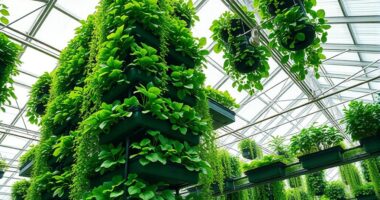
Plant support systems are the backbone of vertical gardening. They serve as frameworks that guide and hold the plants upright, preventing damage and making harvesting easier. Common support systems include trellises, stakes, cages, and wire meshes. As you set these up, consider the type of plant you’re growing and its growth habits. For instance, vining plants like tomatoes or cucumbers benefit from sturdy trellises or cages that can support heavy fruit loads. Installing these systems early ensures plants can grow into them naturally, reducing the risk of damage later on. When attaching plants to their supports, be gentle to avoid damaging stems, and tie them loosely with soft ties to allow for growth.
Frequently Asked Questions
What Are the Best Plant Varieties for Vertical Training?
You should choose plant varieties that respond well to vertical training techniques, such as indeterminate tomatoes, pole beans, and cucumbers. These varieties have vigorous growth habits and flexible stems, making them ideal for trellising. When selecting plants, consider their growth habit and productivity. Proper plant variety selection guarantees your training techniques are effective, maximizing space and yield while maintaining healthy, manageable plants in your greenhouse environment.
How Does Trellising Affect Airflow and Humidity?
Trellising tangles plants, transforming tight spaces into a tapestry of airflow. You’ll notice improved air circulation, as trellised plants create open avenues for fresh breezes. This setup also helps with humidity control, preventing excess moisture buildup that fosters mold and disease. By supporting plants vertically, you promote better airflow and humidity regulation, making your greenhouse healthier and more productive. Keep trellising to tame humidity and boost airflow effectively!
Can Trellising Be Automated in Greenhouse Systems?
Yes, you can automate trellising in greenhouse systems using automated trellising and greenhouse robotics. These systems use sensors and motorized mechanisms to adjust or install trellis structures, reducing manual labor. You can program them to adapt to plant growth stages, ensuring ideal support and airflow. Implementing automated trellising enhances efficiency, consistency, and plant health, making your greenhouse operations smoother and more productive.
What Are Common Mistakes to Avoid When Training Plants Vertically?
Think of training plants as tuning a guitar—if you don’t tighten strings evenly, the sound’s off. Avoid common mistakes like using improper support structures, which can cause damage, and neglecting pruning techniques, leading to tangled growth. Make certain your support is sturdy and correctly positioned. Regularly prune to promote airflow and healthy growth. By paying attention to these details, you keep your plants thriving and avoid setbacks in your vertical training efforts.
How Does Vertical Training Impact Plant Disease Management?
Vertical training can help you manage plant disease by improving airflow and reducing humidity, which limits disease spread. It makes it easier to spot and remove infected leaves or stems early. Additionally, better airflow disrupts pathogen control, decreasing the chances of fungal or bacterial outbreaks. By keeping plants well-supported and spaced, you minimize disease spread and create a healthier environment for your greenhouse crops.
Conclusion
Think of trellising and training your plants like guiding a dance partner. With gentle hands and a clear rhythm, you lead your plants to grow tall and healthy, reaching for the light like graceful dancers on a stage. When you understand their needs and provide support, your greenhouse becomes a lively performance where every plant shines. So, embrace this dance, and watch your green partners flourish in their new vertical spotlight.