TL;DR
Butterfly pea (Clitoria ternatea) is a tropical twining vine that can reach about 15 feet and bloom from late spring through fall. It grows as a perennial in USDA Zones 10–12 and is often grown as an annual in colder regions; full sun and well-drained soil support better flowering.
Butterfly pea (Clitoria ternatea), a tropical climbing vine known for its vivid blue flowers, can be grown as a perennial in USDA Hardiness Zones 10–12 and as an annual in colder areas, according to the supplied gardening guide. The plant can grow vines up to 15 feet long, with flowers appearing from late spring through summer and fall, making sunlight, support and suitable drainage key considerations for gardeners.

Get garden gear delivered free with Prime
- Fast, free delivery on millions of items
- Prime Video, Amazon Music and more included
- Member-only deals all year
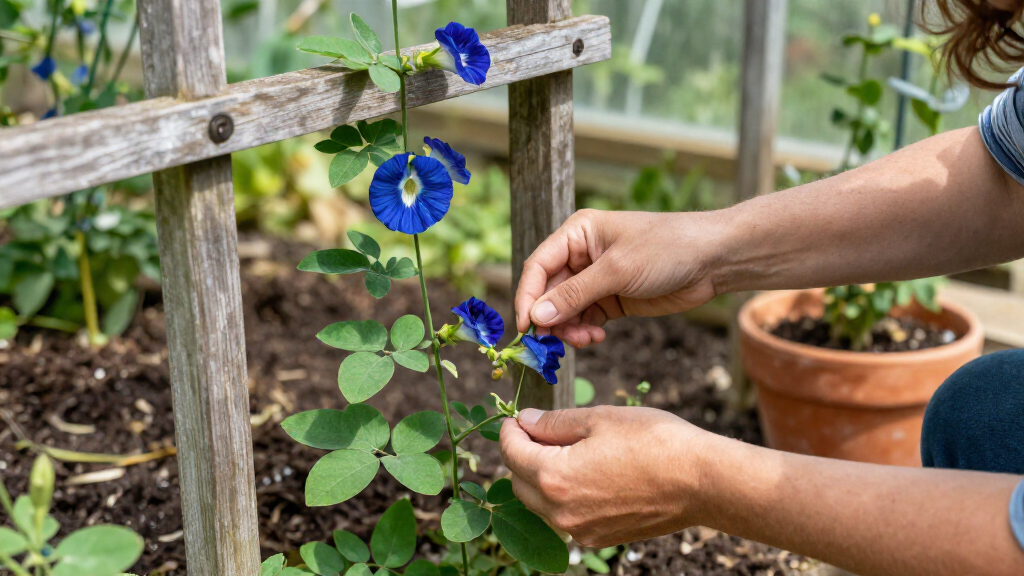
The guide describes butterfly pea as a twining climber: its growing tips wind around nearby supports, though gardeners may need to help young vines attach. It can also spread across the ground. A trellis or other sturdy support gives the long vines room to grow and can make the plant easier to manage. Its flowers are commonly bright blue with a yellow center, while white and pink forms are also available.
Full sun is the recommended exposure for gardeners prioritizing flowers. The plant can tolerate partial sun, but the guide says lower light is likely to mean fewer blooms. It prefers rich, loamy, well-drained soil, although it can grow in somewhat sandy or clay soil. The guide gives a preferred soil pH range of 6.0 to 8.0 and advises against consistently soggy conditions, which can lead to root rot.
Butterfly pea responds best to regular moisture but can tolerate dry spells. The guide suggests keeping soil somewhat moist, roughly like a well-wrung-out sponge, rather than waterlogged. It also says the plant fixes nitrogen, so gardeners may not need to add nitrogen fertilizer; soil conditions and plant growth still matter, and the source provides no detailed fertilizer schedule. In colder climates, it can be removed after the leaves yellow rather than kept through winter.
Grow butterfly pea flowers in your garden
This tropical twining vine brings vivid blooms to warm gardens and can be grown as an annual in colder regions. Sunlight, drainage and winter conditions guide the growing plan.
Choose the right spot
Full sun supports better flowering; partial sun may mean fewer blooms.
Prioritize sunshine
Plant in full sun for the best flowering. The vine can tolerate partial sun.
Keep drainage in mind
Rich, loamy, well-drained soil is preferred. Avoid consistently soggy conditions.
Give the vine room
Butterfly pea twines around nearby supports, though young vines may need help attaching.
Use a sturdy trellis if you want the climbing vines to grow upward.
Help the growing tips reach the support as they begin to twine.
The vine can also spread across the ground if you do not train it upward.
Match care to conditions
- Keep soil somewhat moist, like a well-wrung-out sponge.
- Avoid waterlogging, which can lead to root rot.
- The plant can tolerate dry spells.
- Grow as a perennial in USDA Zones 10–12.
- In colder regions, it is often grown as an annual.
- Remove it when leaves turn yellow rather than expect it to survive winter outdoors.
What the garden may offer
The guide describes several uses, with some limits on what gardeners can conclude.
| Garden feature | What the guide says |
|---|---|
| Flowers | Bright blue blooms with a yellow center; white and pink forms are also available. |
| Bloom season | Flowers from late spring through summer and fall. |
| Pollinators | Flowers attract bees and moths. |
| Soil and infusion | The plant fixes nitrogen; petals steeped in hot water color an infusion blue, shifting toward purple with an acidic ingredient such as lemon. |
A Long-Blooming Vine for Warm Gardens
For gardeners in warm climates, butterfly pea offers a long-flowering vine that can be grown on a support or allowed to cover bare ground. Its blue flowers attract pollinators, including bees and moths, according to the guide. The plant’s nitrogen-fixing ability may also benefit garden soil, although the source does not quantify that effect or recommend it as a substitute for soil testing.
The flowers are also used to make a blue infusion: the guide says petals steeped in hot water color it blue, and adding an acidic ingredient such as lemon can shift the color toward purple. These uses make the plant relevant to edible gardens as well as ornamental plantings, but the supplied material does not provide food-safety or medical-use guidance. Claims about medicinal effects should not be treated as established treatment advice.
Products Worth Considering

Palram Canopia Mythos 6' x 8' Polycarbonate Greenhouse, Silver

EGO Power+ 12-Inch Cordless Electric Snow Shovel with 56V 2.5Ah Battery and Charger

Orbit B-hyve XR 16-Zone Indoor/Outdoor Smart Sprinkler Controller
As an affiliate, we earn on qualifying purchases.
Tropical Origins and Garden Uses
The source describes butterfly pea as originating in South and Southeast Asia, while noting that its precise native range is uncertain because it has spread and naturalized in several regions, including Africa, Australia, and the Americas. Its scientific name is Clitoria ternatea; the source says the specific name was linked historically to the island of Ternate, but that the plant is not now believed to be indigenous there.
Gardeners may grow it as an ornamental, ground cover or climber. The guide also identifies fodder as a use for people with livestock and mentions research into compounds in the plant, including cyclotides, as possible environmentally friendlier insecticides. Those are uses or research directions, not proof of a particular benefit in a home garden. The growing advice here is limited to the cultivation details provided in the source.
Where Growing Advice Has Limits
The source is a gardening guide, not a dated report of a new horticultural finding, and it supplies no named expert interviews or independent studies. Its advice gives a broad preferred pH range and general watering guidance, but does not specify planting dates, seed-starting instructions, spacing, pruning steps or a fertilizer formula. Local climate, soil and growing conditions may affect results.
The guide also refers to medicinal uses involving inflammation, pain, diabetes and cognitive function, but provides no evidence or medical attribution to support those uses. They should be regarded as claims in the source, not confirmed health benefits. It is also unclear from the supplied material which cultivars are most readily available or how reliably flower color varies among them.
Plan for Your Local Climate
Gardeners can use their local frost and winter conditions to decide whether to treat butterfly pea as a perennial or an annual. Choose a sunny site with drainage, provide a support if the vine is to climb, and monitor moisture so the soil does not remain soggy. In areas outside Zones 10–12, the guide recommends removing the plant when its leaves turn yellow rather than expecting it to survive winter outdoors.
The source does not identify a forthcoming study, growing milestone or scheduled update. For now, the practical next step is to check local conditions and follow region-specific planting guidance, since the supplied material does not give a sowing calendar or detailed propagation instructions.
Key Questions
Can butterfly pea grow in a cold climate?
The guide lists it as a perennial in USDA Zones 10–12. In colder climates, gardeners commonly grow it as an annual because it may not survive winter outdoors.
How much sun does butterfly pea need?
Full sun is recommended for the best flowering. The plant may grow in partial sun, but the guide says it is likely to produce fewer flowers in lower light.
Does butterfly pea need a trellis?
Not necessarily. It can spread across the ground, but as a twining vine that may reach about 15 feet, it can be trained onto a trellis or another support.
How should I water butterfly pea?
Keep the soil somewhat moist while avoiding persistent waterlogging. The guide says the plant tolerates drought, but consistent moisture is better for growth and flowering.
Will butterfly pea need fertilizer?
The source says butterfly pea fixes nitrogen and may not need nitrogen fertilizer. It does not provide a full fertilizer schedule, so gardeners should consider their soil and plant growth rather than assume no nutrients are ever needed.
Source: gardenerspath.com